Off-Grid Mobile Dual Office: Redefining Independent Workspaces

Rethinking Remote Workspaces
Remote work has transformed the way individuals perceive traditional office spaces, prompting a shift toward flexible and portable solutions. Among these solutions, mobile units that provide fully independent workspaces, along with living accommodations, emerge as a practical option for those who require a flexible, location-independent work environment.
Design of Mobile Units
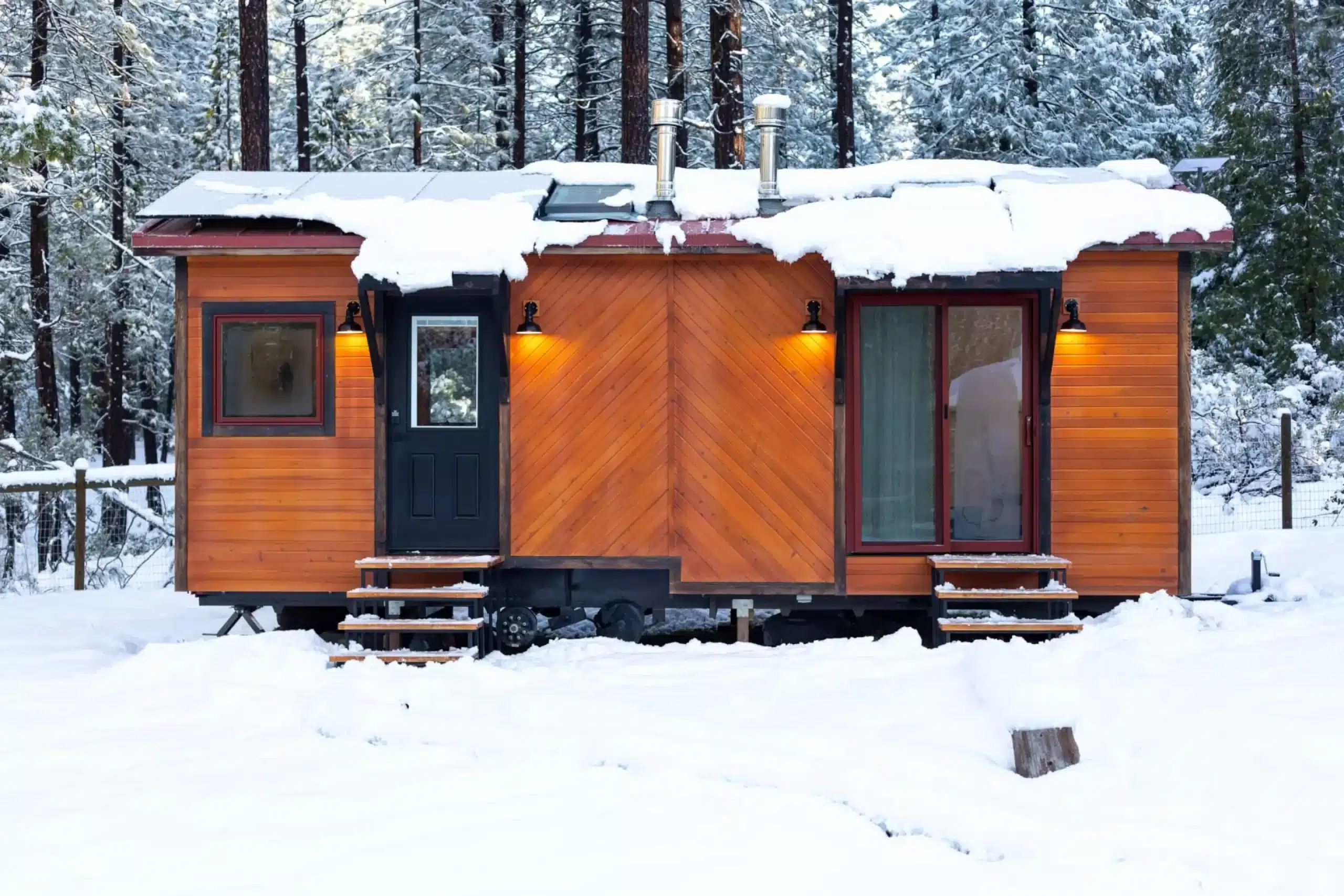
These units are built on double-axle trailers, typically extending wider than conventional trailers, which may require special permits for transport on public roads. The exterior design features natural materials like wood, combined with a durable metal roof, creating a blend of modern aesthetics and functional practicality. This allows the unit to integrate seamlessly into a residential area or work site without appearing out of place or overly conspicuous.
Energy Independence and Flexibility
A core feature of these units is their complete reliance on solar power, making them independent of traditional electrical grids. The wheels can be easily removed and reinstalled when transportation is needed, giving users the freedom to move between different locations without infrastructure constraints.


Interior Space Layout
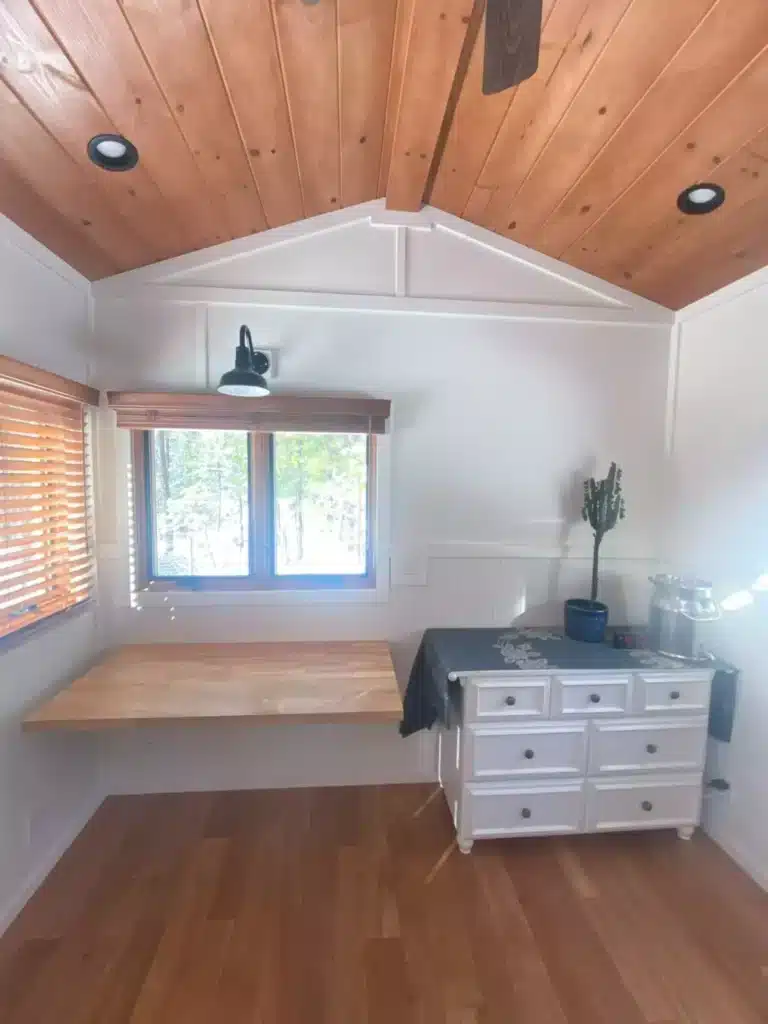
The mobile units are designed to provide two distinct rooms, each equipped in a practical and elegant manner. The walls are clad with “board and batten” panels, while large windows and skylights are integrated to enhance natural lighting, creating a bright and comfortable work environment.
The Larger Workspace
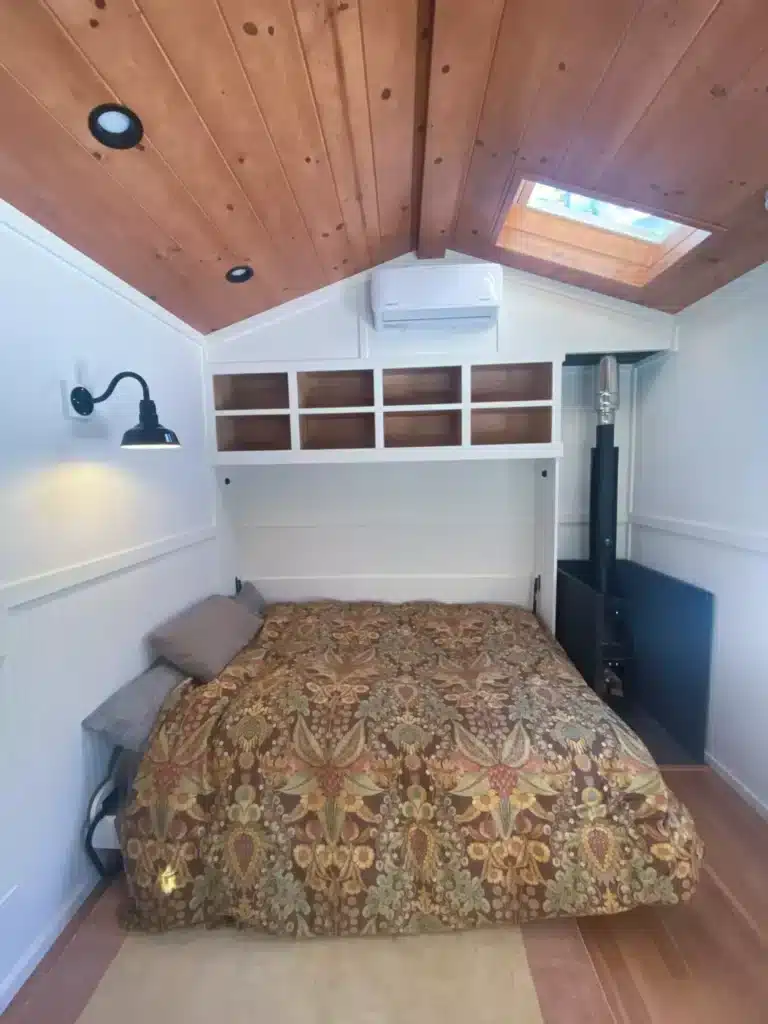
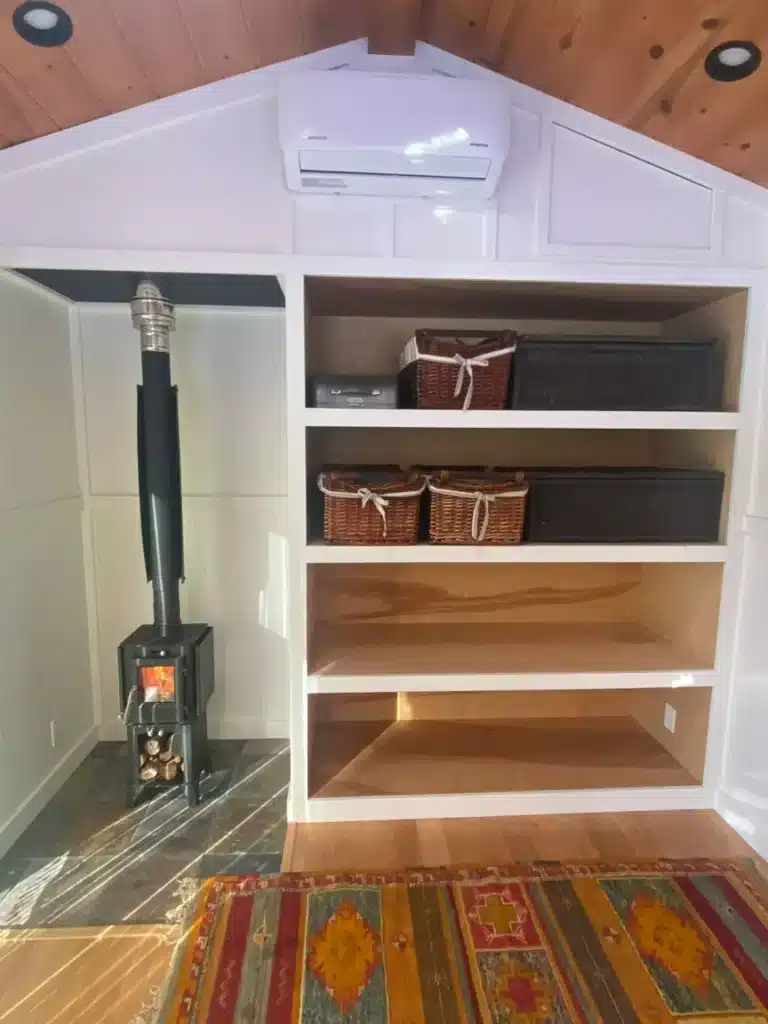
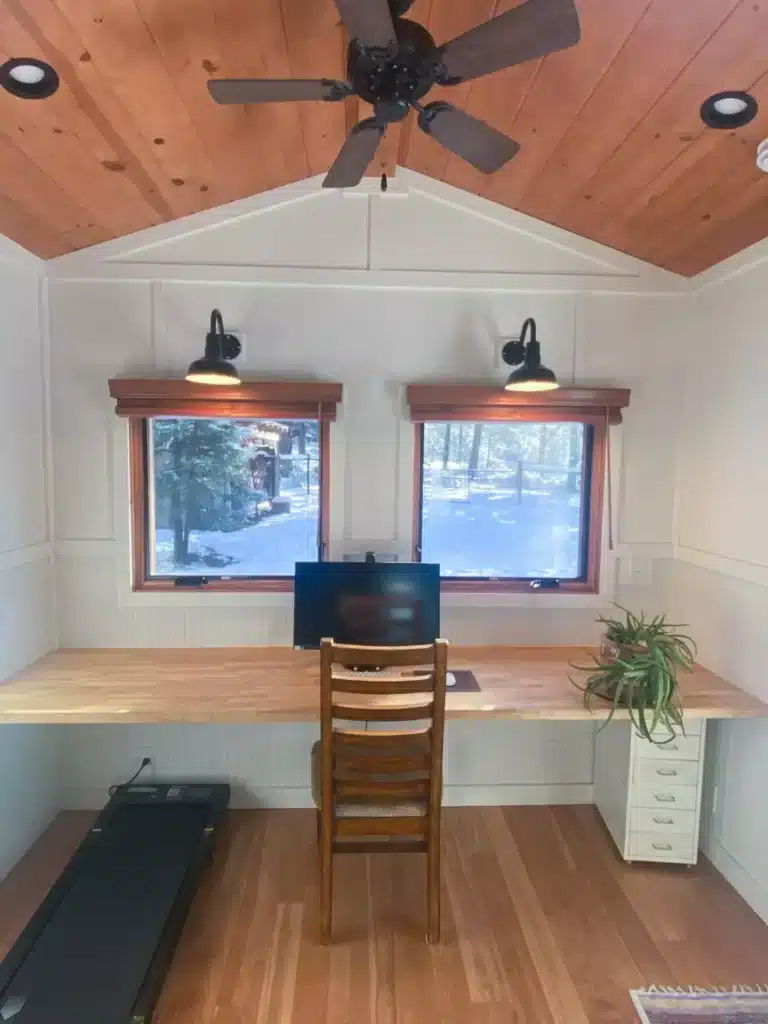
The larger workspace is accessible through a single door and includes a work desk, bookshelves, a small wood-burning heater, and a compact air conditioning unit to regulate the indoor climate. It also features a queen-size Murphy bed that folds into the wall, allowing for rest or overnight stays after long work sessions without needing to return to the main house.
The Smaller Workspace
The smaller workspace features double glass doors and mirrors most of the practical arrangements found in the larger space, including a desk, shelves, a small stove, and climate control. The sleeping option has been replaced with a more compact design, with the possibility of adding a treadmill for those who wish to stay active while working.
Convenience and Usability
Since neither unit includes bathrooms, this setup is suitable for use near a home or existing building that provides essential facilities, making it a practical option for those who need a mobile workspace without sacrificing basic comforts. More examples of adaptable spaces can be found in our Projects section.
Energy Independence
The mobile units rely on a solar system composed of multiple roof-mounted panels, supported by batteries for energy storage, allowing the unit to operate entirely off-grid. Some designs also provide the option to connect to the electrical grid when needed, enhancing flexibility and enabling use in a variety of locations and conditions.
Digital Connectivity in Remote Locations
Internet connectivity is a key element in modern work environments. The mobile units offer high-speed wireless solutions, enabling users to work remotely even in locations where traditional broadband services are unavailable.
Flexibility and Mobility
This type of mobile office introduces a new concept in workspace design, allowing the unit to be easily relocated and repositioned, so the space can be customized according to the user’s needs without committing to permanent construction. This approach reflects a shift in thinking about functional flexibility and spatial planning in offices, combining autonomy with practical workspace in a single experience.
✦ ArchUp Editorial Insight
The emergence of the Mobile Dual-Workspace unit represents a direct response to the fluctuations of remote labor markets and institutional pushes toward flexible residential distribution, supported by ESG-linked initiatives emphasizing adaptable workspaces. Frictions manifest in the form of transportation compliance limits, energy storage boundaries, and regulatory oversight of modular housing units, imposing constraints on the unit’s size and its internal programmatic layout.
The result is a spatial output that reconciles these pressures by integrating two fully independent workspaces within a retractable framework, accompanied by temporary sleeping arrangements and off-grid energy systems to accommodate population flows without relying on existing infrastructure. The unit’s internal and external layers function as mechanisms to mitigate risks and responsibilities, transforming volatile capital cycles into measurable spatial resolutions, where mobility and energy autonomy become tools for stabilizing occupancy and converting incidental work trends into tangible asset configurations. For further insights, explore our Research and Archive sections.