

Smart Small-Space Design: A Comprehensive Analysis of Spindrift’s Olympic Home

Smart Design for a Tiny Home
Spindrift Homes recently launched a 30-foot tiny home model, and the Olympic model has attracted significant attention due to its ability to efficiently utilize a compact 255-square-foot space. Although the company hasn’t introduced any radically new innovations, the design emphasizes maximizing every inch, making the size of the home less important compared to how the space is utilized.
Maximizing Light and Space
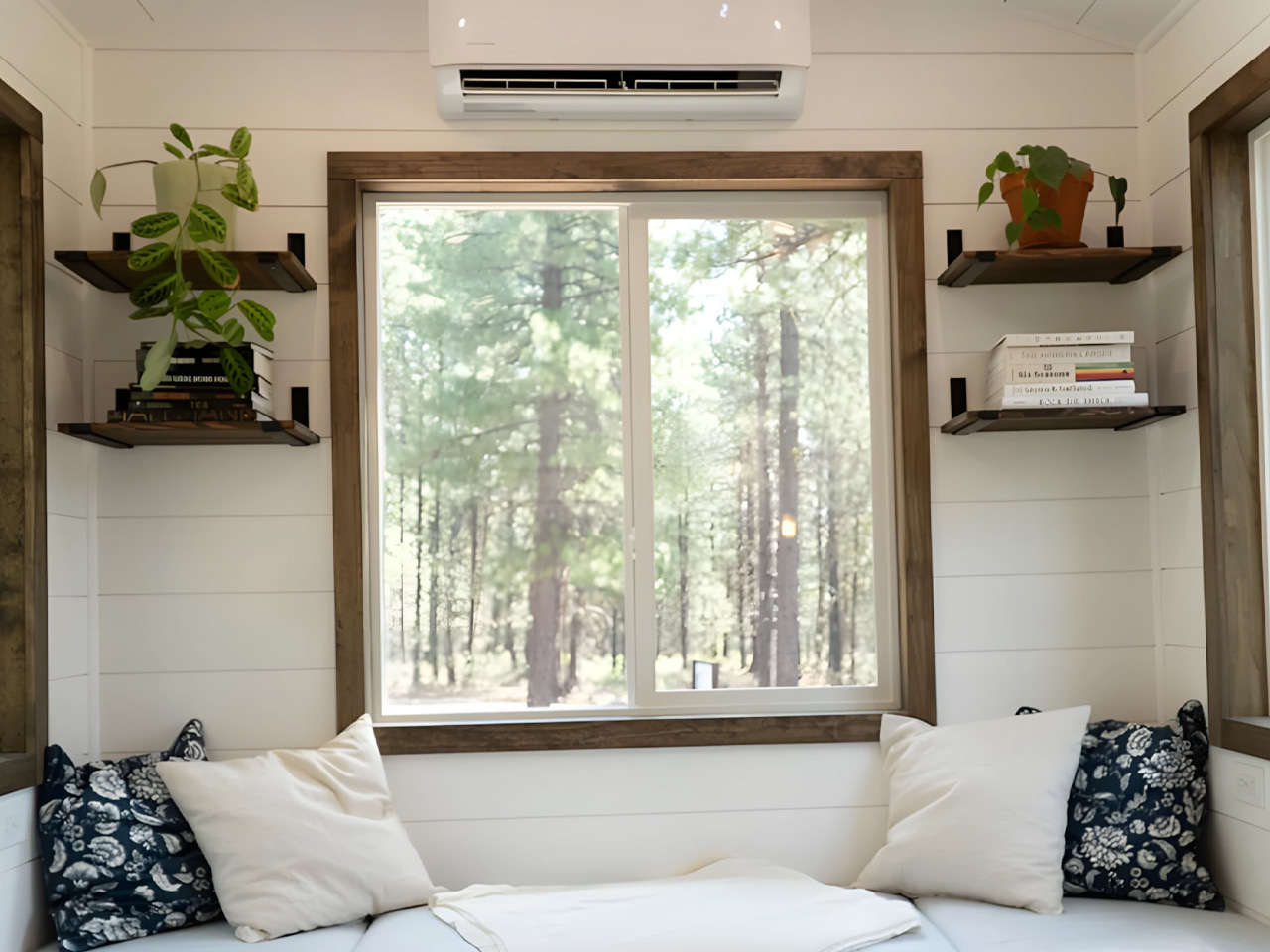
Upon entering the home, visitors immediately notice the abundance of windows, a clever strategy that makes the space appear larger than it actually is. This approach relies on visual trickery to create a sense of openness, which is essential in tiny home design.
Multi-Functional Furniture
The living area is slightly elevated to create storage space underneath, with three long benches that can each be opened to provide additional storage. This approach reflects the principle of utilizing every corner of the home, a common tactic in small-space design to ensure furniture serves multiple functions.
Climate and Sound Control
To enhance the living experience, a ceiling fan and a mini-split air-conditioning system have been integrated to ensure comfort in varying temperatures, while Bluetooth speakers provide a complete audio environment inside the home. This demonstrates the importance of incorporating integrated climate and sound solutions when designing small spaces, as every element impacts overall living quality.

Smart and Functional Kitchen
The kitchen connects directly to the living area and is equipped with serious cooking appliances suitable for daily use. It includes a three-burner gas stove, a full-size oven, and an integrated fridge-freezer. The sink features a rustic design that adds aesthetic charm without feeling like a dollhouse. Even the washer and dryer connections are seamlessly integrated, reflecting careful consideration for maximizing every available space.
Multi-Functional Solutions
The countertop is cleverly designed; a portion can be lifted to become a dining area, adding flexibility without the need for complex design tricks. This adaptability simplifies daily life and highlights the importance of blending beauty and functionality in small spaces.
Smooth Storage
Storage is effortless and uncomplicated, with no need to open large drawers or perform acrobatic maneuvers to access simple items like a coffee cup. This simplicity in design enhances the living experience while saving time and space.
Practical Bathroom
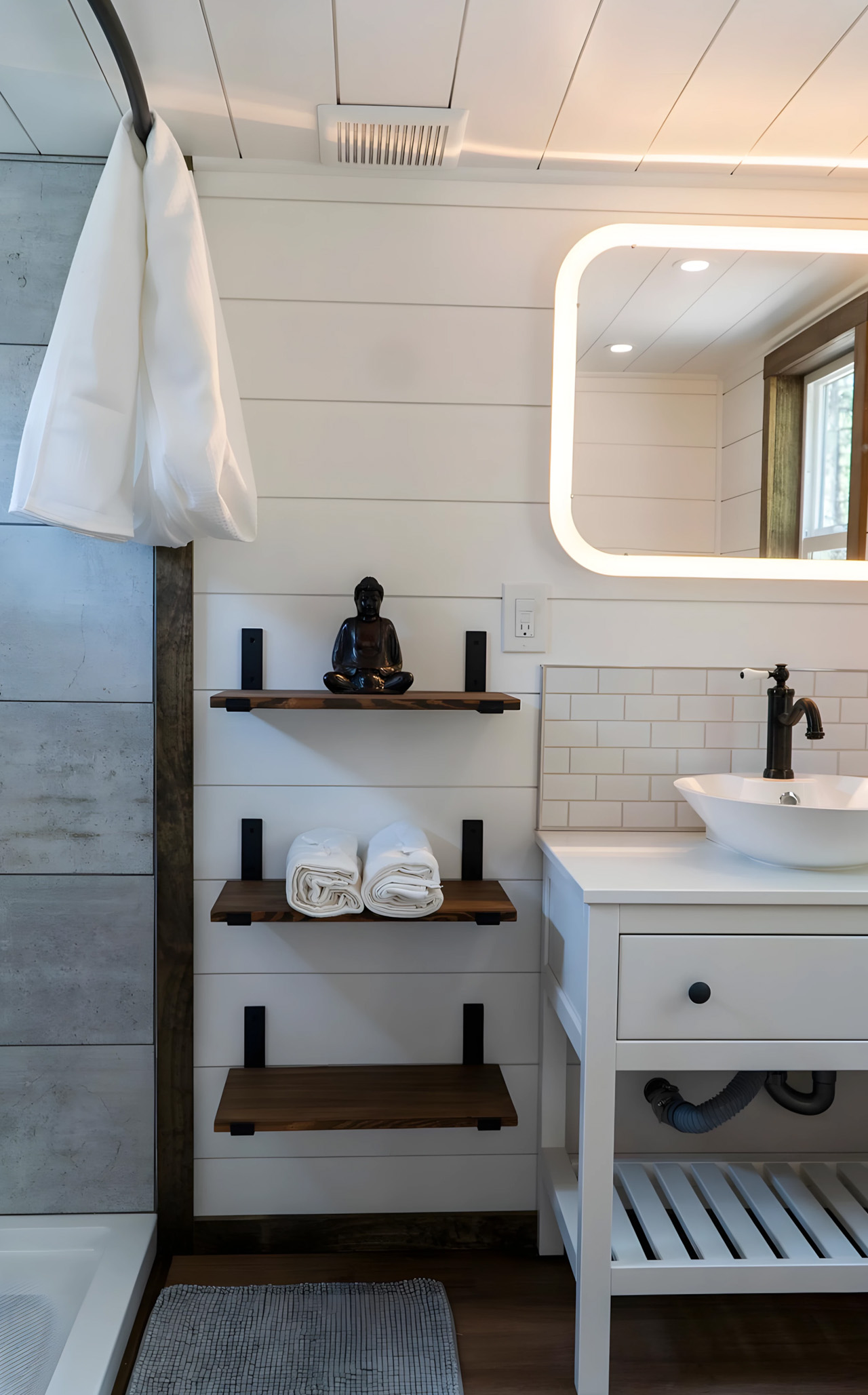
The bathroom, located opposite the living area, efficiently provides essential functions, including a sink, a full shower, and a compost toilet. Everything here is practical and effective, free from any luxurious additions that might feel overwhelming or complicated.
Upper Floor and Master Bedroom
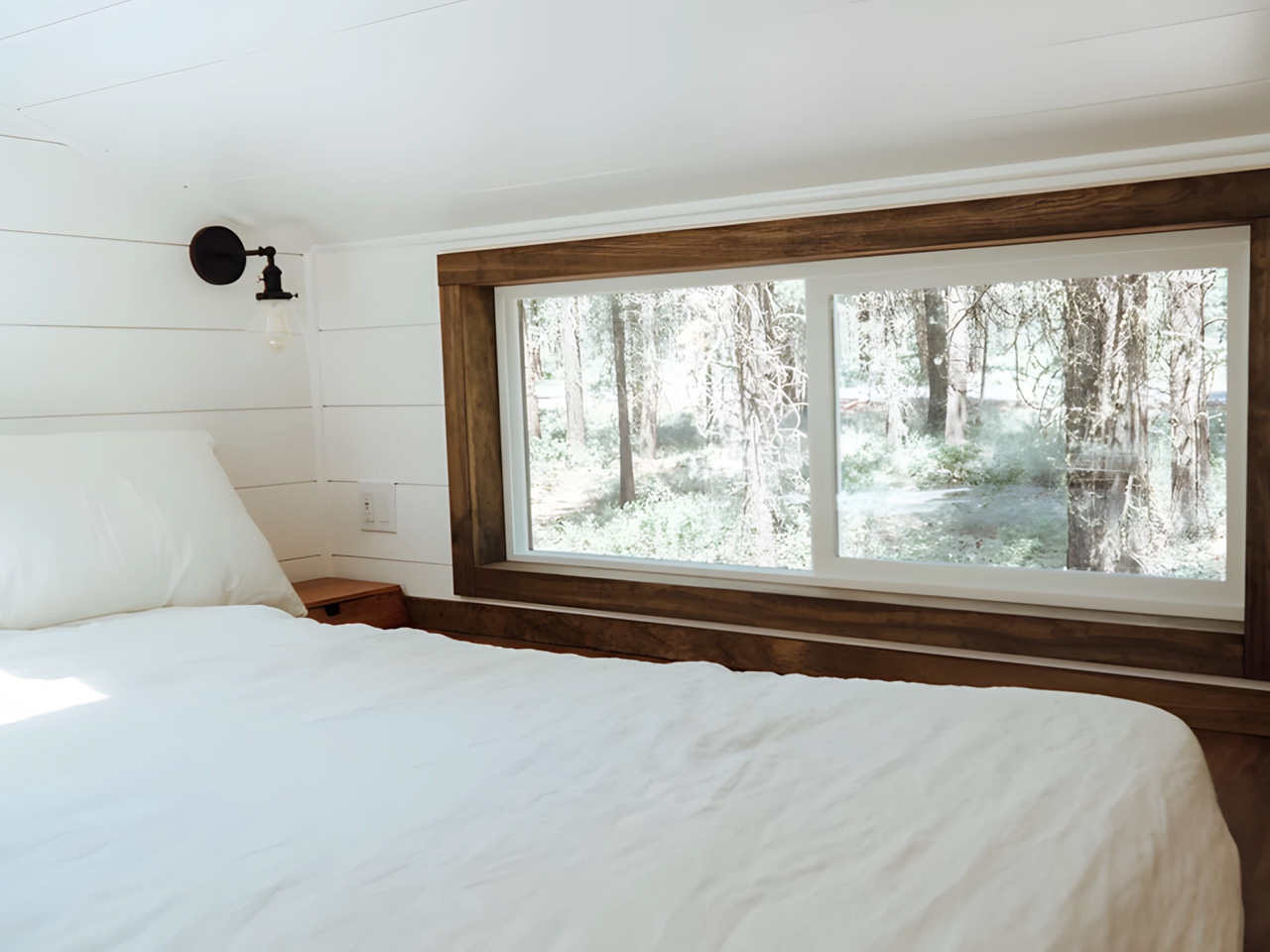
The master bedroom on the upper floor follows a traditional design with low ceilings, featuring a double bed, a skylight, and several side windows to enhance natural lighting. The staircase is also utilized as additional storage, reflecting the principle of maximizing every inch in smart tiny home design.

Design Flexibility
The importance of flexibility in tiny homes is even greater than it might seem at first glance. Spindrift constructs each Olympic home model differently, meaning buyers are not forced to conform to someone else’s idea of perfection. If a larger kitchen or a more spacious bathroom is needed, these requirements can be easily accommodated. This flexibility is essential in tiny home design, where there’s no room to hide mistakes or compromises.
Simplicity and Efficiency
The Olympic model succeeds because it focuses on core functions without attempting to appear overly complex or flashy. There are no design gimmicks, no moments aimed at showing off the exterior for social media, just a small home that functions as efficiently as any traditional house.
Lifestyle Focus
Spindrift recognizes that the experience of living in a tiny home improves when the focus shifts from the size of the space to how life unfolds within it. The concept is simple, but its execution requires precision and a keen sense of maximizing every corner and design element, making this model an exemplar of smart small-space design.

FAQs
1. Is the Olympic tiny home suitable for year-round living?
Yes, the Olympic home is designed to provide complete comfort in all seasons. It comes equipped with a mini-split air-conditioning system and a ceiling fan to maintain a comfortable indoor temperature, whether in the heat of summer or the cold of winter. Additionally, high-quality insulation and climate control features help ensure a stable living environment, making it a practical choice for continuous occupancy without compromising comfort.
2. How is storage utilized in this tiny home?
Storage is one of the key elements of smart design in the Olympic home. For instance, the living area is elevated to create a large storage space underneath for bulky items, and each of the three benches opens to provide additional storage. Furthermore, the kitchen and bathroom feature smart cabinets and shelves, while the staircase leading to the upper room contains extra drawers. Every corner is carefully utilized to enhance efficiency without sacrificing comfort or freedom of movement.
3. Can the Olympic home be customized?
Absolutely. The Olympic home can be adapted to the individual needs of the owner. Whether the goal is to expand the kitchen, enlarge the bathroom, or select specific finishes and appliances, the design team works to meet these requirements. This flexibility ensures that each home is unique and tailored to the owner’s lifestyle and needs, which is critical in small-space design where there is little room for error.


✦ ArchUp Editorial Insight
The Spindrift Olympic home reflects a high level of intelligence in design and the utilization of small spaces, with every corner put to practical use. It integrates storage solutions, multi-functional furniture, and customization flexibility. The home also provides a comfortable living experience through climate and lighting control, demonstrating attention to details that make daily life easier and more organized.
On the other hand, some users may find the 255-square-foot space limiting, and certain design aspects, such as the low ceilings in the master bedroom or the modest kitchen size, may not meet everyone’s expectations. Additionally, relying on a tiny home requires adapting to a specific lifestyle, which may not suit all families or varied uses.
Overall, the model serves as a practical example of balancing functionality and aesthetics in small spaces, while highlighting considerations that may require personal evaluation before fully embracing this style of living.
Prepared by the ArchUp Editorial Team
Don’t miss the chance to explore more from Architectural News in fields like Architecture and Buildings on the ArchUp website.


