

OntheSq by Irenie Studio: A Fragmented Restoration Between Memory and Fantasy

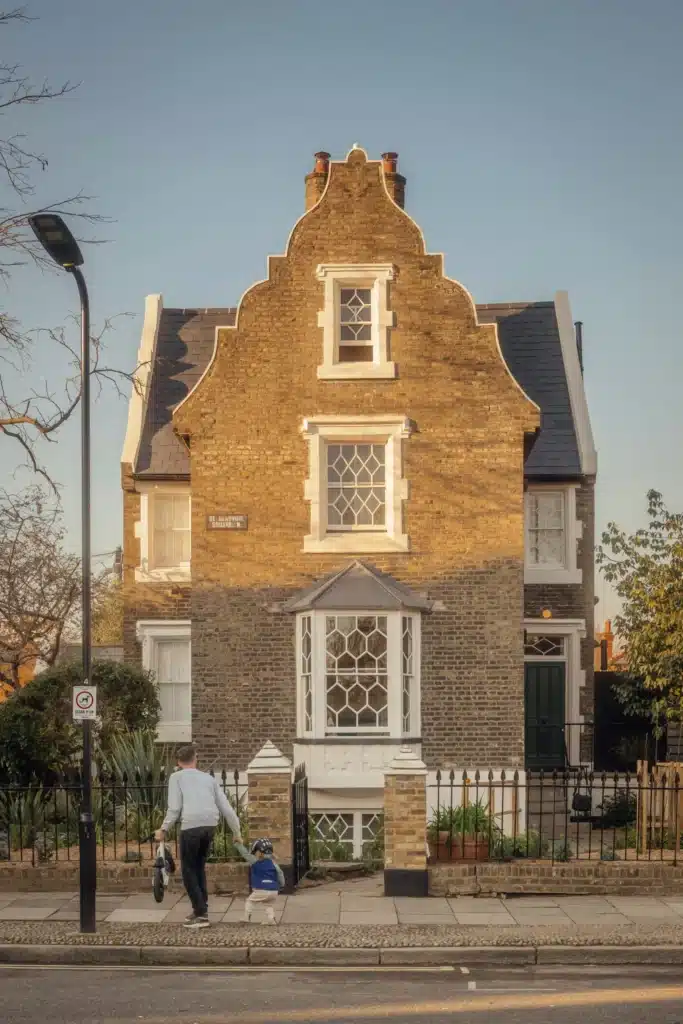
Located in De Beauvoir Square in northeast London, OntheSq is a Grade II-listed 1840s neo-Jacobean townhouse revived by Irenie Studio in collaboration with Studio Dera. Over 18 months, the abandoned structure was filled with curated objects, bespoke furniture, textile compositions, and salvaged materials. The result is not a home that has been redesigned, but rather one that has been scenographically styled — a project where atmosphere dominates architecture, and narrative eclipses spatial clarity.
Follow all new content in the world of “architecture” including projects, trends, and bold ideas through ArchUp.
Architectural Context and Heritage Sensitivity
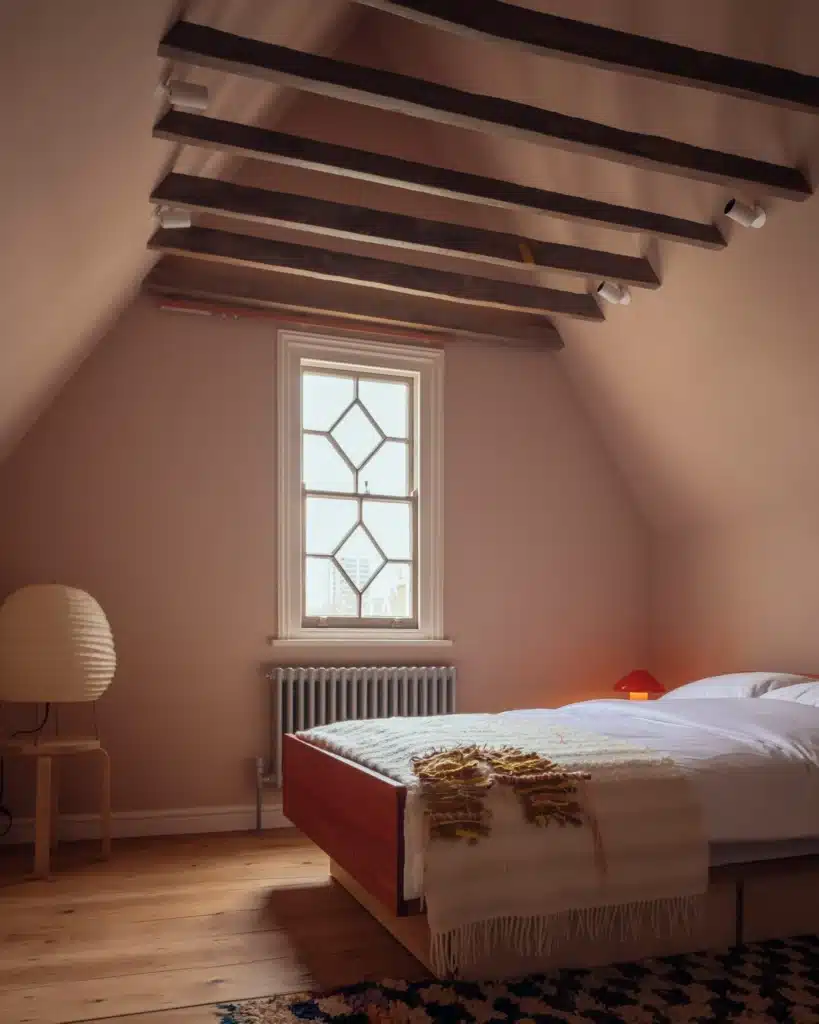
OntheSq sits on a historically significant site, within a Grade II-listed building dating from the 1840s. The neo-Jacobean style of the townhouse brings inherent challenges: a need to respect the original fabric, comply with heritage regulations, and balance historical authenticity with contemporary intervention. The project team’s choice to expose original wooden beams and preserve pine floors acknowledges these challenges and shows respect for the house’s material history.
However, this preservationist approach raises questions about the balance between conservation and creative reinterpretation. The partial retention of original materials combined with strong contemporary interventions—such as the half-sunken kitchen extension—creates a dialogue between past and present, but this dialogue often feels disjointed. The emphasis on exposing aged structural elements can sometimes verge on theatrical, privileging surface textures over spatial coherence.
Spatial Organization and Circulation
The house’s original layout features four storeys with rooms arrayed symmetrically on either side of a central staircase, typical of the period. The renovation retains this formal arrangement, but the addition of a half-sunken extension shifts the functional logic, especially at the rear. While the extension opens the ground floor to a patio and garden, enhancing indoor-outdoor connectivity, its half-sunken nature interrupts the original volumetric hierarchy.
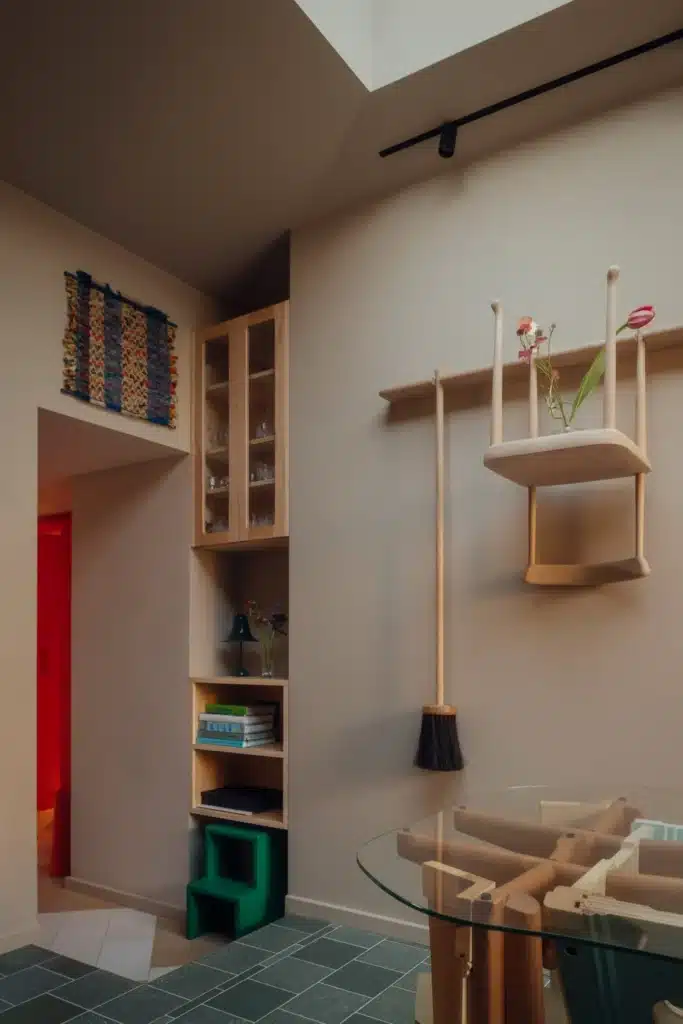
This extension reflects an attempt to negotiate modern living needs—especially light and openness—within a rigid historic shell. Yet, the contrast between the heavy neo-Jacobean massing and the light-filled, playful extension introduces tensions that disrupt the house’s spatial legibility. The kitchen’s scale and playful design cues, inspired by Alice’s Adventures in Wonderland, consciously prioritize whimsy and narrative over architectural clarity or cohesion.
Materiality and Texture: A Playful but Conflicted Palette
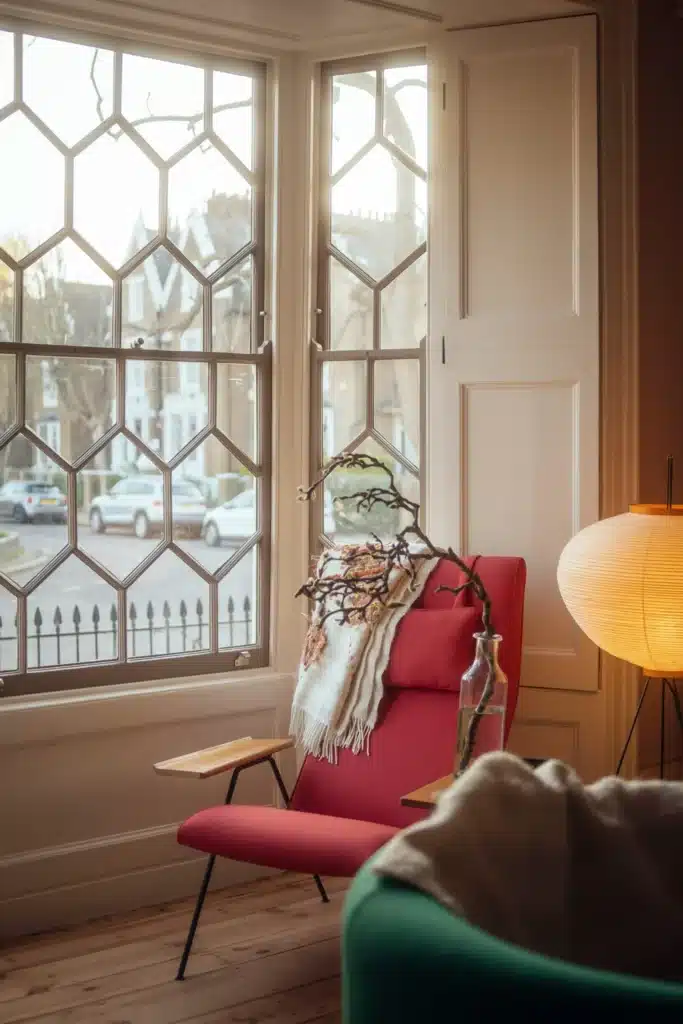
The interior palette is eclectic, merging bold colors, textured textiles, and a mix of craft and designer collaborations. The use of surplus textile samples by Tomoyo Tsurumi for ethereal curtains and shower drapes is a compelling example of sustainable, site-specific design. These light-filtering fabrics create delicate shadows, reinforcing the architect’s statement that the project is “about the windows and the shadows.” This layering of natural light and shadow through textile filters is a sophisticated move that animates the interiors, connecting materiality with changing daylight.
Yet, the overall material strategy risks visual overload. The clash between handcrafted elements (upcycled doors, custom furniture from fallen oak) and industrially produced textures (Kvadrat textile samples) results in a tension between artisanal warmth and curated design. While this may have been intentional—to reflect a collage of time periods and narratives—the eclecticism occasionally lacks restraint, threatening to overwhelm the original architectural language.
Design Choices and Narrative Over Spatial Function
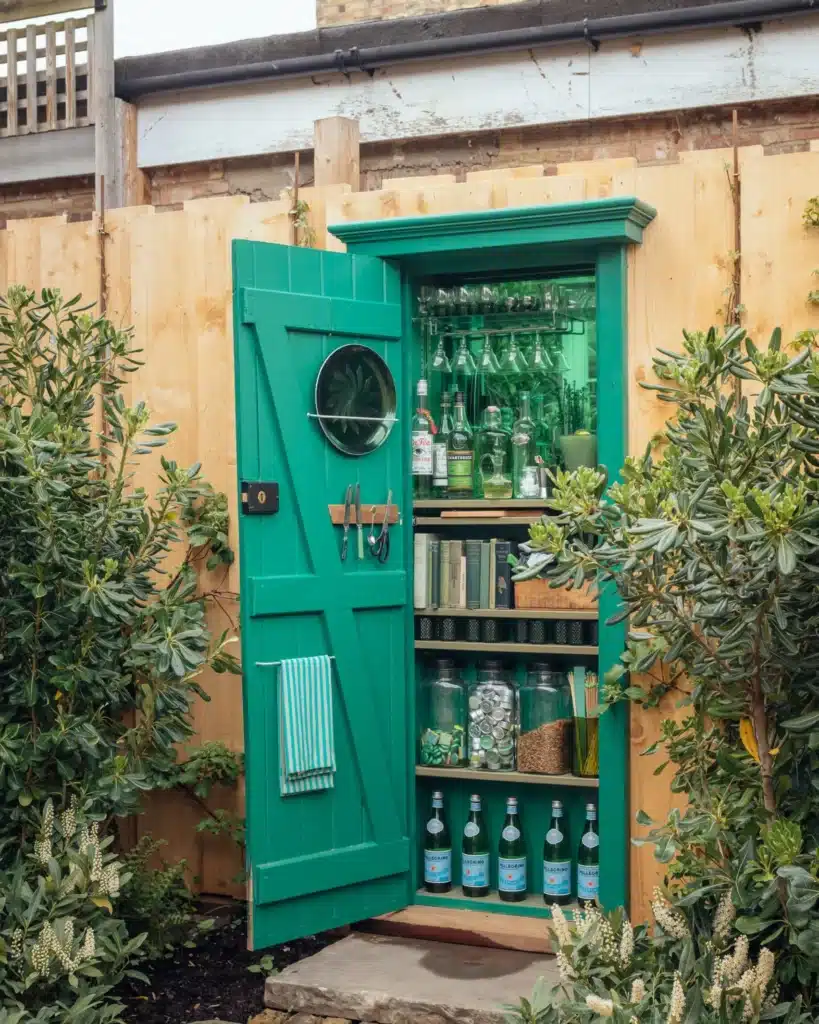
Irenie Studio’s playful interventions—the upside-down oak chair, the tiny keyhole on the kitchen door, the green garden drinks cabinet—are fascinating for their theatricality and evoke curiosity. These gestures contribute to an experiential narrative, rooted in childhood fantasy and literary references, particularly Lewis Carroll’s work.
However, these details prioritize story over functionality. The keyhole, for example, invites interaction but may hinder everyday use. The upside-down chair, while visually striking, becomes a sculptural object rather than a functional seat. These decisions reveal a prioritization of concept and ambiance at the expense of practical architectural concerns such as usability, ergonomics, and circulation.
More on ArchUp:
Lighting and Windows: The Heart of the Project
Central to OntheSq’s identity are its oriel windows, which serve as a motif and structural feature that anchors the design. The windows create a complex play of natural light and shadow, further enriched by the textile curtains. This focus on fenestration acknowledges the historical character of the house while allowing for a modern reinterpretation of light as a dynamic material.
This is perhaps the strongest architectural aspect of the renovation—using existing elements not just as heritage artifacts but as active contributors to spatial experience. It demonstrates an understanding of architecture beyond surfaces, focusing on how light and shadow sculpt perception and atmosphere.
Final Critical Thoughts
OntheSq is an intriguing experiment in adaptive reuse where the architect-designer seeks to create a poetic narrative overlaying the historic fabric. While the project excels in material storytelling and atmospheric manipulation, it sometimes sacrifices architectural coherence and spatial functionality in favor of theatricality and eclecticism.
The project challenges traditional conservation by layering bold contemporary art and craft within a heritage shell, but this layering occasionally produces tension rather than harmony. The success of OntheSq ultimately depends on whether one values narrative richness and sensory experience over architectural rigor and functional clarity.
Photos: Jim Stephenson


