Opening of an exhibition looking at the history of volcanic cave systems in Kenya

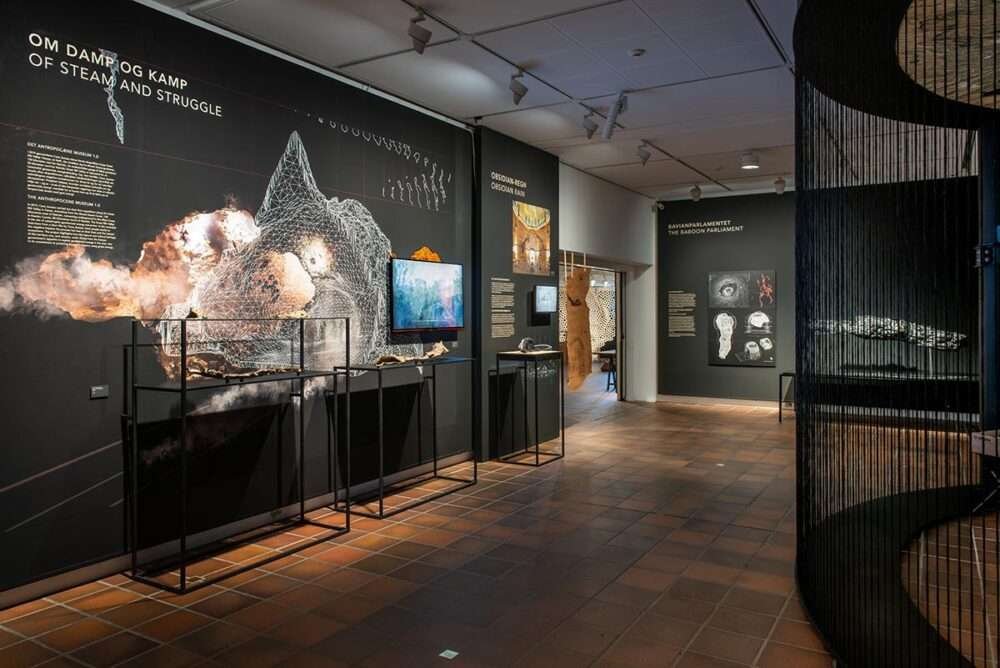
Kenyan architectural studio cave_bureau has opened an exhibition examining the history of Kenya’s volcanic cave systems.
which looks at the origins of structures and plays an important role in decolonization and carbon removal.
Titled The Museum of the Anthropocene, the show is currently on display
at the Louisiana Museum of Modern Art from June 29 to November 26, 2023 in Denmark.
The exhibition takes visitors on an extensive exploration of the history of Kenyan volcanic caves.
Focusing on how the heritage and relics of the past can drive new proposals
and projects and drive sustainable solutions for the future of humanity.
The cave_bureau in Nairobi is led by two architects, Kabage Karanja and Stella Mutegi.
Their research is called an “inverted future” where the history of human existence and knowledge can lead to sustainable solutions for the future.
They described their approach as “only by delving into the past and learning about it,
can they find sustainable solutions for the future.”
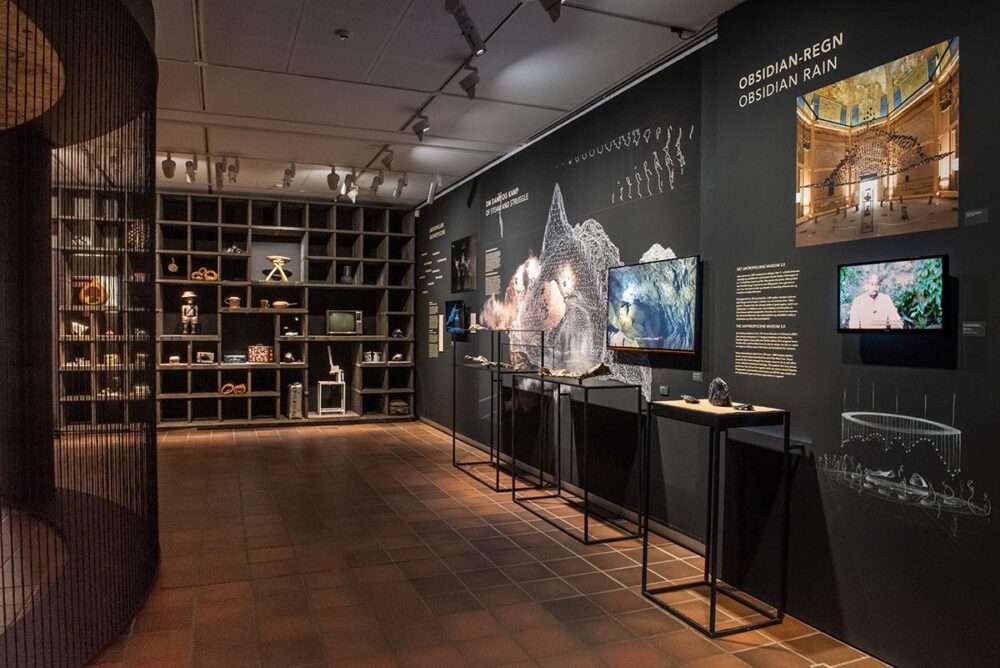
The Museum of the Anthropocene exhibition contains installations, films,
and proposals for architectural interventions in the landscape.
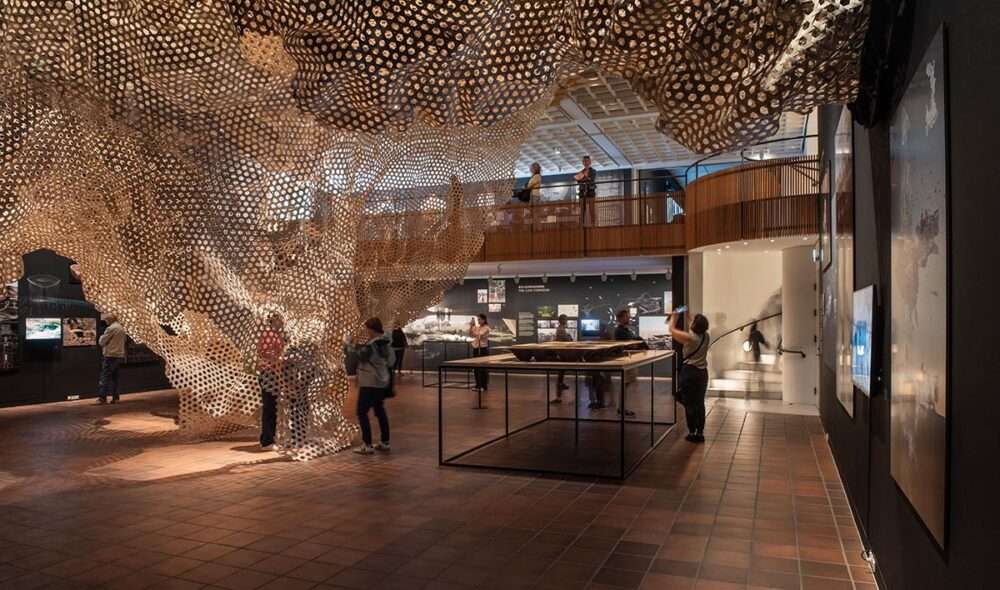
One of the main elements of the exhibition is the single installation that has been 3D printed as a cave architecture.
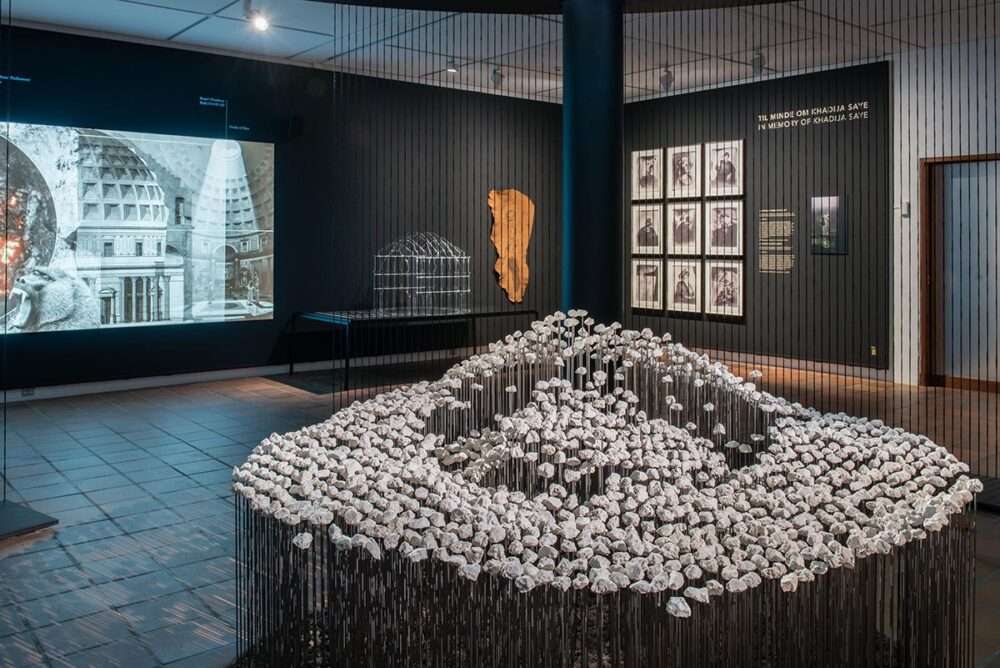
An exhibit looking at the history of volcanic cave systems
cave_bureau builds their work on the millions of years old volcanic caves around Nairobi,
which contain important testimonies of Kenya’s history.
This was where the first humans lived, while – during the colonial era –
East African slaves and freedom fighters passed through these subterranean caverns.
In other words, it comprises vital milestones in the planet’s progression into the Anthropocene – the era when humankind’s impact on nature is now very visible.”
The exhibition also looks at how the area around the caves can be used as a source for geothermal energy extraction –
Which have a critical role in the green transition and can have devastating consequences for nature, animals and humans.
According to cave_bureau who are indigenous to Kenya,
The destruction of their homes and their coexistence with nature due to the extraction of geothermal energy.
The Green Revolution legitimizes its positive global narrative.
This makes the struggle for indigenous culture difficult,
even though these groups may be the people who live most sustainably and consume the least amount of carbon dioxide.
In collaboration with indigenous peoples, anthropologists and geologists,
and in their films and architectural projects,
cave_bureau “seeks to reveal the inequality that inextricably accompanies the green energy transition”.
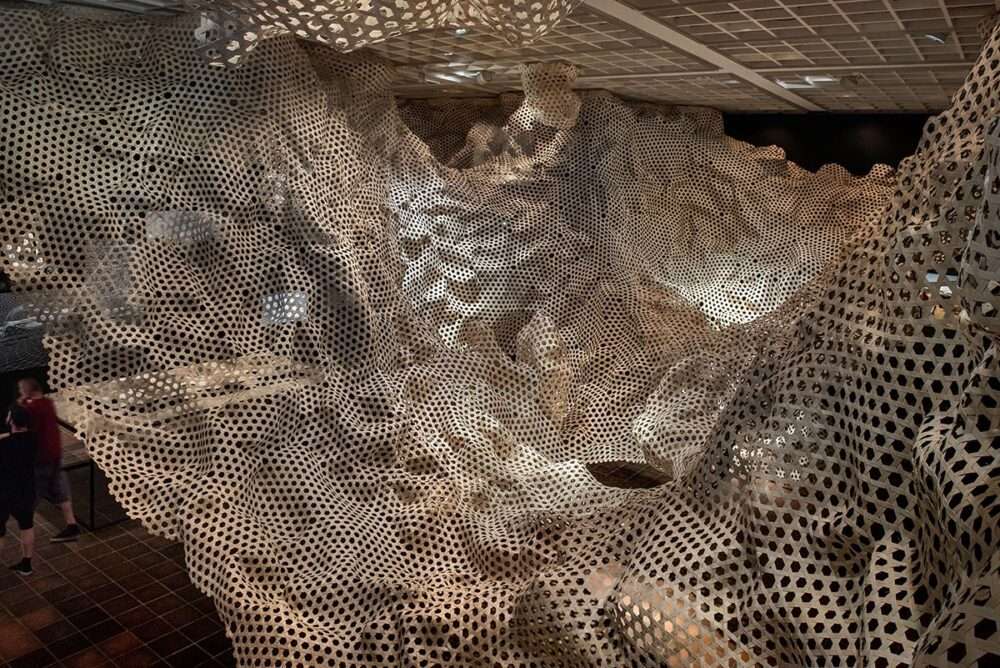
All of their projects, under the title Museum of the Anthropocene,
are also an attempt to articulate the foundation upon which their practice as young African architects should be based.
To avoid a repeat of history’s oppression of African people, we need to hear their voices
as we build the towns, cities and communities of tomorrow.