

Painted Cottages of Ukraine: A Feminine Memory Etched in Walls

The Legacy of Painted Cottages in Rural Ukraine
Across the rural villages scattered throughout Ukraine, glimpses of an ancient tradition that spans centuries can still be found: cottages hand-decorated with vibrant folk paintings.
The Role of Women in Preserving This Art
Often, the task of this artistic work fell to the lady of the house. She would adorn the doors, windows, and thresholds with colorful wreaths of birds, flowers, and branches. According to popular beliefs, these paintings aimed to ward off evil spirits and bring prosperity and health to the household.
A Continuing Threat to the Memory of Folk Art
These folk murals have not been spared from the ravages of time and the ongoing war between Russia and Ukraine. Harsh conditions have led to the disappearance of many landmarks of this unique art. Nevertheless, some individual initiatives have sought to document and revive it through contemporary methods.
Victoria Yakusha’s Initiative to Revive the Heritage
Among these efforts stands the initiative of Ukrainian artist Victoria Yakusha, who worked to honor this legacy by reimagining it as hand-hammered metal panels. She named her collection Drevo — meaning “The Tree” — as a symbol of continuity and deep roots in folk culture.
Inspiration from the Memory of Grandmothers
Yakusha explains that women across generations kept this tradition alive by decorating the interiors and exteriors of houses with paintings that reflect the strength and vitality of women — a spirit she sought to revive anew.
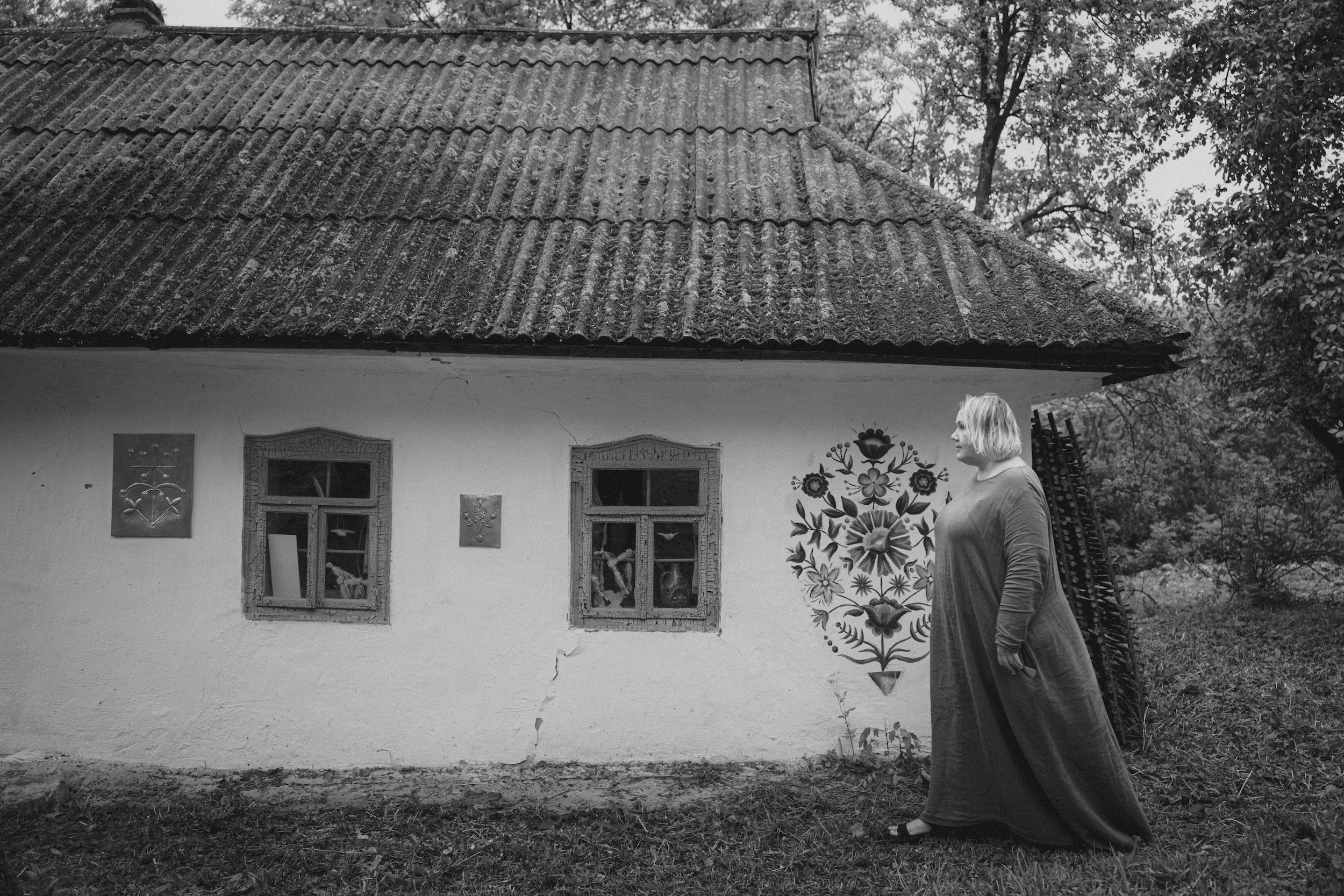
Tracing the Roots in Podillia
Yakusha focused her research on the historic homes of the Podillia region in southeastern Ukraine, an area whose roots extend back to the 14th century, making it a rich source for understanding this ancient tradition.
Challenges to the Survival of Original Paintings
Because the thatched cottages were constructed from clay, most of the original paintings did not survive the effects of erosion. As a result, Yakusha and her team had to rely on written sources, images in books, and even a single rural house converted into a museum to preserve what remained of this memory.
The Tree of Life as a Visual Symbol
During this research, Yakusha was drawn to folk paintings depicting the “Tree of Life” (Drevo Zhyttia in Ukrainian). She adopted this symbol as a visual thread to unify the project and revive its symbolic message.
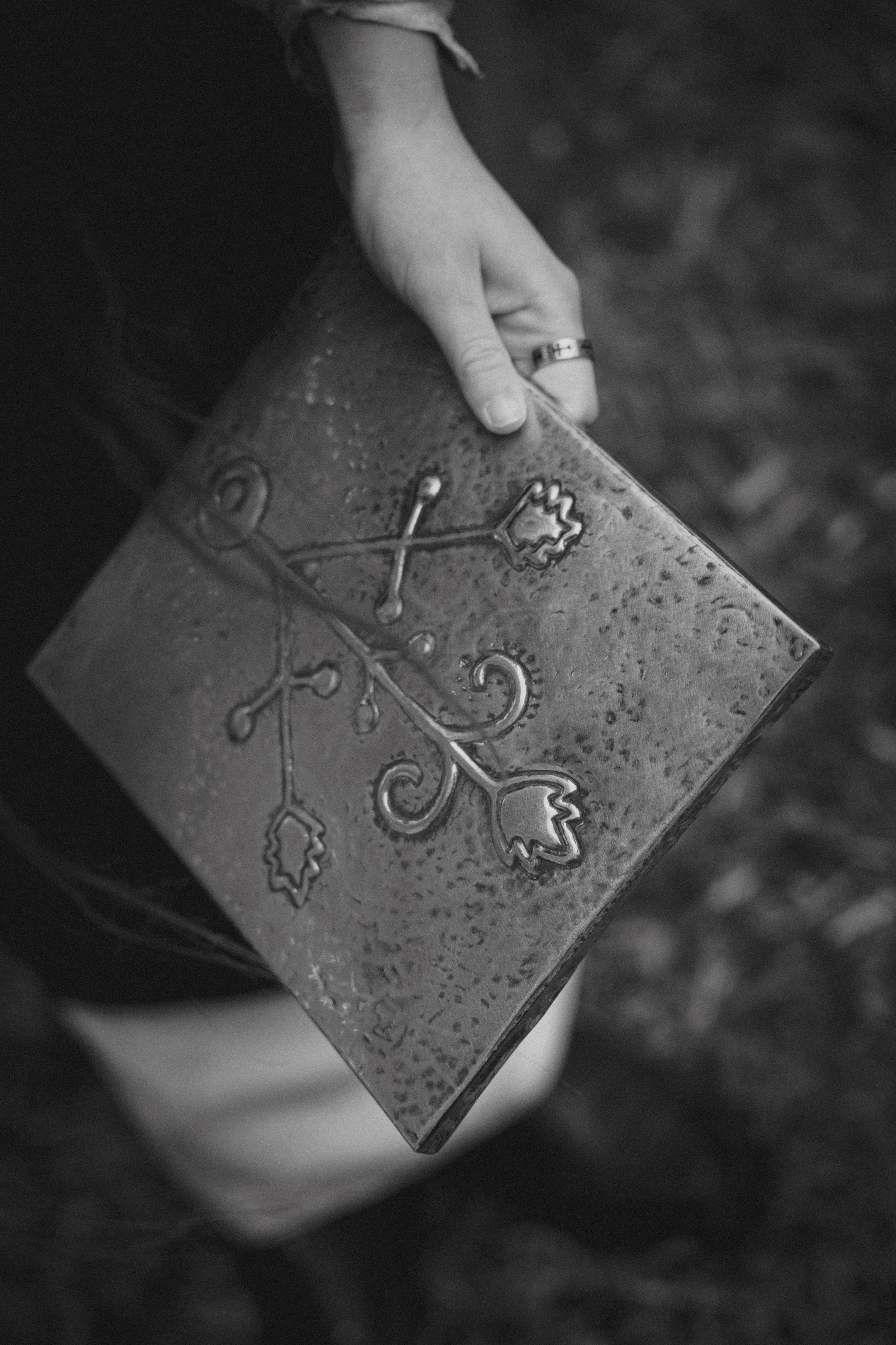
Steel as a Symbol of Resilience
Yakusha saw the use of steel, a new material in her work, as a means to express the strength of Ukrainian women and the enduring power of folk culture despite challenges. Through this choice, she aimed to highlight the concept of intergenerational connection and the passing of knowledge from mother to daughter, as she emphasizes in her statements.
Challenges of Working in Wartime
However, the circumstances were far from easy. The ongoing war resulted in a significant shortage of skilled metalworkers, as most had been drafted. Consequently, Yakusha’s team faced real difficulties in producing the metal panels that embody this heritage. Nevertheless, they eventually found someone able to assist after completing his military service, allowing the project to stand as a testament to determination amid harsh conditions.
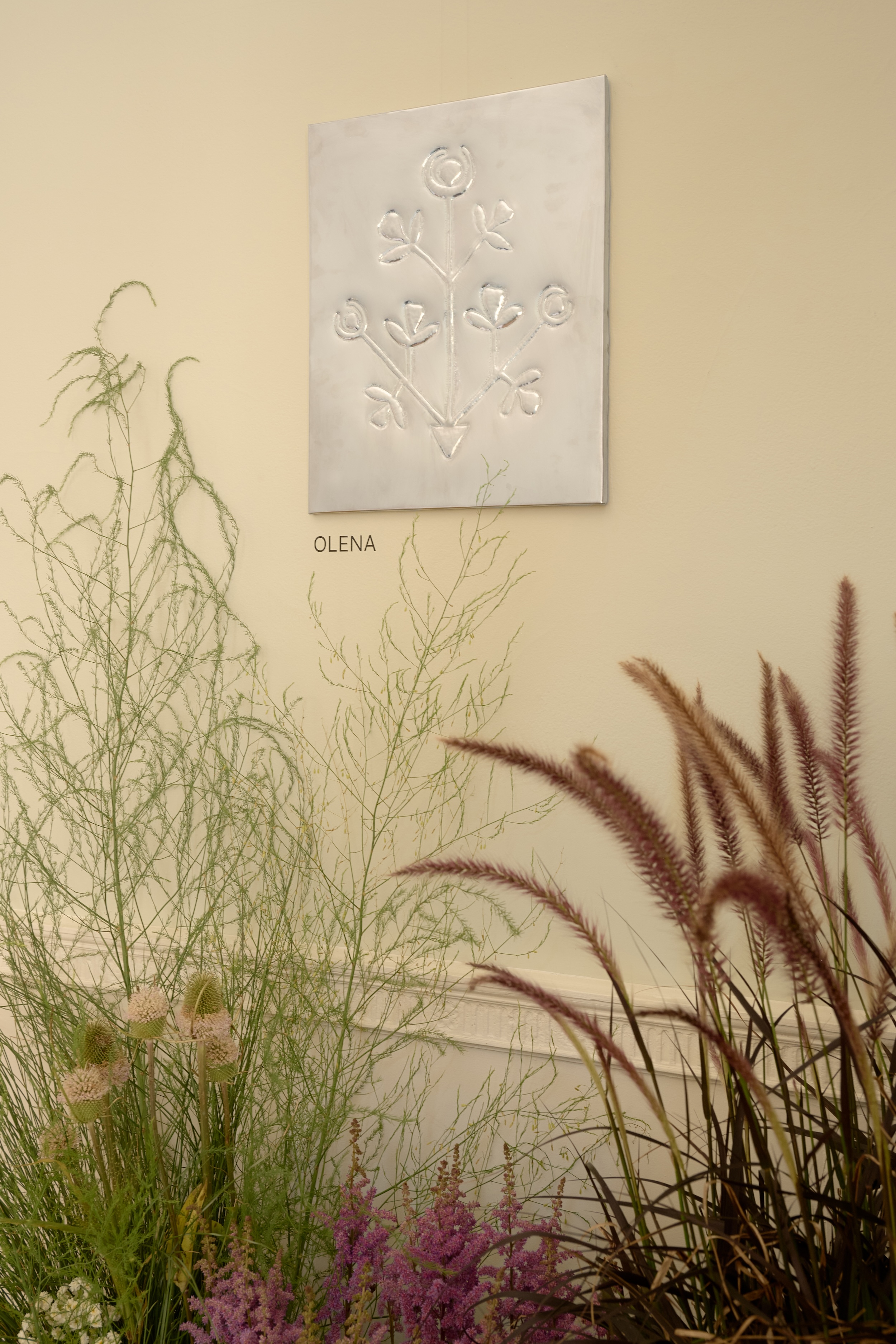
Steel Panels: A Living Memory of Folk Art
Yakusha’s efforts resulted in the creation of gleaming steel panels, varying in size from small pieces no larger than a book to larger ones, all bearing simple engravings of flowers, birds, and leaves.
Women’s Names from the Pages of History
Each panel tells its own story, carrying female names derived from historical record books, honoring the women who carried this folk art from generation to generation. These panels can be displayed individually or grouped together, resembling glowing icons adorning walls with their silent presence.
Evoking the Spirit of the Past in a Contemporary Context
Although the project was exhibited as part of an art installation in New York, its essence remains deeply connected to the memory of rural Ukrainian homes. Amid wildflowers and within the halls of the Ukrainian Institute, these works stand as a reminder of threatened beauty and a spirit that has been awakened anew. As Yakusha says of the folk painters: “They put their souls into these houses.”
✦ ArchUp Editorial Insight
What makes this project truly remarkable is that it does not settle for static documentation. Instead, it evokes collective folk memory within a contemporary framework that can travel seamlessly between rural villages and global exhibitions alike. Although the project’s reach remains limited due to the circumstances of war, it reaffirms that folk art is not confined to the past but can be continually reshaped.
In the end, the Tree of Life panels stand as an invitation to read history beyond the pages of books — through simple symbols engraved on metal instead of clay. The grandmothers’ paintings have not vanished entirely; rather, their spirit has been revived thanks to those who insisted that Ukraine’s folk houses keep their stories alive, even if their walls have changed.
Explore the Latest Architecture Exhibitions & Conferences
ArchUp offers daily updates on top global exhibitions, conferences, and professional art and design forums.
Follow key competitions, check results, and stay informed through the latest news worldwide.
ArchUp is your encyclopedic hub for discovering events and design-driven opportunities across the globe.


