Persian Architecture: The Iwan and Courtyard Across Samarkand and Yazd

Introduction
Persian architecture has long been celebrated for its ability to blend aesthetic elegance with cultural and environmental consciousness. Two key elements that define this architectural language are the iwan—a semi-open vaulted space—and the interior courtyard, which forms the heart of the traditional Persian home. These features are beautifully embodied in the cities of Samarkand and Yazd, each offering a distinct interpretation shaped by climate, culture, and function.
The Iwan: Architectural Grandeur with Purpose
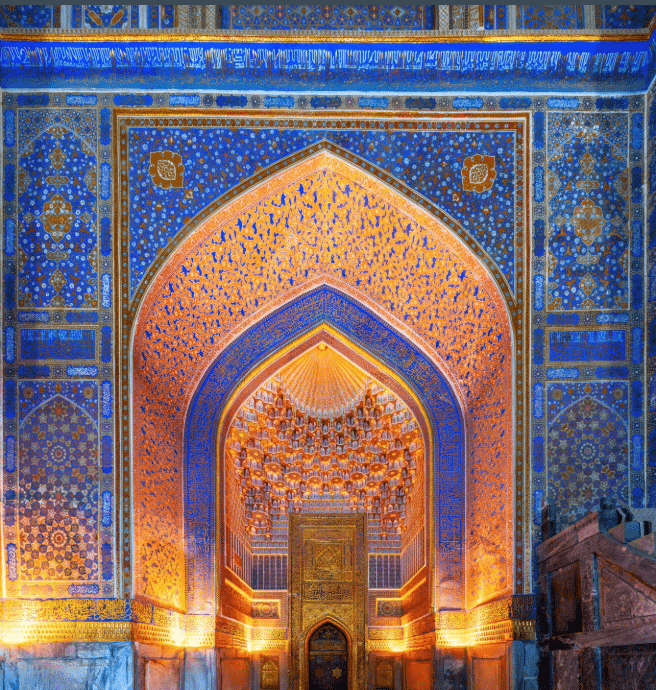
In Samarkand, the iwan became a symbol of power and spirituality. Towering structures with intricate tilework and calligraphy defined religious schools and mosques, turning the iwan into a visual focal point that commanded attention and reverence.
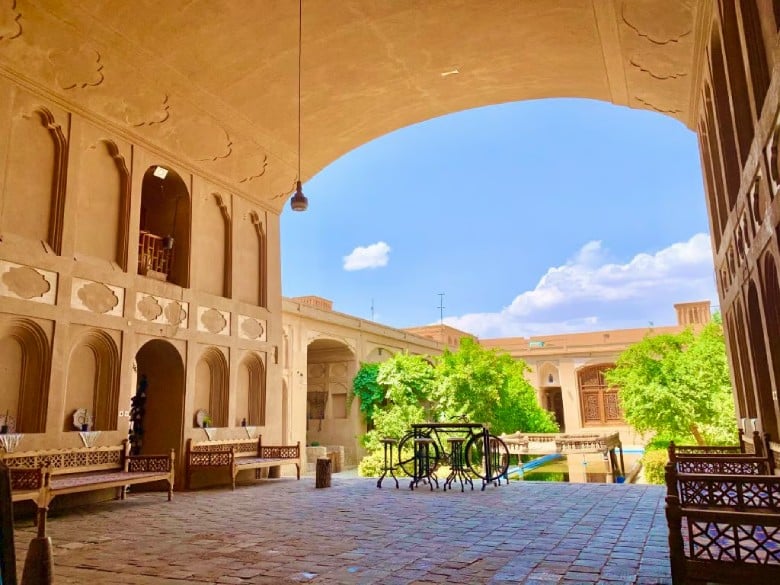
In contrast, Yazd embraced a more intimate and practical version of the iwan. Often used as a transitional space between the outdoors and private living areas, it provided shade and privacy—essentials in a conservative society shaped by desert life.
The Courtyard: A Living, Breathing Space
No traditional Persian home is complete without its central courtyard. In Yazd, the courtyard is a climatic necessity. Surrounded by high walls and cooled by shade, trees, and small water basins, it serves as a natural air conditioning system. The use of windcatchers (badgir) further improves airflow, creating a livable environment even during the intense desert heat.
Meanwhile, in Samarkand, courtyards were designed with social gatherings and visual beauty in mind. Lavishly decorated with colored tiles and arched walkways, these spaces doubled as reception areas and family gathering spots, reflecting status and hospitality.
Comparative Table: Samarkand vs. Yazd
| Element | Samarkand | Yazd |
|---|---|---|
| Overall Style | Grand, symbolic, richly decorated | Simple, functional, climate-adapted |
| Iwan | Dominant, ornate, in public architecture | Modest, integrated into homes |
| Interior Courtyard | Social, decorative, often semi-public | Private, climate-responsive |
| Building Materials | Glazed tiles, decorative brickwork | Adobe, plaster, local wood |
| Architectural Focus | Monumentality and symbolism | Comfort, privacy, sustainability |
Architectural Reflection
Samarkand and Yazd showcase two divergent yet complementary paths in Persian architectural expression. While Samarkand’s structures aimed to impress with grandeur and visual richness, Yazd focused on climate adaptation and modest elegance. These choices reveal the depth of Persian architectural wisdom—design that listens to its surroundings and responds to the needs of its people.
The iwan and courtyard remain central to both cities, yet they fulfill distinct roles shaped by geography and society. This versatility is what makes Persian architecture enduring and relevant across different eras and places.
✦ ArchUp Editorial Insight
This article examines the architectural dialogue between the iwan and courtyard in the Persian contexts of Samarkand and Yazd. Visually, it captures the grandeur of Timurid iwans with their vibrant mosaics and the climate-responsive intimacy of Yazdi courtyards crafted in mudbrick and shaded by traditional windcatchers. While the visual and historical contrast is compelling, the piece leans toward descriptive storytelling rather than probing the architectural evolution or socio-spatial dynamics behind these forms. Could a deeper analysis of cultural adaptation and regional materiality have elevated the insight? Still, the article succeeds in highlighting how timeless design strategies adapt across geography and climate.
Conclusion
Architecture is more than the materials used—it’s a reflection of human experience, climate, and culture. Through the iwan and courtyard, Persian builders achieved a balance between function and beauty, public symbolism and private serenity. Whether you’re walking through a grand madrasa in Samarkand or sitting quietly in a Yazdi courtyard, you’re engaging with a tradition that respects space, nature, and time.
Explore the Latest Architecture Exhibitions & Conferences
ArchUp offers daily updates on top global architectural exhibitions, design conferences, and professional art and design forums.
Follow key architecture competitions, check official results, and stay informed through the latest architectural news worldwide.
ArchUp is your encyclopedic hub for discovering events and design-driven opportunities across the globe.