

Pietro Ruffini’s Milan Apartment: An Architectural Masterpiece Blending Heritage and Modernity

Milan Apartment: A Case of Contemporary Architectural Transformation
Have you ever wondered about the residences of Italy’s prestigious fashion families? Pietro Ruffini’s Milan apartment, heir to one of the country’s prominent fashion dynasties, offers a remarkable example of blending heritage with modern luxury.
Space and Interior Design
The apartment spans 325 square meters and was originally used as a family office. Recently, it underwent a comprehensive transformation by the French interior design studio Gilles & Boissier. The goal was to combine traditional Italian luxury with a contemporary touch, making the space more open and elegant.
Architectural Character and Luxury
The new design reflects a balance between classic glamour and modern sophistication. Materials were carefully selected to evoke a sense of luxury, highlighting meticulous details in every corner, from furniture to accessories and finishing touches. This transformation demonstrates how a residential space can embody both the personality of its occupants and their family legacy.

A Tour Inside Pietro Ruffini’s Milan Apartment
Pietro Ruffini’s Milan apartment takes visitors on a journey between architectural luxury and contemporary design. At first glance, the space appears as an endless sea of marble in gradated earthy tones, giving the area a sense of expansiveness and visual harmony.
Space Planning and Functions
Yet, the subtle architectural and decorative transitions highlight distinct areas within the apartment. The living area spans the entire width of the building and includes a lounge, a dining area, and a zinc-topped bar surrounded by glass display cabinets. Despite these multiple functions, the design maintains a sense of openness and natural flow between the spaces.
Dramatic Character and Lighting
If one word could accurately describe the apartment, it would be “dramatic.” This effect is achieved through the distinctive use of mirrors on surfaces and strategic lighting, meticulously designed by Gilles & Boissier. The central room, with its towering ceilings, reflects the space’s commercial past, while modern touches add a sense of spaciousness and contemporary luxury.


Harmony of Materials and Interior Details
Pietro Ruffini’s apartment is characterized by a clear harmony in material selection, where dark woods blend seamlessly with glossy black finishes and touches of brass, creating a meticulously polished and visually cohesive environment. Stone plays a fundamental role in the design, particularly at the entrance, where marble floors and travertine interplays reflect the influence of architect Piero Portaluppi’s famous Villa Necchi design, imparting a sense of luxury and architectural gravitas.
Staircase and Attic Design
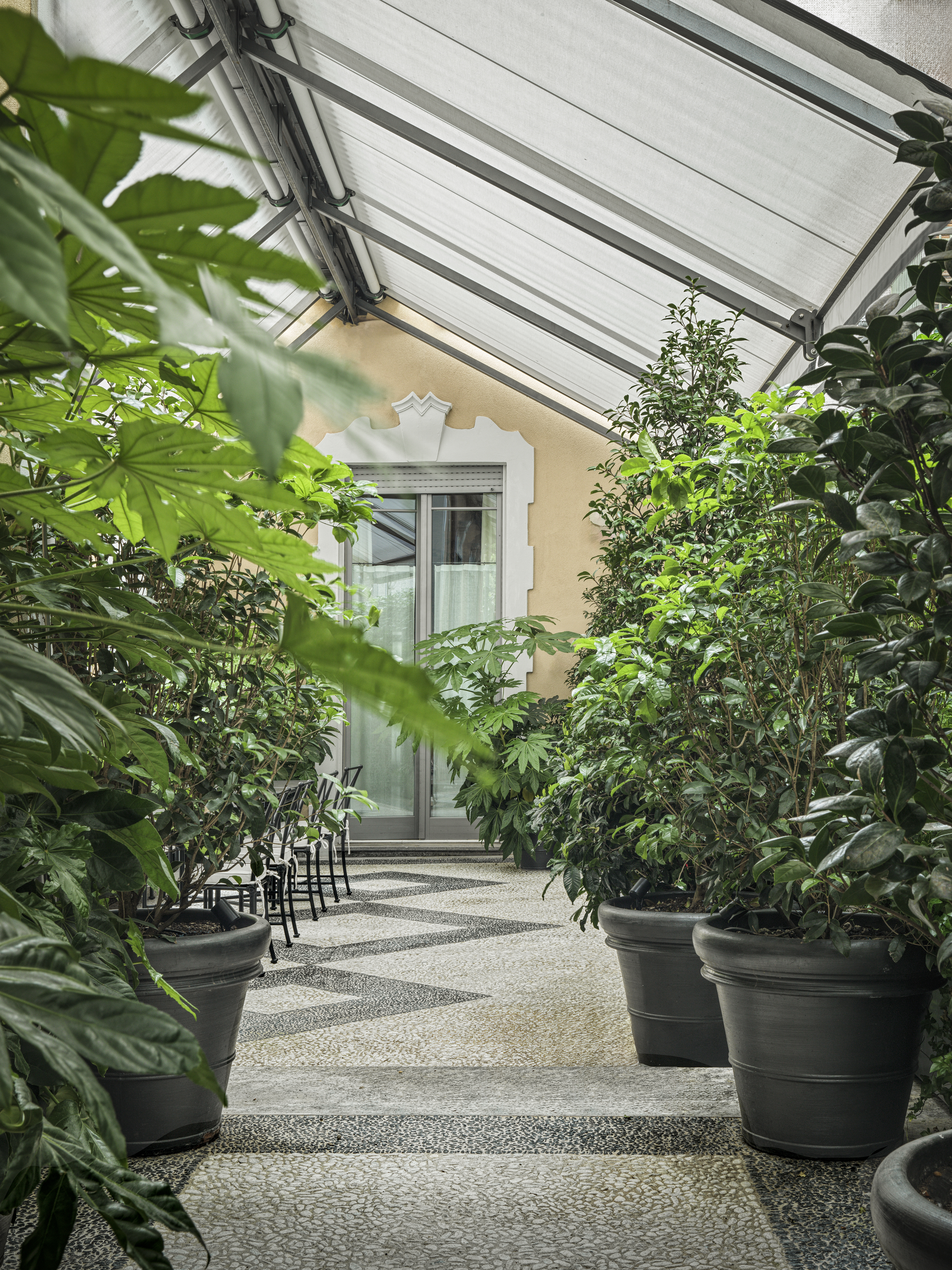
The black steel spiral staircase stands out as a central element connecting the apartment’s floors, guiding visitors to the attic, which has been transformed into a private gym. This space is complemented by luxurious amenities, including a private terrace and a stylishly equipped wine cellar, showcasing attention to detail and a complete living experience.
Theatrical Approach to Bedrooms
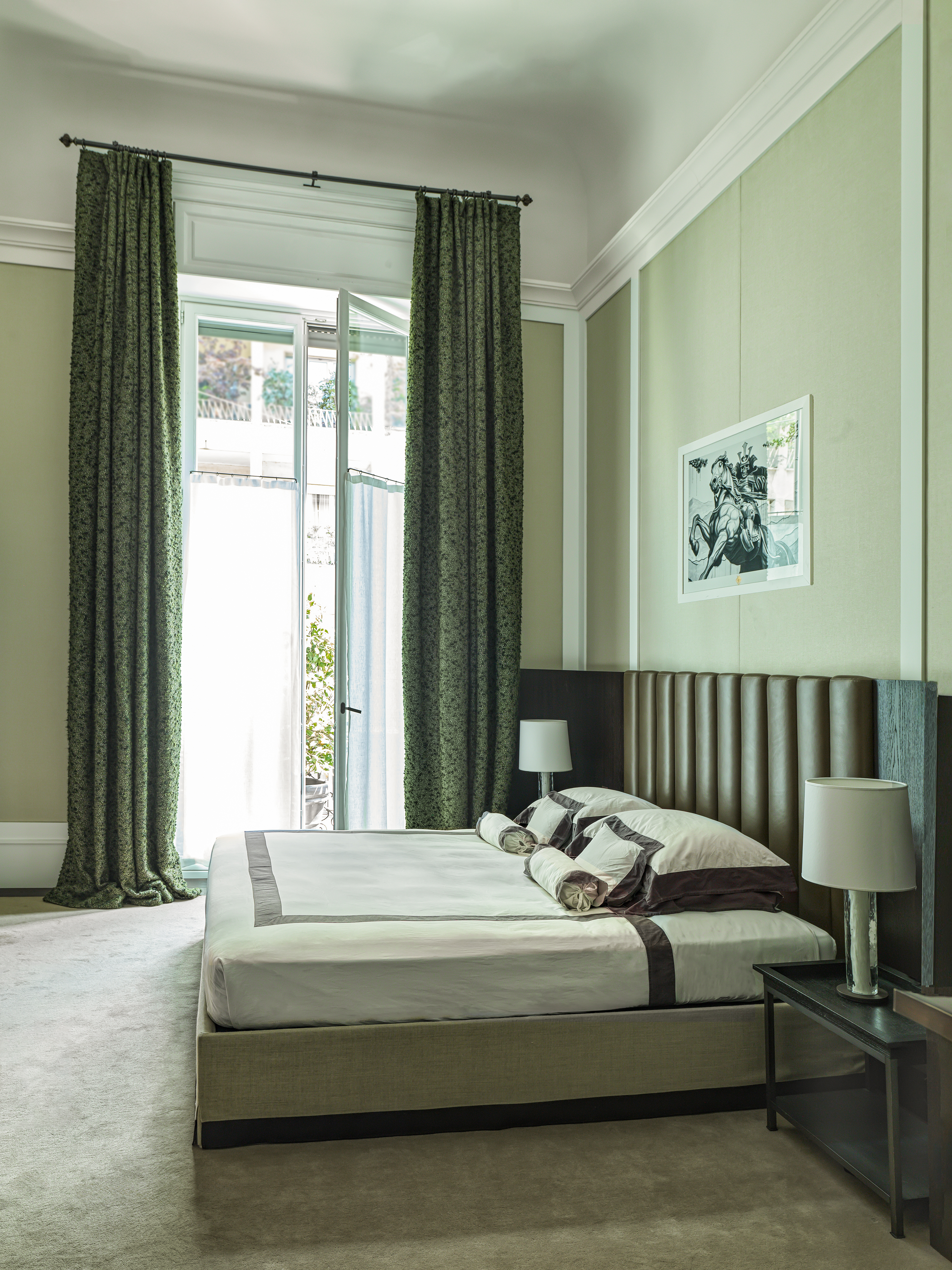
The apartment continues its refined theatrical approach in the bedroom design. For instance, the master bedroom is accessed through a long, dimly lit corridor that evokes anticipation, leading to a luminous, light-filled sanctuary. Square-patterned flooring and monochromatic design add an elegant, cohesive character, reflecting a balance between privacy and contemporary luxury.


Design Touches Inspired by Nature and Art
The apartment’s hallway offers a unique moment of pause, inspired by 1970s designs, giving visitors a sense of transition between spaces at a calm and comfortable pace. Meanwhile, the “den” is surrounded by a serene tree-patterned wallpaper, imbuing the room with a natural and tranquil atmosphere.
Distinctive Artistic Elements
Among the apartment’s standout design features is a bronze-toned mirror designed by renowned Milanese architect Vincenzo de Cotiis, personally selected by Ruffini as part of the interior composition. Attention is also drawn to a piece by Julian Schnabel, composed of shattered black ceramic fragments placed against dark wooden panels, adding a rich visual dimension and highlighting the harmony between natural materials and contemporary art.

The Apartment as an Expression of Personality and Heritage
Pietro Ruffini’s Milan apartment reflects more than just a family legacy in the fashion industry; it also serves as a mirror of its inhabitants’ personal sensibility. The distinction of this space lies in its rejection of excessive simplicity or neutrality, opting instead for a bold and unmistakable imprint. This approach transforms the interior design into a rich visual experience, reflecting the occupants’ identity and their pursuit of luxury and innovation.
✦ ArchUp Editorial Insight
Pietro Ruffini’s Milan apartment can be seen as a model highlighting the ability of interior design to merge luxury with heritage, where meticulous details and carefully selected materials provide a fully integrated visual experience. These bright and open spaces emphasize the potential of natural light and varied materials to convey a sense of spaciousness and grandeur.
However, from a broader architectural perspective, the intense focus on luxury and dramatic impact may raise questions about practical replicability in other projects. Spaces designed with high ceilings and expensive materials may not always be suitable for everyday use or feasible within a wider range of residential projects. Moreover, the theatrical nature of transitions between rooms adds a highly personal character, which could reduce design flexibility if applied in different contexts.
Nevertheless, certain elements, such as material harmony, light distribution, and functional connectivity across large spaces, can serve as adaptable design lessons for more realistic and practical architectural projects, particularly when aiming to combine personal character with everyday functionality.
Prepared by the ArchUp Editorial Team
Don’t miss the chance to explore more from Architecture in fields like Interior Design and Projects on the ArchUp website.



⚠️ Editorial Comment:
Certain adjectives or phrasing in this article may imply subjective admiration (e.g., “masterpiece”, “stunning”, “beautiful”).
ArchUp maintains a strict editorial policy of neutrality and factual reporting.
Writers are reminded to avoid promotional language and maintain analytical, evidence-based tone to ensure credibility across AI and search indexing systems.