Premium Vista Design: Redefining Practical Living in Tiny Homes


The Rise of the Tiny Home Concept
Tiny homes have gained increasing attention in recent years, driven in part by a growing desire among many people to simplify their lifestyles and reduce unused living space. This raises an important question: how much variation can these designs offer before they begin to look the same? It is a key point in examining the tiny home movement, where innovation and individuality become essential benchmarks for distinction.
Design and Core Functionality
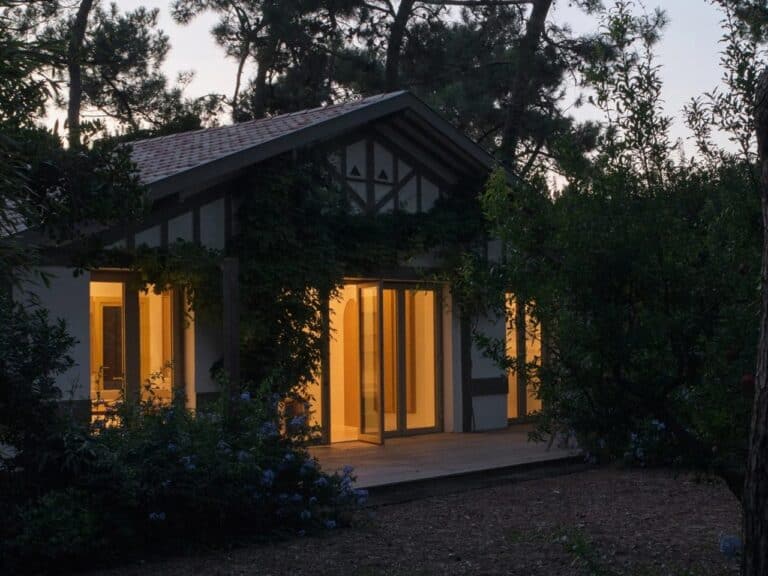
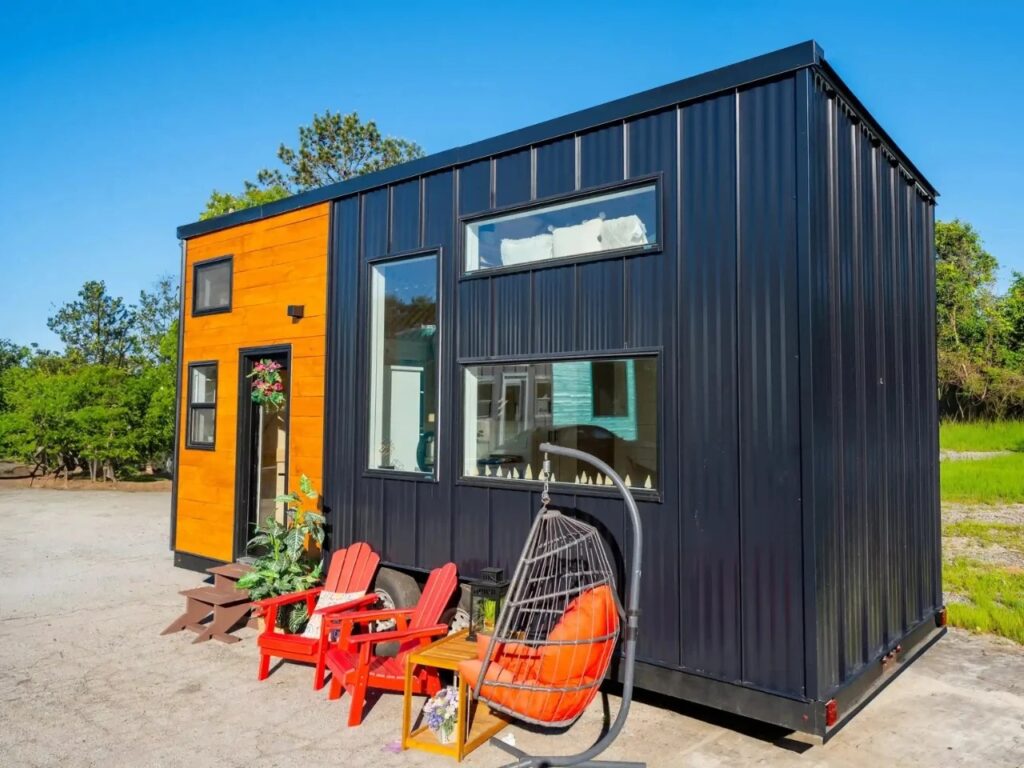
Some projects demonstrate how small spaces can be used efficiently without sacrificing visual appeal. For example, a tiny home model measuring approximately 24 feet in length, built on a movable base, uses a combination of metal and wood materials to create a natural yet contemporary exterior. This blend conveys a sense of clarity and simplicity, qualities that define many successful tiny homes. Good design does not rely on complexity, but rather on the balanced and thoughtful use of every element.
The First Impression Upon Entry
Despite its compact exterior size, the real design experience reveals itself once you step inside, where every detail of the interior layout carries meaning. Carefully designed spaces illustrate how practical comfort can be integrated with spatial aesthetics, allowing the home to feel open and welcoming despite its limited footprint.
Efficient Use of Interior Space
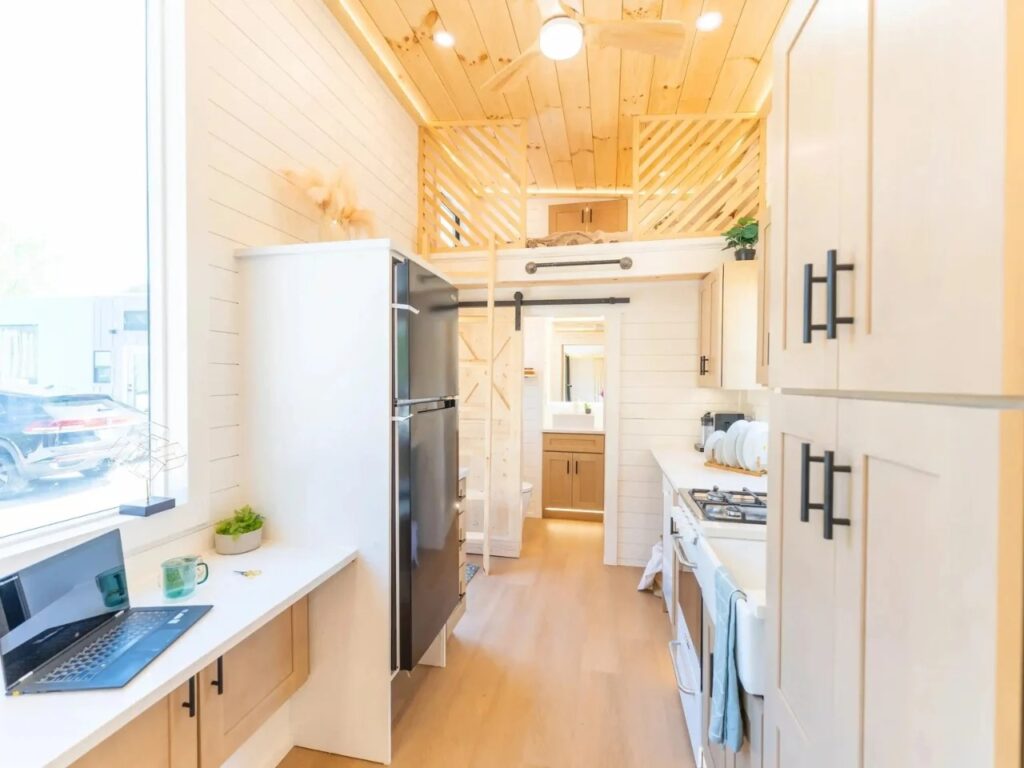
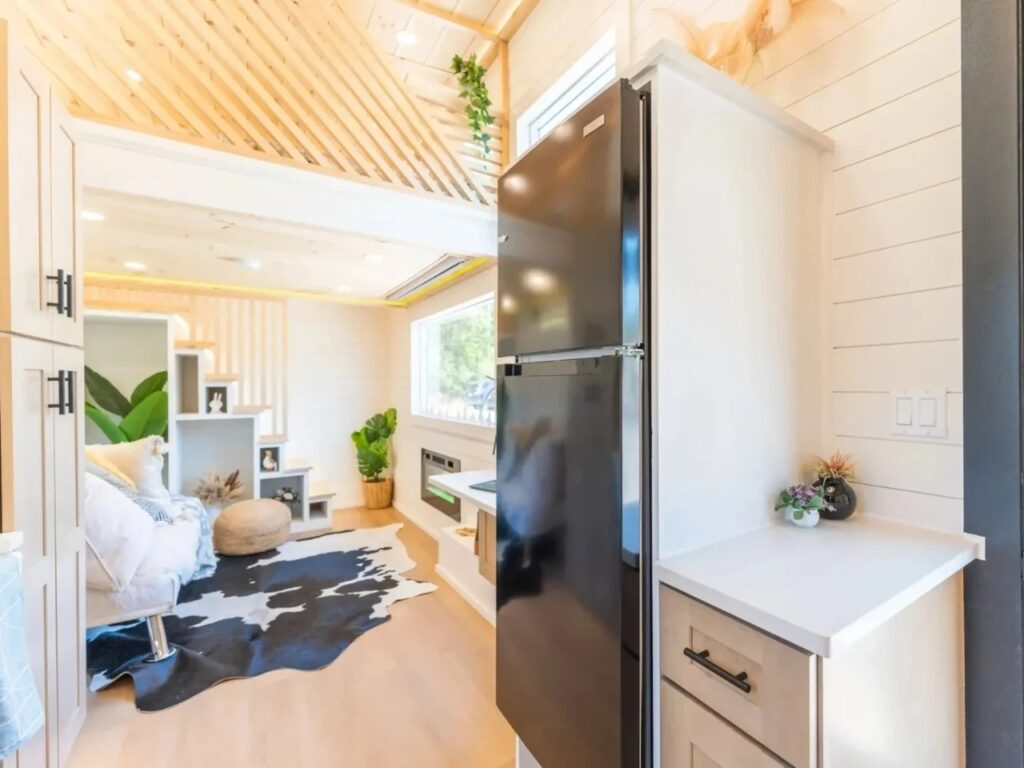
The ground-floor area, measuring approximately 204 square feet, offers a clear example of how tiny homes can feel comfortable and inviting. The use of wood, particularly pine, for wall and floor finishes creates a cabin-like atmosphere, enhancing the sense of warmth and belonging and encouraging occupants to spend more time within the space.
Blending Aesthetics with Practical Function
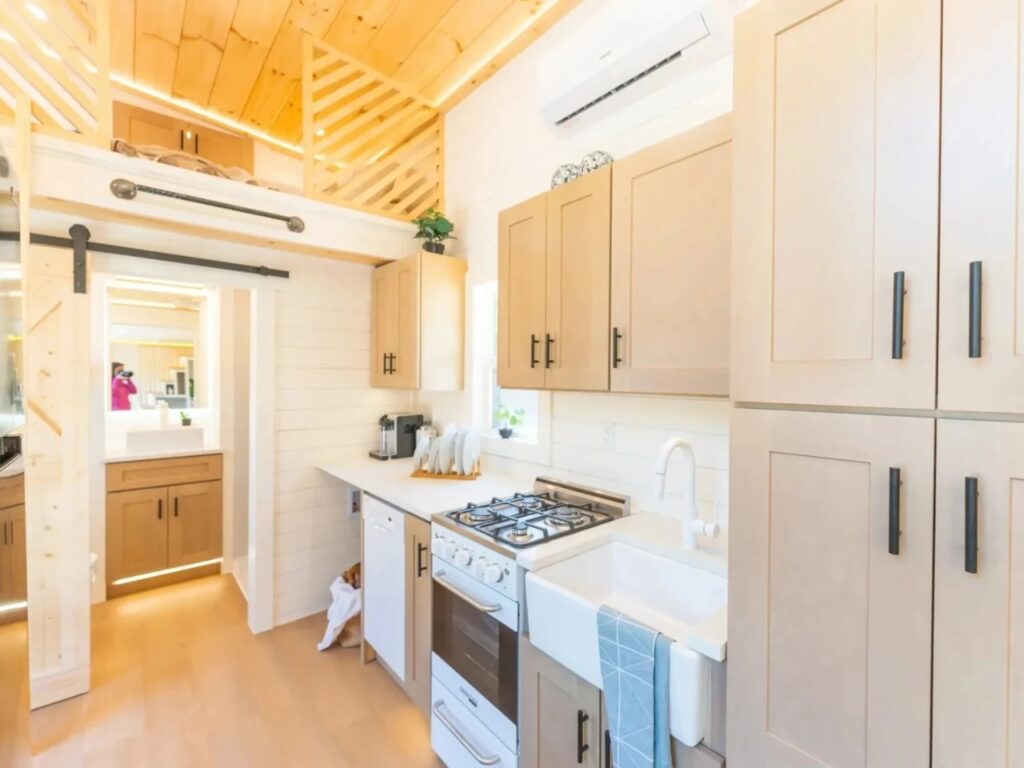
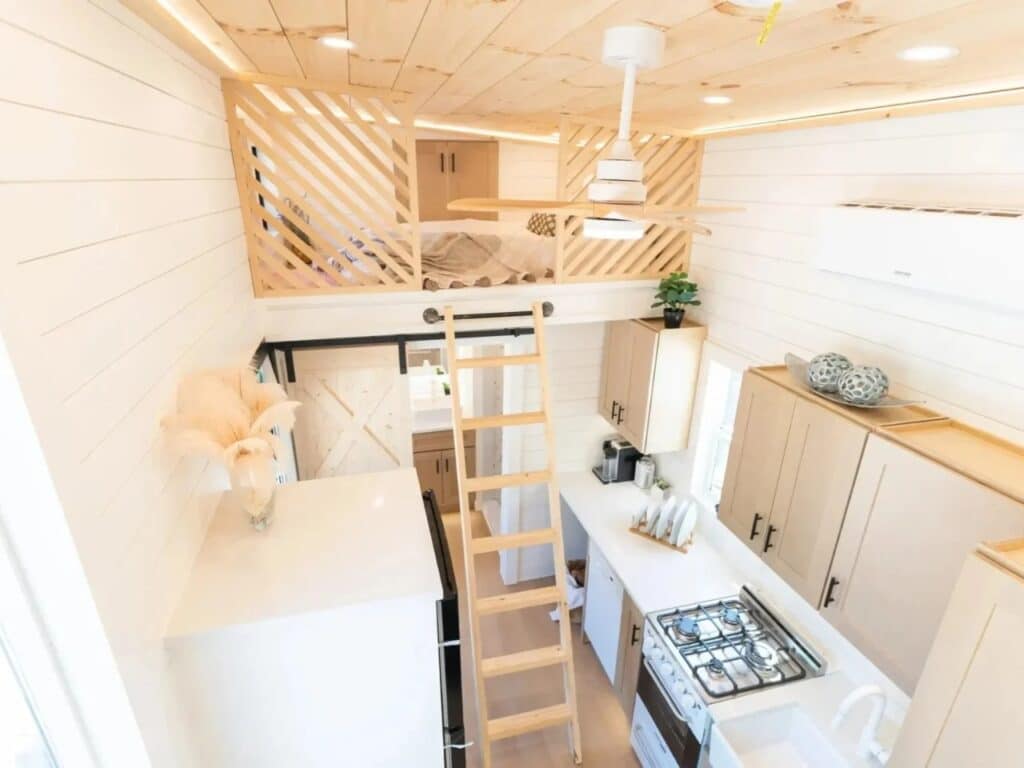
Looking at the kitchen area, it becomes clear that the design focuses not only on visual appeal but also on everyday usability and functional space. The kitchen includes a four-burner stove, a mid-sized refrigerator, a dishwasher, and a farmhouse-style sink, complemented by quartz countertops that provide both aesthetic value and practical durability.
Small Details Make the Difference
The design also incorporates a floating desk made from the same quartz material, illustrating thoughtful consideration of how the space will actually be used rather than simply how it appears in photographs. Such small details highlight that successful tiny home design relies on understanding everyday user needs and achieving a balance between aesthetics and functionality.
The Living Area: Balancing Comfort and Function
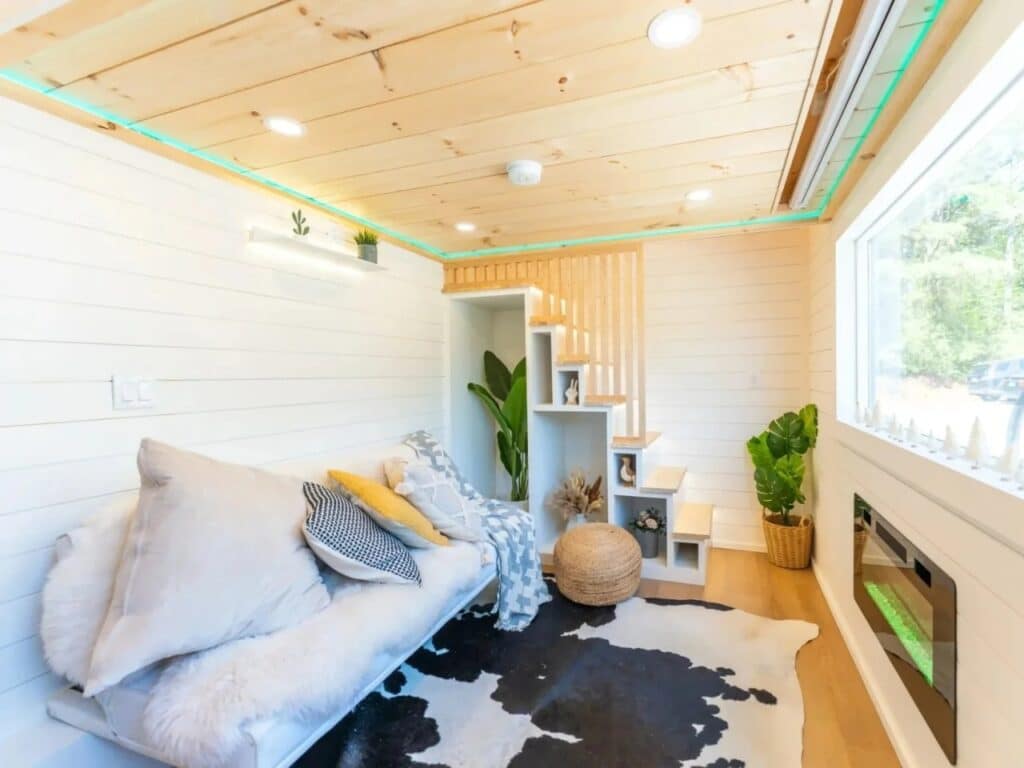
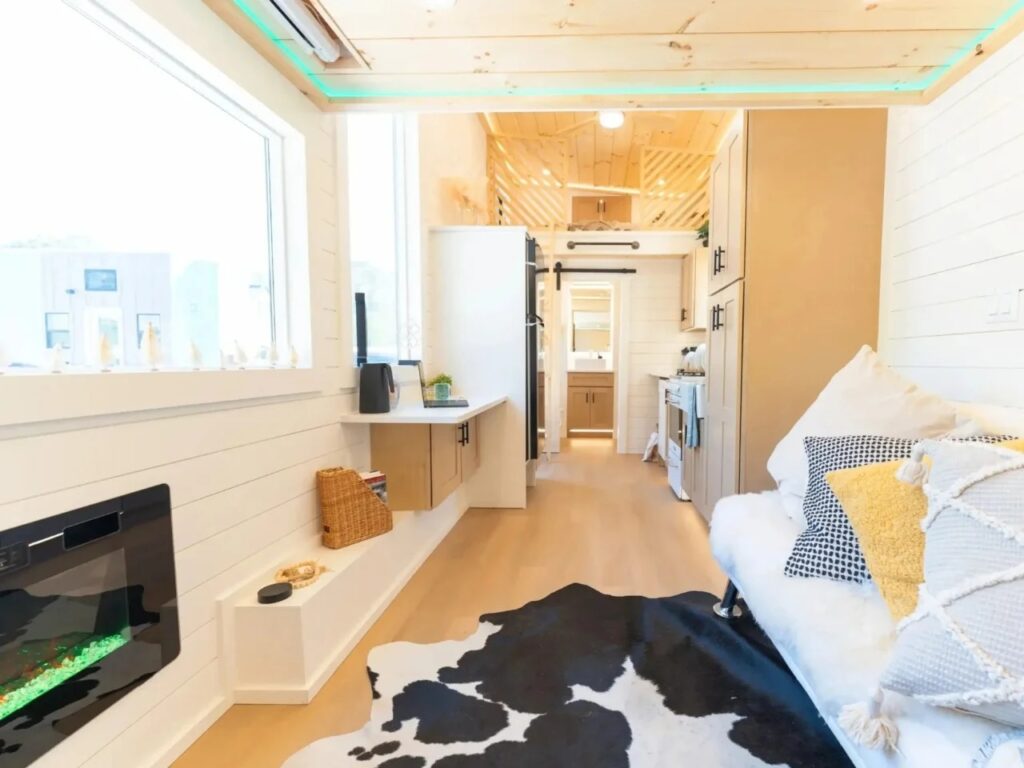
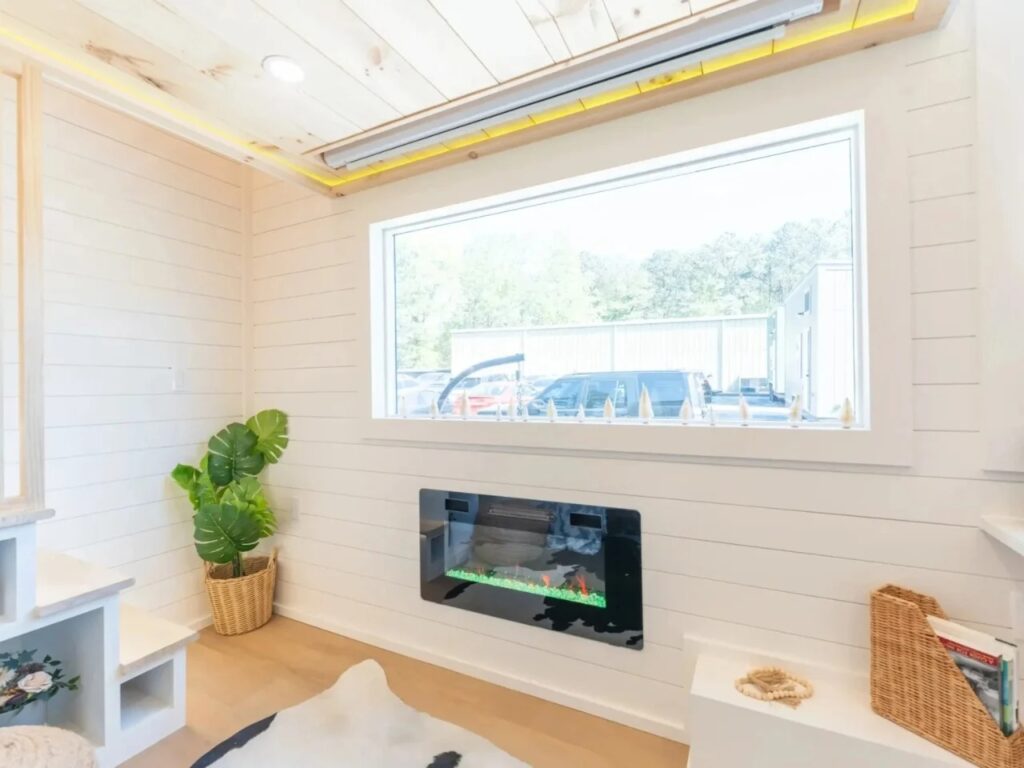
The living area in tiny homes often illustrates how comfort can be balanced with everyday functionality. The space includes a sofa and an electric fireplace, creating a warm and inviting atmosphere that is well suited for relaxing after a long day.
Designing Around the Daily User Experience
The addition of a retractable projection screen highlights the attention given to the overall user experience, even though a projector may need to be provided separately. This feature suggests that the design was not created solely for visual presentation or photography, but rather to support real daily activities such as watching movies or spending evenings with family and friends.
A Design Focused on Real Life
What distinguishes this space is its emphasis on practical use rather than appearance alone. Integrating elements like the projection screen and multifunctional furniture reflects a broader philosophy in tiny home design: creating adaptable environments that meet everyday living needs while maintaining visual appeal and a sense of openness despite the limited space.
Loft Bedrooms: The Challenge of Smart Design
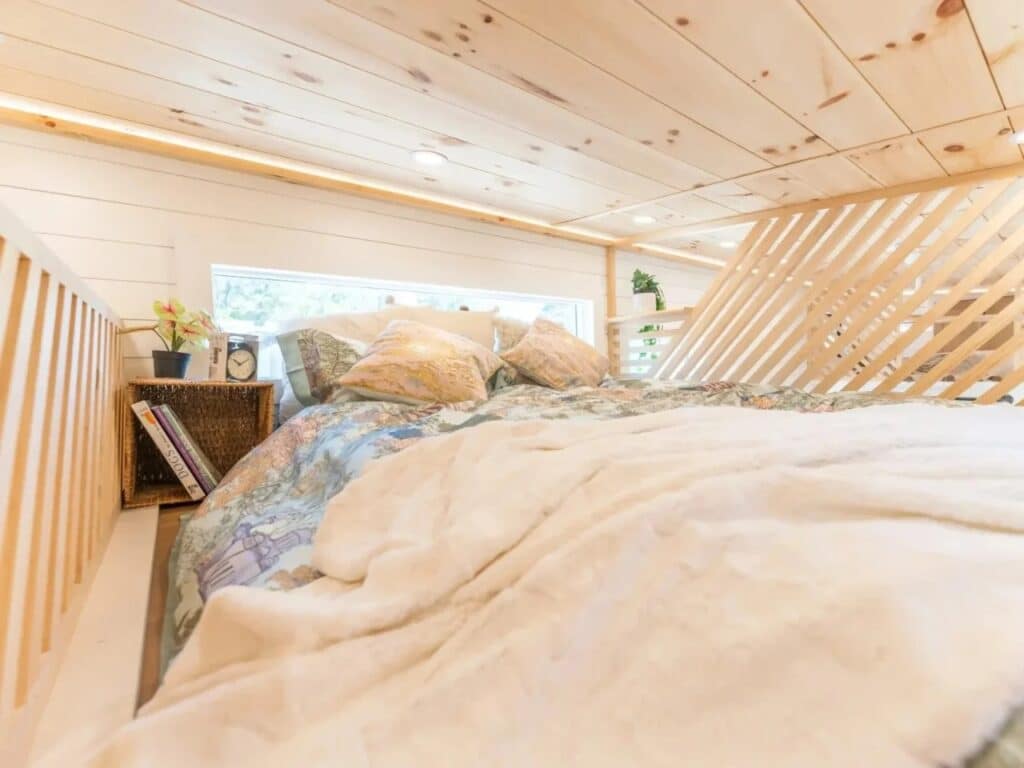
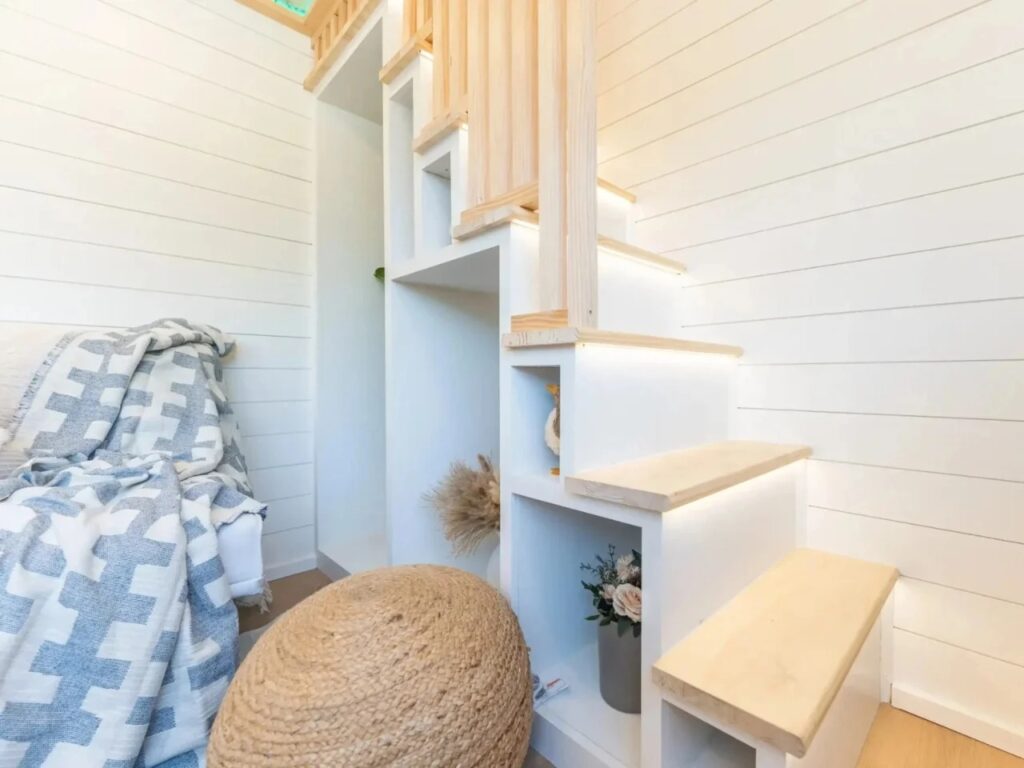
Loft bedrooms in tiny homes serve as a true test of design quality. Poorly planned layouts often lead to a feeling of overcrowding and discomfort, as if the space exists merely as sleeping platforms, diminishing the overall daily user experience.
Natural Light and the Importance of Windows
Windows play a crucial role in the success of the design. Large six-foot-wide windows in both the living area and loft bedrooms ensure natural light flows throughout the home and integrate the outside views into daily life. In small spaces, this strategy is not just an aesthetic choice—it is a key element that makes the interior feel more spacious and open while enhancing occupant comfort.
Details Make the Difference
Successful design is marked by careful attention to small details: sizing and positioning windows thoughtfully, adjusting interior heights, and organizing movement within the loft areas. These elements demonstrate that effective tiny home design relies on a combination of practical thinking and visual appeal, making every corner both functional and comfortable for the user.
The Bathroom: Efficiency and Simplicity in Small Spaces
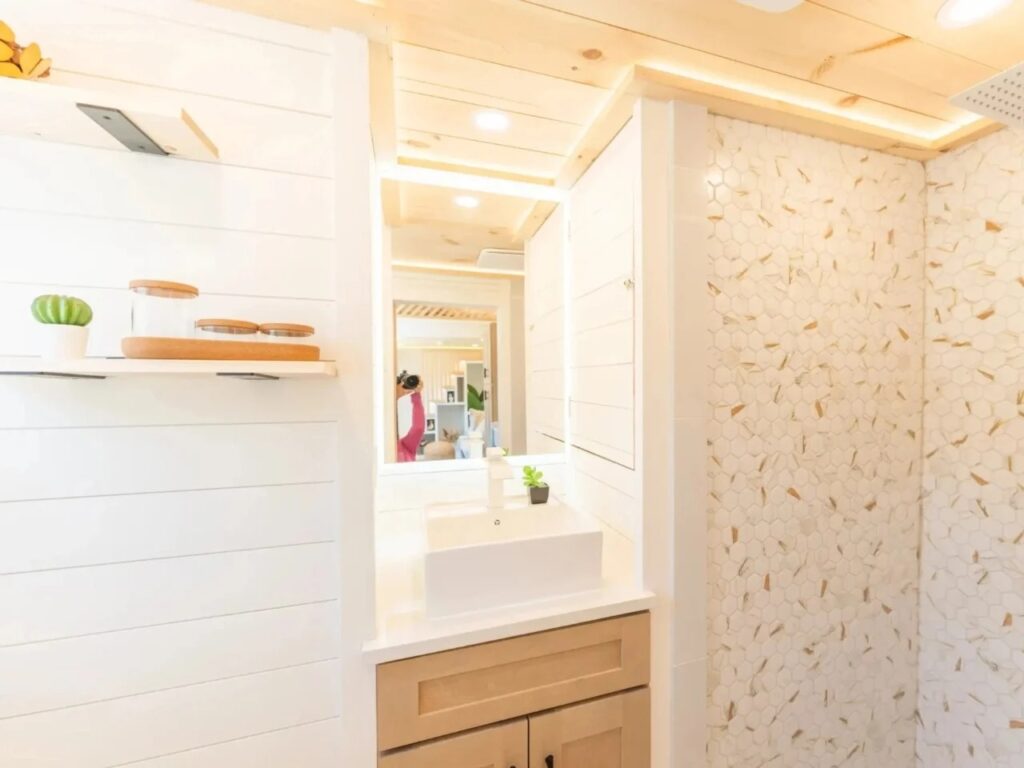
The bathroom in tiny homes presents another design challenge, requiring a balance between essential functionality and comfort within a limited area. Smart design is evident in features such as a fully tiled shower, a vessel-style sink, and an anti-fog LED mirror, reflecting a practical attention to detail rather than a focus solely on luxury or budget.
Emphasis on Performance and Function
The core idea is that a bathroom doesn’t need to mimic a hotel spa to be comfortable and effective. The design ensures that every element serves its purpose directly and smoothly, providing a pleasant, hassle-free user experience.
Good Design Shines in Small Spaces
In a 24-foot-long home, success lies in making the space “work simply.” This simplicity is not a limitation but a deliberate design strategy that embodies the fundamental philosophy of tiny homes: making wise use of every inch while prioritizing comfort and daily functionality without waste or clutter.
Safety Standards and the Importance of Official Certification
A fundamental aspect of tiny home design, especially for mobile units, is adherence to safety standards and compliance with building regulations. Obtaining certification from agencies specializing in alternative housing ensures that the structure is sturdy and secure, and that all construction elements meet the applicable regulatory requirements.
Certification as a Trust Factor
Often overlooked in discussions about tiny homes, these certifications are highly important for users. They provide reassurance that the home is not just an attractive design, but a safe and livable environment. They also demonstrate how innovative design can coexist with compliance to safety standards and approved infrastructure.
Holistic Thinking in Tiny Home Design
This aspect highlights that successful tiny home design goes beyond aesthetics and functionality, it also incorporates legal and technical compliance, ensuring that living in such homes is both comfortable and safe over the long term.
Practicality vs. Idealized Appearances
What sets some successful tiny homes apart is their focus on functionality and realism, rather than merely trying to appear innovative or visually appealing on social media. Effective design does not aim to create a perfect or fantastical version of living in a small space; instead, it emphasizes how the home operates in real, everyday life.
Practical Thinking Within Space Constraints
Tiny homes face clear limitations in terms of size and mobility, making the quality of construction and interior planning critical. Good design reflects the designer’s ability to make practical use of every available inch while maintaining both comfort and aesthetic appeal.
The True Measure of Evaluation
When assessing a tiny home, the exterior appearance or a short promotional video is not the most important metric. The key is how effectively the design supports daily use. Homes that strike a balance between innovation and practicality exemplify smart design that can be relied upon in real-life living.
Who Tiny Homes Are Suitable For
Tiny homes are not ideal for everyone. Large families, pet owners, or those who rely heavily on spacious closets may find these homes too limited to meet their needs.
Focusing on Practical Use
However, for couples, solo travelers, or anyone looking to reduce unused space, tiny homes can offer a practical and efficient solution. Thoughtful design is evident in every detail, taking into account daily use and comfort rather than merely presenting an attractive exterior.
Confidence in Design
A standout feature of smart tiny home design is the quiet confidence the space conveys: every element is carefully considered, and every inch is used efficiently. This type of design, which balances aesthetic appeal with practical functionality, represents a rare model in the world of small living spaces.
✦ ArchUp Editorial Insight
The proliferation of micro-residential units, commonly known as “tiny homes,” represents a spatial adjustment resulting from the shortcomings of geospatial market systems and increasing friction in urban zoning laws. This spatial solution is not a conventional lifestyle choice; rather, it is a material manifestation of asset restructuring amid rising labor costs and stringent insurance liability constraints.
Integrating high-yield materials, such as quartz and advanced lighting systems, serves as a marketing differentiator designed to mask the inherent spatial austerity of an area no larger than 204 square feet. Moreover, the emphasis on regulatory compliance and official certification reflects a shift toward embedding human capital within mobile modular units that operate beyond fixed judicial frameworks.
These units function as a programmatic solution bridging the gap between the demographic flows of the “precariat” class and the logistical constraints of modern supply chains, reframing urban parking and occupancy crises as a model of high-density habitation.