
Biblioteca dos Saberes in Rio de Janeiro: An Architectural Tribute to Afro Brazilian Heritage and Knowledge

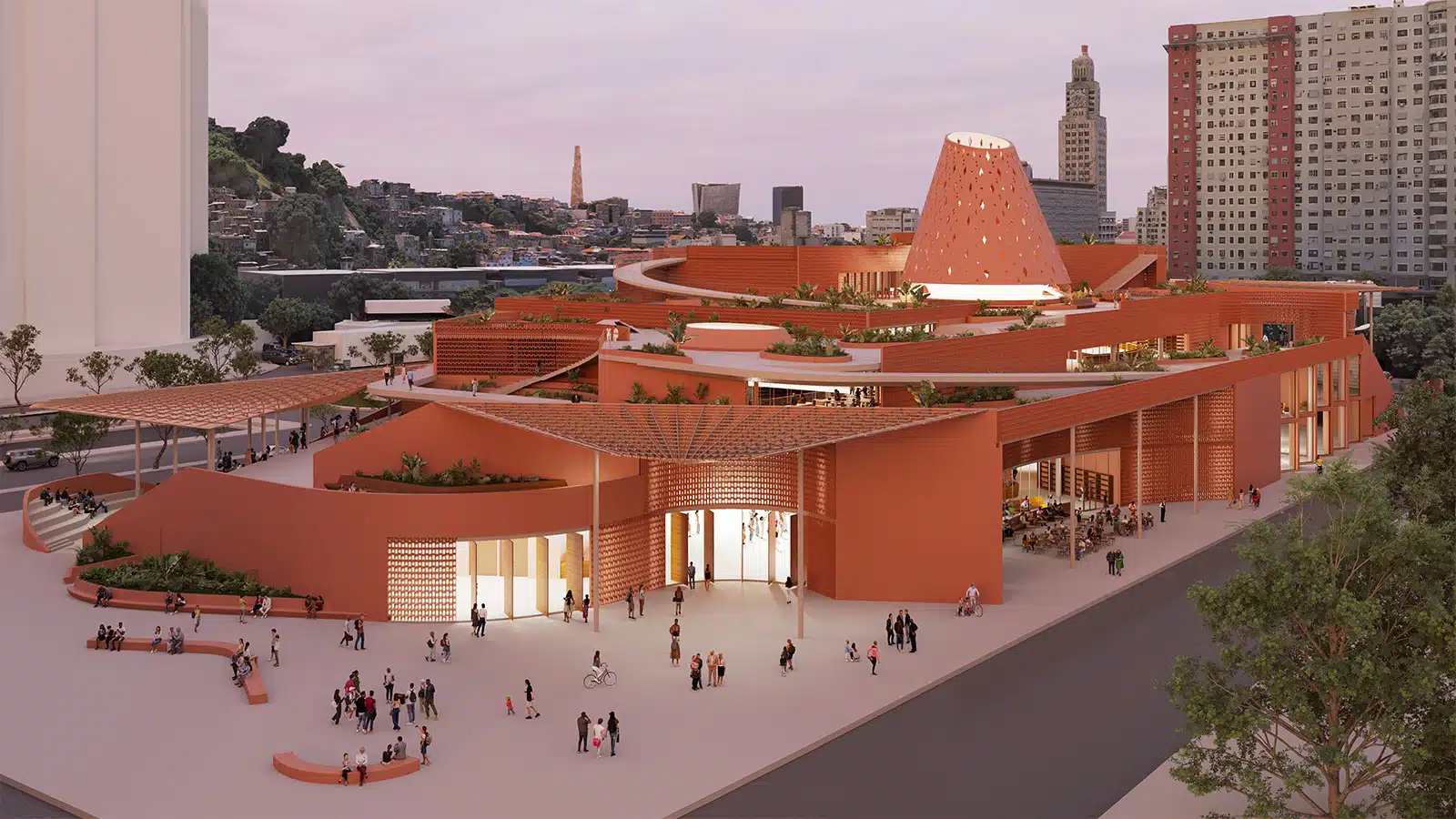
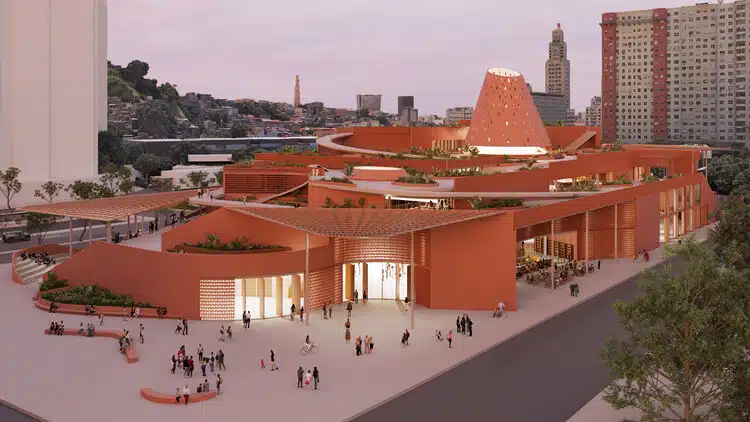
Located in the heart of a historic neighborhood, this public library in Rio de Janeiro is a cultural and architectural landmark. It combines learning, culture, and community interaction. The library spans a large area and strengthens the social role of a public library. It serves as a hub for education and celebrates Afro-Brazilian heritage. The design features perforated facades to reduce direct sunlight, rooftop gardens to provide green spaces, and open, shaded areas that support cultural and social activities.
Site and Function
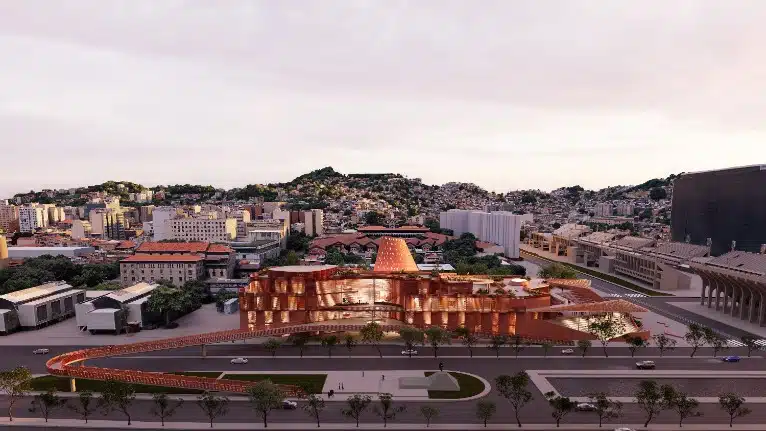
The library is located near prominent cultural landmarks, making it a key hub for both local communities and visitors. The building hosts multiple functions, including reading rooms, workshops, exhibition spaces, a lecture hall, and a café. This creates a comprehensive educational and cultural environment. Its proximity to the Sambadrome Oscar Niemeyer and Praça Onze square highlights the area’s deep cultural significance.
Design Concept and Architectural Approach
The Knowledge Tree as a Central Element
The design centers on a cylindrical Knowledge Tree, inspired by local forest trees. It acts as a vertical axis connecting the library’s three floors. This structure guides visitors smoothly from quiet reading areas to interactive social spaces. It also connects zones for creativity, dining, and play, supporting a wide range of activities throughout the building.
Celebrating Cultural Heritage
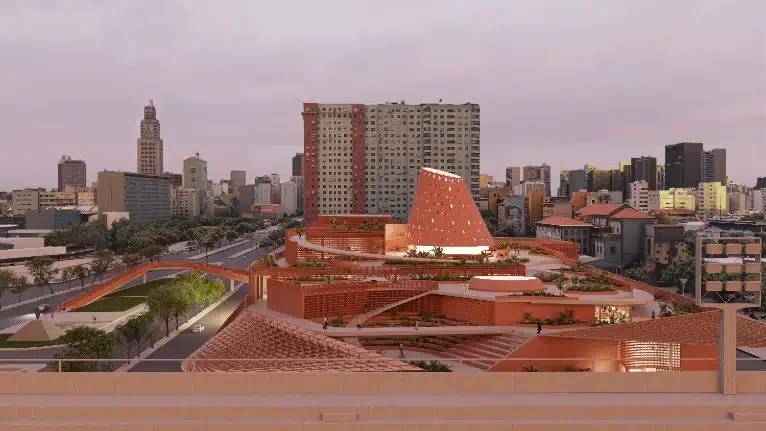
The project celebrates Afro-Brazilian heritage and oral traditions. Samba is expressed as a living form of knowledge. The design also interprets the Atlantic Ocean as a symbol of shared cultural history between Brazil and Africa. This reinforces the library’s cultural identity and offers visitors an intellectually rich and immersive experience.
Materials, Techniques, and Sustainability
The building is based on a reinforced concrete structural system with a central cylindrical core rising 24 meters. This core acts as the backbone, connecting the three floors and distributing loads to 25 cm thick floor slabs, which can support up to 5 kN/m². The perforated facades are both visual and functional elements. They are 30 cm thick and feature 1,200 geometric openings, providing 65% shading and reducing heat gain. The windows have double-glass panels with a thermal transmittance of 1.8 W/m²·K, 35 dB sound insulation, and 95% humidity resistance, ensuring a comfortable indoor environment.
The rooftop hosts 850 m² of green gardens. Smart irrigation reduces water consumption by 40%, while natural ventilation achieves six air changes per hour. Daylight supplies 70% of daily lighting needs through precisely oriented skylights. Adjustable LED lighting complements this, reducing energy consumption by 45%, thanks to 12 cm-thick thermal insulation and low thermal transmittance of 0.35 W/m²·K.
Inside, sustainable timber is used for the interior stairs, combining durability with natural aesthetics. The building includes a semi-open amphitheater with a concrete core and a movable shading system, creating a flexible space for cultural events. A pedestrian bridge made of steel and concrete connects the building to a nearby landmark, improving circulation and integration with the urban context.
These elements from perforated facades to rooftop gardens and environmental systems form a cohesive design strategy. It combines high structural performance, energy efficiency, and environmental harmony. The project establishes a contemporary architectural identity, embedding sustainability as a core component.
Architectural and Environmental Analysis
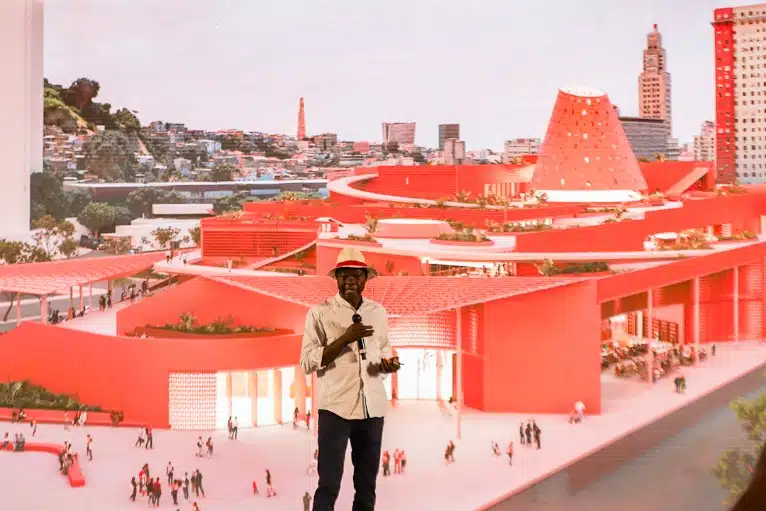
The design of Biblioteca dos Saberes exemplifies advanced sustainable cultural architecture, integrating functional, aesthetic, and environmental performance. The vertical structure allows natural light and airflow throughout the floors, while open and shaded areas foster social and cultural interaction.
Perforated facades and double-glass windows demonstrate a precise architectural response to Rio’s hot and humid climate. Rooftop gardens not only provide green spaces but also improve air quality and mitigate internal heat, enhancing user comfort and offering a balanced architectural model combining performance, sustainability, and aesthetics.

Conclusion
Biblioteca dos Saberes represents a comprehensive architectural experience that combines knowledge, heritage, and community culture. Its design connects past and present, reflecting the interplay between local culture and shared history with Africa, making the building a living architectural document that highlights the role of architecture in fostering learning, innovation, and social engagement. The library is more than a repository of books; it is a living space that embraces creativity, experience, and thought, offering a sustainable model for architectural design in urban environments.
Architecture professionals can follow ArchUp’s events section for verified updates on exhibitions, conferences, competitions, and results.
✦ ArchUp Editorial Insight
Public library Rio de Janeiro features a visual design that blends modernity with cultural heritage. The library has perforated facades and natural tones, complemented by rooftop gardens, creating openness and connection with its surroundings. The cylindrical Knowledge Tree guides visitors vertically through the floors, giving the building a distinctive presence in the urban landscape. This public library in Rio de Janeiro demonstrates a clear understanding of how public and private spaces interact. Some open areas could benefit from additional shading during peak sunlight. Overall, the project effectively combines local culture with educational functions, reinforcing the library’s role as a hub for learning and community engagement.



ArchUp: Technical Analysis of Dos Saberes Library
This article provides a technical analysis of Dos Saberes Library as a case study in sustainable cultural architecture. To enhance its archival value, we would like to present the following key technical and design data:
The structural system utilizes a reinforced concrete frame with a cylindrical central core reaching 24 meters in height, featuring 25 cm thick floor slabs supporting loads up to 5 kN/m². The perforated facades are 30 cm thick with 1,200 geometric openings providing 65% shading.
The environmental system incorporates 850 m² of rooftop gardens with smart irrigation consuming 40% less water, and natural ventilation achieving 6 air changes per hour. Natural lighting meets 70% of illumination needs through precisely calculated roof openings.
In terms of thermal performance, the building achieves 45% energy consumption reduction through 12 cm thermal insulation with U-value 0.35 W/m²·K. Double-glazed windows feature 1.8 W/m²·K thermal transmittance and 95% humidity resistance.
Related Link: Please review this article for a comparison of sustainable library design:
Sustainable Library Architecture: From Design to Community Interaction
https://archup.net/zhongshuge-bookstore-in-tianjin-showcases-wavy-architectural-design-with-brick-and-steel/