

Qiddiya tennis complex: stadium design, capacity and opening status

Qiddiya tennis complex anchors Saudi Arabia’s national tennis development strategy. It is located in Qiddiya’s sports district near Riyadh. The facility supports international tournaments and public use. Its planning aligns with standards in architectural design.

Design Concept
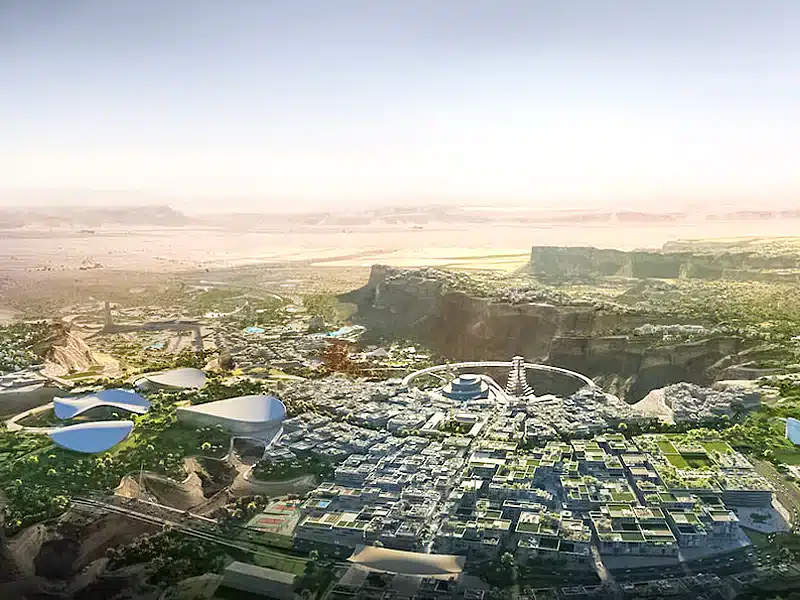
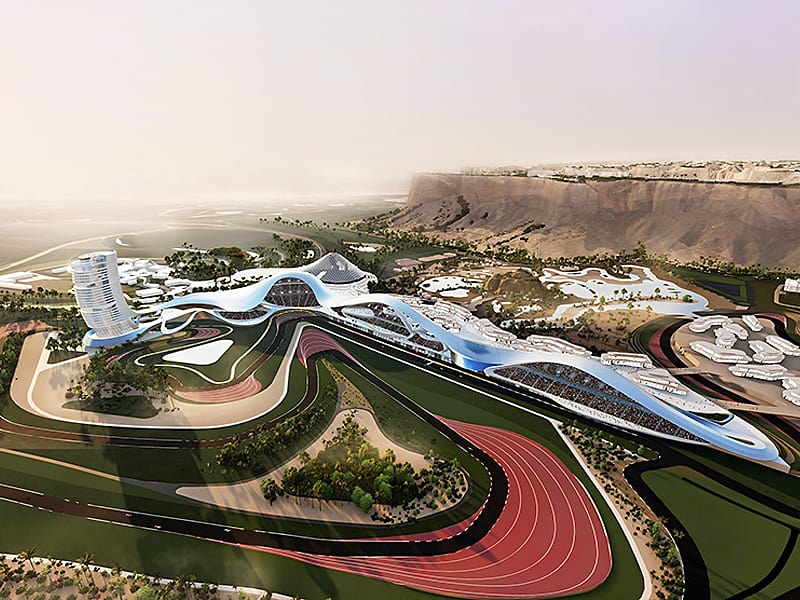
The site uses natural terrain to shape viewing angles and movement paths. A central stadium holds 5,000 to 7,000 spectators. Around it, 10 to 15 courts offer varied surfaces. This layout echoes strategies seen in other events covered by the news section.
Materials & Construction
Construction relies on reinforced concrete and structural steel. High-performance glass features in pavilions and viewing areas. These choices follow regional norms in building materials. The approach supports rapid assembly and heat resistance. Prefabricated elements reduce on-site construction time.

Sustainability
Passive shading minimizes solar heat gain. Greywater systems irrigate courts and landscaping. Photovoltaic panels may power auxiliary functions. These tactics reflect broader trends in sustainability. They also appear in other Gulf sports buildings.
Urban and Programmatic Role
The complex transforms desert land into active public space. It links to transport routes and nearby venues. This fits planning models documented under cities. Future phases could add a national tennis academy. No demolition plans have been announced. The National Tennis Complex in Qiddiya serves dual athletic and civic roles.
Will daily public use match the scale of its tournament ambitions? The National Tennis Complex in Qiddiya faces this test over time.
Architectural Snapshot: The National Tennis Complex in Qiddiya features a central stadium, multi surface courts, and climate-responsive design in Saudi Arabia’s Qiddiya district.
ArchUp Editorial Insight
The National Tennis Complex in Qiddiya functions as a programmatic node within Saudi Arabia’s sports diversification agenda, adopting a globally legible but contextually inert architectural language. Its design replicates international stadium typologies without interrogating local spatial culture or climatic intelligence, settling for compliance over innovation. Credit is due for integrating baseline sustainability measures in a region where environmental accountability remains rare. Yet its legacy may hinge less on form and more on operational inclusivity if it serves communities beyond ceremonial openings, it might outlive its promotional utility; otherwise, it risks becoming another infrastructural relic of ambition without adaptation.


