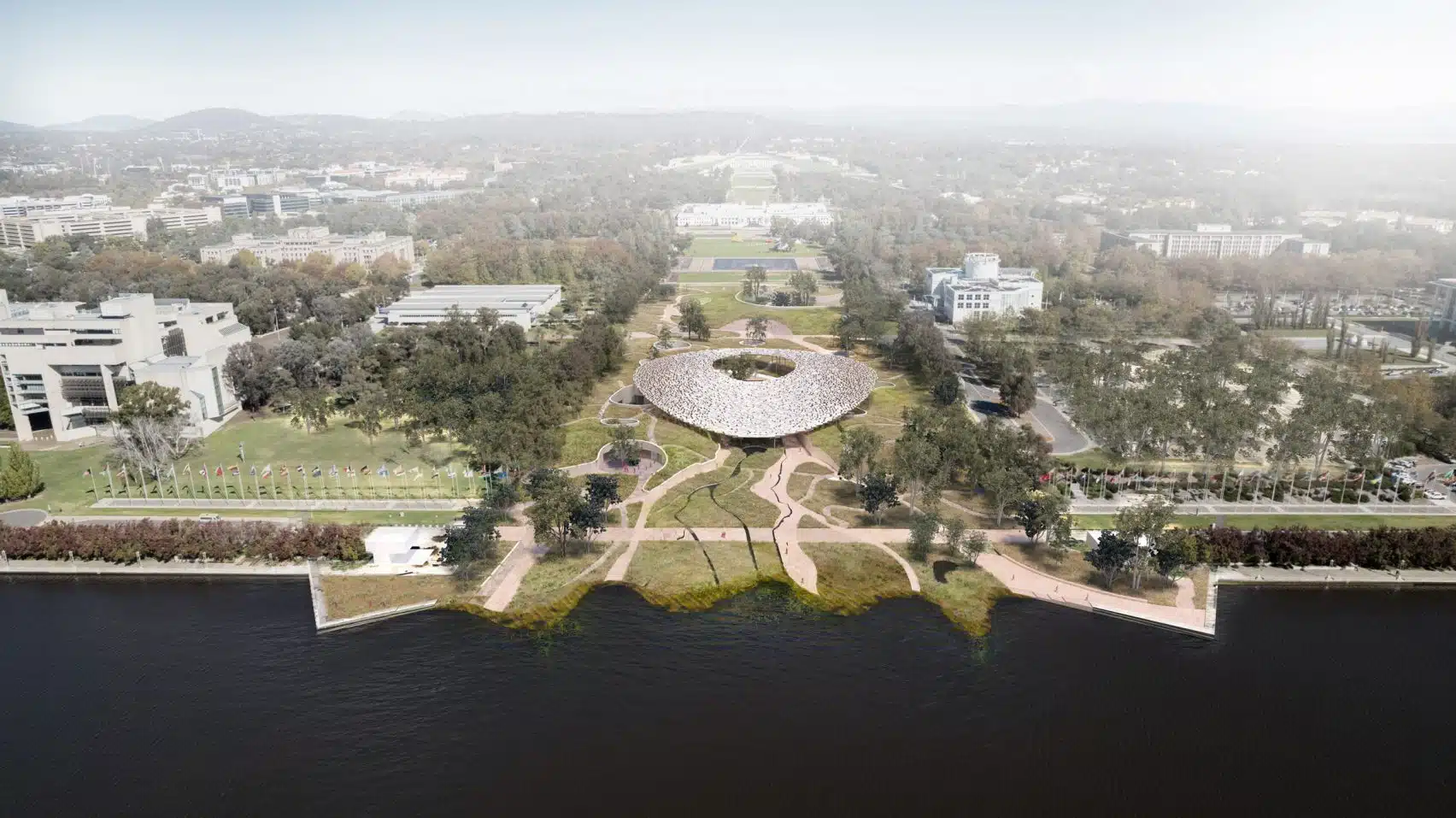
Ralph C. Wilson Jr. Centennial Park: Redefining the City-River Relationship Through a Multi-Functional Design

Ralph C. Wilson Jr. Centennial Park: Transforming the City and the River
Ralph C. Wilson Jr. Centennial Park spans 22 acres along the Detroit Riverfront. This project represents a significant architectural and social transformation, redefining the relationship between the city and its river.
From an Abandoned Industrial Site to a Vibrant Public Park
Before its redevelopment, the site was an abandoned industrial area reflecting Detroit’s industrial history. However, the park was designed to become a versatile public space that serves as a civic gateway, connecting city residents with the water and surrounding nature.
Reimagining Urban Space
This project demonstrates how neglected sites can be transformed into active elements of the urban fabric, enhancing the interaction between community and nature, and creating an open environment that encourages walking, relaxation, as well as cultural and social events.


Design Leadership: Global and Local Collaboration
Adjaye Associates, in collaboration with Michael Van Valkenburgh Associates (MVVA), was selected through an international competition organized by the Detroit Riverfront Conservancy to redevelop the area. Following their win, a broad community engagement process was launched to ensure that the final design reflects Detroit’s identity and meets the needs of its residents.
Flexible and Sustainable Design
MVVA’s landscape design provides a resilient, year-round environment that blends nature, recreation, and community gatherings. The plan incorporates versatile green lawns, play areas, and green infrastructure to support activities throughout the year, with a strong focus on sustainability principles and building materials.
Enhancing Community Interaction
This approach demonstrates how contemporary urban design can create public spaces that encourage community engagement and cultural participation, transforming the park into an active and vibrant element of urban life.

Adjaye Associates’ Contributions to the Park’s Civic Identity
Adjaye Associates’ architectural contributions form the cornerstone of the park’s civic presence, focusing on integrating recreational and community functions with the natural environment.
William Davidson Sport House: A Multi-Functional Design
The William Davidson Sport House is a prominent structure housing a full-size basketball court beneath a sculpted concrete canopy, providing year-round recreation and shelter.
Two Adaptive Pavilions for Community Needs
In addition, two pavilions, also designed by Adjaye Associates, provide restroom facilities and flexible community spaces. The main pavilion features an adaptable enclosure system, allowing it to transition between open-air and enclosed configurations to meet seasonal and programmatic needs, reflecting the design’s flexibility in accommodating diverse activities.

Enhancing the Park’s Status as a Public Destination
Together, these interventions establish Ralph C. Wilson Jr. Centennial Park as a premier public destination, offering a comprehensive and diverse space that reconnects Detroit residents with the natural beauty of the riverfront.
William Davidson Sport House Pavilion: Innovative and Open Design
The park features the William Davidson Sport House pavilion, spanning 28,000 square feet, supported by 33 steel columns that hold a sculpted concrete roof with a large skylight of approximately 2,000 square feet.
Integrating Natural Light and Flexibility
The design allows natural light to flow into the pavilion, enhancing the sense of connection between interior and exterior spaces. It also houses a full-size basketball court for the Detroit Pistons, usable day and night year-round, reflecting a flexible and multi-functional design that accommodates community needs, as well as sports and cultural activities.

A Collaborative Development Process
The park’s final plan was developed after an extended period of public consultation, ensuring that the design reflects the needs and aspirations of the local community.
Extensive Community Engagement
Between 2018 and 2021, six major public meetings involved more than 800 participants. Additionally, outreach efforts included school programs, neighborhood club meetings, and exhibitions across the city, reaching a total of over 5,000 Detroit residents.
Fostering a Sense of Belonging
This approach highlights the importance of involving the community in urban design processes, allowing residents to help shape public spaces that meet their daily needs and strengthen their sense of belonging to the city.

✦ ArchUp Editorial Insight
Although the Ralph C. Wilson Jr. Centennial Park project serves as an example of repurposing an abandoned industrial site into a versatile public space and highlights positive elements such as design flexibility and community engagement, there are several points worth considering from an architectural perspective. For instance, the project’s focus on both open-air and covered infrastructure provides ample opportunities for year-round activities, yet it raises questions about the long-term sustainability of these elements, particularly regarding maintenance, adaptation to climate changes, or potential future uses that may differ from the current ones.
Furthermore, the design places a strong emphasis on sports and recreational functions, with limited space dedicated to natural interaction or diverse horticulture, which could reduce the ecological balance within the park. From a broader perspective, the project can be seen as an initial step in redefining the relationship between the city and the river, but it opens the door for further study on integrating multiple uses in a more flexible and inclusive manner, enabling future public spaces to adapt to the diverse and evolving needs of both residents and visitors.