

Living with the Forest: An Architectural Reading of Residence SAB

Architecture Embraced by Nature
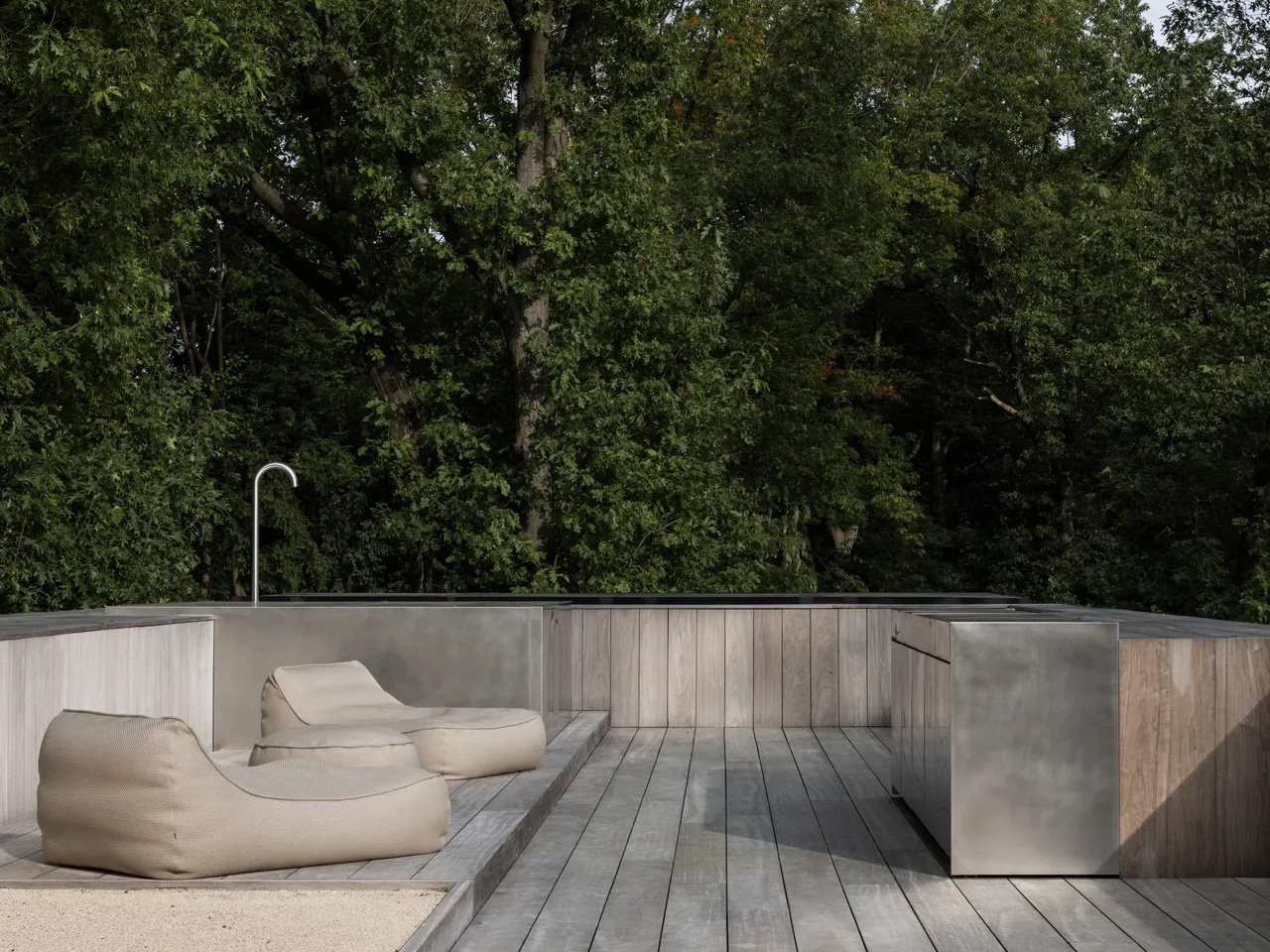
Amid the shadows of Belgian trees, the Residence SAB project emerges as a vivid example of the delicate balance between nature and architecture. The house rests quietly within the forest. Its sharp geometry and expansive glass façades assert the presence of the structure without overpowering the natural scenery.
Clarity and Simplicity of Design
From the very first glance, the clarity of the design concept is evident. The building relies on two essential materials: concrete and glass. Although free from excessive ornamentation, every detail is carefully considered. This gives the structure a balanced presence and makes the forest an integral part of daily living.
Fluidity of Interior Spaces
Moving inside, it becomes clear how the spaces have been designed to be interconnected and seamless. Floor-to-ceiling windows run along the living areas. They allow natural light to penetrate deep into the house while framing views of the forest that change with the seasons.
Warmth of Materials Despite Their Coldness
On another note, concrete is often perceived as a cold material. Yet here it transforms into an element that retains warmth. This is thanks to filtered sunlight and the surrounding greenery. The designers have maintained a limited color palette, allowing fabrics and natural textures to speak for themselves without visual clutter.
Balance Between Openness and Privacy
In the end, the house stands as a space that combines a sense of spaciousness and intimacy at the same time. It remains in constant interaction with the landscape that extends beyond its glass walls.
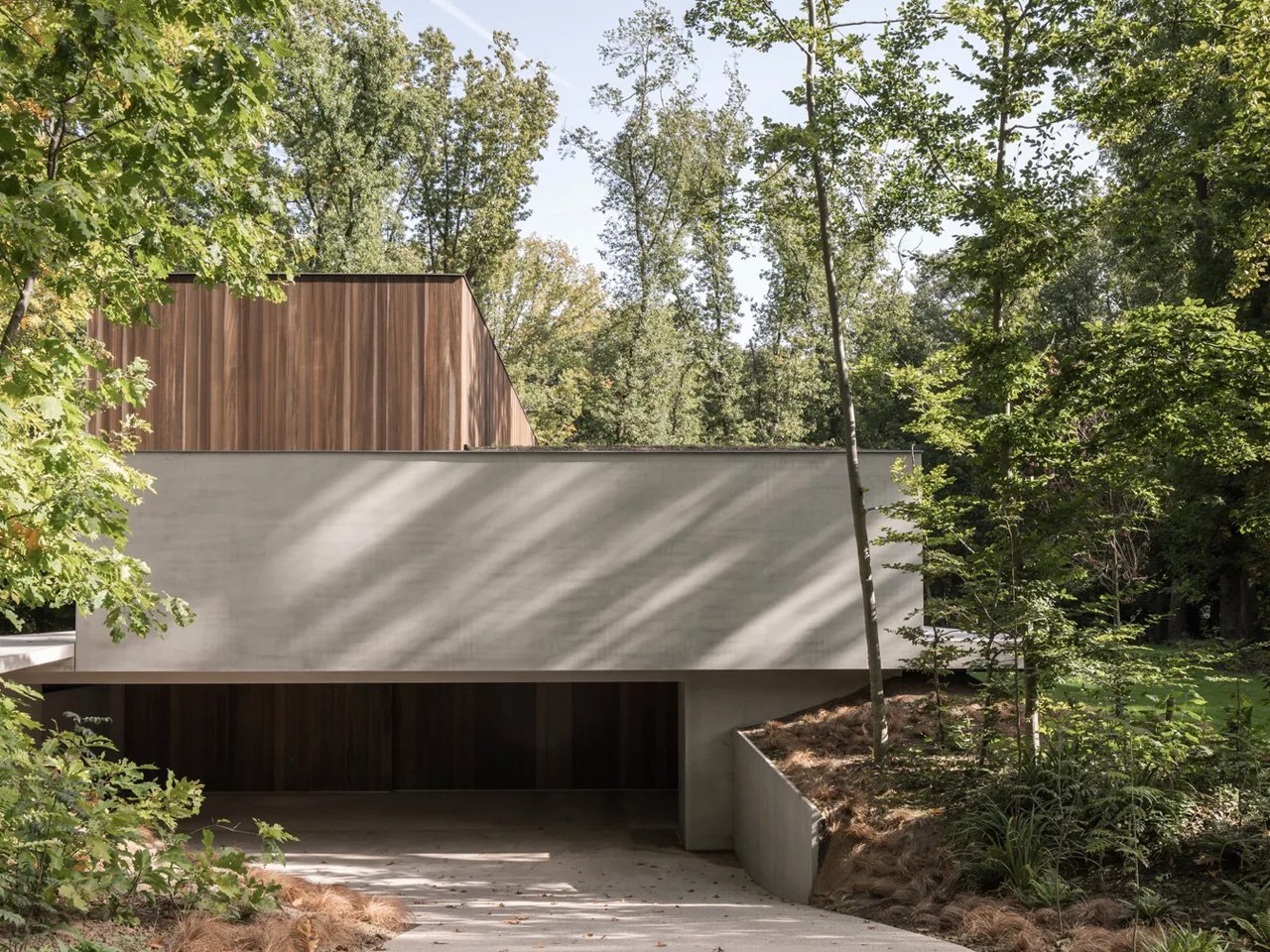

Organization of Mass and Spaces
The house takes the form of a clear linear block, with communal areas arranged along one side. Meanwhile, the private rooms are discreetly tucked away behind them. This smart layout ensures the residents’ privacy while keeping all functions seamlessly connected.
Smooth Circulation
When it comes to internal movement, the flow through the spaces is smooth and intuitive. A long corridor guides residents from one end of the house to the other. It is punctuated along the way by natural views and subtle shifts in light that add a sense of living dynamism to the experience.
Thoughtful Details
Additionally, storage is integrated into the design without visual disruption. The junctions between different materials are handled with great care. These details keep the focus on how the space feels, rather than drawing attention to the construction elements themselves.
Suspended Mass to Protect Nature
What further distinguishes this project is how the building appears to hover above its natural site. By elevating part of the structure, the house minimizes its direct footprint on the forest floor. Thus, it preserves the soil and vegetation beneath it.
Enhanced Privacy and Views
Finally, this carefully considered elevation gives the living spaces a gentle sense of floating among the trees. It also improves privacy and directs sightlines away from neighbouring plots. In this way, it ensures that nature remains the primary frame for every room.
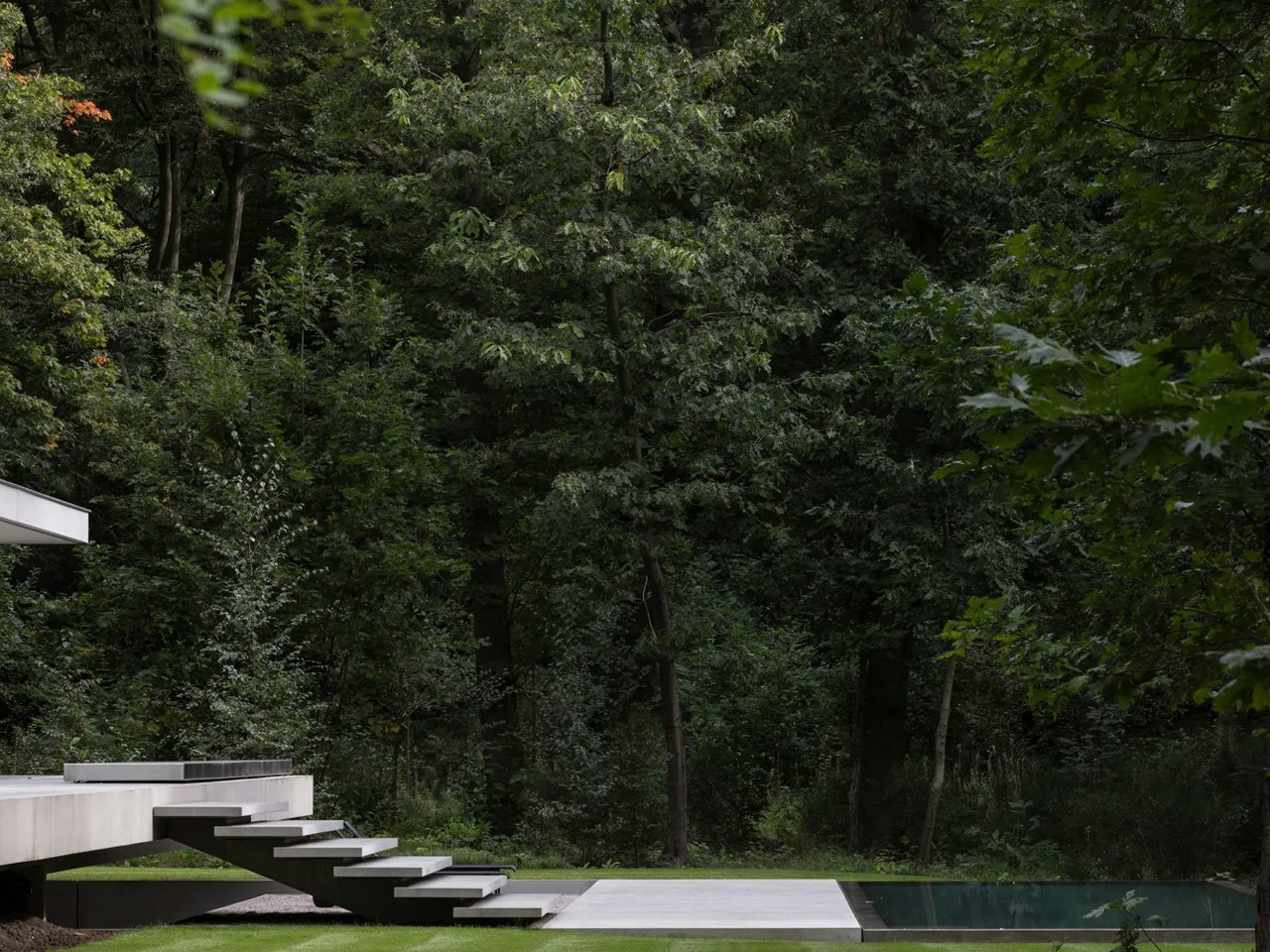

Living with the Seasons
This house offers an experience of living in harmony with the rhythms of nature. In winter, the concrete acts as a thermal reservoir, retaining warmth while the surrounding forest transforms into a calm canvas of bare branches. As summer approaches, the green canopy fills out again. It creates dappled patterns of light on the floors and dissolves the glass walls as a barrier between inside and out.
Balanced Flexibility with Nature
In addition, the true value of Residence SAB lies in its quiet adaptability to its surroundings. It is a space designed to be both a serene retreat and a place that fosters connection with nature. Here, architecture becomes a visual mediator, allowing residents to experience the forest from within without isolation or interruption.
Disciplined Simplicity and Considered Openness
Despite the simplicity of its details, this discipline in design does not cancel out a sense of generosity. Instead, it grants the place a thoughtful openness that invites nature inside. It celebrates the small daily moments that make living warmer and more genuine.
Lessons in Listening to Place
Ultimately, Govaert-Vanhoutte Architecten has presented an architectural vision that shows how a home can be practical and flexible in its details. Yet it remains genuinely in tune with its natural setting. This project reminds everyone who passes by or lives within it of the beauty that emerges when design listens sincerely to its place.
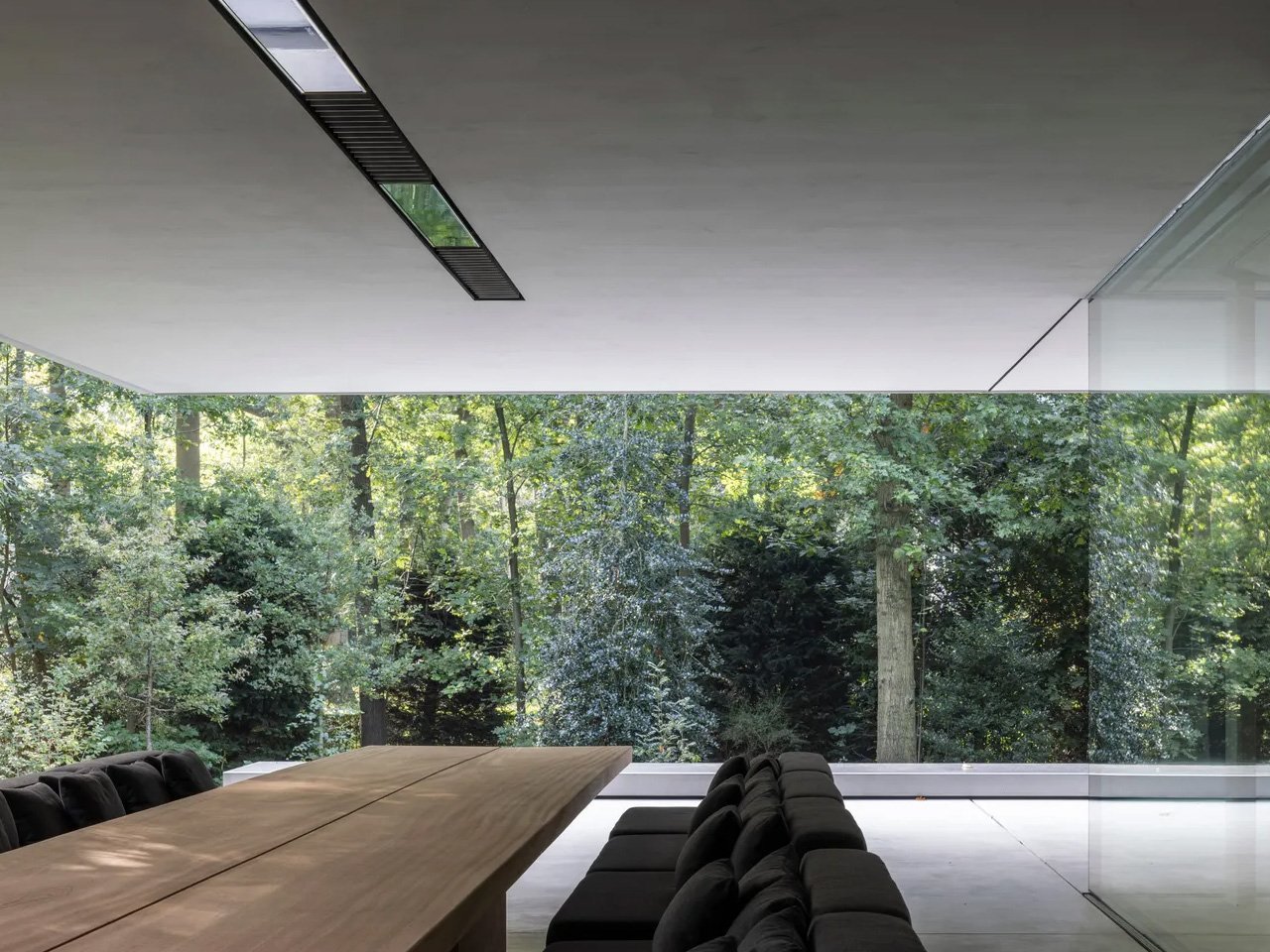


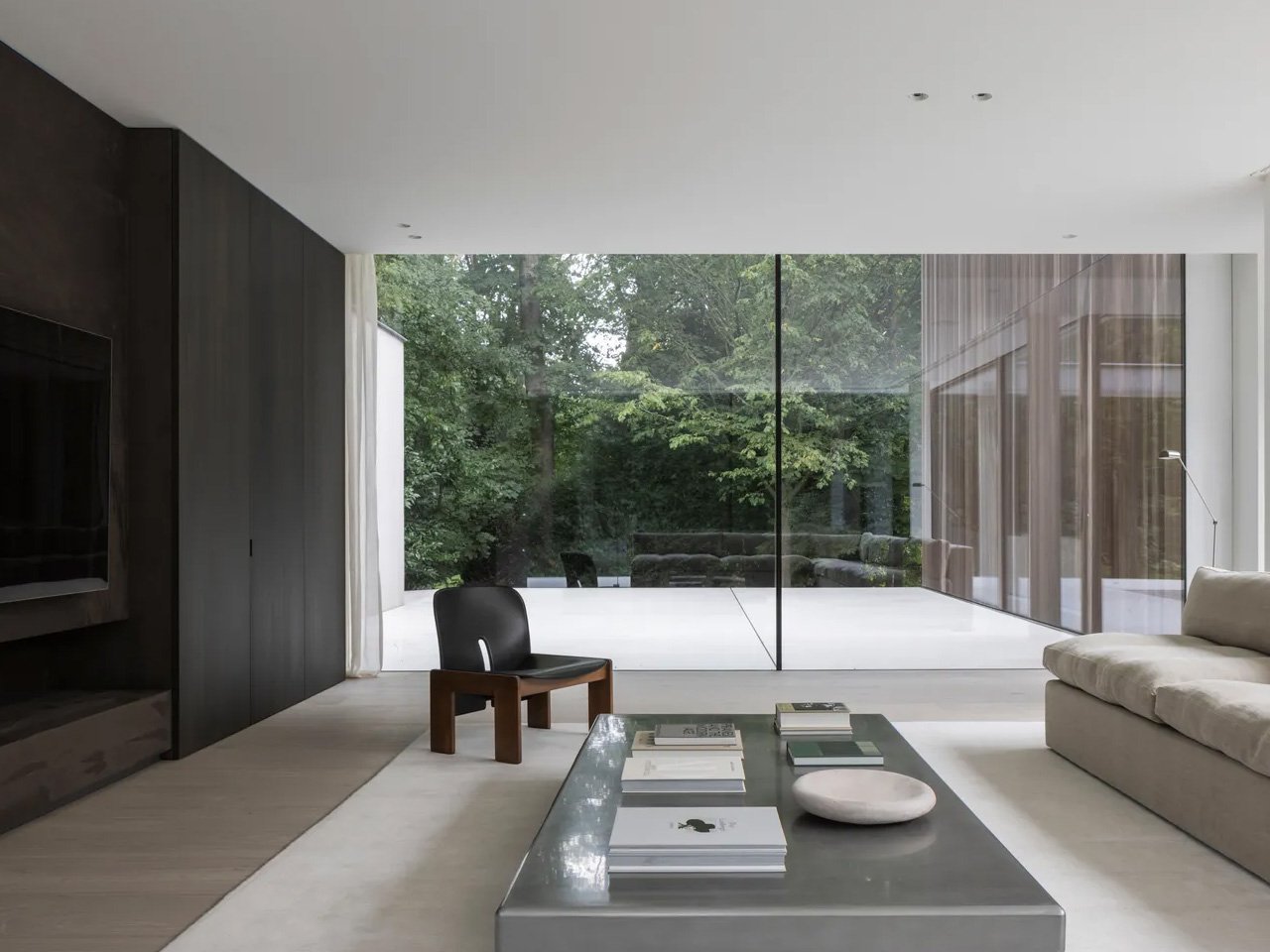

✦ ArchUp Editorial Insight
One of the most commendable details is that the house is partially suspended above the ground. This gesture reduces the direct impact on the forest floor and preserves the original ecosystem beneath the building. It also enhances views and orients them towards the trees rather than neighbouring plots.
Despite the simplicity of its design approach, the project demonstrates that fewer details do not mean repetition or monotony. On the contrary, its thoughtful detailing and careful material direction show how quiet architecture can create a visually and functionally rich living experience.
What sets Residence SAB apart is its ability to create a balanced dialogue. It presents a considered openness to the forest while genuinely preserving residents’ privacy and the sanctity of the natural site. And it does all this without wasting space or causing environmental harm.
Explore the Latest Architecture Exhibitions & Conferences
ArchUp offers daily updates on top global exhibitions, conferences, and professional art and design forums.
Follow key competitions, check results, and stay informed through the latest news worldwide.
ArchUp is your encyclopedic hub for discovering events and design-driven opportunities across the globe.


