

Opening of a Major Marine Bridge Eases Travel and Reduces Distances Between Cities

: A Turning Point in Marine and Traffic Mobility
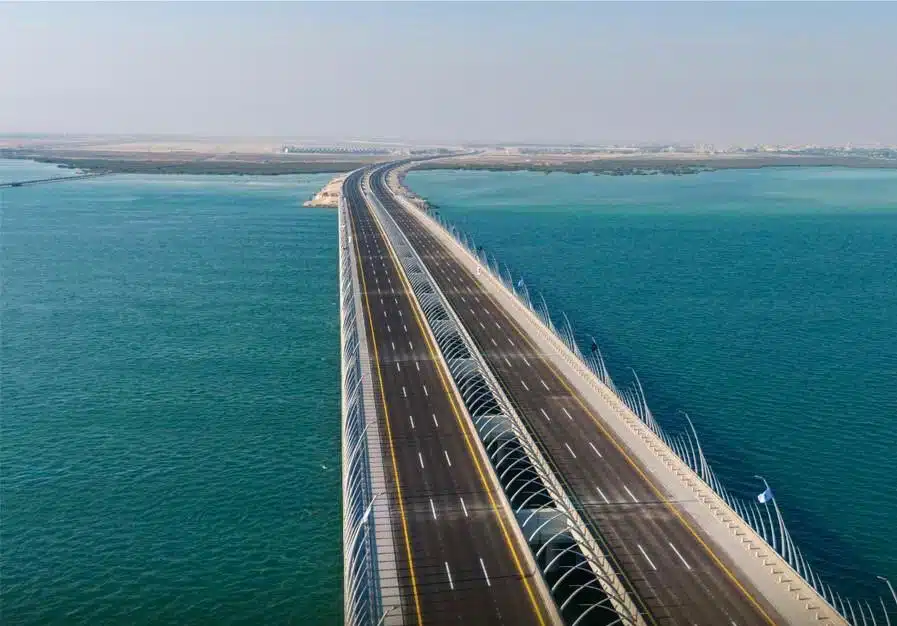
The Safwa – Ras Tanura Bridge has opened, marking a major shift in marine and traffic mobility in the region. The bridge spans 3,200 meters, crossing the Gulf waters and providing a new artery connecting Qatif, Safwa, and Dammam efficiently. It is designed to embrace the surrounding environment. Streamlined architectural lines reflect the sky and water on its sturdy steel and concrete structure. Wide lanes on both sides allow free vehicle movement and reduce congestion. The fluid lines balance function and visual harmony.
Location and Design Concept
The bridge stretches along the Gulf coast. It serves as a vital link between industrial and residential cities in the Eastern Province. The Safwa – Ras Tanura Bridge was designed to interact with the marine environment. Its smooth lines reduce wind and water current resistance. The design combines traffic efficiency with a complete visual experience. Users can enjoy views of the sea from both sides while crossing. The bridge acts as an additional vital entrance. It enhances seamless city connections and reduces travel time.
Visitor Experience and Traffic Flow on the Bridge
The bridge provides a smooth driving experience, with clearly marked lanes ranging between 12 and 16 meters wide to ensure uninterrupted traffic flow. Side emergency lanes and service paths facilitate daily movement, while gentle slopes and curves create a sense of continuity with the sea. During the crossing, visitors notice the interplay of natural light and shadows along the lanes and surfaces, making the journey visually comfortable and connected to the marine environment.

Architectural Details, Materials, and Techniques
The bridge relies on a composite structure of steel and concrete, with a central core supporting vertical loads and preventing lateral vibrations from wind or ship movements. Materials were selected to ensure resistance to marine corrosion and longevity. Streamlined lines help distribute loads and reduce wind resistance, while open spaces provide panoramic sea views.
Summary of Materials and Techniques:
- Steel structure with thickness 25–30 mm for heavy load support
- High-strength concrete with compressive strength 60 MPa
- Composite floor slabs 30 cm thick for durability and stability
- Traffic lanes width 12–16 meters for smooth vehicle flow
- Corrosion-resistant side metal facades 95% resistance
- Streamlined design reduces wind resistance by approximately 20% compared to conventional designs

Sustainability and Environmental Integration
The bridge is designed to minimize its impact on the marine environment, with corrosion-resistant materials and facades allowing natural light to penetrate. The lane layout and overall structure respect airflow and water currents. The bridge promotes sustainable traffic movement, reducing congestion in connected cities. High strength concrete and corrosion-resistant steel reduce maintenance needs and extend the bridge’s lifespan.
Project Vision
The Safwa – Ras Tanura Bridge demonstrates integration between infrastructure and the surrounding environment, connecting cities efficiently and smoothly. It is more than a passage it offers a daily seamless experience for users. The project illustrates the ability of design to achieve functional traffic flow while maintaining architectural and environmental harmony, establishing a new link in the Eastern Province’s transportation network and facilitating faster, safer access to cities and the airport.
Architecture professionals can follow ArchUp’s events section for verified updates on exhibitions, conferences, competitions, and results.

✦ ArchUp Editorial Insight
The Safwa – Ras Tanura Bridge stands out with its streamlined lines following the Gulf waters, complemented by wide side lanes offering panoramic views of the sea and horizon. The steel and concrete structure balances robustness with visual elegance, creating a smooth travel experience for users. Critically, the emphasis on fluidity limits the inclusion of auxiliary functions such as dedicated bike or pedestrian paths, slightly reducing multifunctional use. Nevertheless, the project delivers tangible value by facilitating traffic flow and minimizing congestion, while maintaining harmonious integration with the surrounding marine environment.




ArchUp Editorial Management
The article provides an analytical perspective on the Safwa – Ras Tanura Bridge as a case study in integrated marine bridge engineering. To enhance its archival value, we would like to add the following technical and structural data:
We would like to add that:
· Structural Data: 18,500-ton steel structure with 60 MPa reinforced concrete, and foundation piles extending 45 meters below seabed level
· Monitoring Systems: 24/7 stress monitoring sensors with 0.1 mm accuracy, and early vibration warning system detecting frequencies of 0.5-10 Hz
· Advanced Materials: Corrosion-resistant steel with 250-micron protective coating, and self-compacting concrete with 90% sulfate resistance
· Functional Performance: Traffic capacity of up to 40,000 vehicles daily, reducing travel time from 50 to 15 minutes
Related Link:
Please review for a comparison of marine bridge technologies:
[Marine Bridge Engineering: From Design to Implementation in Challenging Environments]
https://archup.net/jiaozhou-bay-bridge/