
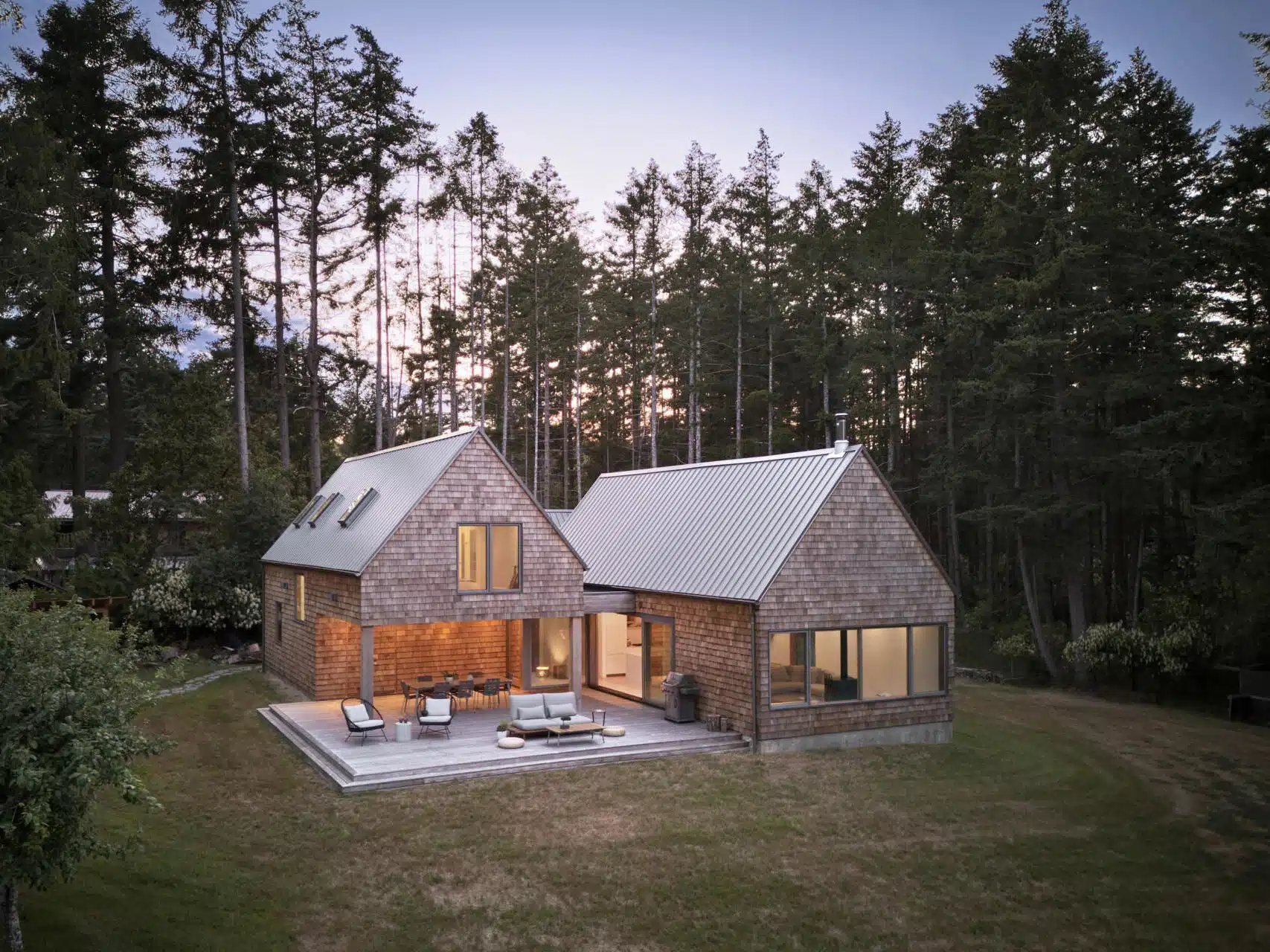
Sandpiper Cabin: Where Modern Design Flows into the Natural Embrace of Hornby Island

In the heart of the stunning natural landscape of Canada’s Hornby Island, the Sandpiper Cabin by Scott Posno Design emerges as a pinnacle of contemporary architecture that dialogues with nature rather than invading it. More than just a dwelling, this cabin represents a deep design philosophy aimed at creating a modern sanctuary that fosters a profound connection to its forest surroundings while retaining all the comforts and tranquility demanded by modern life. This project was designed to blend into its environment, expressing the slow rhythm and timeless beauty of the island through a pure and serene design language.
Site Integration: A Dialogue Between Architecture and Forest
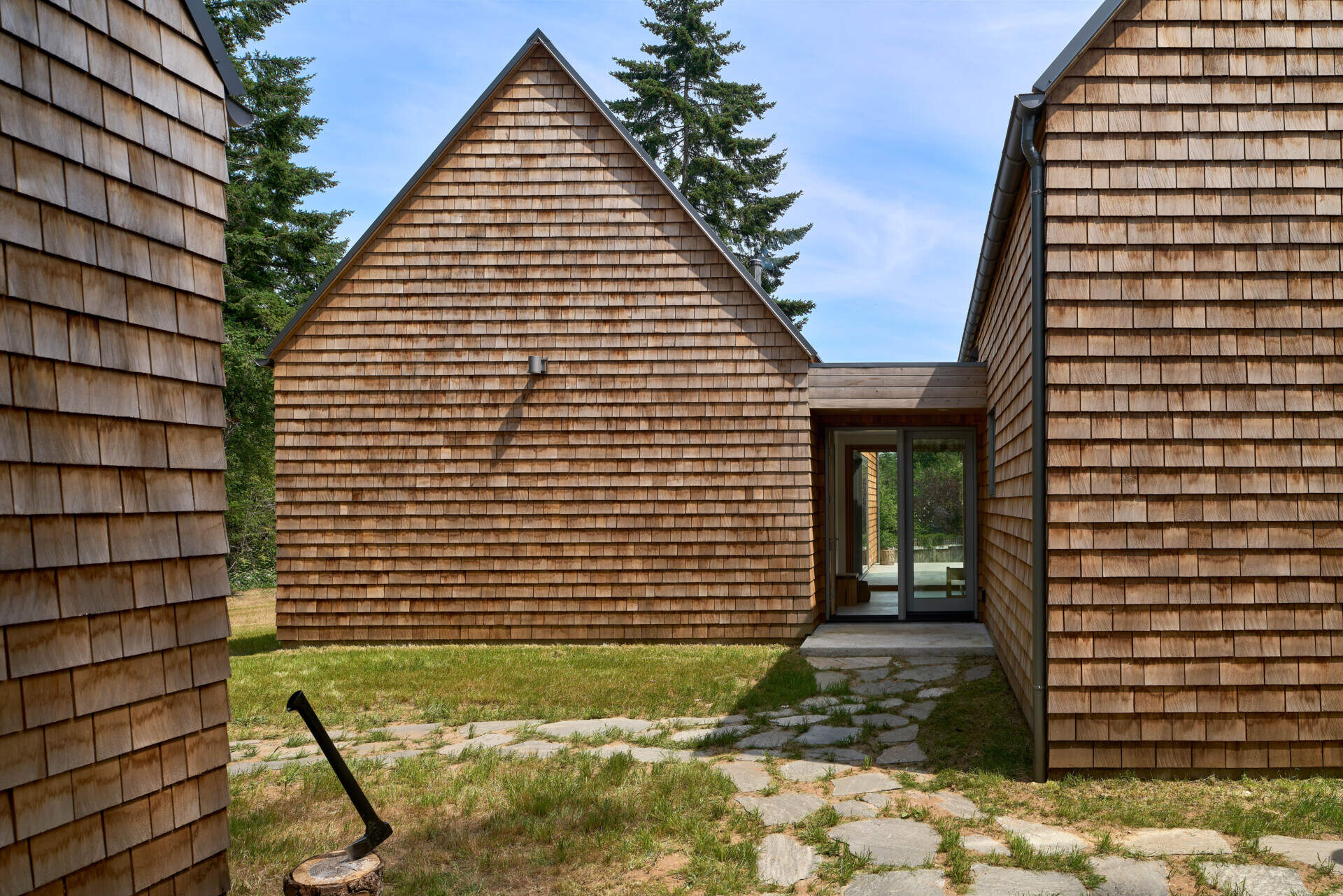
The building site was not merely an empty plot but a fundamental partner in the design process. Nestled amidst dense trees, the location dictated a specific orientation and called for exceptional visual openings. The designer responded to this challenge by dividing the program into two separate structures, connected by a shared entryway and passage. This intelligent design formula not only ensures privacy but also creates a feeling of connection between the home’s sections while maintaining an intimate relationship with nature from every angle.
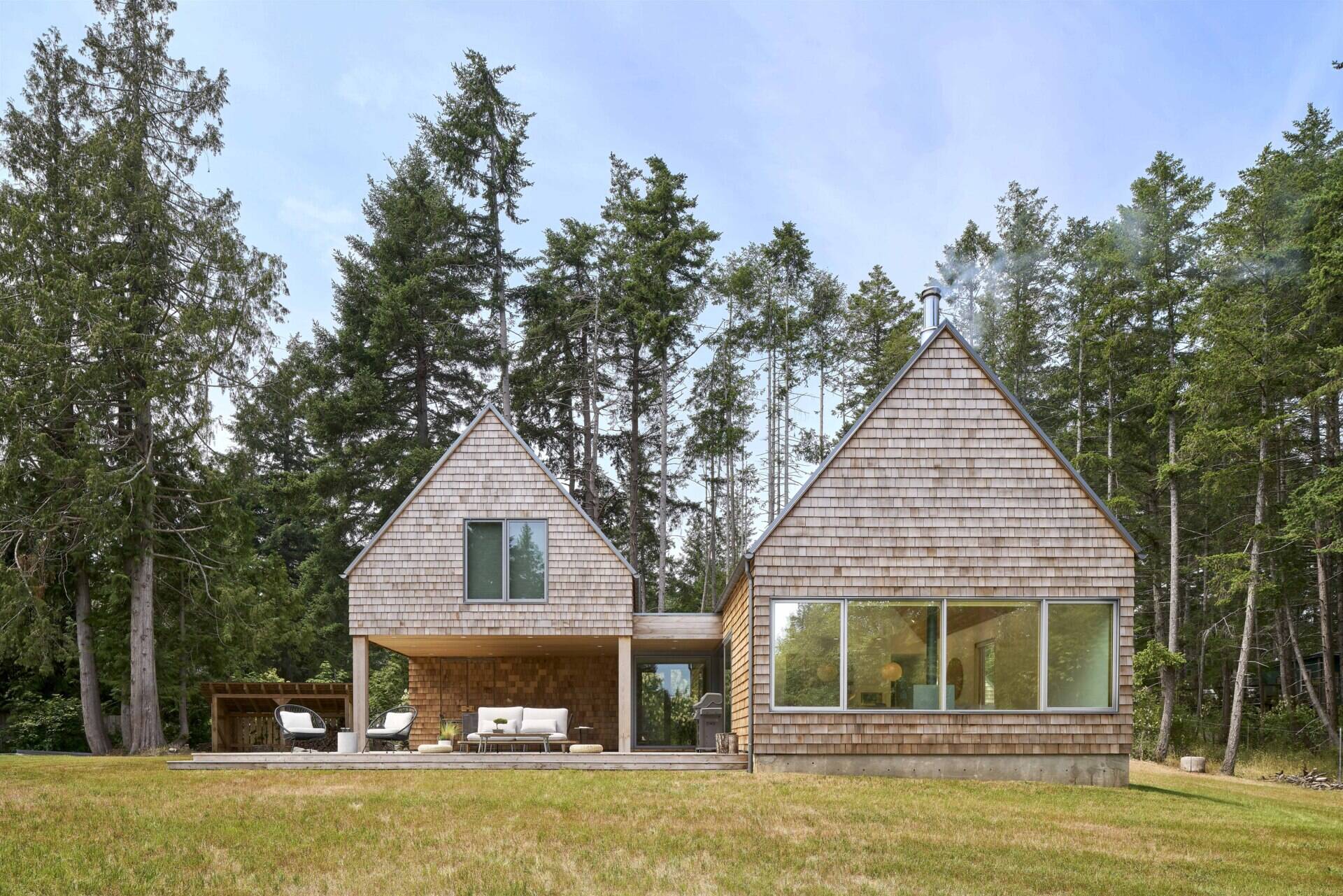
A Timeless Facade: Cedar Shingles as a Bridge Between Modern and Natural
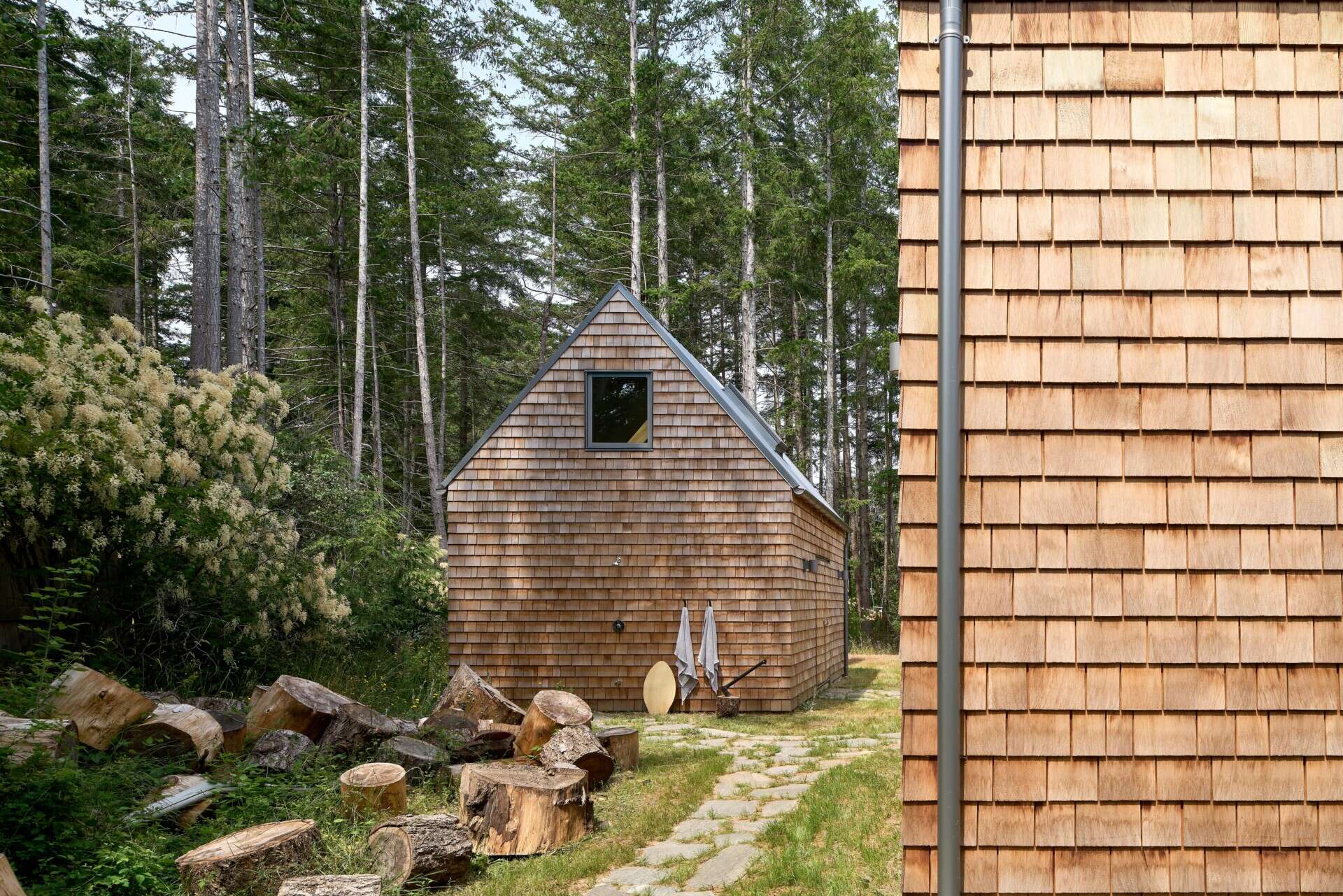
The cabin’s exterior is a study in aesthetic and functional balance. The design features a simple, linear volume clad in natural cedar shingles. This material is not just an aesthetic choice but a design statement. It gives the sharp, modern form a warm, organic texture that echoes the surrounding tree bark and earth tones. Practically, this material is renowned for its durability and ability to withstand the island’s humid coastal climate. Over time, the wood will naturally weather to a silvery grey, further fusing the cabin with its forest setting, making it appear as if it has always been a part of it.
Panoramic Views: Windows that Frame Nature
To enhance the dialogue between inside and outside, the design relies on extensive, large glass facades. These windows are not just openings for light and ventilation; they are living works of art that change with every season. They frame views of the green forest and clear skies, pulling the depth of the natural scene into the interior space. At night, this concept transforms; the warm internal light is cast through the glass, emitting a soft glow through the trees, turning the cabin into a bright, friendly beacon within the forest’s embrace without losing its modern, sleek architectural character.
Expansive Living Spaces: Blurring the Lines Between Inside and Out
The interior design extends the concept of fluidity, where the main living areas open directly onto a partially covered deck. This deck acts as an additional outdoor room, blurring the physical boundaries between the enclosed and the open. This design encourages inhabitants to live outdoors, providing an ideal space for gathering and relaxing while enjoying the natural sights and sounds. It is a space of continuous dialogue, where the forest becomes the permanent backdrop to daily life.
The Interior: Functional Simplicity and Natural Warmth
Inside, the design reflects the principles of simplicity and functionality.
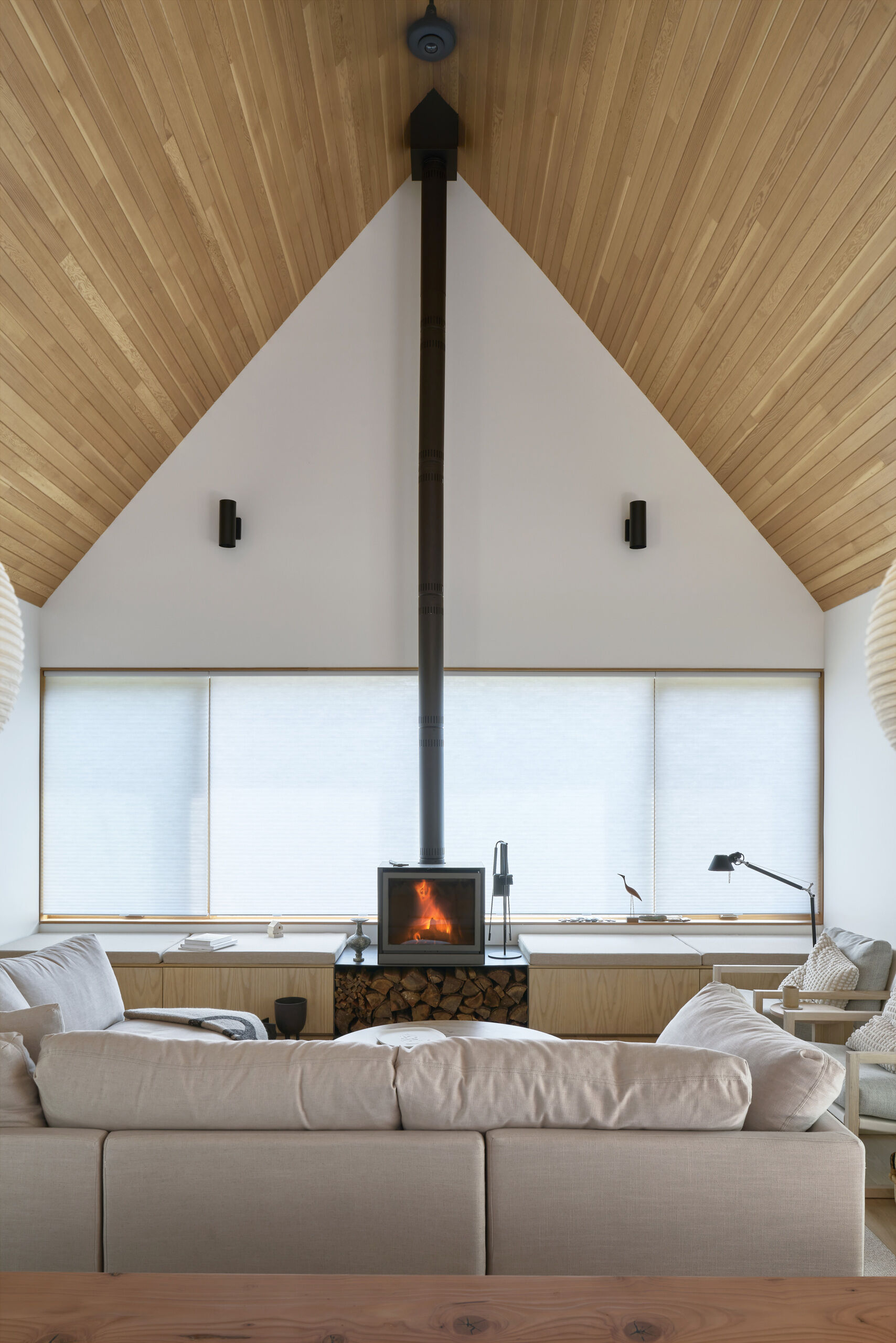
- The Living Room: Designed as a flexible gathering space, it is dominated by views of the forest through the tall windows. A wood-burning fireplace brings physical and emotional warmth to the room, acting as its beating heart. Built-in seating along the windows provides additional seating and hidden storage, maintaining the clean lines of the space.
- The Kitchen and Dining Area: These areas are centered around a long, substantial wooden table surrounded by simple chairs, creating a warm and inviting atmosphere for meals. The kitchen features light wood cabinetry, open shelving, and a pale backsplash tile in a calm, clean color palette. The central island with seating adds a layer of flexibility, functioning as an informal eating area or a gathering spot.
- Stairs and Upper Levels: A meticulously crafted wooden staircase provides a seamless transition between different levels. Upstairs, the primary bedroom with its wooden vaulted ceiling offers a private and quiet retreat. A second bedroom is equipped with bunk beds, providing flexible sleeping arrangements for family or guests.
- The Bathrooms: Designed with a contemporary touch, they feature subway tiles lining the shower walls, while skylights add a flood of natural light, enhancing the feeling of connection to the outdoors even in this private space.
The Sandpiper Cabin is more than a house; it is a living experience. It presents a sophisticated architectural solution that respects and celebrates its environment, answering the question of how modern architecture can be both elegant and comfortable without losing its organic connection to the land and nature that embrace it.
(✦ ArchUp Editorial Insight)
Scott Posno’s project provides a tangible example of achieving a deep harmony between modern architectural principles and the natural environment, where the forest becomes an essential partner and not just a backdrop. The design’s potential shortcoming may lie in its reliance on vast glazed areas, which could raise questions about long-term energy efficiency in Canada’s colder climate, opening a discussion for integrating high-performance double-glazing technologies. Nevertheless, the choice of materials that age with dignity, like the silvery-gray weathering cedar shingles, demonstrates an exceptional commitment to the idea of a living architecture that evolves with its surroundings, ultimately enhancing the project’s timeless aesthetic.
Brought to you by the ArchUp Editorial Team
Inspiration starts here. Dive deeper into Architecture, Interior Design, Research, Cities, Design, and cutting-edge Projectson ArchUp.


