

Breaking EDC Monotony: How Smart Design Reinvents Everyday Gear

Daily Carry Gear Similarity: A Real Issue
Over the past few years, EDC (Everyday Carry) gear has reached a noticeable level of sameness and monotony. Anyone visiting a tactical store or browsing Reddit’s r/EDC forum will instantly notice the same patterns repeating: traditional cylindrical flashlights, bulky multitools, and copycat designs that feel like scenes straight out of survival shows.
Design Question: Why Must a Flashlight Be Cylindrical?
Faced with this monotony, an alternative example opens the door to rethinking the very idea of design. A key point emerges here: does a handheld flashlight really need the usual tubular shape when your pocket isn’t cylindrical at all? This simple thought leads to re-examining the relationship between form and function.
A New Design Approach: The Flat Form Factor
From this idea comes a design direction inspired by principles taken from the smartphone world: a flat, practical product that’s comfortable to carry. In this way, it becomes easy to slip it into a pocket or hold it in your hand for extended periods without discomfort.
Core Specifications: Realistic Numbers
Looking at the dimensions, the flat measurements (0.88″ × 1.89″ × 4.17″) make this flashlight slimmer than most portable power banks, yet practically more useful during a power outage. The body is also made of aluminum with truly functional anti-slip grooves, unlike the decorative knurling often seen on tactical tools made mainly for show.
Ease of Control: An Intuitive Interface
In addition, the design includes a rotating bezel that lets you easily switch between spotlight, floodlight, sidelight, and power bank modes — all controllable with just your thumb, without complicated steps or a steep learning curve.
Balance Between Weight and Capacity
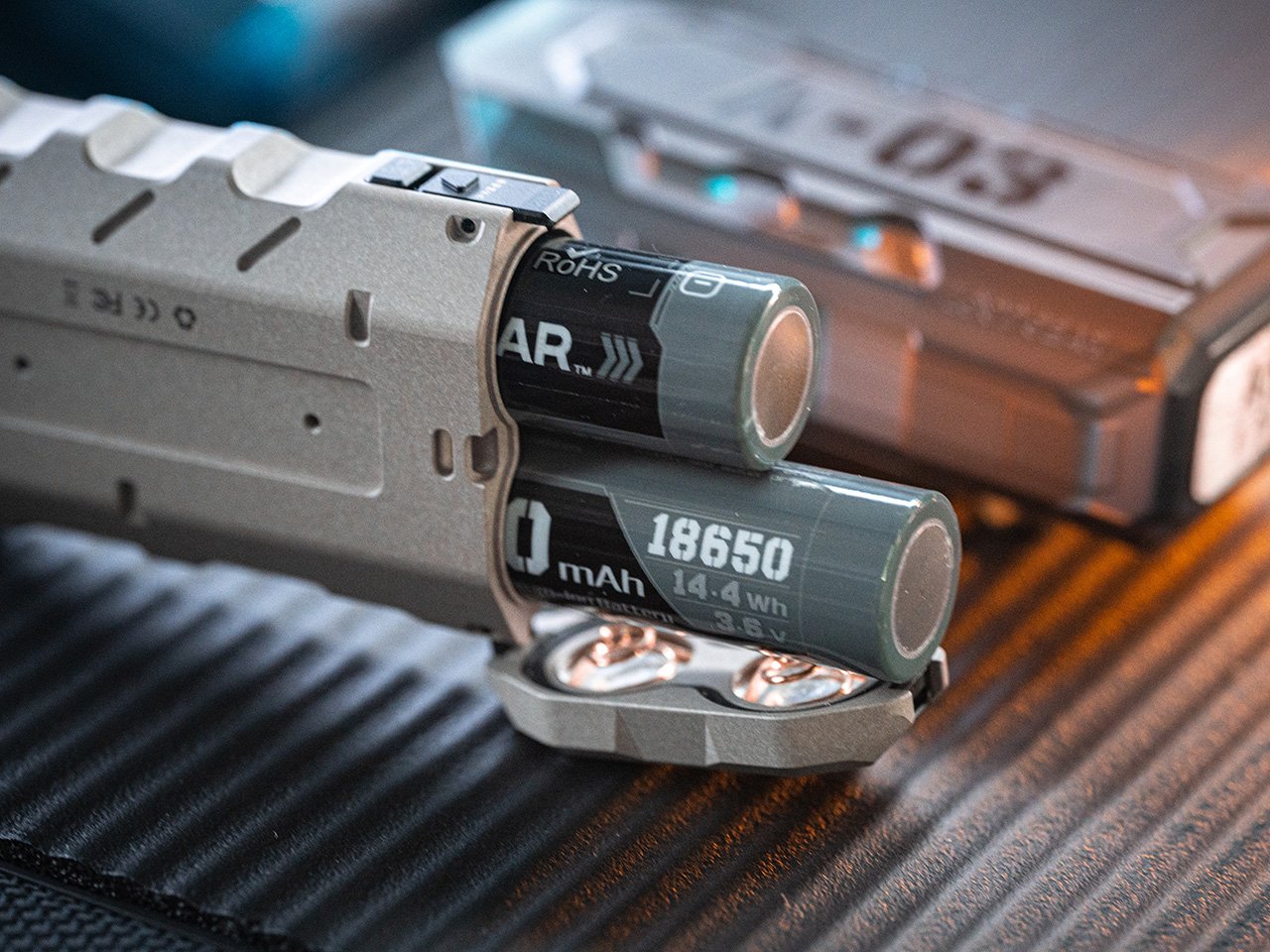
Finally, this type of flashlight weighs about 7.93 ounces with two 18650 batteries inside. At first glance, this might seem heavy, but on closer inspection, the batteries provide an approximate 8,000mAh capacity — enough to charge small devices when needed, replacing the need to carry an extra power bank.
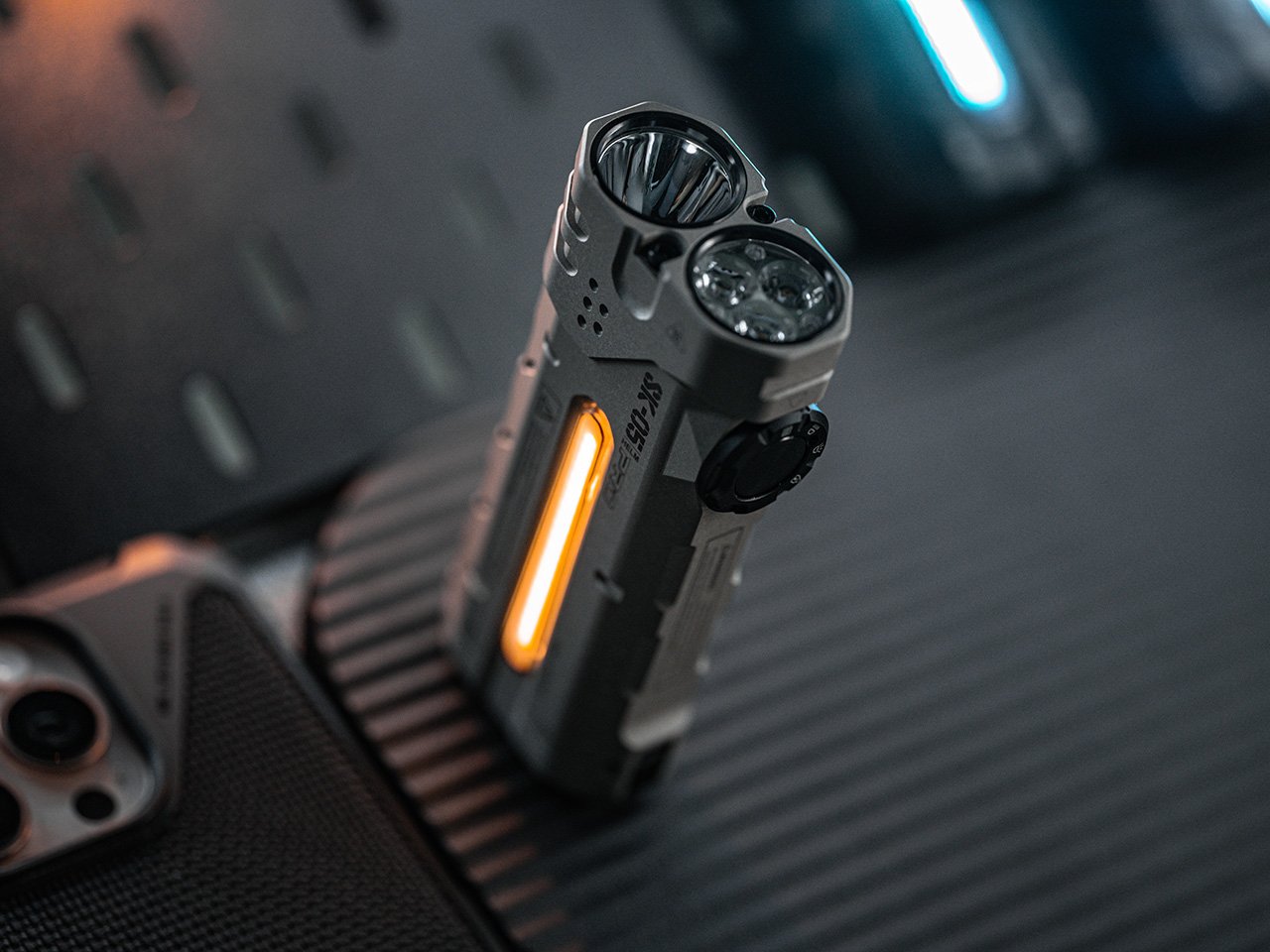
Lighting Configuration: More Than Just a Flashlight
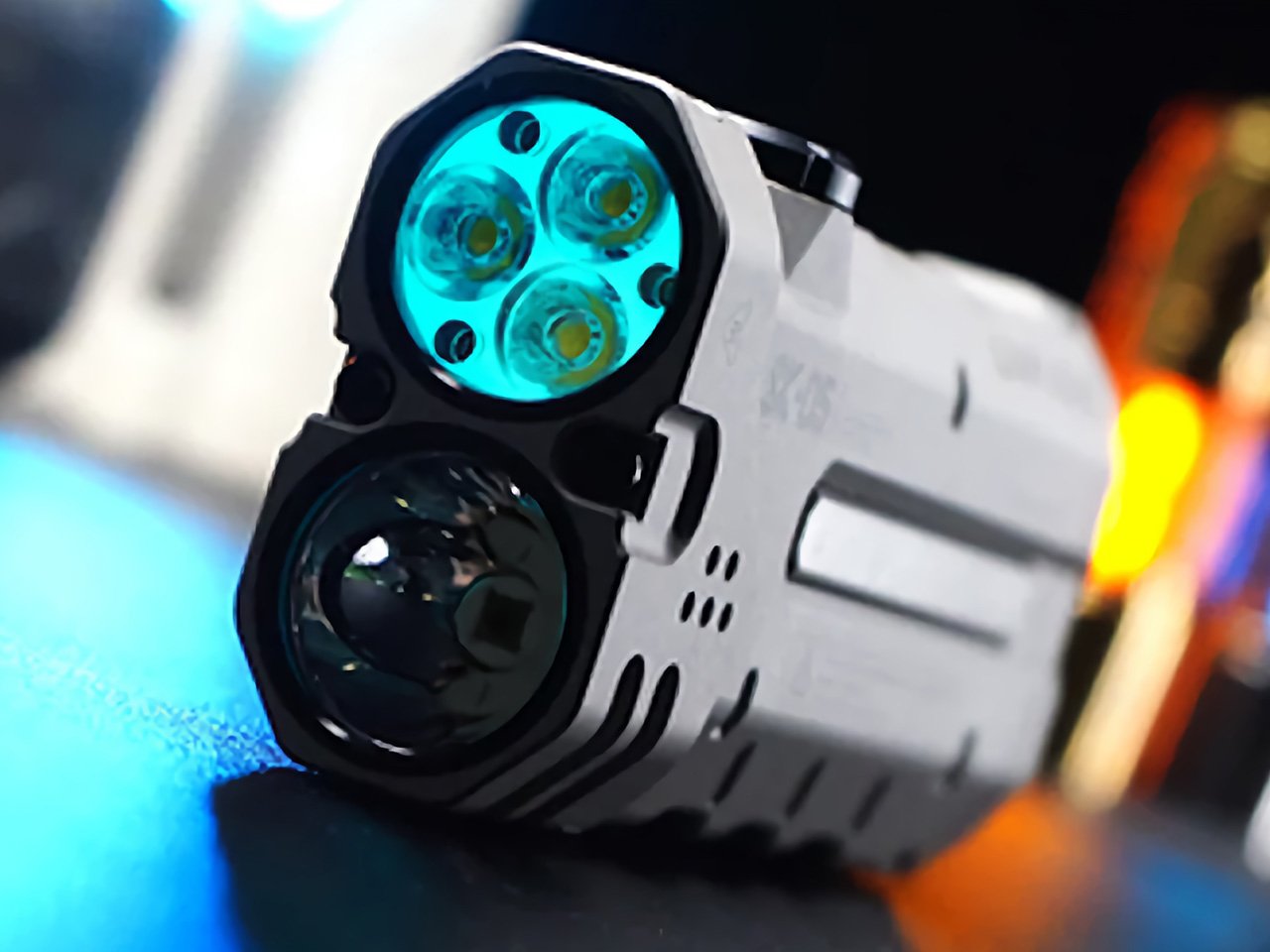
The LED setup reveals a high level of engineering thought in addressing daily lighting needs. Here, it’s not limited to a single light source — instead, the design combines a Luminous SFT25R unit for focused beam lighting, along with multiple floodlight options for versatile use.
Color and Light Options
When it comes to floodlighting, there are two main choices:
- A triple array of Nichia 519A LEDs with a color temperature of 5700K, delivering natural-looking light thanks to its high Color Rendering Index (CRI). This makes colors appear comfortable to the eyes during prolonged use.
- Or SST25 units with a 6500K color temperature, providing a cooler white light with higher lumen intensity, which helps cut through darkness more effectively.
Lighting Range: When You Need Distance
When there’s a need for long-range illumination, the SFT25R unit delivers a beam that reaches up to 405 meters, regardless of which floodlight option you choose. This means the user doesn’t have to choose between distance and spread — both can be combined as needed.
Light Distribution for Close Spaces
On the other hand, for lighting a workspace or campsite, both floodlight options provide even light distribution without harsh shadows that could interfere with detailed tasks. However, there is a difference in range: the SST25 light extends to about 200 meters, while the Nichia 519A option reaches up to 150 meters.
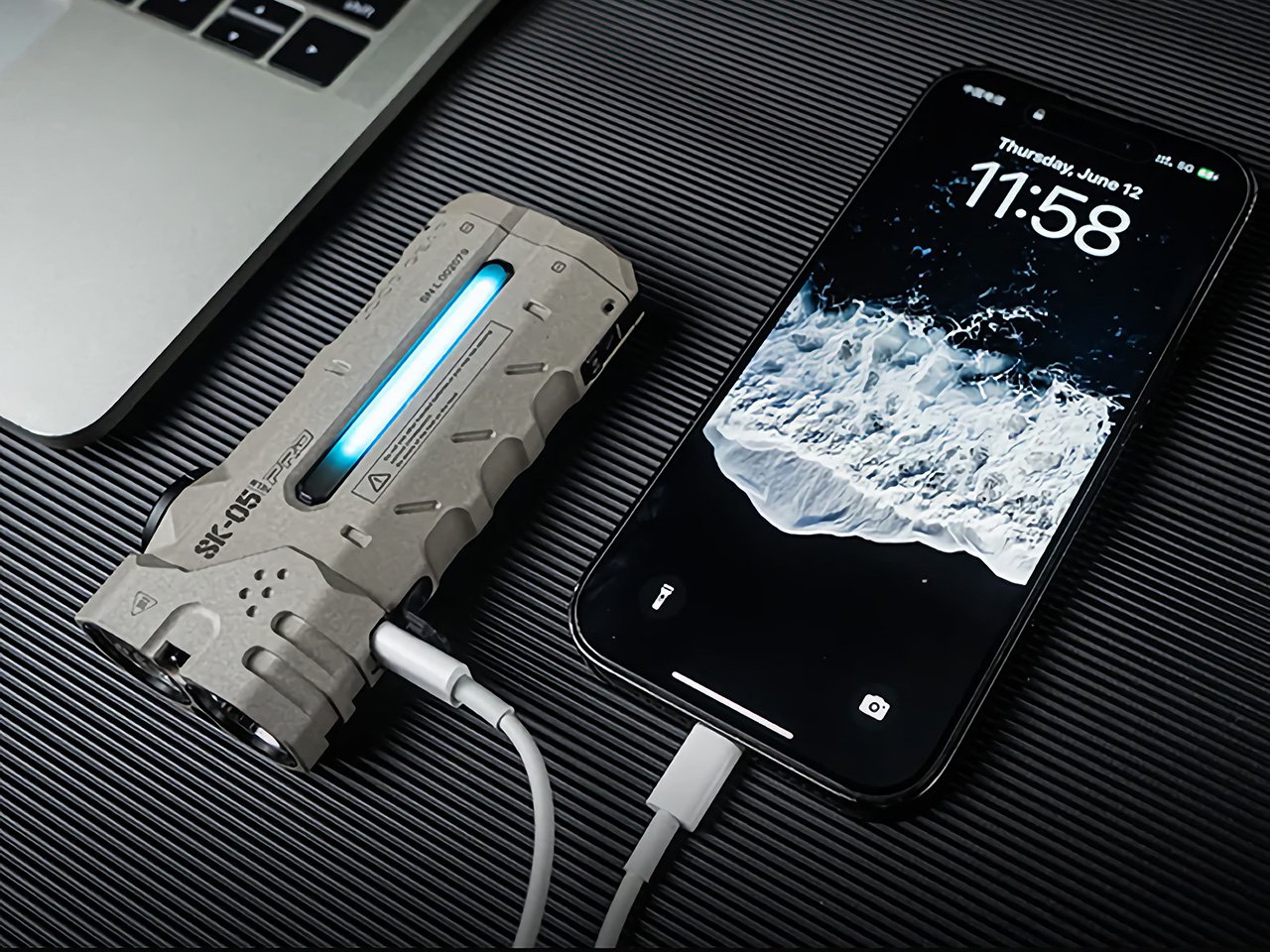
Compatibility with Modern Charging Ecosystems
One highlight worth noting in modern flashlight design is its support for a USB-C port — especially when paired with fast charging capability of up to 20W. This simple feature makes charging more seamless with everyday devices, eliminating the hassle of hunting for a dedicated cable for every tool.
Turning Weight Into Utility
Additionally, the built-in power bank feature transforms the idea of extra battery weight into real, practical value. Instead of the batteries being a burden, their capacity can be used to recharge your phone or wireless earbuds — removing the need to carry a separate power bank altogether.
The Philosophy: Get the Most Out of Every Gram
In short, this design approach reflects a core idea: every extra gram in your pocket should earn its place. In this way, you can reduce the number of items you carry on the go or on short trips without sacrificing essential needs.
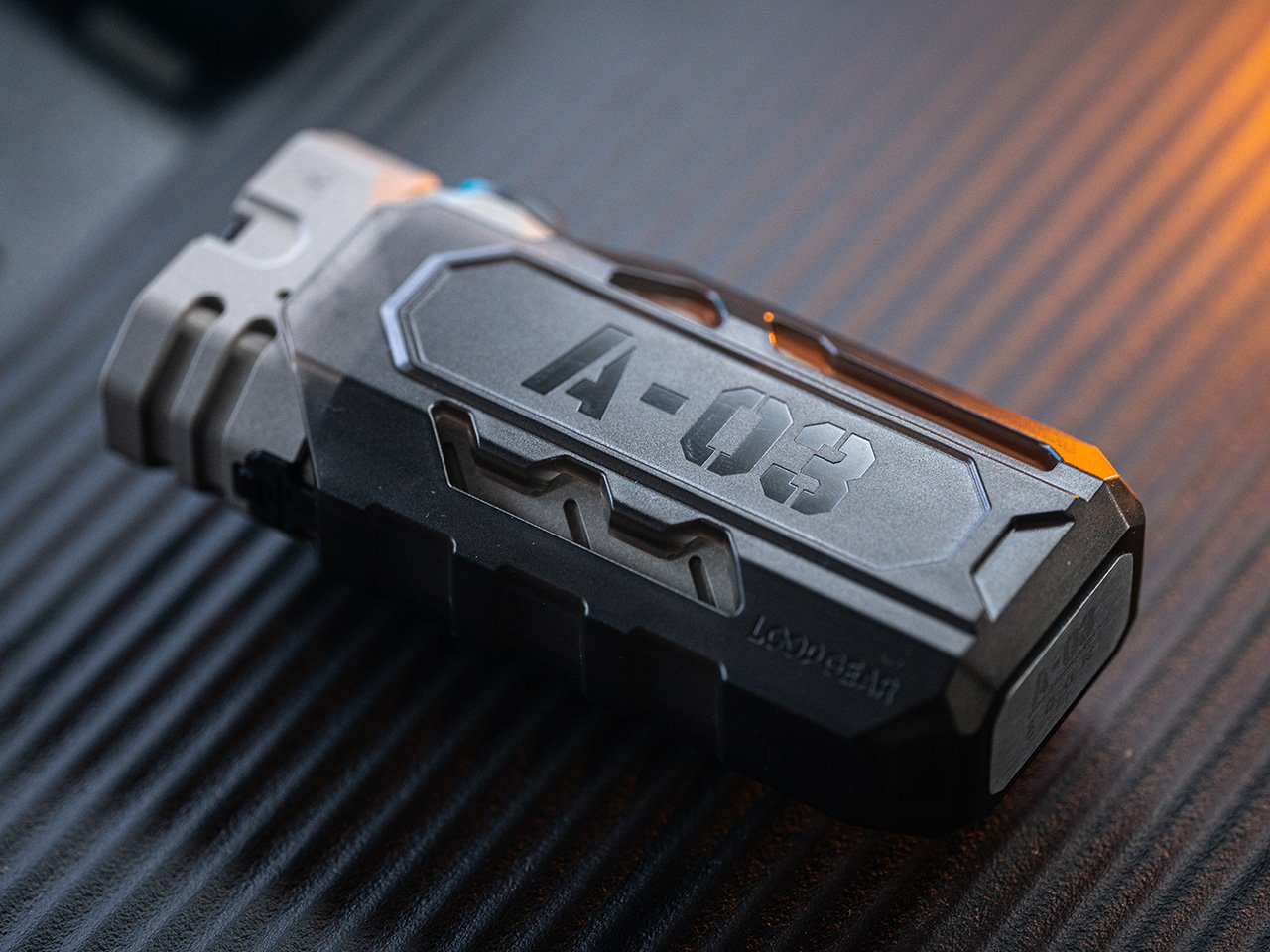
Drawbacks of the Traditional Cylindrical Design
When thinking about the typical shape of handheld flashlights, it’s clear that the cylindrical form brings certain practical limitations. For example, a round flashlight can easily roll away if placed on a sloped surface — which can be annoying or even cause damage in some situations.
How the Flat Design Solves These Issues
In contrast, the flat design directly addresses this problem. It sits comfortably in your hand for extended use without slipping or wobbling, and stays put when you set it down. This enhances ease of use and minimizes interruptions while working.
Pocket Clip Efficiency
Moreover, the flat shape works naturally with a pocket clip. Unlike round flashlights that create awkward bulges or pressure points, the flat flashlight rests smoothly inside your pocket without discomfort.
Better Use of Internal Space
Most importantly, this shape allows for a larger battery compartment within nearly the same outer dimensions. This means you can achieve higher capacity — like 8,000mAh — without significantly increasing size or weight.
Between Looks and Function
Over time, much of today’s EDC gear has shifted its focus toward projecting a tactical image — even if that comes at the expense of real-world performance. Too often, the emphasis is on rugged looks or an adventurous vibe without delivering practical, everyday solutions.
Back to the Core of Design
Amid this trend, some products stand out by reminding us of the value of design that solves real problems. When you rethink simple details — like the shape of a tool, how you carry it, or how it can serve multiple roles — the result is a product that’s truly functional.
The Value of Innovation and the Question of Change
While this type of gear may sit in a higher price range than standard alternatives, its true value lies in the impact of the thoughtful details it brings. The real question isn’t about price — it’s about why we keep repeating the same old approaches for decades.
One Last Thought
In short, this mindset reminds us that true innovation often starts with a simple question: Why do we keep doing things the same way? Sometimes, an honest answer is all it takes to redefine even the simplest tools we use every day.
✦ ArchUp Editorial Insight
–At first glance, carrying 7.93 ounces might seem excessive — but once you realize this design houses two 18650 batteries with a combined capacity of around 8,000mAh, it makes perfect sense as a backup power bank that saves you from packing an extra unit.
Over time, experience shows that looks alone don’t get the job done. Many EDC items have become more about showcasing a tactical vibe than delivering real, tangible utility. Rethinking the simplest design choices — from shape and controls to making every gram count — can redefine the entire concept from the ground up.
While products that offer this kind of smart problem-solving may cost more than basic alternatives, their true value appears in the bigger question they raise: Why do we keep repeating the same old ideas? Sometimes, simply asking that question leads us to far better tools than we ever thought possible.
Explore the Latest Architecture Exhibitions & Conferences
ArchUp offers daily updates on top global exhibitions, conferences, and professional art and design forums.
Follow key competitions, check results, and stay informed through the latest news worldwide.
ArchUp is your encyclopedic hub for discovering events and design-driven opportunities across the globe.


