
Sofia Tiny House: Redefining Sustainable and Mobile Living in Compact Spaces

Living in a Small Space: The “Sofia” Tiny House Experience in the Swedish Countryside
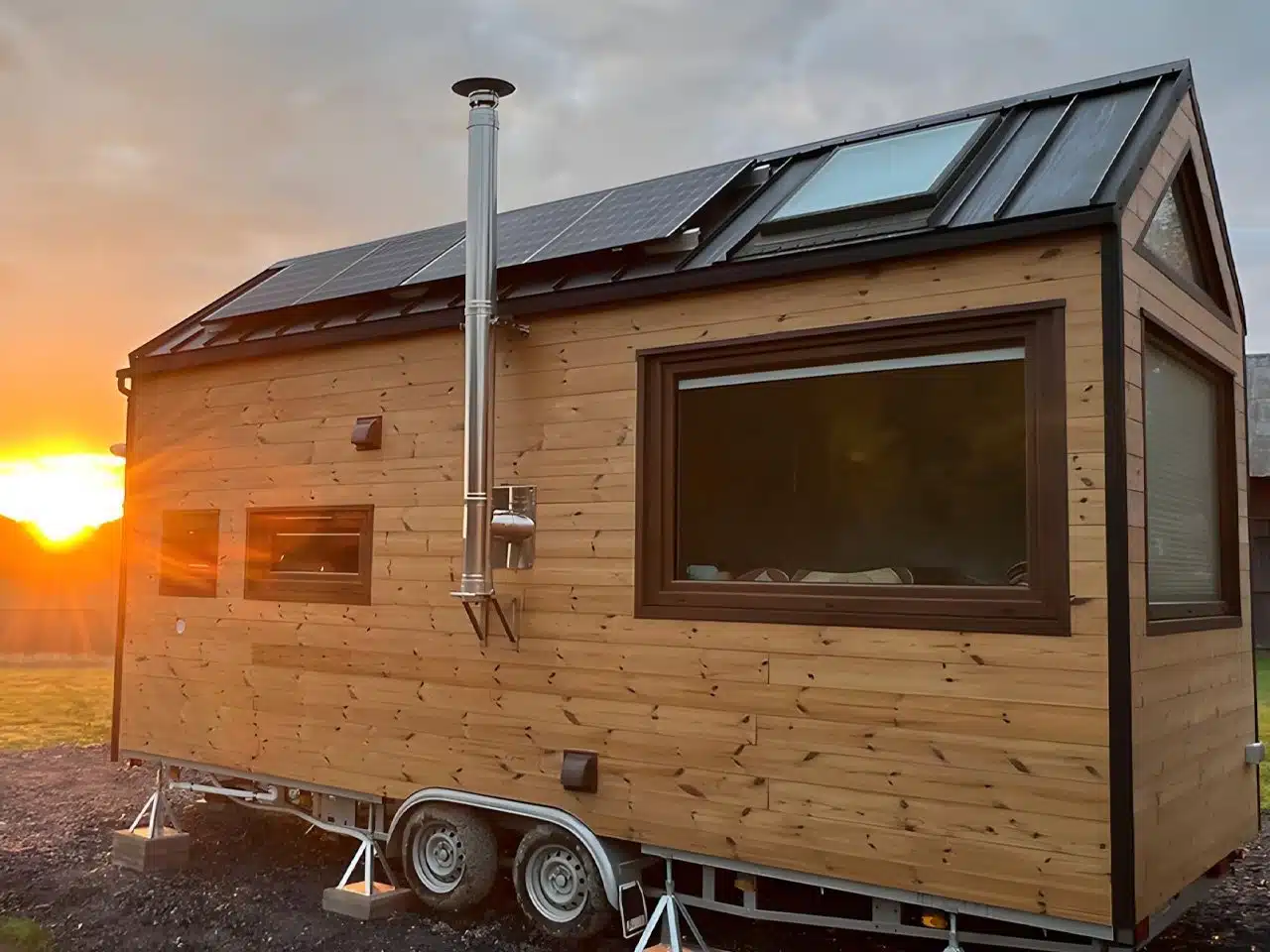
Nestled in the peaceful Swedish countryside, the Sofia tiny house by Vagabond Haven stands as proof that living in a limited space does not mean sacrificing comfort or aesthetics. At just 172 square feet, this home demonstrates how space can be used intelligently while maintaining a deep connection with the surrounding nature.
Windows and Natural Light
The first thing that stands out in Sofia is the window design. Large panoramic panels wrap around the interior, while a skylight sits directly above the king-size bed. This configuration turns the sleeping area into a private observatory where residents can follow the movement of the clouds during the day and watch the stars at night. The elegant bohemian décor blends naturally with this openness, creating an atmosphere that feels more like a cozy retreat than just a living space.
Structure and Mobility
Sofia is built on a 20-foot dual-axle trailer, giving the house mobility and enhancing the appeal of small-space living on the move. The pinewood structure provides the ideal balance of weight and durability, ensuring it can withstand harsh Scandinavian winters.
Year-Round Living
This model is specifically designed for year-round habitation in harsh northern conditions, featuring solid insulation and high-quality materials throughout. The house measures 6.1 meters in length, 2.55 meters in width, and 4 meters in height, road-legal in size yet surprisingly spacious once you step inside.


Interior Design: Smart Space Utilization
The interior design of Sofia reflects a thoughtfully planned layout, where the elevated bedroom platform also serves as storage space. The pull-out furniture beneath the bed easily transforms the area from a sleeping zone into a multifunctional living space, maximizing every square meter in a practical way.
Kitchen and Living Area
The fully equipped kitchen occupies one wall and contains all the tools needed for daily cooking without creating a sense of tightness. The living area adapts to different needs throughout the day, proving that a 16-square-meter space can accommodate more activities than one might expect. This transformative interior design shows how a very small area can offer suitable comfort for two people.
Bathroom: Comfort and Customization
The bathroom deserves special attention due to its wet-room design using Fibo Trespo panels. Users can choose the type of toilet that suits them, whether it’s an incinerating toilet, a composting model, or a wall-integrated system, making the house adaptable to different locations and lifestyles.
The shower cabin offers multiple options between a curtain or a glass door, while the energy-efficient water heater keeps utility costs low. The bathroom setup is completed with a cabinet, a washbasin, and the option of traditional mirrors or infrared mirrors, demonstrating that small spaces can combine comfort and flexibility without sacrificing quality or design.


Sustainability and Environmental Awareness
What sets the Sofia tiny house apart from others in its size category is its emphasis on eco-friendly details. Sustainable materials are used throughout every stage of construction, and the home offers a variety of off-grid solutions for those seeking complete independence.
These solutions include a rainwater harvesting system, a ventilation recuperator, and solar power options, allowing Sofia to provide full comfort even in remote locations far from traditional municipal services. The design philosophy reflects an understanding of what tiny-house dwellers truly want: genuine quality, not just a miniature version of conventional homes. Every cabinet, window placement, and storage solution serves multiple purposes, resulting in a balanced and elegant space rather than a cramped or empty one.
Flexibility in Design and Use
Sofia represents the perfect balance in the tiny-house market: small enough to remain affordable and mobile, yet large enough to serve as a legitimate permanent home for couples or individuals seeking closeness to nature and freedom from excess. Its flexible design allows users to customize both space and features according to their needs, making the house practical and comfortable at the same time.


✦ ArchUp Editorial Insight
From an architectural standpoint, the Sofia tiny house offers an intriguing experience in utilizing compact and mobile spaces while considering sustainability and a connection to nature, an aspect that represents a modest yet meaningful contribution to practical innovation. However, certain challenges arise when examining the potential of replicating this model on a wider scale or adapting it to different needs.
Firstly, the limited size and multifunctional spaces make the design highly sensitive to furniture layout and daily activities, which may reduce practical flexibility in everyday use. Additionally, relying on a mobile trailer structure and specific materials, such as pinewood and specialized mechanical systems, may increase maintenance costs or decrease adaptability in climates that differ significantly from those in Sweden.
Secondly, the emphasis on sustainability and self-sufficient systems (such as solar power and rainwater harvesting) raises questions about the feasibility of the design in denser urban contexts, where such solutions may be less applicable or less efficient compared to conventional systems. Moreover, the limited customization options in some standard models may restrict users’ ability to adjust the design to their long-term needs.
Nevertheless, architects and engineers can benefit from the Sofia concept by studying small-space management and the integration of flexibility with multifunctionality, particularly when designing mobile homes or sustainable projects in rural or remote areas. The core idea of combining an elevated platform with smart storage and multifunctional living zones represents a model that can be further developed and improved, especially if greater consideration is given to climatic and operational constraints.
Prepared by the ArchUp Editorial Team
Don’t miss the chance to explore more from Architecture, Buildings, and Interior Design on the ArchUp website.


ArchUp Editorial Management
The article provides a comprehensive analysis of the functional and aesthetic dimensions of Little Sofia House, with a distinguished focus on space optimization strategies in limited areas. To enhance its archival value, we would like to add the following technical and structural data:
We would like to add that:
· Structural Data: Swedish pine timber frame meeting C24 specification, with 200 mm rock wool thermal insulation, and wind resistance up to 120 km/h
· Environmental Systems: Flexible solar panels with 2.5 kWh capacity, 300-liter water tank, and electric underfloor heating system consuming 1.8 kWh
· Sustainable Materials: 85% recycled wood flooring, Fibo Trespo moisture-resistant panels, and VOC-free paints
· Dimensions & Performance: 16 m² floor area with 2.4-meter interior height, achieving 92% energy efficiency through advanced insulation and triple glazing
Related Link:
Please review for a comparison of mobile residential unit construction techniques:
[Micro Architecture: Designing Sustainable Living Spaces in Limited Areas]
https://archup.net/sahab-project-in-lazord-destination-offers-modern-living-near-half-moon-bay-in-eastern-province/