Steppe Yurts and the Art of Mobile Architecture Nomadic Space in Mongolia

Across the vast, windswept Mongolian steppe, where seasons shift dramatically and survival depends on adaptability, one of the world’s most intelligent and resilient shelter designs continues to thrive: the traditional yurt. But this circular tent is more than just a home—it’s a living expression of nomadic life, blending practicality with deep cultural identity.

Built for the Land
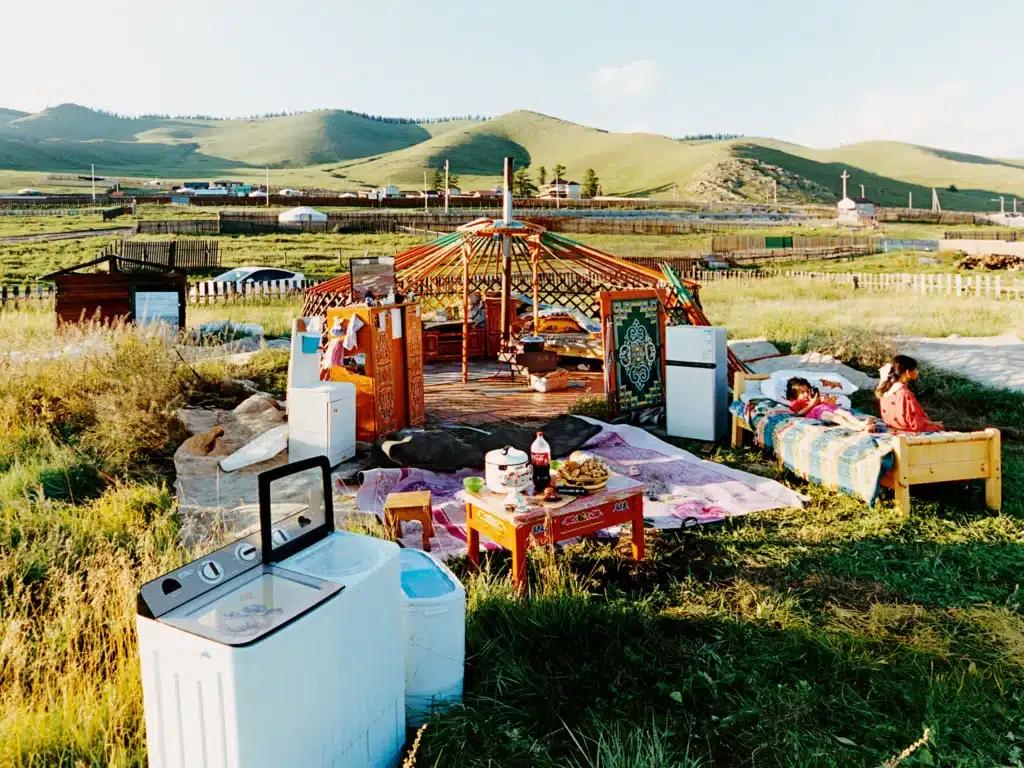
A yurt isn’t just a tent; it’s a refined architectural response to the natural world. Its frame is circular, made from lightweight, collapsible wood that allows for quick assembly and disassembly. Slanted roof beams converge at a central opening that lets in light and allows smoke to escape. The outer covering, often made from thick felt or goat hair, offers insulation that handles both extreme cold and intense heat.
| Component | Material | Purpose |
|---|---|---|
| Wall frame | Foldable wood lattice | Flexibility and portability |
| Roof | Beams + central skylight | Ventilation and structural balance |
| Covering | Compressed felt or goat hair | Weatherproof insulation |
| Floor | Wooden boards or bare ground | Basic thermal separation |

A Social Space by Design
Inside the yurt, nothing is random. Every part of the interior reflects long-standing traditions and a clear sense of order:
- The right side is typically for men and guests.
- The left is reserved for women and daily tools.
- Opposite the door is a sacred area, where spiritual items or family heirlooms are kept.
This arrangement isn’t rigid or forced—it’s a reflection of deep-rooted customs that foster respect and harmony within the home.
Tradition That Adapts
Although nomadic life has declined, yurts have not disappeared. In fact, they’re evolving. Urbanization and climate change have reshaped life in Mongolia, but yurts are finding new roles that bridge past and present.
| Project | Location | Modern Use |
|---|---|---|
| Eco Yurt Camp | Gobi Desert | Sustainable tourism |
| Nomadic Pavilion | Ulaanbaatar | Cultural exhibitions |
| Innovation Hub Yurt | Capital outskirts | Youth training and community events |
These examples show how traditional architecture can inspire modern solutions without losing its soul.
More Than Shelter: A Way of Thinking
The yurt embodies a lifestyle—lightweight, flexible, and deeply connected to nature. Its simplicity isn’t about minimalism for style’s sake; it’s a conscious design that supports movement, preserves community structure, and respects the environment.
Final Thoughts
Mongolian yurts prove that meaningful architecture doesn’t always need concrete and steel. Sometimes, the most profound ideas come in the form of a tent that can move with the seasons yet remain anchored in identity.
This round, portable shelter continues to carry the spirit of the steppe, reminding us that adaptability can be just as powerful as permanence.
✦ ArchUp Editorial Insight
This article presents the Mesonía Suite as a layered exploration of chromatic identity within hospitality design. The images reflect a controlled palette of deep reds, earth tones, and soft lighting that convey cultural depth. Yet, while the spatial language is expressive, the article omits discussion on functionality or environmental relevance. As a conceptual showcase, it offers aesthetic value but limited future-proofing for long-term design strategies. Nonetheless, the personal narrative behind the project enriches its experiential appeal and makes it a distinctive case in boutique spatial storytelling.
ArchUp offers daily updates on top global architectural exhibitions, design conferences, and professional art and design forums.
Follow key architecture competitions, check official results, and stay informed through the latest architectural news worldwide.
ArchUp is your encyclopedic hub for discovering events and design-driven opportunities across the globe.