The Nest: A Sustainable Architectural Model Redefining Harmonious Living with Nature

Sustainable Living at the Heart of Nature
Atop Kits Island, amidst a calm and secluded atmosphere, The Nest project by Daria Sheina Studio presents an architectural model that rethinks the concept of living in remote locations. This concept centers around blending comfort with simplicity. The design is aimed at minimizing environmental impact and enhancing harmony with the natural surroundings of the Pacific Northwest.
Compact, Multi-Level Design
The Nest is built within a compact footprint, yet consists of three cleverly connected levels. This vertical structure provides a sense of spaciousness while maintaining privacy. Different functions are thoughtfully distributed across each floor.
Compared to traditional designs that rely on horizontal expansion, this approach demonstrates that utilizing height can be an innovative way to save space without sacrificing comfort.
Harmony with the Natural Landscape
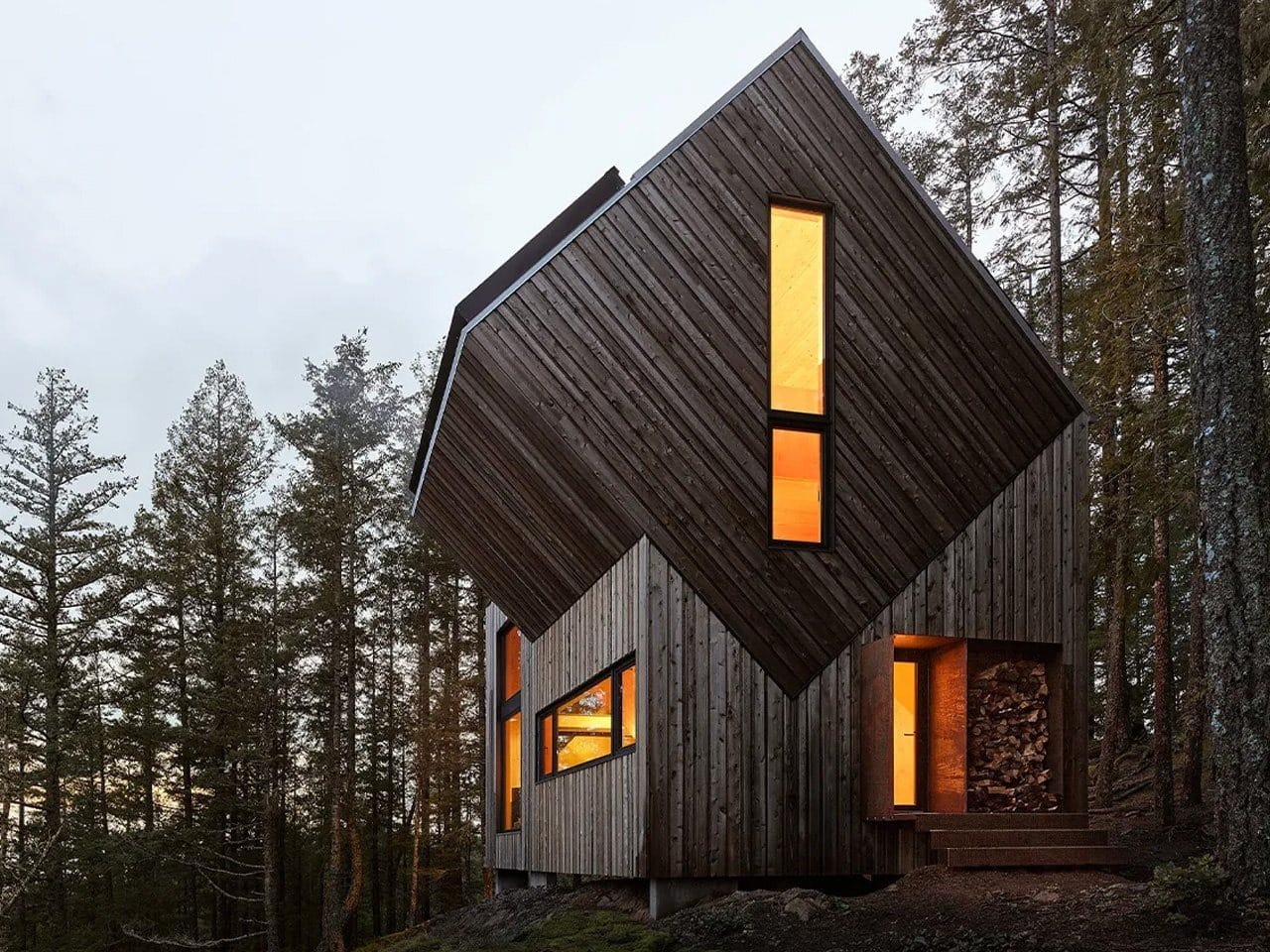
From the outside, the building appears as a geometric composition resembling an “architectural puzzle”. Shapes interlock and twist deliberately to form a balanced volume that does not overpower the surrounding nature. Despite the small ground area it occupies, the design remains balanced between modernity and natural beauty. It reflects a clear philosophy of respecting the environment and preserving the overall landscape.
Sustainable Philosophy in Material Selection
Every element in The Nest, from the materials used to the way spaces are allocated, reflects a genuine commitment to sustainable living principles. Materials were carefully chosen to have a low environmental footprint, while considering durability and aesthetic appeal simultaneously. This makes the project a practical example of how to combine innovation and sustainability in contemporary architectural design.


Spatial Distribution for Harmony and Comfort
Upon entering The Nest, the interior design reveals a carefully interconnected sequence of thoughtfully planned spaces. Each area harmonizes with the rhythm of daily life, offering moments for reflection or interaction.
The designers relied on a vertical layout to maximize space efficiency. Elevated platforms are designated for sleeping, while the lower levels are reserved for gathering or peaceful contemplation.
Natural Lighting and Panoramic Views
Windows are strategically placed not only to allow natural light to flood in but also to artistically frame the ever-changing views of the forest and coastline. This approach blends the indoors with the outdoors. It gives residents a constant sense of connection to the surrounding environment.
Functional Furniture and Clutter-Free Design
Furniture in The Nest follows a simple functional approach. Space-saving solutions and built-in storage units help maintain order while meeting all daily off-grid living needs.
Eco-Friendly Prefabrication Techniques
The choice of prefabrication techniques was strategic. This ensures precision and quality in construction, with the ability to quickly assemble the structure on the remote site. This method reduces environmental disturbances caused by construction activities and contributes to protecting the fragile local ecosystem.

Material Selection and Environmental Impact
The materials used in constructing The Nest were carefully chosen for their low environmental impact. This commitment extends beyond the materials themselves to the overall design, which aims to minimize the project’s ecological footprint, both literally and figuratively.
Architectural Integration with Nature
The Nest is more than just a place to stay; it is a space that enables a deep reconnection with nature. The building seamlessly integrates with its surroundings. It blurs the boundaries between shelter and natural landscape, enhancing the healing potential of both and creating a unique restorative experience.
An Architectural Vision that Promotes Health and Awareness
Daria Sheina Studio’s vision is founded on a holistic concept linking physical and mental health, supporting a lifestyle based on mindfulness and intention. The project transcends the idea of construction to become an experience of existence itself. It raises fundamental questions such as:
- What does it mean to truly reside in a place?
- How can architecture facilitate renewed moments of inspiration and comfort?
An Inspiring Model for the Future
In light of this vision, The Nest stands as a sustainable architectural model deeply integrated with nature. It represents an inspiring direction for future retreats that seek to balance humanity and the environment. The design unites beauty, functionality, and ecological harmony.

✦ ArchUp Editorial Insight
The Nest project highlights excellence in integrating sustainability with modern architecture through a compact design. This respects nature and reduces environmental impact. However, it may face practical challenges such as limited interior space compared to traditional designs. There is also a need for meticulous maintenance in a remote environment, which could affect its long-term durability.
Prepared by the ArchUp Editorial Team
Don’t miss the chance to explore more from Architecture in fields like Building Materials and Architectural News on the ArchUp website.