Sustainable Diplomatic Architecture: A Case Study of the Nogales Consulate for the Bureau of Overseas Buildings Operations

Ennead Architects and Diplomatic Mission Design
Ennead Architects, headquartered in New York, possesses extensive experience in designing diplomatic missions in diverse locations, whether near or far. Among their recent prominent projects is the design of the new General Consulate in Nogales, Mexico, commissioned by the U.S. Department of State’s Bureau of Overseas Buildings Operations (OBO).
The Building’s Significance and Primary Function
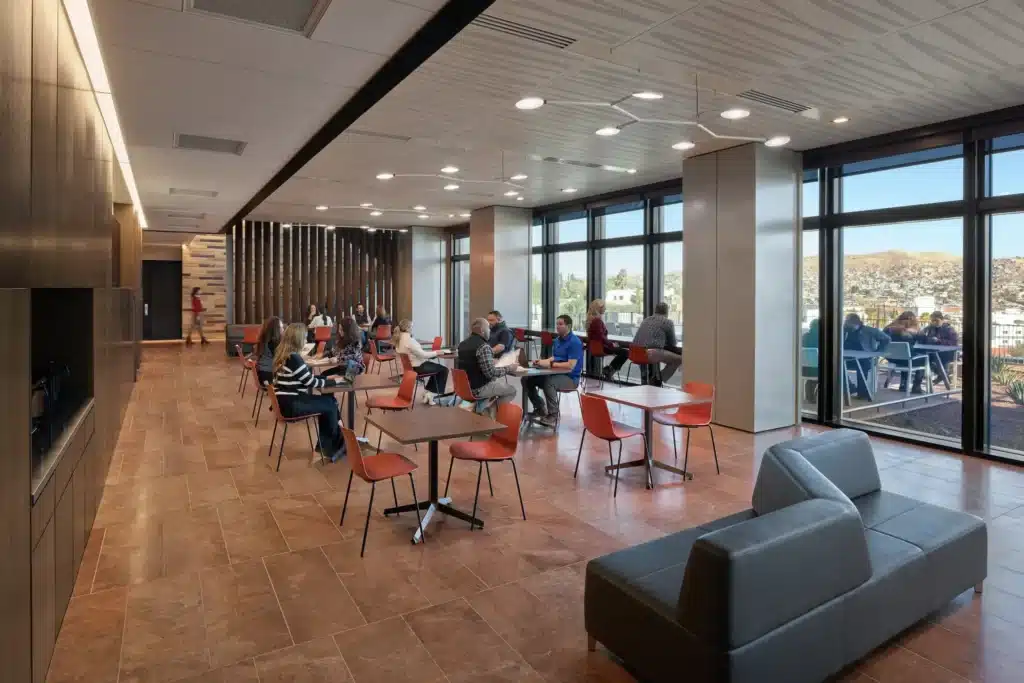
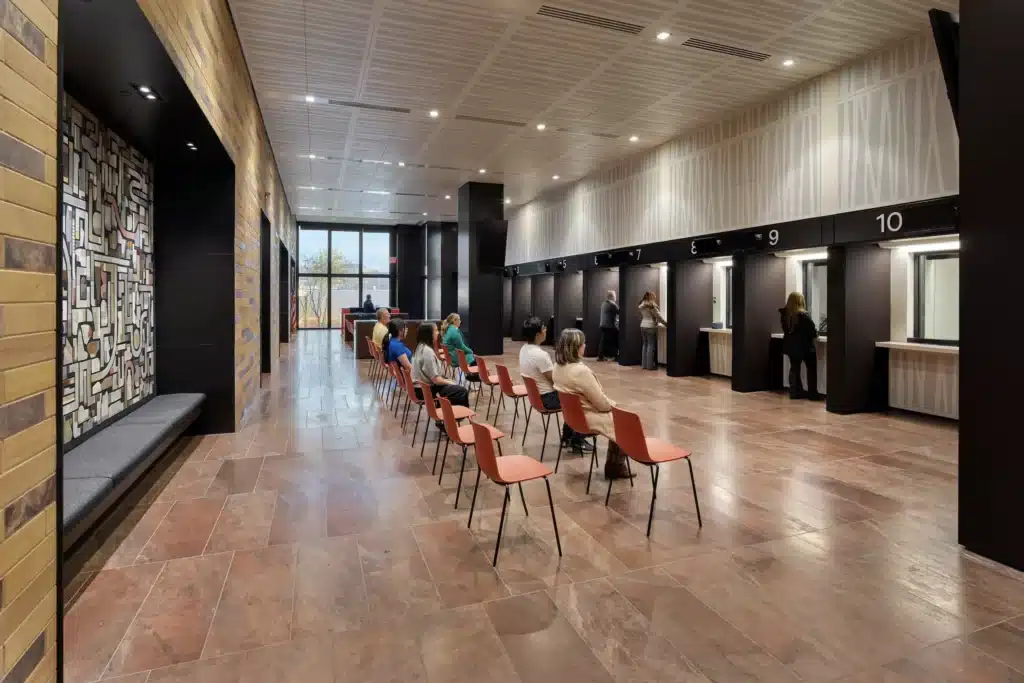
According to Felicia Berger, partner and executive director of the project at Ennead, the three-story building combines two essential functions: meeting daily operational needs on a human scale while simultaneously projecting a dignified diplomatic presence. The primary function of this building is to process work visas, a vital task given the heavy traffic across one of the busiest border crossings between the United States and Mexico.
The Strategic Location of Nogales
Nogales city is located in the state of Sonora, Mexico, just south of its smaller namesake counterpart in Arizona, USA. This area serves as a major international entry point, containing five significant border ports. Massive volumes of fresh Mexican produce flow through this vital border region, more than any other area along the U.S.-Mexico border.
Project Launch and Implementation Challenges
The strategic project began execution in May 2019, taking into account the challenges imposed by the border environment, both in terms of security and operational procedures. Designing a building that integrates diplomatic work requirements with daily practical functions in an active area like Nogales represents an architectural and engineering challenge simultaneously.
Site Challenges and Architectural Design
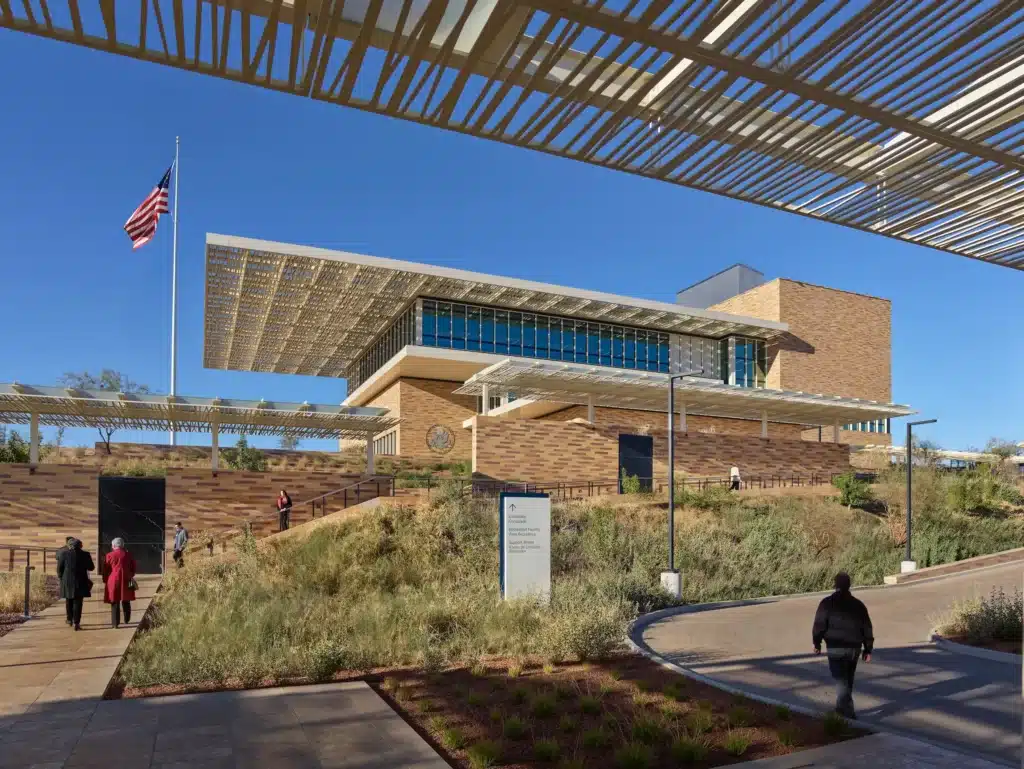
The complex was constructed on a platform situated on a site that was previously a steep and difficult-to-access slope, covering an area of approximately 8.45 acres. This uneven terrain presented a complex task for the design team, requiring a delicate balance between stringent diplomatic security requirements and the necessity of seamless integration with the surrounding neighborhood.
The building is located in the heart of a densely populated neighborhood known as Colonia Jardines Caletia in Nogales, making it important for the design to convey a formal and clear presence without overwhelming the mixed-use character of the area.
Moreover, the design aims to create a sustainable and enduring infrastructure that serves the local community while providing a functional space that combines security, utility, and social integration.
Architectural Design and Inspiration from Mexican Heritage
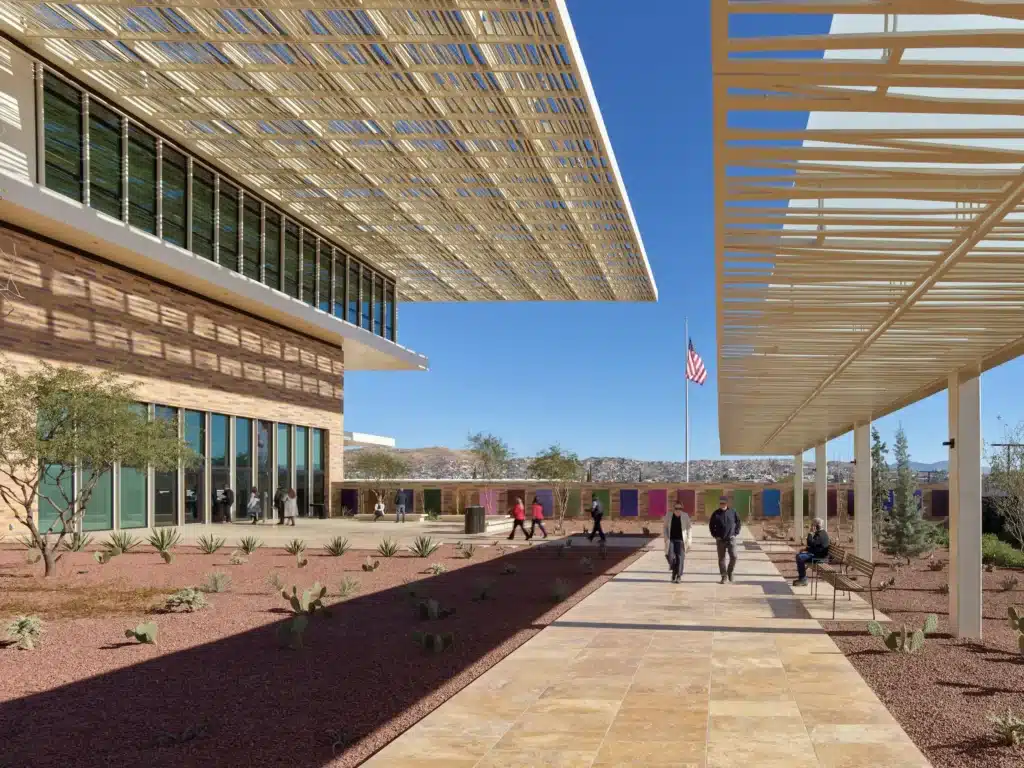
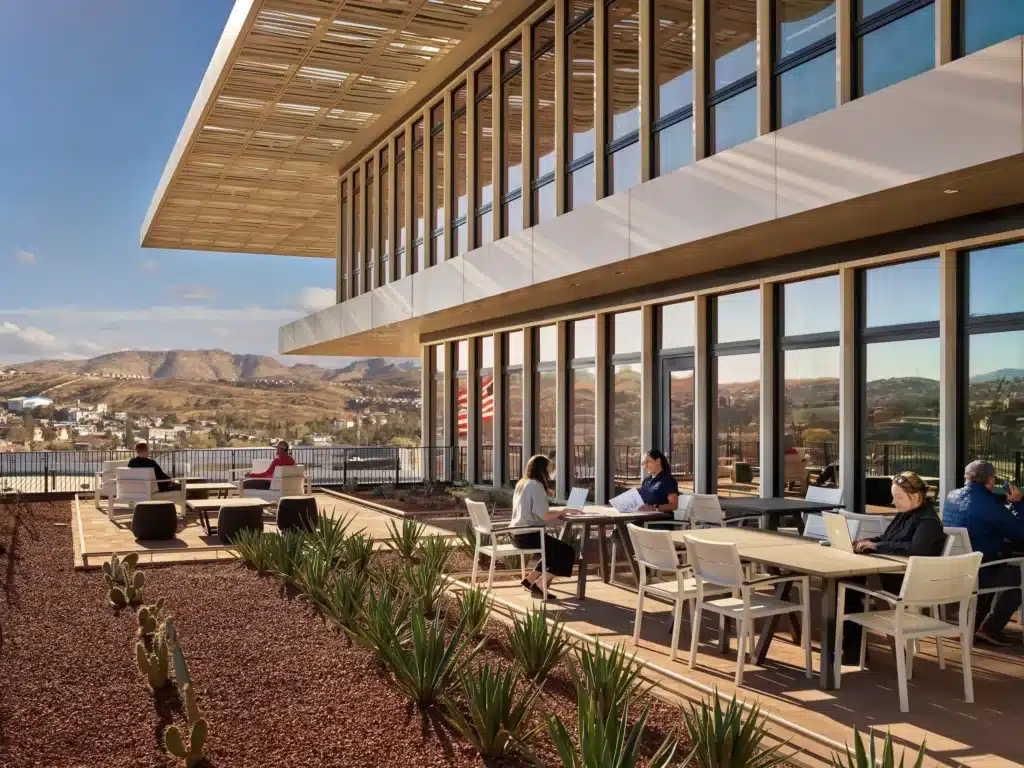
The consulate was realized by stacking three distinct volumetric blocks clad in stone, clearly expressing a contemporary tribute to the traditional Mexican ramadas. In this project, the tradition is reinterpreted through the use of a series of shading screens made of aluminum and steel, generously deployed to provide protection and shade.
The Roof Canopy and Its Role in Enhancing Thermal Performance
The building’s most prominent architectural feature is one of these structures, which offers natural heat mitigation through a wide roof canopy extending from a suspended metal-glass box on the upper floor. This design includes a large protected terrace facing northeast, furnished with seating and drought-resistant plants, creating a comfortable and sustainable environment.
The Relationship Between Heritage and Sustainability
Ennead explains that these modern interpretations of traditional desert shading structures provide a coordinated sequence of gathering spaces and resting points, acting as mediators in regulating temperature, reducing the building’s cooling load by up to 20%.
Furthermore, these contemporary ramadas serve as symbolic bridges connecting authentic Mexican heritage with the American diplomatic presence, reflecting the integration of function and culture.
Enhancing Outdoor Use in a Harsh Desert Environment
Additionally, these structures double the usable outdoor space of the consulate, transforming areas that were previously uncomfortable public voids due to intense desert sun heat into effective and comfortable places suitable for events and gatherings.
Sustainability Strategies in the Design
In addition to providing thermal comfort through shading screens, the building integrates several important sustainable strategies. Among these is the use of photovoltaic solar systems, which contribute to generating clean energy and reducing reliance on traditional energy sources.
Enhancing Biodiversity and Resource Management
The project also includes planting native vegetation, which enhances the building’s integration with the surrounding environment, including efforts to rehabilitate the historic walnut tree in Nogales. This step is not only symbolic but also contributes to restoring the area’s biodiversity.
Furthermore, the building features an integrated water management system that helps reduce flood risks in neighboring communities, reflecting a practical and environmental concern for local challenges.
Design Vision and Embodiment of International Cooperation
In this context, Richard Olcott, design partner at Ennead, stated: “We aimed to create a building that emerges from the landscape itself (both literally and figuratively) and serves as a physical embodiment of international cooperation.”
These words reflect the vision behind the design, where the building integrates diplomatic functions with local environmental requirements, becoming a symbol of cultural communication and a commitment to sustainability.
Other Ennead Projects in Diplomatic Mission Design
Ennead Architects continues to expand its expertise in diplomatic mission design through several important international projects currently underway. Among these projects are:
- The U.S. General Consulate in Chiang Mai, Thailand
- The U.S. General Consulate in Lagos, Nigeria
- The U.S. Embassy in Nassau, the Bahamas
Opening of the U.S. Embassy in Ankara
On the other hand, Ennead opened its U.S. Embassy project in Ankara, Turkey, in 2023, a project that reflects a high level of innovation and commitment to the standards of modern diplomatic design.

✦ ArchUp Editorial Insight
The Nogales Consulate project represents a prominent example of how diplomatic architecture integrates security, operational functionality, and environmental sustainability, an especially critical balance in a complex border environment like Nogales. One of the most notable positives of this project is the design’s focus on achieving a delicate balance between stringent security requirements and the need for social integration with the surrounding neighborhood, reflecting a deep architectural awareness of the importance of local context.
Moreover, the modern reinterpretation of the Mexican tradition of “ramadas” is not merely an aesthetic touch but adds practical value by improving thermal performance and reducing energy consumption, making the building more sustainable in a harsh desert environment.
However, some challenges can be noted regarding the practical use of outdoor spaces. While the shading canopies and contemporary ramadas expand the usable outdoor area, relying on such techniques in a desert environment may limit user comfort during peak heat periods, especially given increasing climate variability that could push temperatures even higher. Additionally, questions remain about the capacity of the water management infrastructure to adapt to extreme flooding that might exceed current estimates, particularly as climate severity intensifies.
Architecturally, the company’s design reflects a high capability to blend heritage with modernity, but this might render some parts of the building somewhat constrained in terms of internal flexibility to accommodate future developments in consulate use. The stacking design and chosen materials, despite their quality, could impose limitations on reconfiguration or expansion, an important consideration for governmental buildings that may require periodic updates.
Overall, the Nogales Consulate project is regarded as an advanced model in contemporary diplomatic architecture, combining functional beauty with cultural respect. Yet it remains in need of close monitoring to ensure the continuity of its functional and environmental performance amid future changes.
Prepared by the ArchUp Editorial Team
Don’t miss the chance to explore more from Architecture in fields like Design and Architectural News on the ArchUp website.