
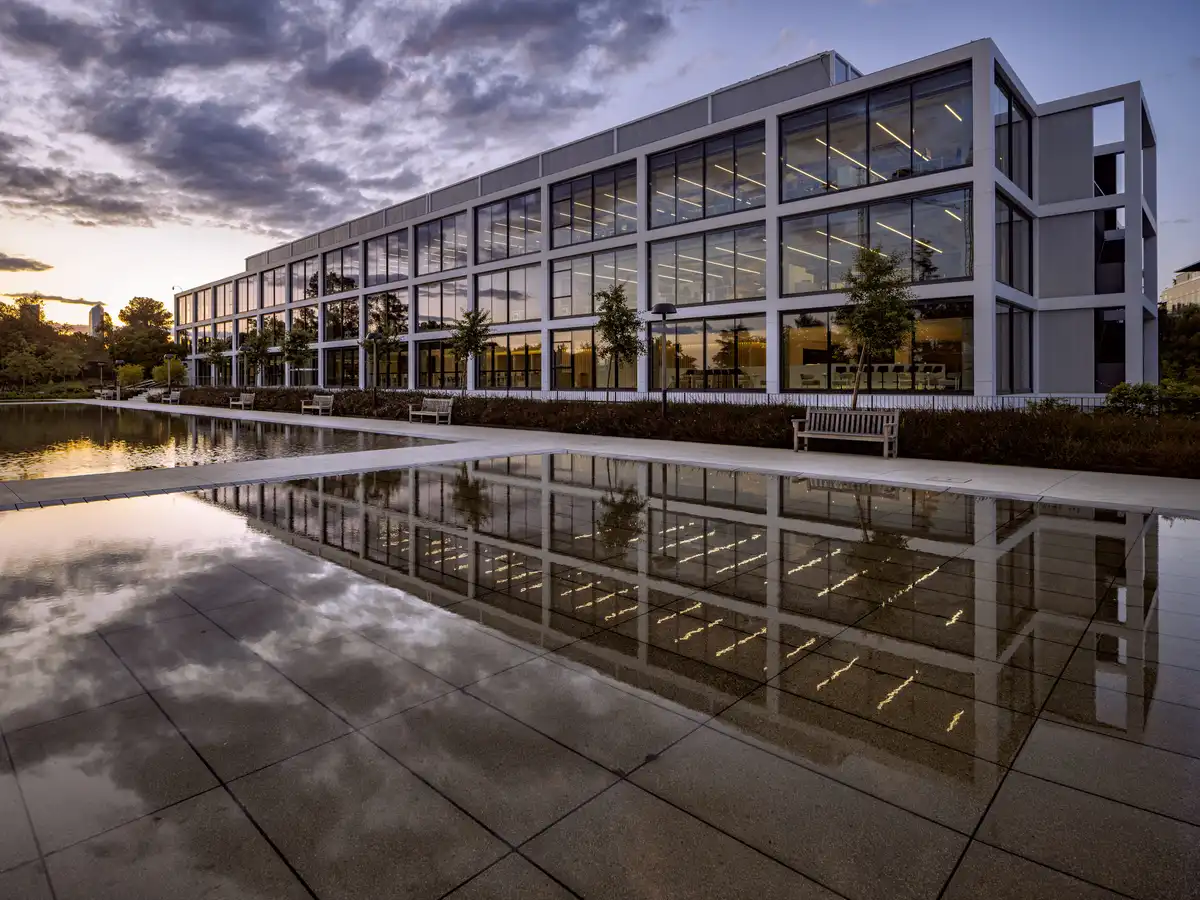
ACCIONA’s New Madrid Headquarters: A Global Model for the Future of Work

A Journey into Regeneration: The Birth of a New Madrid Campus
The new international headquarters in Madrid redefines workspace standards. The project focuses on employee well-being and ecological renewal. The story began on the site of a sprawling 1970s corporate complex. This vast 10 hectare site sits in a quiet central district. The project was not merely a renovation; it was an architectural and environmental revitalization. The entire site was reused to create an interconnected campus. The campus accommodates 4,000 employees. This fusion of past and future forms the foundation of Sustainable Headquarters Design.
Harmony of Movement and Light: Paths Telling Tales of Collaboration
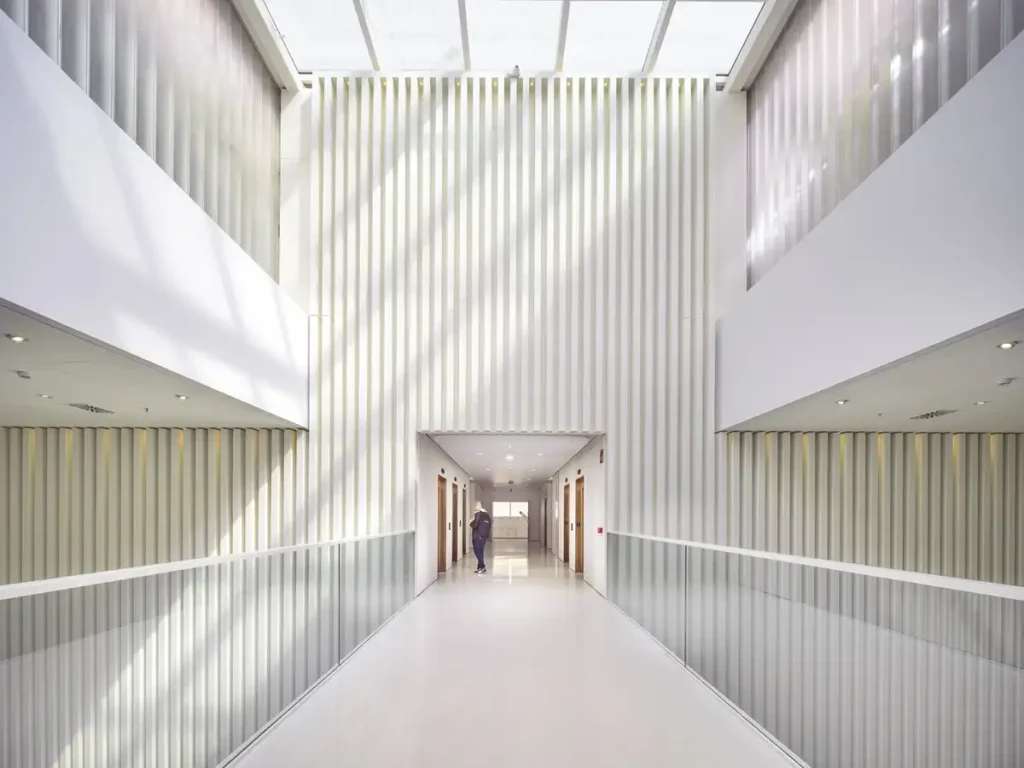
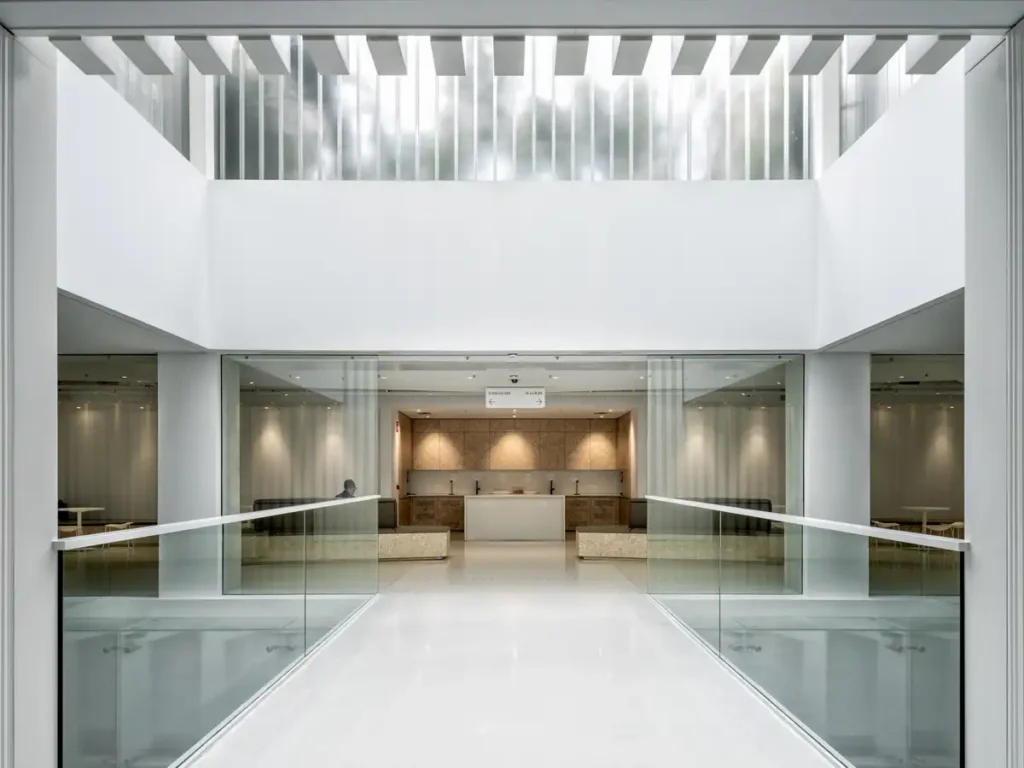
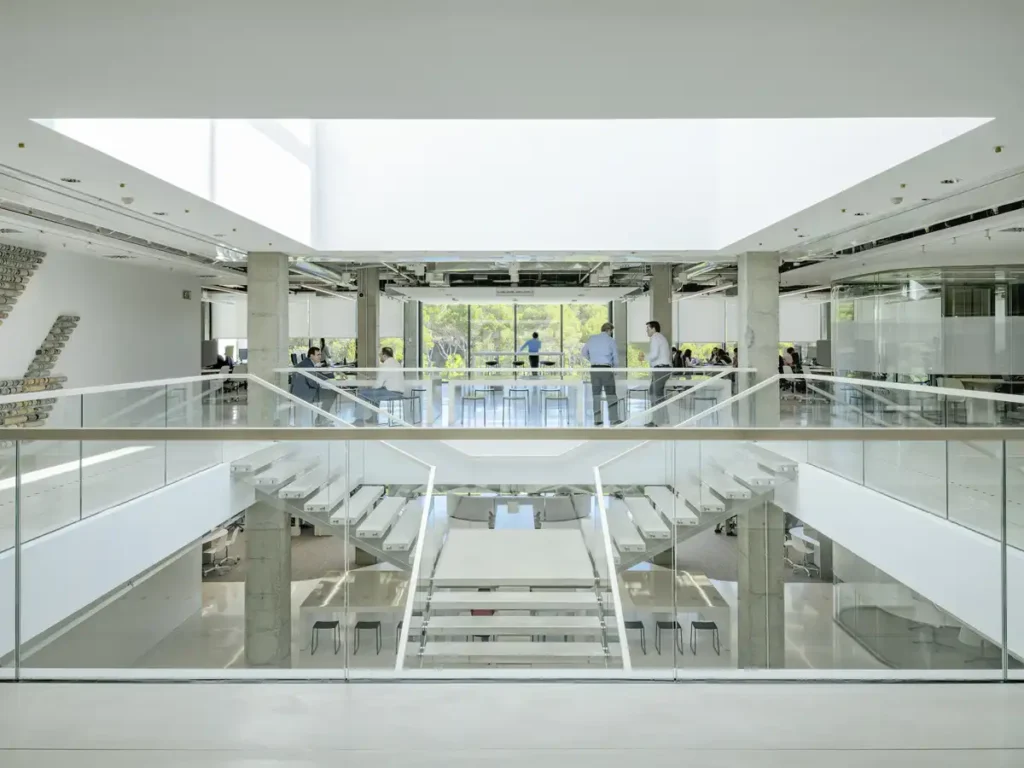
You now stand at the headquarters’ threshold. Visitor and employee paths intertwine within the workplace environment. The space promotes movement and spontaneous interaction. The interior spaces prioritize human experience and collaboration. They offer flexible workspaces and shared zones. Interconnected internal staircases encourage easy movement and spontaneous interaction. This Sustainable Headquarters Design extends beyond just offices. It is about the social dynamics of the place.
Dedicated zones support quiet contemplation. Optimized lighting follows circadian rhythms. This supports mental clarity and physical vitality. Natural daylight reaches deep inside the buildings via thoughtful architectural interventions. This significantly reduces reliance on artificial lighting. Outdoor terraces offer shaded spaces with fresh air. These spaces overlook the surrounding landscape. This creates a continuous indoor-outdoor connection.
Materials and Techniques: The Environmental Engineering Equation
The Sustainable Headquarters Design features a harmonious visual language. The design contrasts raw texture with refined finish. The methodology relied on integrating high-performance environmental materials. Spaces feature a juxtaposition of raw textures like concrete and metals with refined materials such as wood and reflective surfaces.
The following materials and techniques were used to support the low environmental footprint:
- Renewable Electricity: 100% reliance on renewable electricity for operation.
- Solar & Geothermal Energy: Integration of photovoltaic systems and geothermal recovery systems.
- Low Carbon Materials: Use of specially manufactured building materials with a reduced carbon footprint.
- Metals and Wood: Integration of locally sourced timber and antimicrobial metals.
- Additive Manufacturing: 3D printed joinery techniques to minimize waste.
- Water Management: Use of greywater recycling and rainwater reuse systems.
These elements deliver architectural quality. They also reflect a structural commitment to a more sustainable future of construction.
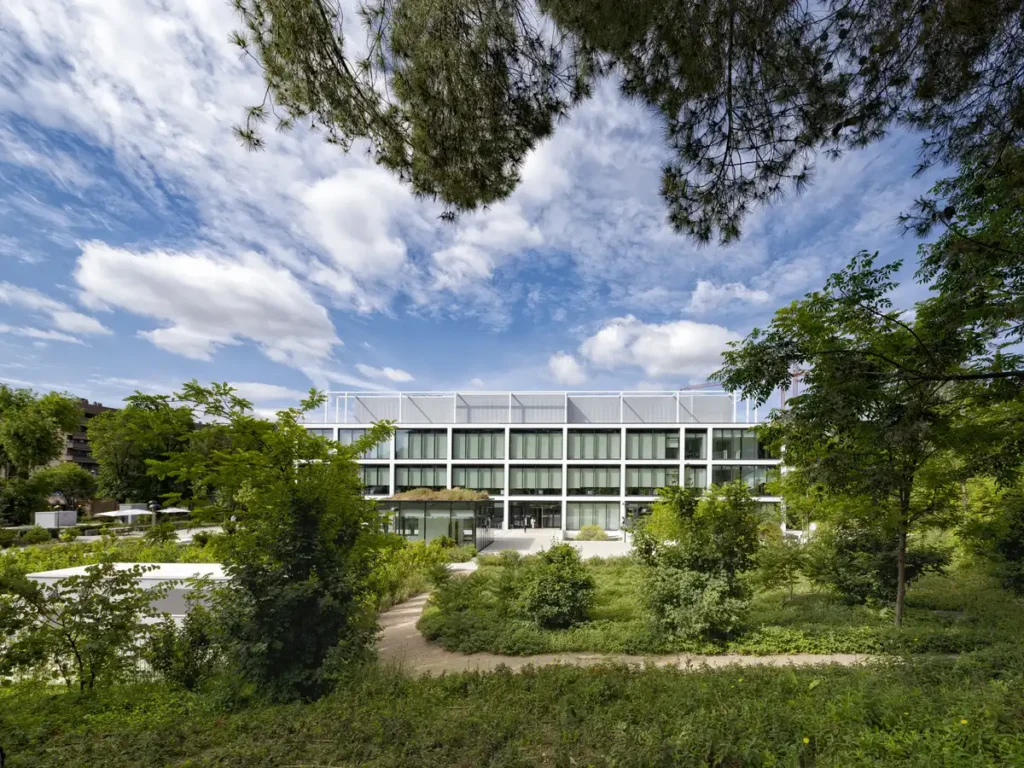
Ecological Integration: From Asphalt to Native Meadows
The Sustainable Headquarters Design reflects a broad commitment to restoring the site’s natural balance. The project preserved and expanded historic pine groves. 1,000 new trees and 20,000 shrubs were planted. The focus was on climate-adapted native species. These plants require minimal water. Extensive lawns were replaced with native meadows. This improves soil health and limits erosion. This change is not just aesthetic. It is a functional action serving sustainable water and habitat management. It makes the campus an active part of the Madrid ecosystem.
✦ ArchUp Editorial Review
ACCIONA’s Madrid Headquarters represents an ambitious attempt. It merges strict adherence to green certifications with a vision for the future workplace. The project stems from reviving an outdated complex. The project must be evaluated beyond its polished marketing narrative. This applies particularly to its contextual awareness of indigenous Spanish office design. The focus on the regenerative aspects of the landscape and water management is a positive step. In the coming decade, this project will be judged on its actual operational resilience. Sustainability must prove to be consistent ethical transparency throughout the building’s life cycle, not just performance.


