Suzhou Museum of Contemporary Art A Landmark of Contemporary Architecture in Suzhou

Introduction
The Suzhou Museum of Contemporary Art Suzhou MoCA is located along the waterfront of Jinji Lake and represents a convergence of modern art, architecture, and nature. Spanning a large area, the museum’s design draws inspiration from traditional Suzhou gardens, reinterpreting classic elements such as the long covered corridor and open courtyards. It offers visitors an immersive architectural experience, guiding them through a journey that seamlessly connects indoor and outdoor spaces, natural light, and water features.

Design Concept and Architectural Approach
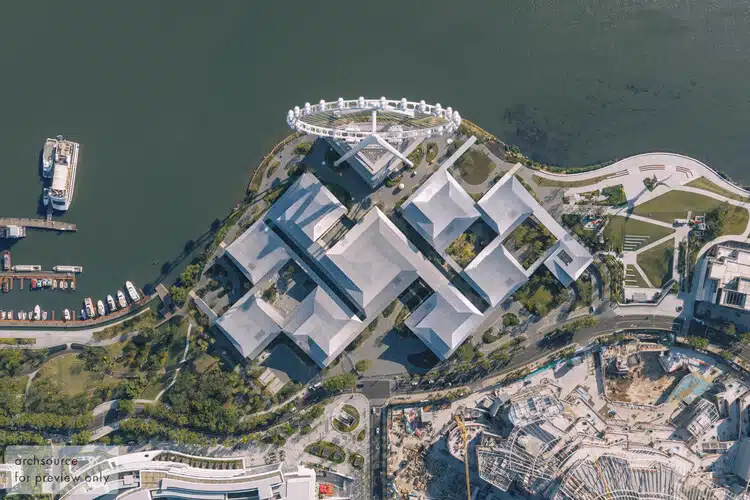
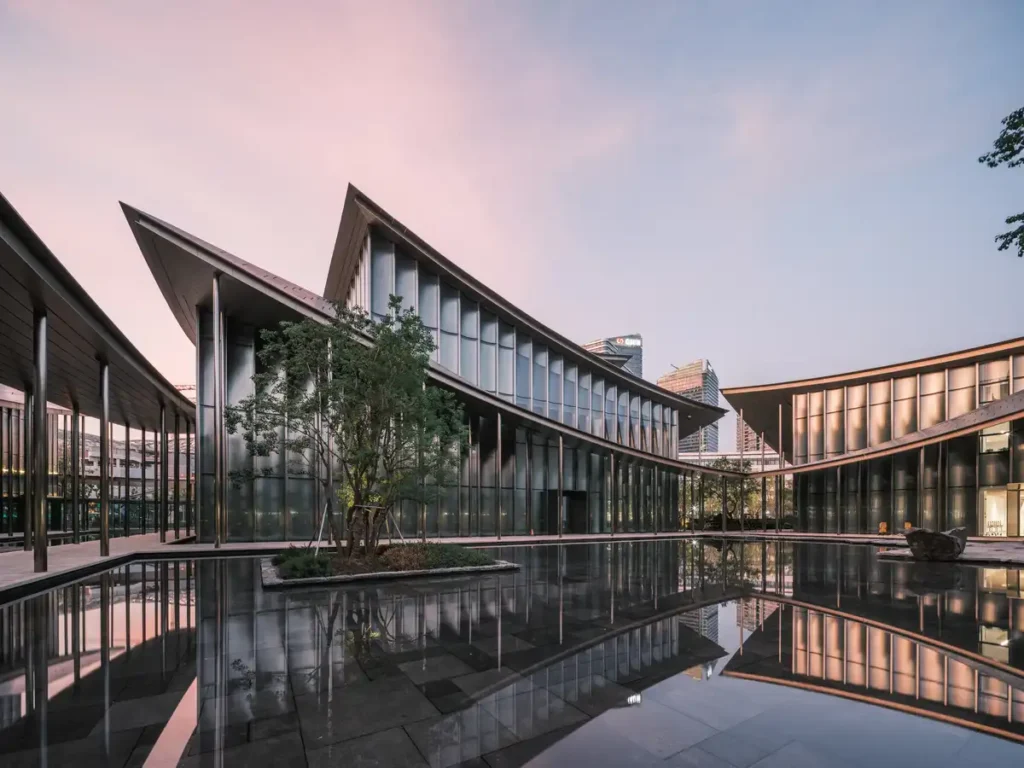
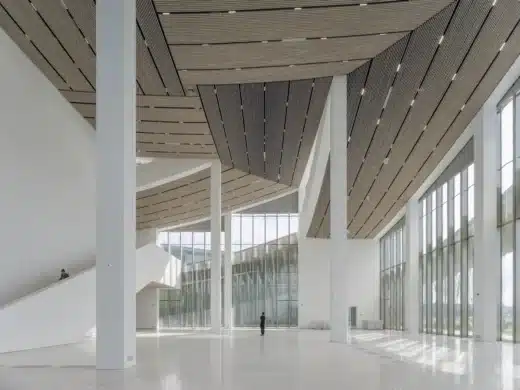
The museum is conceived as a village of interconnected pavilions beneath a continuous ribbon-like roof, echoing the form of traditional Suzhou eaves. The pavilions are linked through glazed corridors and overhead bridges, with underground pathways connecting different sections, allowing flexible circulation.
The layout reflects an organic logic, extending from the city to the lake. Pathways branch naturally between pavilions, creating a sense of discovery and exploration. The building functions like a maze of plants and art, revealing its intricate structure primarily when observed from an elevated perspective.

Facades and Environmental Interaction
The façades are clad in rippled glass and warm-toned stainless steel, reflecting the sky, water, and surrounding gardens. This creates a visual harmony with the natural environment, blurring the boundaries between architecture and landscape.
Natural light filters through clerestories and skylights, animating the interior galleries with shifting shadows and reflections. Above- and below ground connections provide fluid circulation while maintaining the integrity of exhibition spaces. The landscape transitions gradually from hardscaped plazas to greenery and finally water-themed plantings, forming a natural progression from the building to the lake.

Interior Spaces and Exhibitions
The museum comprises several specialized pavilions. Four main pavilions house the primary exhibition galleries, while others include grand entrances, multifunctional halls, a theater, and dining areas. Continuous pathways guide visitors, with smaller offshoot routes between galleries, providing freedom to explore.
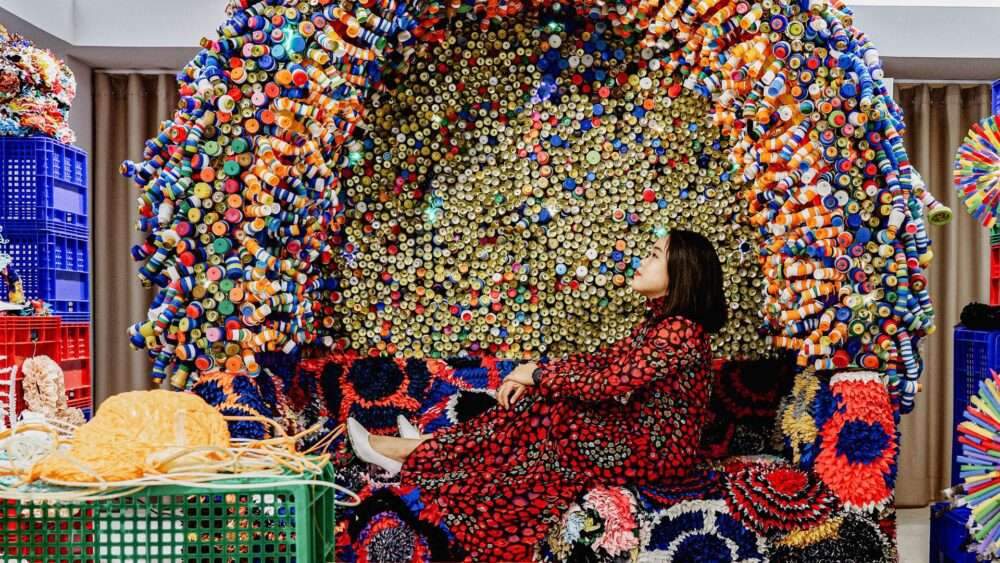
Exhibition design emphasizes the relationship between material and space, where displayed materials themselves inform the spatial experience. Visitors engage with textures and forms of stone, wood, glass, and recycled materials, creating a fully sensory architectural journey.
Sustainability and Conceptual Approach
The design prioritizes sustainability through passive shading, natural ventilation, and locally sourced materials. By carefully integrating light, water, and landscape, the museum transcends conventional exhibition spaces, offering a thoughtful architectural narrative that invites reflection on the interplay between art, materiality, and environment.
Conclusion
The Suzhou Museum of Contemporary Art exemplifies the integration of contemporary architecture with traditional Chinese design. Through its interconnected pavilions, open courtyards, reflective façades, and branching pathways, the museum creates a living architectural environment that responds to both visitors and its natural surroundings. It stands as a cultural and architectural landmark, offering a rich, immersive experience of material, space, and landscape.
ArchUp provides an updated reference featuring key global architectural exhibitions and design forums, along with a dedicated space for competitions and results in a daily analytical context.
Project Summary Table
| Element | Description |
|---|---|
| Project Type | Contemporary Art Museum |
| Location | Jinji Lake waterfront, Suzhou |
| Area | Extensive, with multiple pavilions |
| Design Concept | Village of pavilions under a continuous ribbon-like roof inspired by traditional gardens |
| Pavilions & Circulation | 12 pavilions connected via corridors and bridges; pathways both above and below ground |
| Façades | Rippled glass and warm-toned stainless steel reflecting surrounding nature |
| Interior Spaces | Main exhibition galleries, grand entrance, multifunctional hall, theater, restaurant |
| Environmental Interaction | Gradual transition from hardscape to greenery to water, natural light integration |
| Sustainability | Passive shading, natural ventilation, local materials |
| Conceptual Aim | Creating a sensory and architectural experience linking material, art, and place |
✦ ArchUp Editorial Insight
The Suzhou Museum of Contemporary Art features a design combining interconnected pavilions under a continuous undulating roof, open courtyards, and reflective glass façades, creating a visually rich experience of shifting light, shadow, and water. The branching pathways and organic site logic demonstrate a design approach focused on visitor interaction with space, seamlessly integrating interior galleries with outdoor gardens. Critically, the abundance of bridges and offshoot routes may pose circulation complexity, yet this complexity encourages exploration and discovery. Through this layered spatial experience, the project provides a meaningful architectural and cultural contribution to the city, enhancing both form and function.