The Jungle: A Tropical Oasis in Vietnam’s Urban Landscape

Small-Scale Mixed-Use Development as an Urban Solution
In Vietnam’s rapidly growing cities, the traditional shophouse has long dominated urban architecture. However, a new wave of small-scale mixed-use developments is emerging as a dynamic alternative, offering sustainable, community-focused solutions to dense urban living. When executed with innovative design and strong business models, these projects unlock a site’s full potential benefiting owners, tenants, and the surrounding neighborhood. Unfortunately, many rushed developments result in poorly planned, inefficient, and unsafe structures, failing to meet the needs of modern urban life.
The Jungle, a groundbreaking project in Vietnam, challenges these shortcomings. Designed as a bold response to a constrained urban site, it proves that thoughtful architecture can thrive even under tight spatial and regulatory conditions.
The Challenge: Maximizing Potential in a Compact Urban Site
Located just ten minutes from the city center, The Jungle occupies a 300-square-meter south-facing plot on a bustling street. The brief demanded over 800 square meters of functional space combining retail, commercial offices, and residential units while adhering to strict urban planning regulations.
Key constraints included:
- A 12-meter setback requirement
- A chamfered southwest corner for future road expansion
- Integration into a neighborhood of low-rise homes and shops, reflecting Vietnam’s vibrant yet chaotic urban fabric
Smart Design for Efficiency and Flexibility
To overcome these challenges, the architects employed strategic spatial planning:
- A 150-square-meter basement for utilities and storage
- 300+ square meters of retail and commercial spaces with column-free layouts for maximum usability
- Nine flexible one-bedroom apartments (30–45 sqm each), some combinable for future adaptability
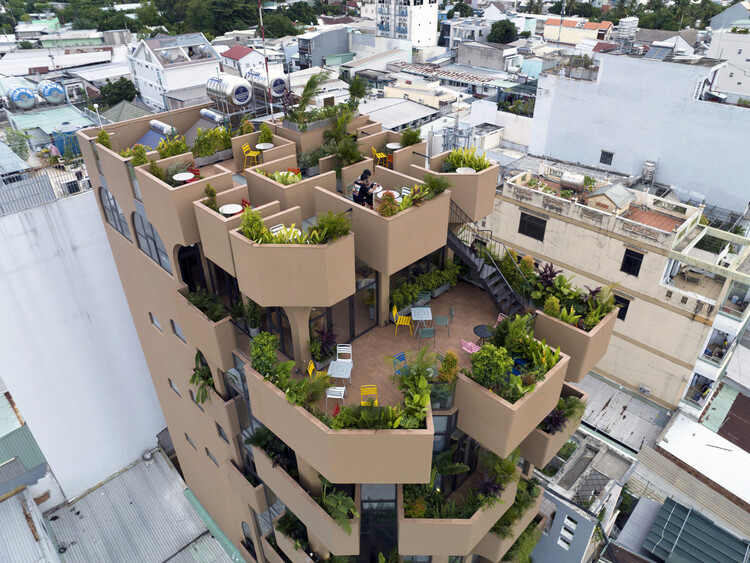
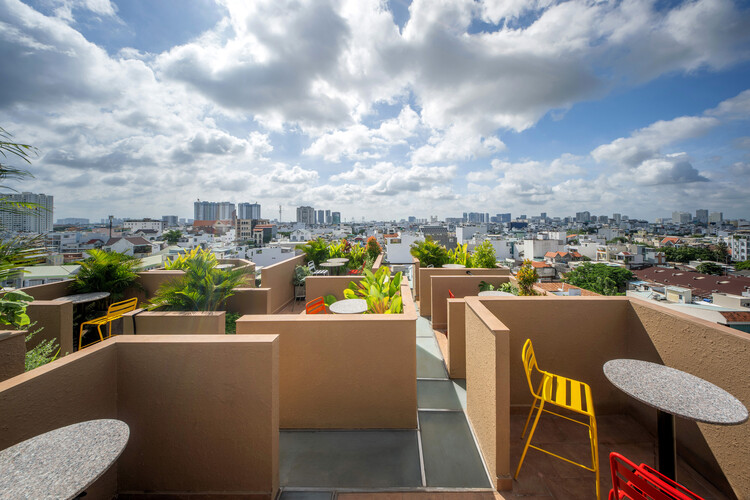
- A rooftop café and co-working space with panoramic city views
A rear-positioned vertical core and efficient service zones maximize usable area, ensuring every square meter serves a purpose.
A Façade That Breathes: The Tropical Forest Concept
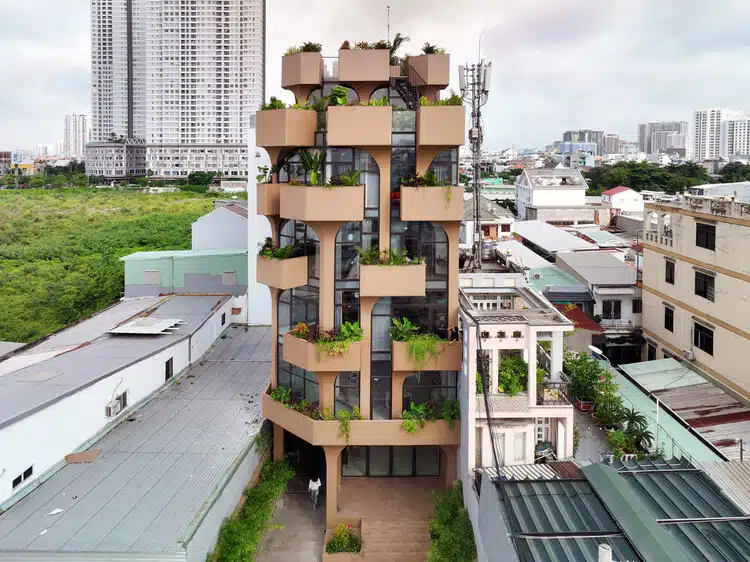
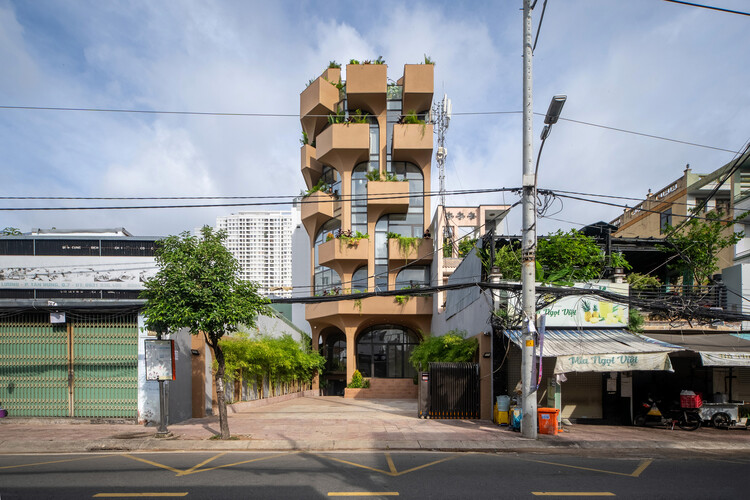
The Jungle’s most striking feature is its biophilic design, transforming the building into a vertical urban forest. Balconies of varying shapes and sizes cascade along the façade, mimicking the organic randomness of nature. In Vietnamese culture, balconies are more than decorative they are vital spaces for shade, social interaction, and urban living. Here, they become green pockets, filled with plants that soften the boundary between indoors and outdoors.
The façade blends:
- Vaulted columns and curved glass panels
- Earthy clay tones for warmth and texture
- Abundant greenery, evoking a tropical jungle
Interiors: Fluid, Organic, and Human-Centric
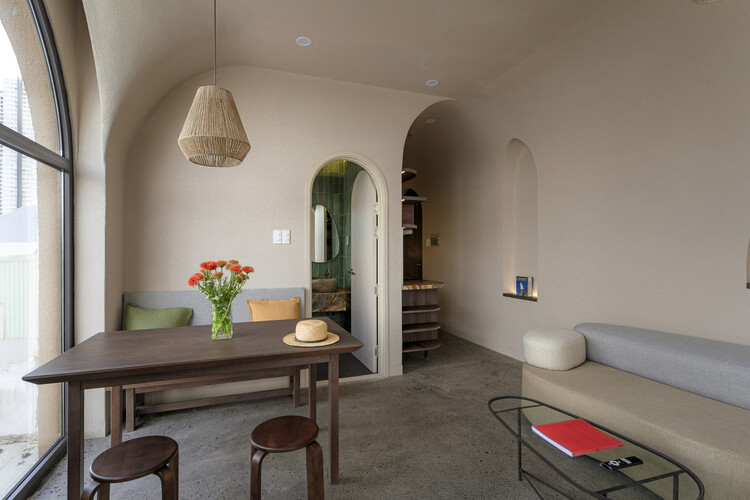
Inside, the natural aesthetic continues:
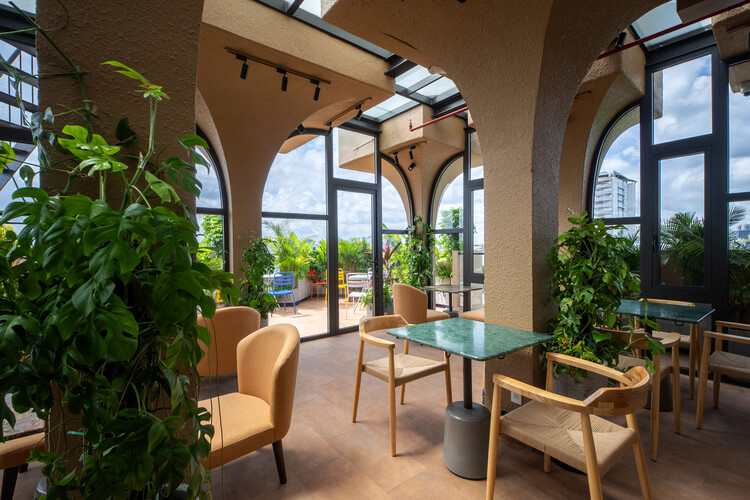
- Soft curves and irregular forms create a sense of movement
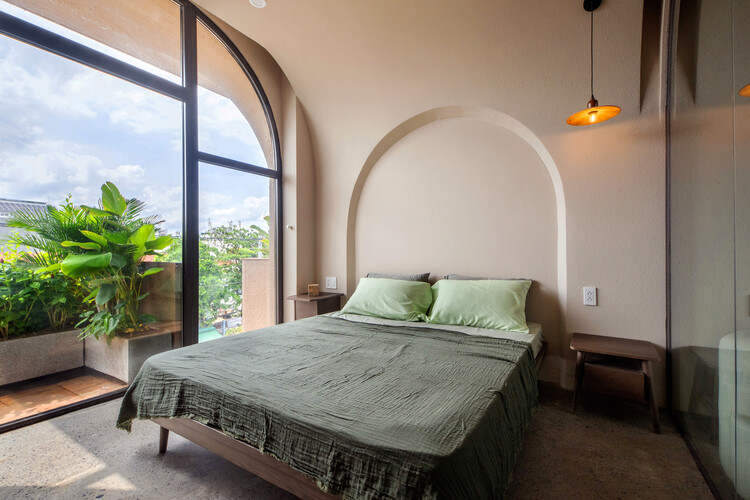
- Warm clay finishes enhance coziness and tactility
- Each apartment opens to lush balconies, reinforcing the connection to nature
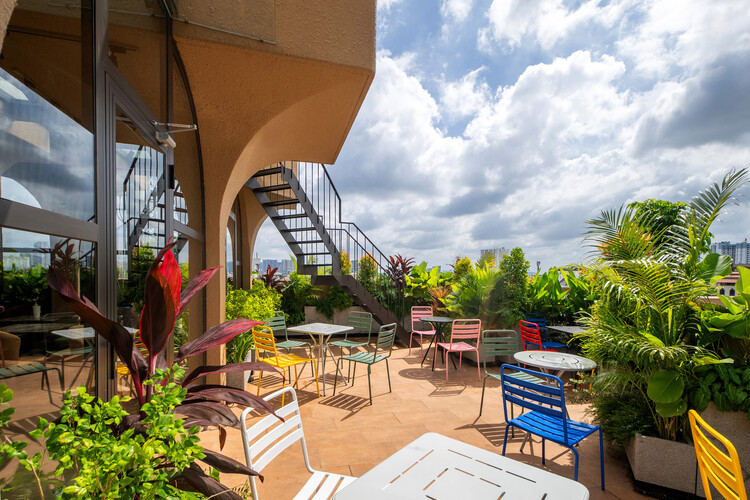
The rooftop café and co-working space sit beneath a translucent canopy supported by tree-like columns, while a zigzag stair leads to a rooftop garden a rare urban retreat with sweeping views.
Sustainability Embedded in Design
Rather than an add-on, sustainability is woven into The Jungle’s DNA:
- Natural ventilation and daylight optimization reduce energy use
- Rainwater harvesting through vertical “tree” structures for irrigation and firefighting
- Solar heaters, low-E glazing, and LED lighting minimize environmental impact
- Locally sourced materials (granite, ceramics, wood) blend with recyclable components (aluminum, fiberboard)
Conclusion: A Blueprint for Future Urban Living
The Jungle demonstrates that high-density urban projects can be beautiful, functional, and sustainable. By embracing biophilic design, flexible spaces, and eco-conscious materials, it sets a new standard for mixed-use developments in Vietnam and beyond.
✦ ArchUp Editorial Insight
The Jungle reimagines urban living by blending functionality, aesthetics, and sustainability in a compact footprint. Its biophilic approach and clever spatial planning make it a standout example of how small-scale developments can enhance city life. However, while the design excels in creativity, one might question whether such intricate architectural features are scalable for mass urban housing—balancing artistry with affordability remains a challenge. Still, the project’s commitment to greenery and community-centric spaces offers a refreshing vision for future cities, proving that even in dense environments, nature and humanity can thrive together
Explore the Latest Architecture Exhibitions & Conferences
ArchUp offers daily updates on top global architectural exhibitions, design conferences, and professional art and design forums.
Follow key architecture competitions, check official results, and stay informed through the latest architectural newsworldwide.
ArchUp is your encyclopedic hub for discovering events and design-driven