

The Rise of Slow Architecture: Why Context, Craft, and Patience Are Redefining Design Innovation

What do Zaha Hadid’s MAXXI Museum, Bjarke Ingels’ residential designs, and Frank Gehry’s Guggenheim Museum have in common? At first glance, these buildings appear radically different, each bearing the unmistakable signature of their creators. Yet, they can all be considered “fast” architecture bold, complex forms that captivate the eye, demanding attention and admiration. In contrast, architects like Peter Zumthor have consistently produced a “slower” form of architecture one that is quieter, more introspective, and deeply rooted in sensory experience rather than visual spectacle.
Neither approach is inherently “wrong,” but over the past two years, the architectural avant-garde has gradually shifted. Where innovation once meant pushing morphological boundaries, it now often means resisting them prioritizing patience, context, and slowness.
Why Does Speed Matter in Architecture?
“Fast” architecture is typically spectacle-driven, media-friendly, and image-conscious. It often follows a top-down approach, beginning with a strong conceptual idea that shapes the exterior shell first, while interior functionality becomes a secondary consideration. In contrast, “slow” architecture prioritizes longevity, materials, context, and atmosphere. It engages deeply with its site climate, history, landscape and relies on local craftsmanship and resources to create meaningful spaces. It is conceived and built at a deliberate pace, allowing time for observation, iteration, and dialogue, often emerging from a more collaborative and layered process.
Case Study: Nujiang 72 Turns Canyon Scenic Area
The Nujiang 72 Turns observation deck in Tibet, designed by Archermit, exemplifies slow architecture. Perched on the cliffs of the Nujiang Canyon, the structure extends outward with a 120-foot (37-meter) cantilever. Given the site’s harsh weather and rugged terrain, the design heavily incorporates local materials and construction techniques. The viewing platform, made of weather-resistant red steel and laminated SGP glass, ensures durability while blending seamlessly into the rocky surroundings. The transparency of the glass makes the platform nearly invisible from a distance, reinforcing the idea that slow architecture asks to be noticed and experienced rather than instantly captured and shared.

The Emergence of “Fast” Architecture
To understand why slow architecture is gaining traction, we must first examine the rise of its counterpart. By the late 20th century, cultural fatigue with modernism’s uniformity led to postmodernism’s playful, ironic interventions. Many architects then shifted toward form-driven practices, using bold shapes to reintroduce excitement and identity into design. Gradually, architecture became a branding tool buildings turned into visual signatures that attracted attention and investment.
Today, the world seems to crave the opposite. Post-pandemic, there’s been a reassessment of overstimulating urban environments, with people increasingly rejecting sensory overload. Endless digital feeds, instant gratification, and constant stimuli have made quietness feel revolutionary. Simultaneously, rising environmental awareness and resource depletion call for architecture that is context-sensitive, passive, and adaptive.

Case Study: Ocean by Locus.Studio
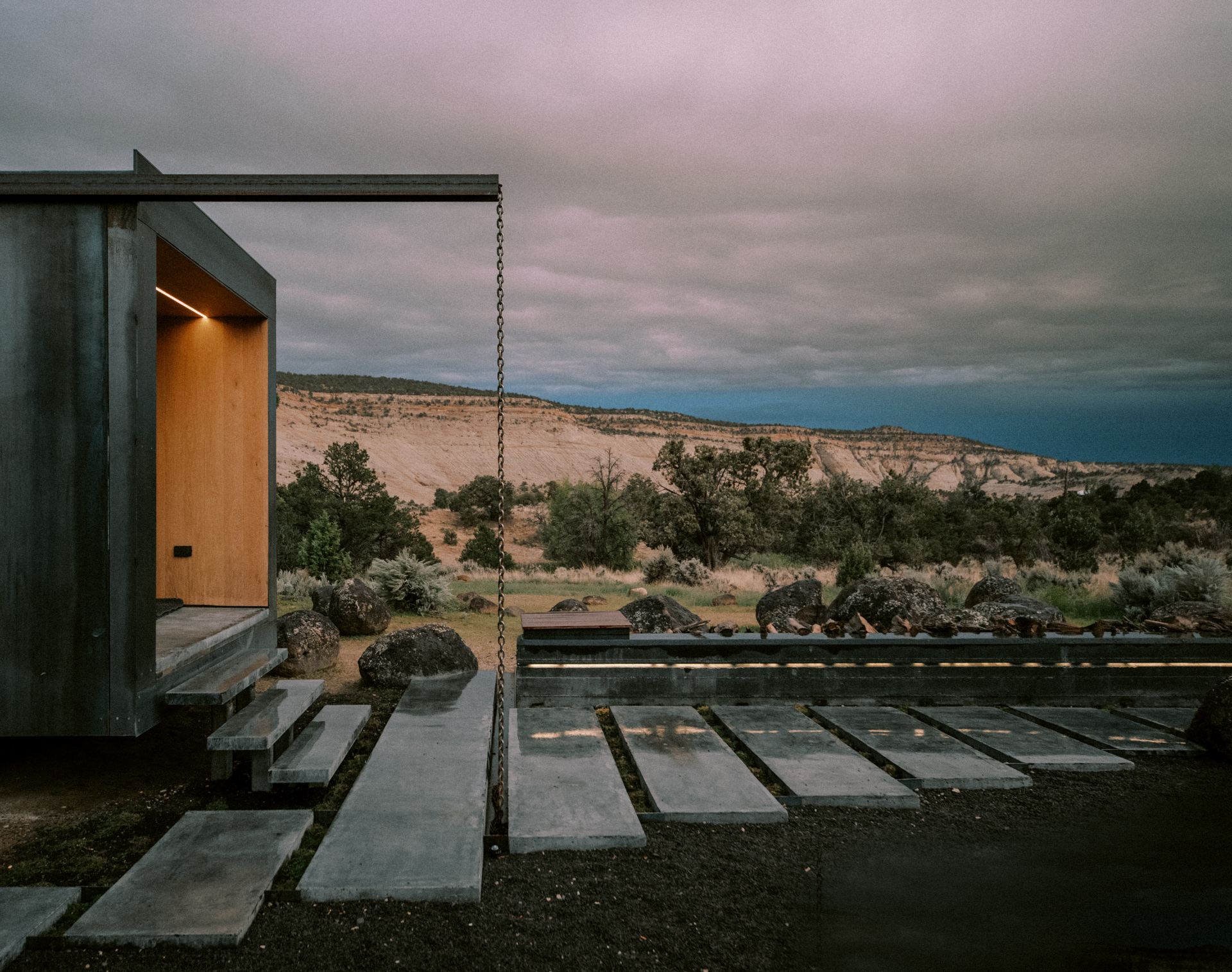
Take Ocean, a two-bedroom home embedded in Utah’s remote desert, elevated above slickrock and wetlands. The residence responds to a landscape shaped by wind, water, and time, preserving the delicate desert ecosystem. Its engineering and environmental performance are impressive, employing passive design strategies, air quality regulation, and energy efficiency. Materials like oak, steel, and concrete are drawn from the surrounding context, while expansive windows and full-height oak doors blur the boundary between interior and desert.
Redefining Innovation for the 21st Century
Projects like these force us to reconsider what innovation means in 2025. Concepts such as craft revival, passive environmental strategies, and deep engagement with time, weather, and function are emerging as the new radical subtler in impact but deeper in long-term influence.
Case Study: The Offset ADU by Byben
The Offset ADU, a backyard home in Los Angeles, exemplifies this shift. As an accessory dwelling unit (ADU), it serves as a flexible secondary residence, convertible into a living room, dining area, or kitchen. Its compact, low-carbon footprint reactivates outdoor space while embodying slow architecture’s values modest in scale yet rooted in daily utility. However, it also raises a crucial question: How do we appreciate such restrained, thoughtful projects in a culture dominated by visual spectacle?
The Challenge for Slow Architecture
One major obstacle remains: slow architecture’s lack of “Instagrammability.” The pressure to produce eye-catching structures leads many architects to prioritize style over substance, speed over depth. In contrast, slow architecture is often unphotogenic, experiential, and local.
The challenge, then, is this: How do we value architecture that isn’t designed for the camera? Perhaps we need a new way of seeing—one that prioritizes presence over appearance, patience over spectacle. The spaces that move us most are rarely those that dazzle at first glance, but those that reveal themselves slowly. These are not moments engineered to go viral—they’re moments designed to last.
✦ ArchUp Editorial Insight
The exploration of slow architecture presents a compelling counterpoint to today’s spectacle-driven design culture, emphasizing context, craft, and sustainability. While the argument is persuasive, it occasionally romanticizes the movement without addressing practical barriers such as client demands for iconic structures or economic constraints in large-scale developments. A deeper discussion on balancing slow principles with real-world feasibility would strengthen its case. Nevertheless, the call for more deliberate, environmentally attuned architecture is timely and necessary. By shifting focus from instant impact to lasting value, slow architecture offers a refreshing vision for the future of design one that prioritizes depth over dazzle.
Explore the Latest Architecture Exhibitions & Conferences
ArchUp offers daily updates on top global architectural exhibitions, design conferences, and professional art and design forums.
Follow key architecture competitions, check official results, and stay informed through the latest architectural newsworldwide.
ArchUp is your encyclopedic hub for discovering events and design-driven


