The Slow Lane: why quick fixes fail and how to achieve real change

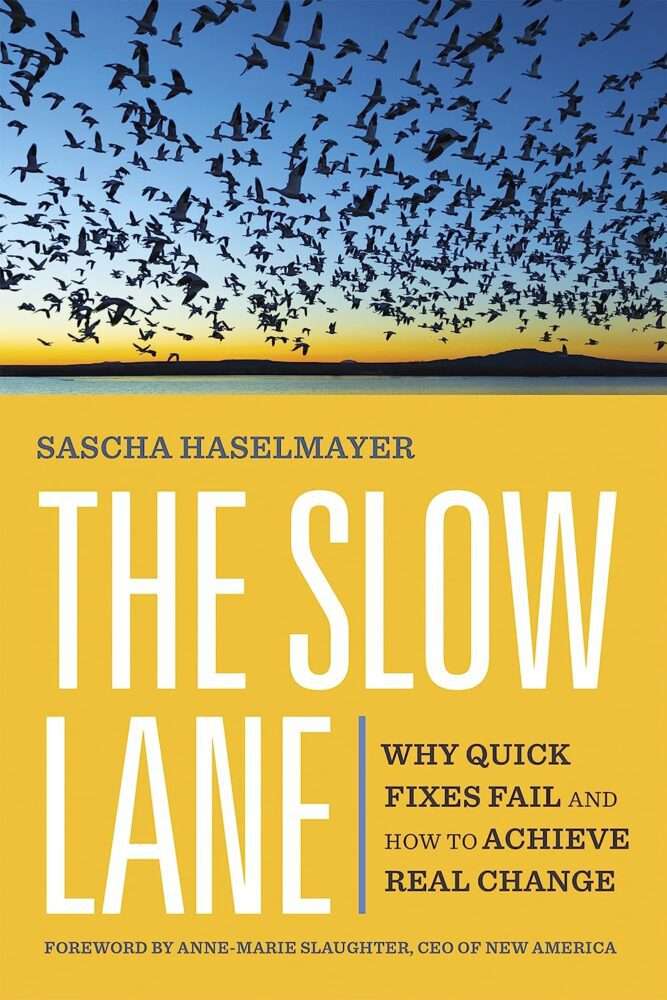
The Slow Lane: why quick fixes fail and How to achieve real change
We live in a world of quick fixes. In business, government, and society, we celebrate the entrepreneurs, hackers, and disruptors who try to deal with change by finding shortcuts. They give us a sense that any big problem can be resolved by a daring, often technological solution. But, as the past decades have repeatedly shown, these quick fixes are nothing more than an illusion. It turns out that there is no technical fix to climate change, injustice, discrimination, pollution, or rising inequality.
In his new book “The Slow Lane: Why Quick Fixes Fail and How to Achieve Real Change” Sascha Haselmayer offers his insights into the principles and mindsets by which real change in cities and communities comes about. In this event, he will share some of the stories that shape The Slow Lane – How a Caracas slum became a beacon of democracy in Venezuela for over thirty years. How to waste pickers in Peruvian cities made municipal waste management fit for a zero-waste future. And how a movement that is ending homelessness in U.S. cities is quietly restoring racial equity in municipal services in Brownsville, New York. He will be joined to discuss his ideas by Tessy Britton a social designer and founder of Participatory City and Ellie Cosgrave Director of Publica’s Community Interest Company and co-director of UCL’s Urban Lab.
___
Speakers: Sascha Haselmayer, Architect, Author, and Social Entrepreneur; Ellie Cosgrave, Director, Publica and Co-Director, UCL Urban Lab. Moreover, Tessy Britton, Founder of Participatory City.
Ricky Burdett, Professor of Urban Studies and Director of LSE Cities at the London School of Economics and Political Science
___
Further event information
Read more on Archup: