The Studio Frank Lloyd Wright-Inspired Set for Apple TV+

Art direction group on the Apple TV+ series The studio created and constructed a building that was very much like Frank Lloyd Wright’s style. The intention of the filming was to showcase a natural Wright building for the imaginary Hollywood film studio, Continental Studios, during the period of the 1920s and 1930s.

Project Context
The plot of the series is about Matt Remick, who is played by Seth Rogen and who is the head of Continental Studios. The building symbolizes the core of the company and showcases its splendor and past. The design crew, consisting of Emmy-winning production designer Brian Grego, Julie Berghoff, and others, looked into the houses Wright built in Los Angeles during the 1920s, for example, Hollyhock House (1921) and Ennis House (1925), to draw their inspiration for the set. The aim was to not just imitate Wright but to speculate what he might have conceived had he been working for a major studio.

Design Logic
The design crew was after a building that would not only look genuine but also be able to function as if it were part of the series. They concentrated on:
- Wright’s Mayan revival style
- Textile blocks having distinctive patterns
- Quality materials and finishes
- Furnishings and interior elements in Wright style
The outcome is a delicate beauty of truth that misled even the professional art directors who thought they were shooting a real Wright building. For extensive architectural knowledge, please refer to ArchUp architecture.

Table: Set Components
| Component | Description | Purpose |
|---|---|---|
| Exterior Ground Floor | Built along a car park at Warner Bros lot | Provides realistic street-level facade for filming |
| Two-Story Interior Set | Constructed inside studio | Supports interior scenes and continuity with exterior |
| Textile Blocks | 1,000s fabricated using CNC, laser, and foam casting | Create signature Wright-style facade patterns and textures. |
| Furnishings | Custom-built desks, chairs, and tables in Wright style | Maintain authenticity and visual continuity of set |

Material and Techniques
that areThe team did a thorough study of Wright’s houses in Los Angeles for their textures and finishes. The plasterers used such techniques to create the subtle shine and texture; for instance, they would sprinkle wet plaster with brass shavings or welding slag. They created textile blocks around a C-motif theme for Continental Studios. The materials were fabricated and then sprayed to blend the illusion. This effort has demonstrated the level of research and the attention to detail which is characteristic of the principles explored in ArchUp building materials.

Furniture and Interior
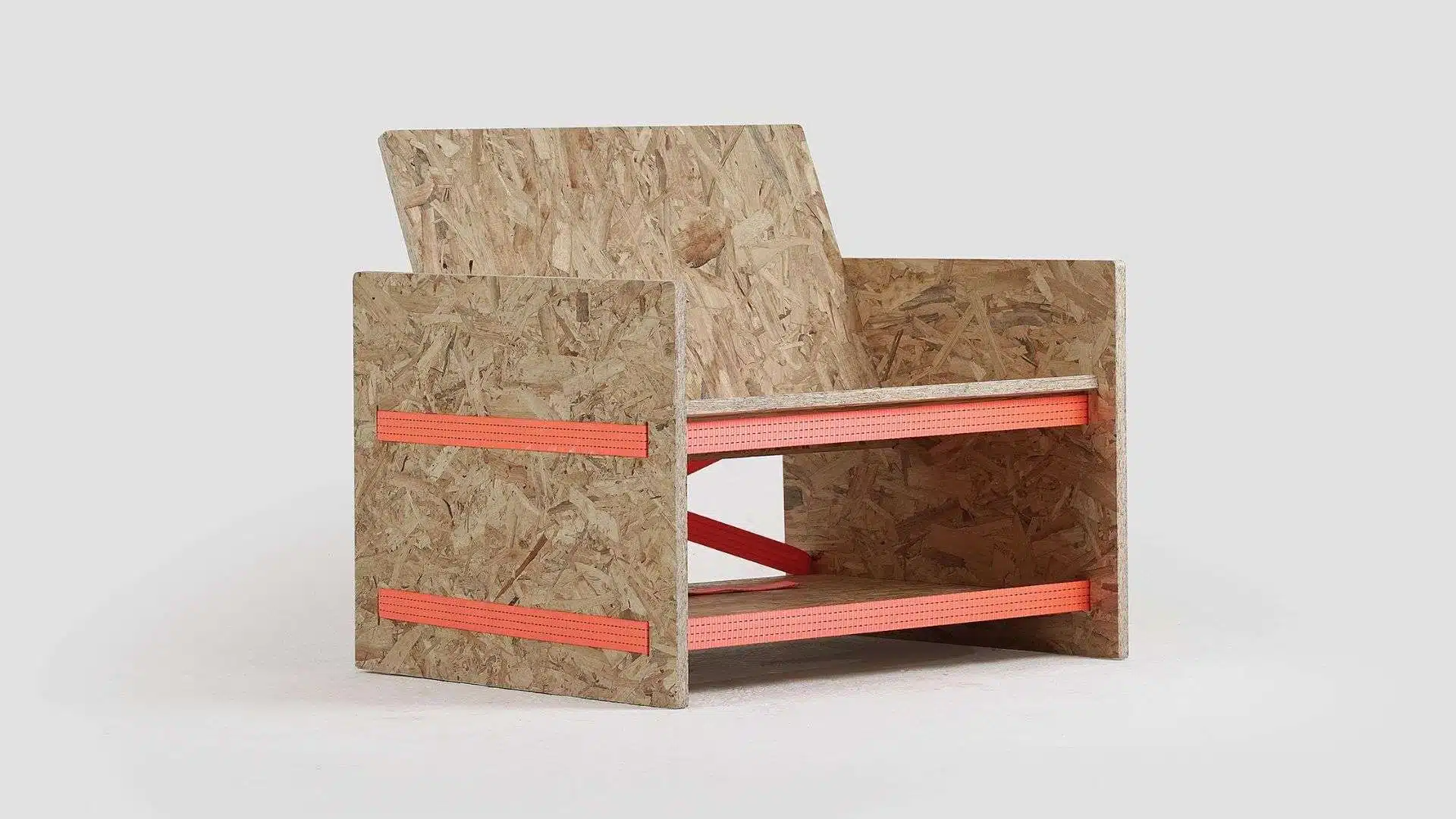
Set decorator Claire Kaufman, together with her team, had skilled the furnishings in the Wright’s style so that she would be adding large walnut desks, chairs, and tables for discussion. The six-week schedule was very tight, so most of the items were built with the traditional rework modern reissues as a reference. Through the narrative of a historical and prestigious studio, the interior works well together with the architectural design and around it. Related design discussions can be found on ArchUp design.

Critical Interpretation
The set reveals how, through careful design, the secret of the illusion and the reality is exposed. It also gives quite a lesson to designers that deep research, material attention, and thoughtful adaptation are the keys to the creation of authentic environments even in the case of fictional contexts. The whole project indicates the current-day relevance of Wright’s methods in production design and architectural thinking. It not only connects the architectural history with the Hollywood storytelling but also emphasizes the authenticity and craft.

Why This Matters Now
When storytelling through visuals is the main thing, building sets that were historical architecture basically encourages respect towards the architectural research, the materials, and the techniques. This project illustrates how architecture can influence and even be a part of the culture in a fictionalized environment. It strengthens the point of the necessity of the study of the architectural typologies and material systems in the future design applications. More on architectural thinking is available at ArchUp research.

✦ ArchUp Editorial Insight
For the artistic team of the Apple TV+ series The Studio, the art direction consisted of developing a Frank Lloyd Wright–style building that would be perceived as both realistic and architecturally correct. Mainly influenced by Wright’s 1920s Los Angeles houses like the Hollyhock and Ennis, the team arrived at a full-fledged spatial arrangement marked by Mayan Revival geometry, intricate textile blocks, and custom walnut furniture. Each component, from the CNC-fabricated façades to the plaster surfaces embellished with metallic textures, is the result of careful material exploration and design uniformity.
Looking at the project critically, one cannot help but think about the authenticity-simulation debate. The set does speak Wright’s aesthetic language, but it also opens up a discussion regarding the extent to which composed illusion can transmit the experience and contextual depth of his architecture. The interaction between narrative and architectural truth is the most intriguing conflict in this case.
In the end, The Studio asserts that historical inquiry and design savvy together can keep architectural significance alive in modern visual storytelling.

Conclusion
More than just a set, the one inspired by Frank Lloyd Wright for The Studio is an artistic representation of harmony between authenticity, creativity, and storytelling. The process of the team working on research, fabrication, and design is a unique approach in the areas of architectural thinking, historical interpretation, and innovation for both movie set designers and architects.

Explore the Latest Architecture Exhibitions & Conferences
ArchUp offers daily updates on top global architectural exhibitions, design conferences, and professional art and design forums.
Follow key architecture competitions, check official results, and stay informed through the latest architectural news worldwide.
ArchUp is your encyclopedic hub for discovering events and design-driven opportunities across the globe.
Brought to you by the ArchUp Editorial Team
projectsInspiration starts here. Dive deeper into Architecture, Interior Design, Research, Cities, design, and cutting-edge Projects on ArchUp.