The Use of Robots in Construction Works

Key Highlights
- Robots are revolutionizing construction: They’re used to boost productivity, enhance safety, and cut costs on job sites.
- Various types available: Including autonomous robots, drones, 3D printing robots, and collaborative robots (cobots).
- Clear benefits: Reduced risks, faster project completion, and less material waste. However, high costs and legal challenges remain hurdles.
- Arab world perspective: Countries like the UAE (with the “Jaibot” robot) and Saudi Arabia (in projects like NEOM) are adopting this technology, though cultural and technical barriers still exist.
- A promising future: Integration of AI and small-scale robots is set to transform construction, with a growing focus on sustainability.

Introduction: A Technological Revolution in Construction
Imagine a construction worker standing 20 meters above the ground, battling strong winds and exposed to daily dangers. Now picture a robot performing the same task quickly, precisely, and without any risk to human life. This isn’t science fiction; it’s the new reality in construction. Technological advancements led by robotics are transforming how we build homes, bridges, and airports. Robots are becoming essential tools for improving efficiency and safety.
In this article, we’ll guide you through how to launch an architectural project from scratch using robots, with a full breakdown of the types, benefits, challenges, and the current state of robotics in the Arab world.

Why Are Robots Becoming Essential in Construction?
The construction industry is facing serious challenges: a shortage of skilled labor, rising labor costs, and significant safety risks. Robotics offers innovative solutions:
- Increased Productivity: Robots can perform tasks faster and more accurately than humans. For example, the Hadrian X robot can build a wall in a single day work that might take several days for a human crew.
- Improved Safety: Robots take on dangerous tasks, such as working at high altitudes or in extreme conditions, reducing the number of accidents.
- Cost Savings: Over time, robots can cut labor expenses and reduce material waste through precision.
According to market reports, the construction robotics market is expected to reach $252.5 million by 2027, with a compound annual growth rate (CAGR) of 15.5% from 2020 to 2027 (Abudhabienv). This trend reflects the increasing reliance on automation in the sector.

How to Start an Architectural Project Using Robots
Launching a project that incorporates robotics involves several key steps:
- Planning and Design
Use Computer-Aided Design (CAD) software to create a 3D model of your project. Robots like Hadrian X rely on such models to perform precise construction tasks. - Selecting the Right Robots
Choose the type of robot based on the project’s requirements. Drones can be used for site surveys, while 3D printing robots handle structural elements. - Training the Team
Ensure your team is well-trained to operate and maintain the robots. - Execution and Monitoring
Begin construction with robotic assistance, and use monitoring systems to track progress and maintain quality. - Evaluation and Maintenance
After completing the project, the team should evaluate the robots’ performance and maintain them to ensure long-term usability.

Types of Robots Used in Construction
| Type | Description | Applications |
|---|---|---|
| Autonomous Robots | Operate without direct human control | Digging, automated welding, bricklaying |
| Drones | Flying devices for monitoring | Site surveying, progress tracking |
| 3D Printing Robots | Print concrete or metal structures | Building homes, bridges |
| Collaborative Robots | Work alongside humans | Assisting in repetitive tasks |
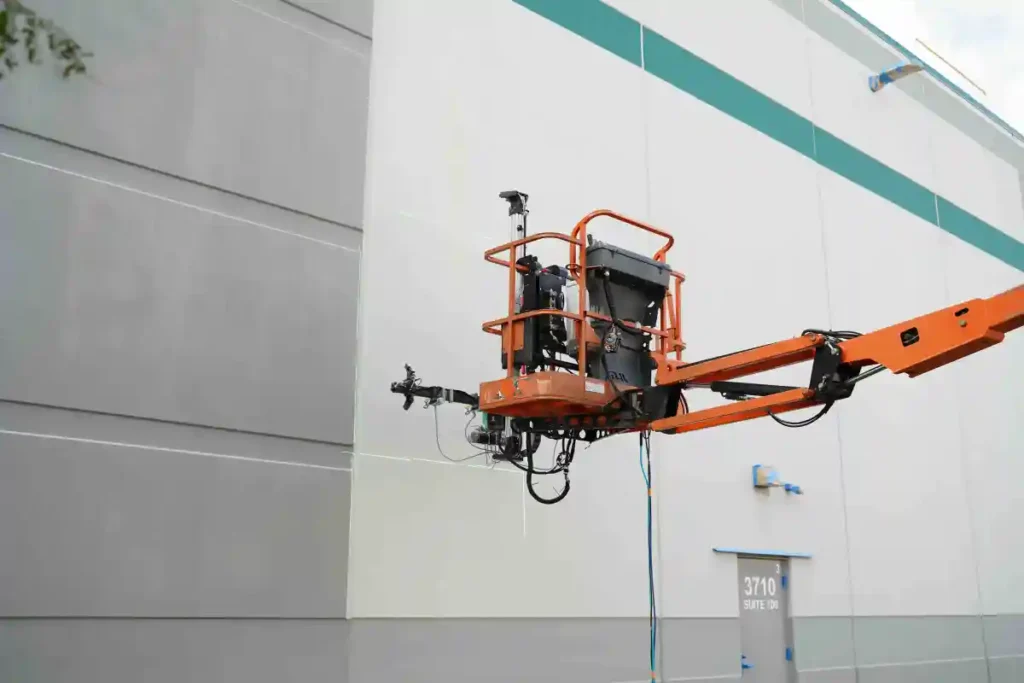
For example, construction workers in the UAE use the Jaibot robot to perform precise drilling operations on job sites (Al Ain News).
Benefits of Using Robots in Construction
- Higher Productivity: Robots operate faster and more accurately. The Hadrian X robot can lay 500 bricks per hour, compared to a human worker’s average of 300 & 400 bricks per day (FBR).
- Improved Safety: Robots reduce human involvement in hazardous tasks, such as working at heights or in dangerous environments.
- Material Efficiency: Thanks to their precision, robots minimize material waste especially in concrete and steel usage.
Challenges and Obstacles
Despite the benefits, several challenges hinder the widespread adoption of robotics:
- High Costs: The upfront investment is substantial, especially for small and medium-sized businesses.
- Regulations and Laws: New legal frameworks are needed to regulate robotic use, particularly concerning accountability for mistakes.
- Resistance to Change: Some workers fear job loss or struggle to adapt to new technologies.

Real-World Case Studies
Here are practical examples of robotics transforming the construction sector:
- Hadrian X in Australia: Developed by Fastbrick Robotics, this machine can build a house’s walls in just two days using a 30 meter telescopic arm (FBR).
- Foster + Partners: This global firm uses robots to handle complex construction tasks in airports, improving both efficiency and precision.
- Japan’s Approach: Facing a labor shortage due to an aging population, Japan is increasingly turning to robots to fill workforce gaps in construction.
The Future of Robotics in Construction
The outlook for robotics in construction is highly promising:
- Integration with Artificial Intelligence: To analyze job sites and predict problems before they occur.
- Mini Robots for Precision Tasks: Small robots designed for maintenance, like repairing cracks in structures.
- Sustainability: More efficient building methods to reduce carbon emissions.
Analysts estimate that the robotics market could reach $260 billion by 2030, with significant growth in professional service robots (Al Jazeera).

The Arab World: Opportunities and Challenges
Across the Arab region, progress is being made toward embracing robotic technologies in construction:
- UAE: The use of the Jaibot robot in the One Za’abeel project highlights the UAE’s commitment to advancing this sector (Al Ain News). Jaibot performs accurate drilling and sends real-time updates to project managers.
- Saudi Arabia: While direct construction use is still developing, the National Center for Robotics and Smart Systems is working on technology that may soon be deployed in major projects like NEOM (Al Eqtisadia).
Yet, the region still faces barriers:
- Cultural Challenges: Traditional reliance on human labor can slow the acceptance of robotics.
- Workers need intensive training to effectively operate and maintain robots
Conclusion
Robots are more than just machines they’re becoming essential partners in building the future. By boosting productivity, enhancing safety, and reducing costs, robotics offers innovative answers to some of the construction industry’s toughest problems.
Still, widespread adoption will require addressing key issues like high costs and workforce resistance. In the Arab world, countries like the UAE and Saudi Arabia are making bold moves, but the journey is just beginning.
Will construction jobs disappear or evolve?
The answer depends on how we manage this technological shift.
Frequently Asked Questions
Will construction jobs disappear due to robots?
Not necessarily. Jobs are likely to evolve, with workers handling more technical roles while robots take over routine tasks.
Who is responsible for robotic errors on site?
Responsibility usually falls on the robot’s manufacturer or the company operating it, depending on local laws and regulations.
Researchers expect the cost of using robots to be around
Costs vary based on the type of robot, but overall, it’s a significant investment that requires careful financial planning.