Title: The Garden Party by Min Design: A Serene Urban Oasis in San Francisco’s Mission Rock

At the heart of San Francisco’s vibrant Mission Rock development, The Garden Party by Min Design redefines urban interaction by transforming a high-traffic pedestrian pathway into a tranquil, inviting retreat. This innovative public art installation merges functionality with beauty, creating a “street room” that encourages pause, connection, and a slower pace amid the city’s relentless energy.
A Nod to History, Reimagined for Today
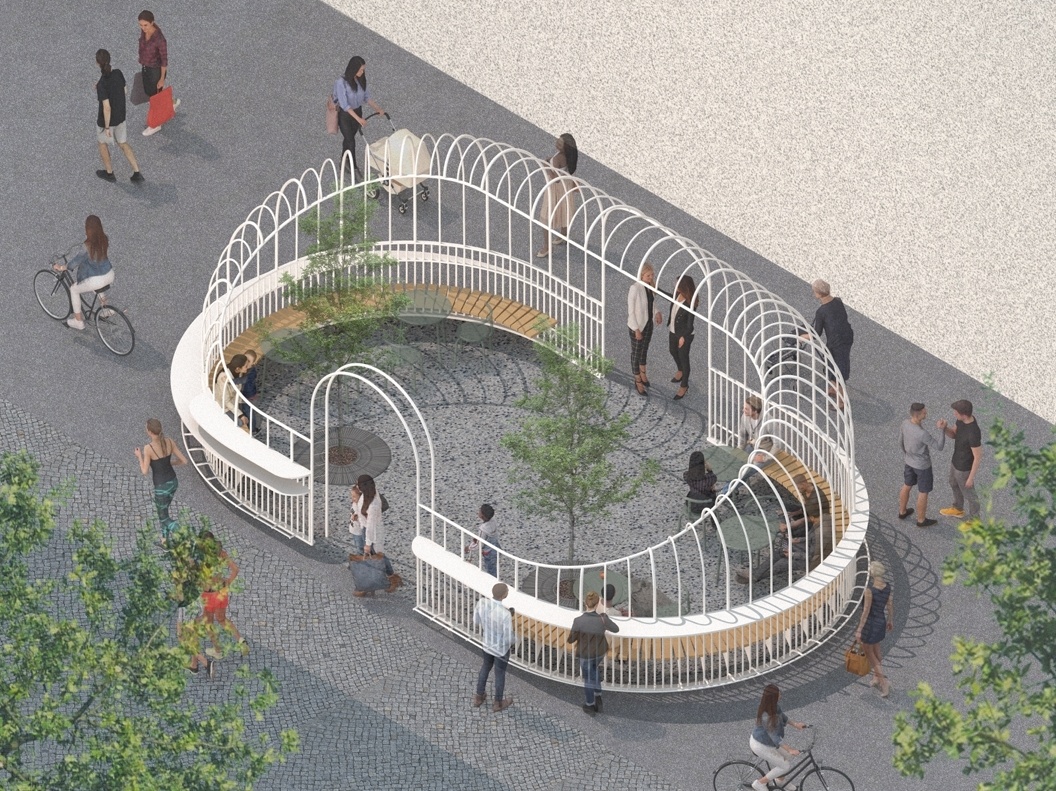
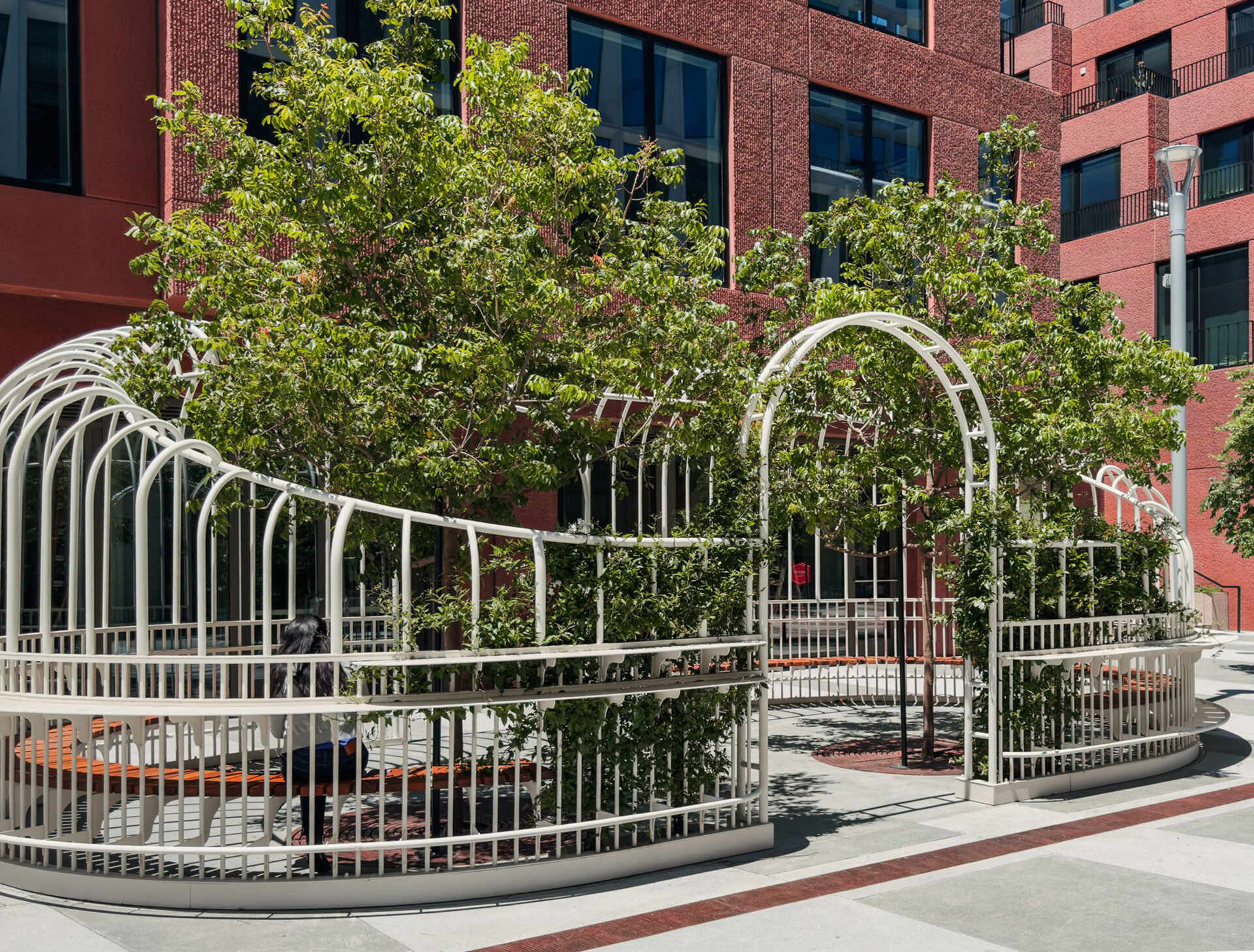
Drawing inspiration from Victorian-era conservatories and classical greenhouses, Min Design reinterpreted these historic forms with a contemporary sensibility. The result is an elegant oval pavilion, its curved silhouette rising gently to frame the sky. The structure’s custom-crafted rails and meticulous detailing strike a delicate balance open enough to maintain visibility yet defined enough to offer a subtle sense of enclosure. It’s neither fully indoors nor entirely outdoors, but a liminal space where architecture and nature converge.
Nature as an Active Design Partner
Two mature trees, preserved and thoughtfully integrated into the structure, form a living canopy overhead. Over time, their growing branches will cast dappled shade, enhancing the pavilion’s biophilic design and reinforcing its connection to the landscape. This choice reflects a long-term vision, where architecture evolves alongside nature, fostering a dynamic yet harmonious relationship.
Overcoming Urban Constraints with Creativity
The project navigated complex site challenges, including fixed utilities and the preservation of existing trees. Rather than seeing these as limitations, Min Design treated them as opportunities, crafting a space that feels intentional and organic. The result is more than a shelter it’s a carefully composed moment of stillness within an ever-changing urban environment.
A Space for Connection, Defined by Light and Openness
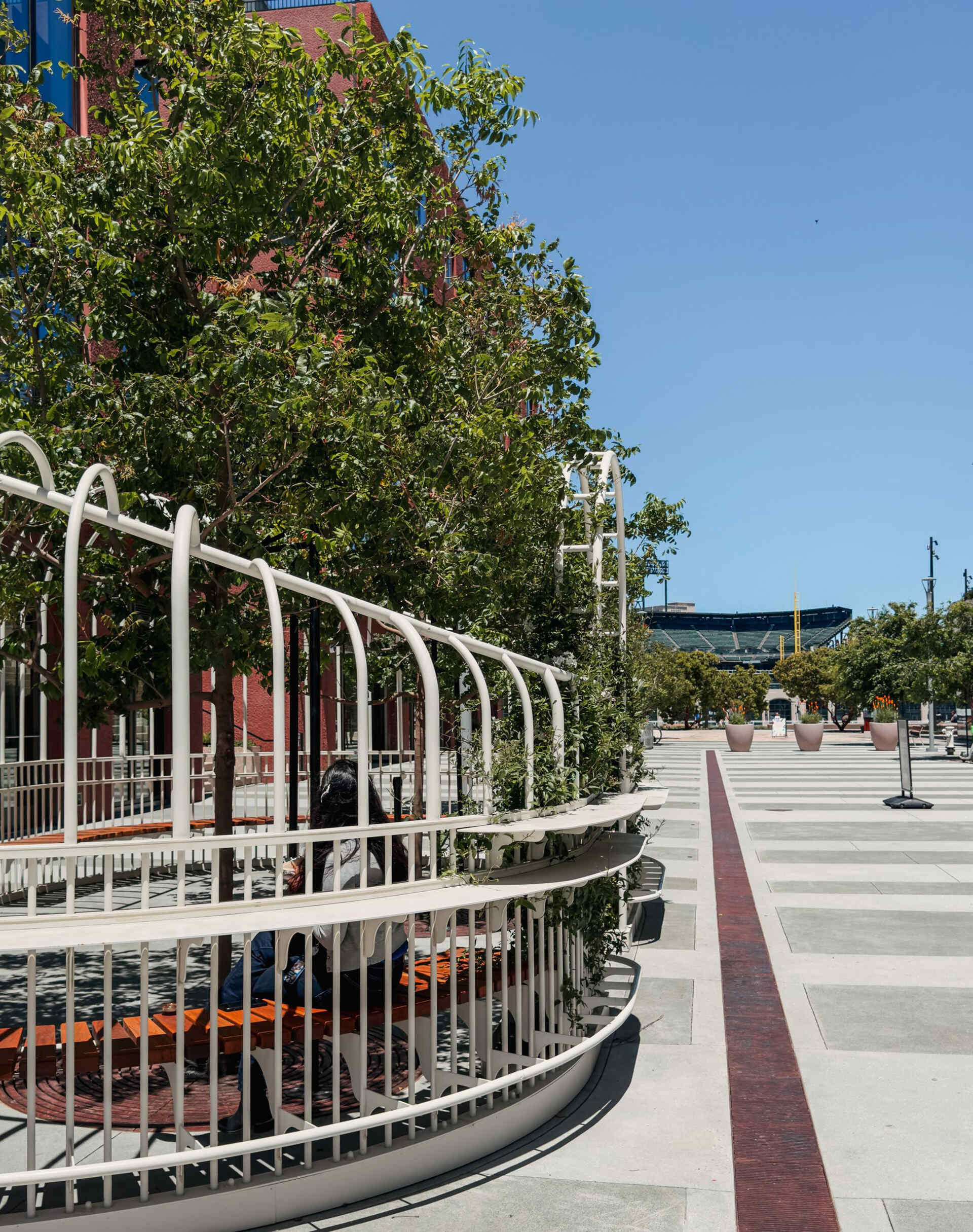
Unlike traditional gathering spots, The Garden Party doesn’t rely on walls for definition. Instead, it uses light, form, and openness to shape an experience. Whether visitors come to socialize, dine, or simply observe, the pavilion invites them to linger, fostering spontaneous interactions and a shared sense of place.
For those curious about the design process, detailed drawings reveal the structure’s thoughtful geometry, showcasing how every curve and angle was meticulously planned to enhance both aesthetics and functionality.
✦ ArchUp Editorial Insight
The Garden Party exemplifies how thoughtful design can soften urban intensity, offering a pause in the daily rush. Min Design’s fusion of historical inspiration and modern execution creates a space that feels both timeless and fresh. However, one might question whether such installations while beautiful truly address broader urban challenges like overcrowding or accessibility. Could future iterations integrate more adaptive elements, such as modular seating or seasonal vegetation, to enhance utility? Still, the pavilion’s greatest success lies in its simplicity: it proves that even small interventions can profoundly shift how we experience a city, turning transit into connection and haste into repose.
Explore More with ArchUp
ArchUp documents the evolving profession of architects worldwide, from career insights and research to project profilesand industry news. Our editorial team publishes global salary trends, career advice, and opportunities for emerging talents. Learn more on our About page or Contact us to collaborate.