
Urban Infrastructure: Central Kowloon Bypass Opens

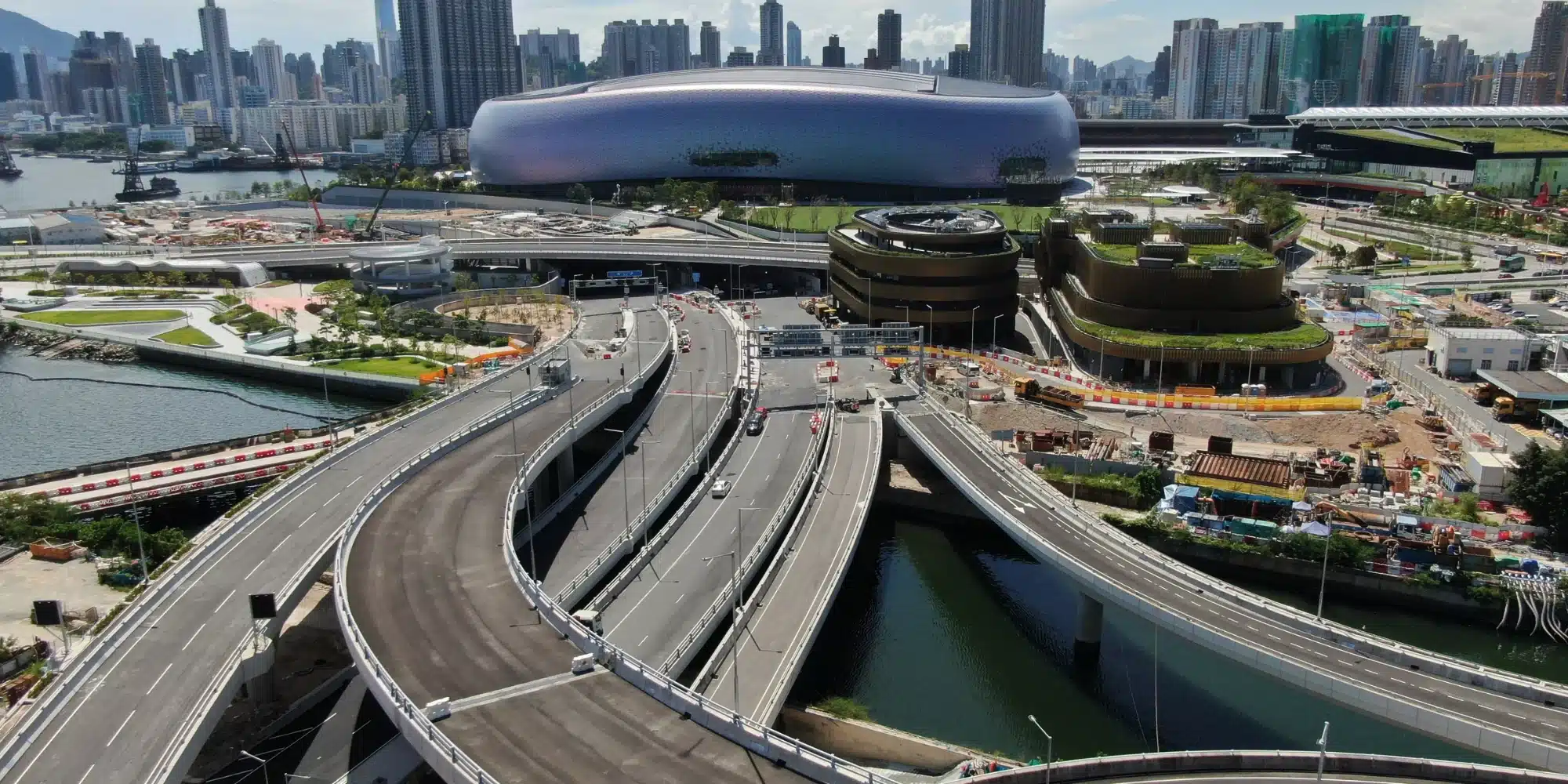
Urban infrastructure in Hong Kong now includes the Central Kowloon Bypass. The 4.7 kilometer corridor links Yau Ma Tei Interchange in western Kowloon with the Kai Tak Development Area and Kowloon Bay to the east. It cuts peak-hour travel time between these districts from 30 minutes to five.
Tunneling Through Extreme Density
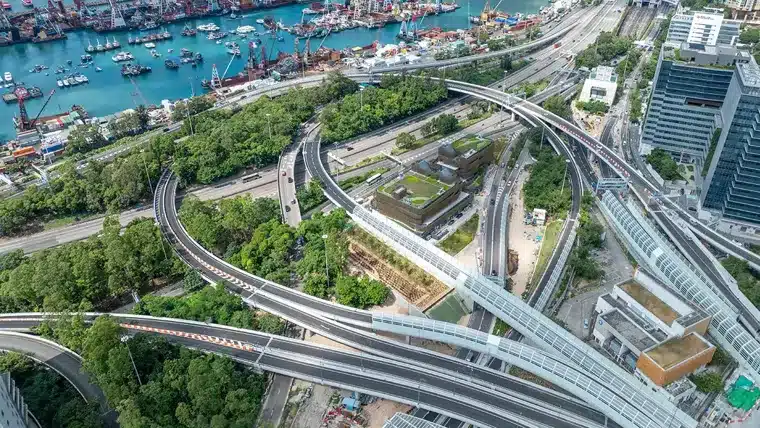
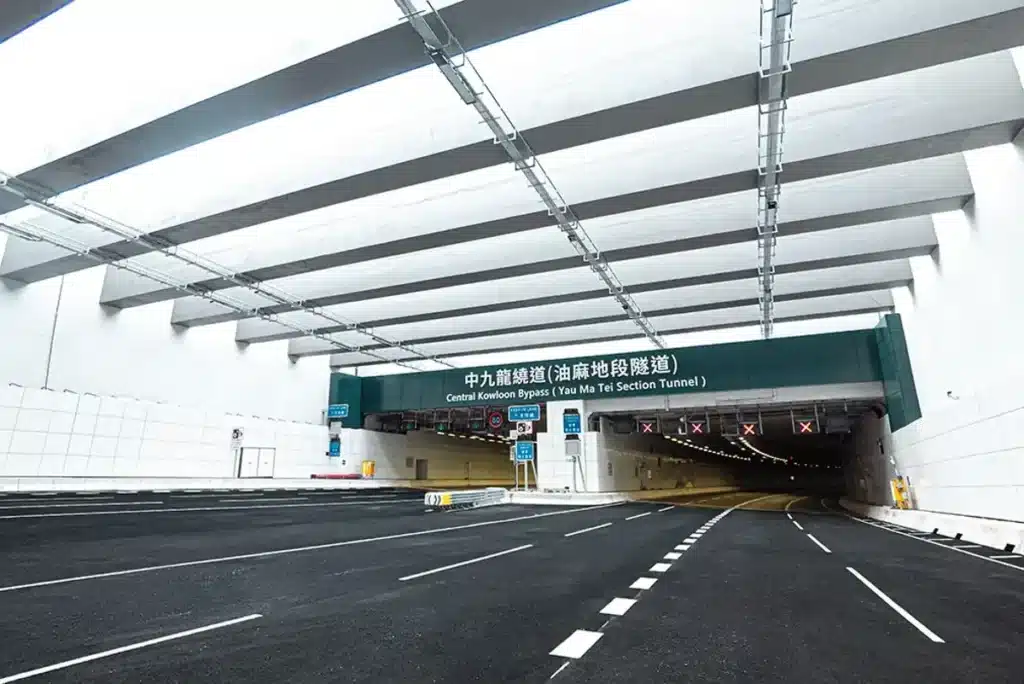
A 3.9 kilometer tunnel runs beneath some of the city’s densest neighborhoods. Complex interchanges anchor both ends. Engineers used digital risk modeling during construction to avoid disrupting live traffic or evacuating buildings. This method responds directly to spatial limits common in high-density cities.

Green Space as Core Function
A 32,000 square meter landscaped deck now connects West Kowloon Station to Yau Ma Tei. It adds public space where none existed before. The project earned Platinum certification under Hong Kong’s BEAM Plus New Buildings v2.0 the highest local standard for sustainability. Unlike typical road projects, this urban infrastructure treats surface activation as essential, not optional.
Integration Over Intervention
The bypass improves connectivity without demolition. It threads mobility through existing fabric instead of clearing it. This aligns with contemporary architectural design that values continuity over spectacle. Planners documented the approach in the archive as a model for responsive urban infrastructure.
Most global news ignores such projects. Yet they shape daily city life more than iconic towers. This urban infrastructure succeeds by integrating quietly. It maintains stability under occupied buildings while improving flow above. Experts highlight it in architectural research for its interdisciplinary coordination across engineering, landscape, and policy.
Architectural Snapshot
Effective urban infrastructure disappears into the city’s rhythm while holding its fabric together.

✦ ArchUp Editorial Insight
The Central Kowloon Bypass reflects layered systemic pressures. Mobility demand rush hour congestion reduction from 30 to five minutes drives the tunneling beneath dense urban blocks. Economic constraints prioritize ROI and risk avoidance, leading to prefabricated systems and digital modeling to maintain live traffic. Regulatory frameworks enforce continuity of use and public safety, while sustainability standards incentivize green decks and BEAM Plus Platinum certification. Labor and operational structures favor minimal disruption, with sequencing and monitoring tools embedded throughout construction. The repeated institutional choice to preserve existing buildings while enabling high-capacity throughput produces linear, subterranean corridors with integrated surface activation. The architectural outcome a 4.7 km three-lane bypass with a 32,000 m² landscaped deck emerges as a symptom of dense urban patterns, financial caution, regulatory rigor, and technological mediation, rather than as a standalone design gesture.

★ ArchUp Technical Analysis
ArchUp: Technical Analysis of the Central Kowloon Route Corridor in Hong Kong
This article provides a technical analysis of the Central Kowloon Route Corridor project, serving as a case study in proactive infrastructure engineering beneath ultra-dense urban fabric and its integration with urban sustainability. To enhance archival value, we present the following key technical and structural data:
The central corridor extends for 4.7 kilometers, including a 3.9 km tunnel bored beneath 15 ultra-dense residential neighborhoods with an average building height of 40 stories. The tunnel consists of two parallel bores with three lanes in each direction, featuring an internal width of 14.5 meters and a height of 7.8 meters. The project utilized 16.2-meter diameter Tunnel Boring Machines (TBMs) with real-time digital monitoring systems to ensure soil stability under existing foundations, allowing normal surface life to continue without evacuating any residential buildings. A total of 1,850 precast concrete segments were installed to form the tunnel lining.
The environmental and sustainability system features a continuous green roof spanning 32,000 square meters above sections of the tunnel, planted with native species that reduce stormwater runoff by 85%. The project achieved BEAM Plus Platinum certification (the highest local standard) through criteria including traffic noise reduction below 55 decibels in adjacent residential areas, and the installation of 1,200 smart LED lighting units inside the tunnel that consume 60% less energy than traditional systems. The ventilation system processes 2 million cubic meters of air per hour with filters that remove 95% of fine particulate matter (PM2.5).
In terms of operational efficiency and urban integration, the corridor reduces peak-hour travel time between Yau Ma Tei and Kai Tak from 30 minutes to 5 minutes, with a daily capacity of 180,000 vehicles. It connects 5 major urban districts and 3 public transport interchanges, integrating with the M+ Museum and West Kowloon Station. Nine entrances/exits were designed with smart congestion management systems that automatically redirect up to 20% of traffic flow as needed. The project cost was HKD 36 billion (USD 4.6 billion).
Related link: Please review this article to understand strategies for developing infrastructure beneath dense cities:
Beneath the Surface: Urban Tunnel Engineering in the Age of Extreme Density.



✅ Official ArchUp Technical Review completed for this article.