Villa 1374 in Bangalore: Integrating Nature into Urban Design

Bangalore’s Urban Context
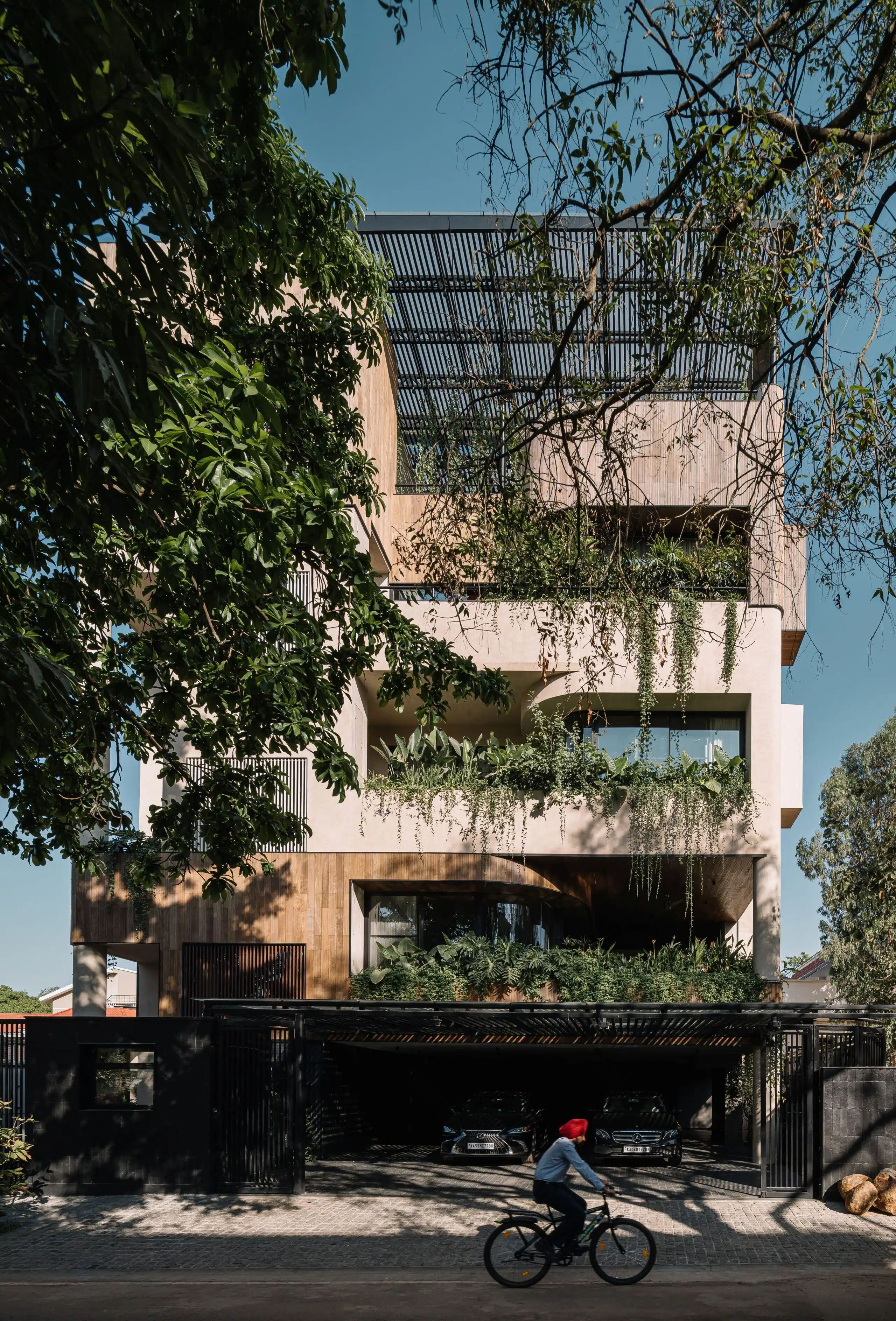
Bangalore exemplifies a balance between urbanization and lush greenery, with climbing plants cascading from building balconies while expansive gardens continue to form the heart of daily life in many homes. As urban density increases and living spaces become more constrained, preserving existing green pockets becomes essential, yet it is no longer sufficient.
Reimagining Nature in Urban Life
From this perspective, The Purple Ink Studio believes that nature’s role should go beyond mere decoration or the preservation of green spaces. The architects pose a fundamental question:
“Can the home itself transform into a vessel that embraces nature?”
Villa 1374: The Architectural Embodiment of Urban Nature
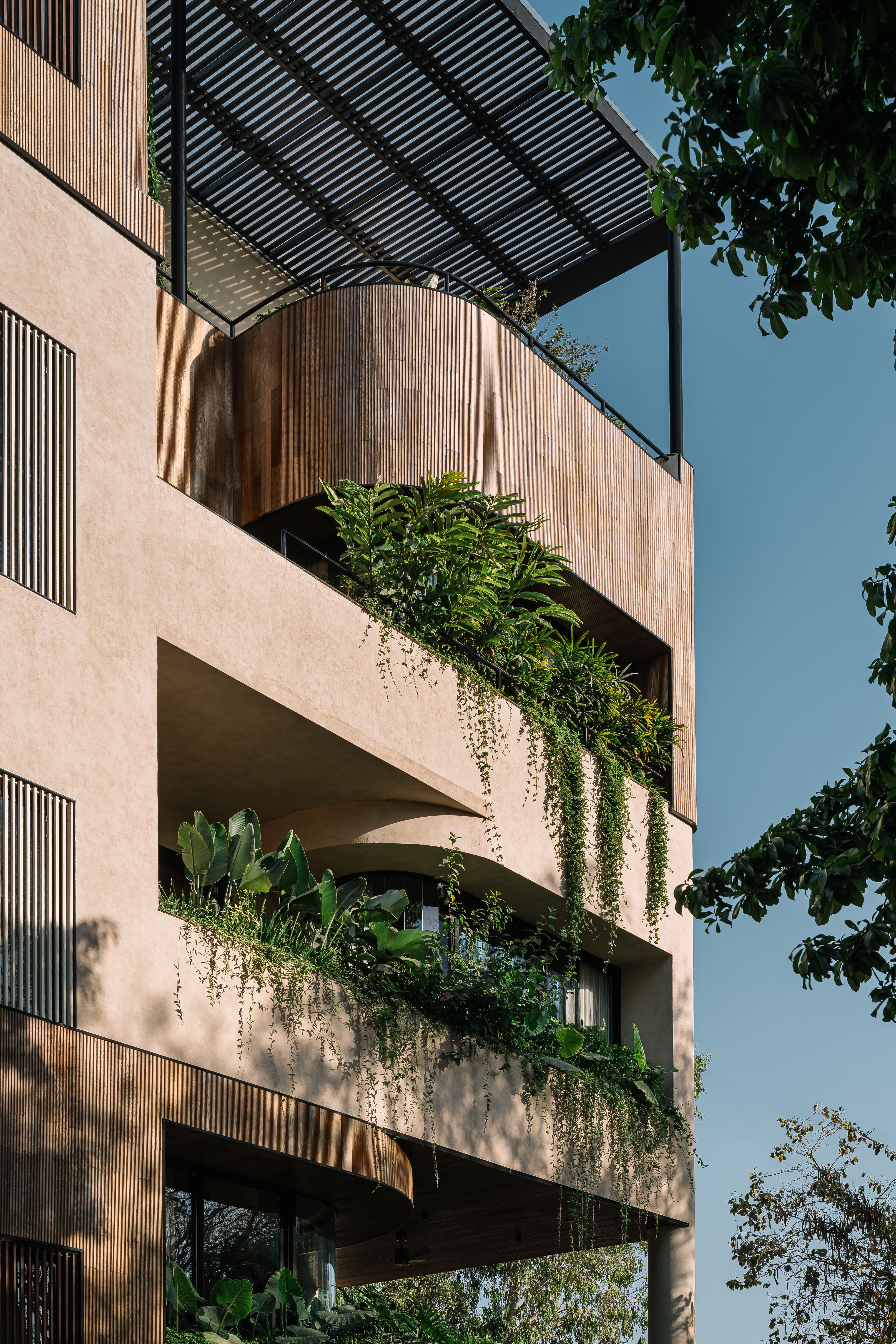
Villa 1374 provides a tangible answer to the question of how nature can be integrated within the home itself. Located in northern Bangalore, the villa is surrounded by wide streets lined with trees, enhancing the connection between the building and its green environment.
The design is based on a monolithic form, with a solid lower floor that anchors a sense of stability and strength. In contrast, the curved upper floors and graduated volumes introduce a sense of softness and visual harmony, creating a balance between rigidity and flexibility within the architectural composition.
Integration of Nature and Light Indoors
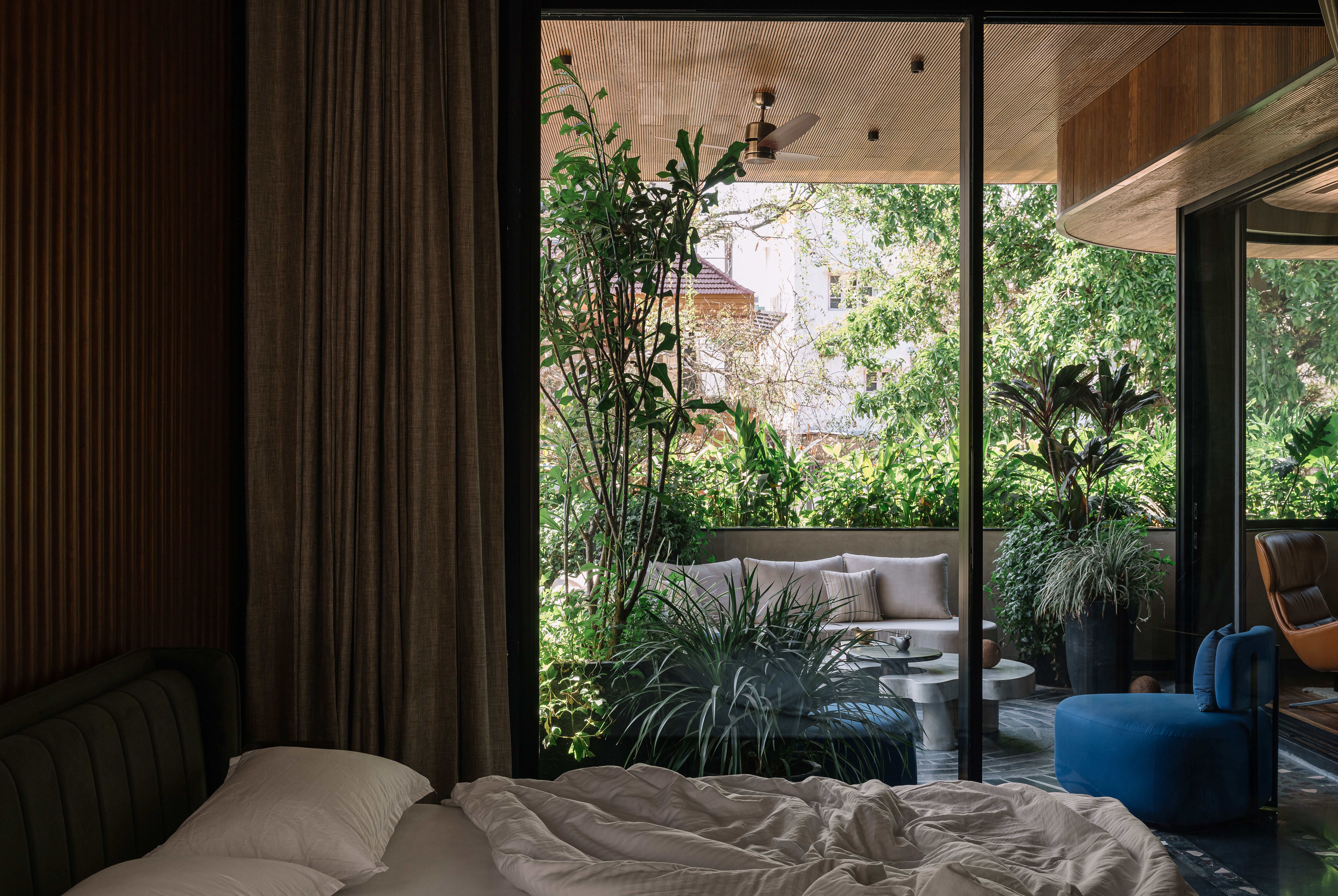
Inside Villa 1374, social spaces flow seamlessly, allowing smooth movement between different areas of the home. Small gardens are interspersed within the building fabric, adding a natural touch that harmonizes with the residents’ daily life.
The interior design leverages the interplay of light and shadow to create warm and balanced atmospheres, enhancing the living experience and fostering a sense of comfort. Additionally, the soft furnishings embody the spirit of local craftsmanship, paying a clear homage to the traditional artisanal practices of the region, thereby connecting the design to Bangalore’s cultural identity.
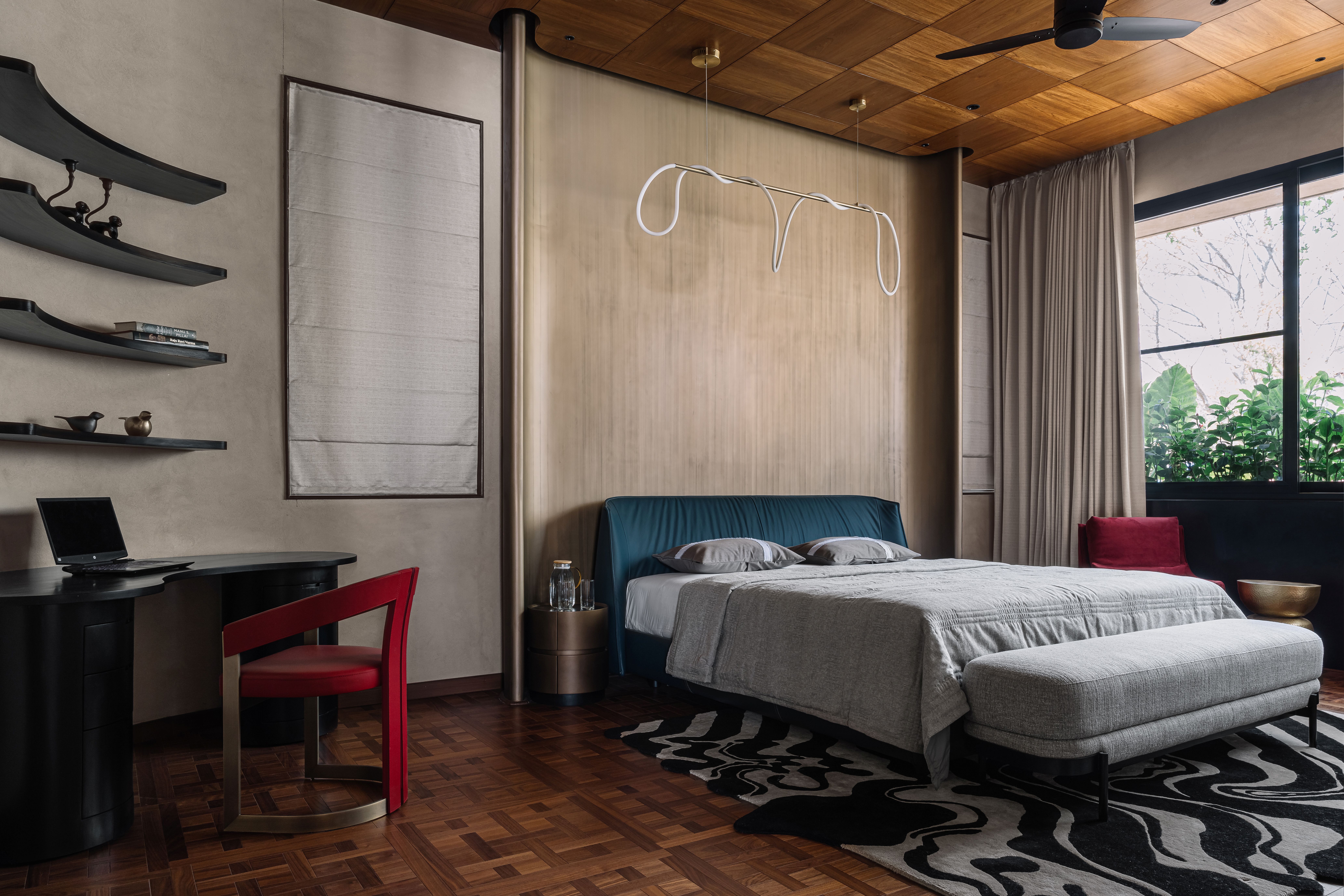
Material and Color Selection for a Cohesive Sensory Experience
The architects carefully selected materials that age gracefully, developing a natural beauty over time and forming a harmonious tactile palette that flows throughout the home.
The colors carry an earthy character, inspired by stone, charcoal, and neutral tones, while touches of terracotta and custom-designed furniture introduce a sense of warmth and familiarity, enhancing the living experience and creating a seamless connection between nature and the interior.

An Urban Cocoon Home
The home forms a warm, cocoon-like refuge, quietly and comfortably embracing its residents. The staircase unfolds in successive layers, while the corridors interweave to create a smooth flow of movement, enhancing the daily living experience and making navigation within the home enjoyable and intuitive.
On the upper floor, the space is utilized optimally with a swimming pool and recreational areas, imparting a sense of openness and welcome, completing the comfortable living experience in this urban residence.
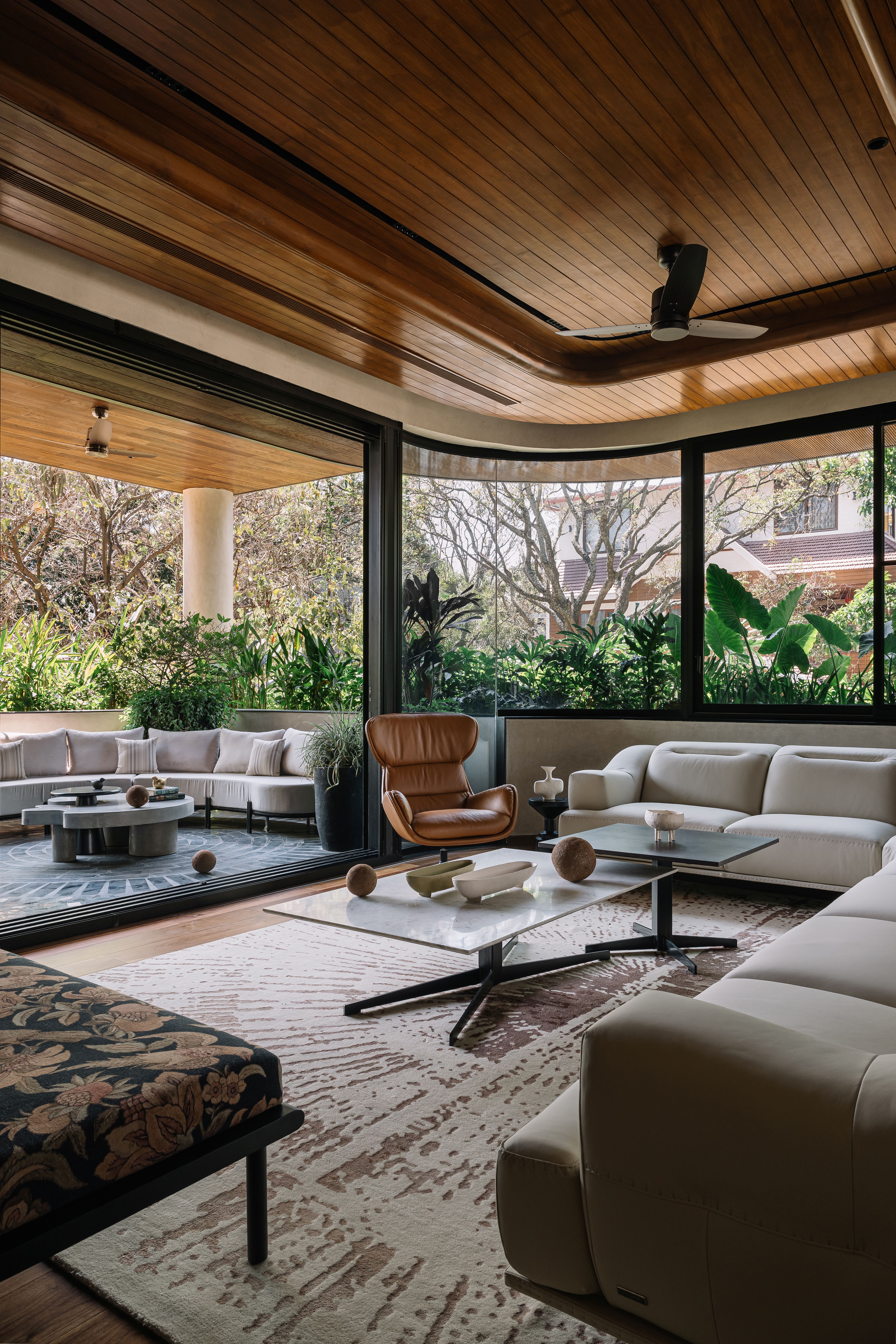
Landscape as a Core Design Element
The carefully designed landscape forms the foundation of this project. The architects ensured that the villa remains in constant harmony with its surroundings, allowing the green spaces to act as a quiet companion to daily life.
Drawing on the experience of the home’s previous occupants, for whom plants were central to daily living, the architects utilized the existing mature collection and introduced new species. This approach created a personal urban oasis that reflects the unique relationship between humans and nature, imparting a fresh and vibrant character to the residence.
✦ ArchUp Editorial Insight
Villa 1374 offers a unique architectural experience that merges urban design with nature, showcasing positive aspects such as the harmony between indoor and outdoor spaces, the use of natural light, and materials that age gracefully. The integration of small gardens within the architectural fabric adds a vital dimension to the everyday living areas.
However, the project raises certain concerns regarding functional flexibility and practical spaces, particularly in the distribution of rooms and circulation across the upper floors. The monolithic character may also convey a sense of excessive rigidity in some corners. Additionally, the ongoing maintenance of gardens and mature plants requires consistent effort and attention to preserve this delicate sensory and visual balance.
Prepared by the ArchUp Editorial Team
Don’t miss the chance to explore more from Architecture in fields like Interior Design and Buildings on the ArchUp website.