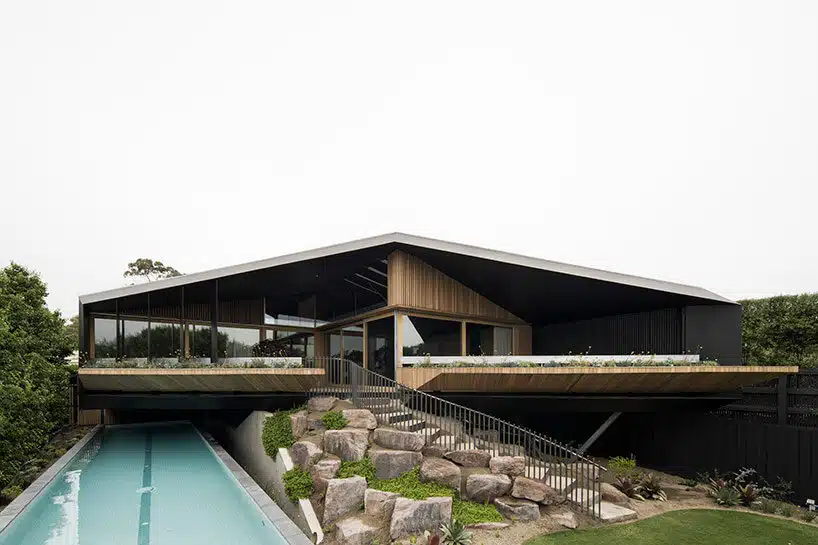
Villa Omah Tanah: A Sustainable Architectural Masterpiece Reconnecting with Nature in Sukabumi

In the heart of the charming Pelabuhan Ratu area in Sukabumi, West Java, where the calm ocean waters meet expansive rice fields, stands “Omah Tanah” (Earth House) Villa—a testament to the possibility of perfect harmony between luxurious architecture and environmental sustainability. This unique project redefines modern living within a framework that respects the environment and revives local building traditions.
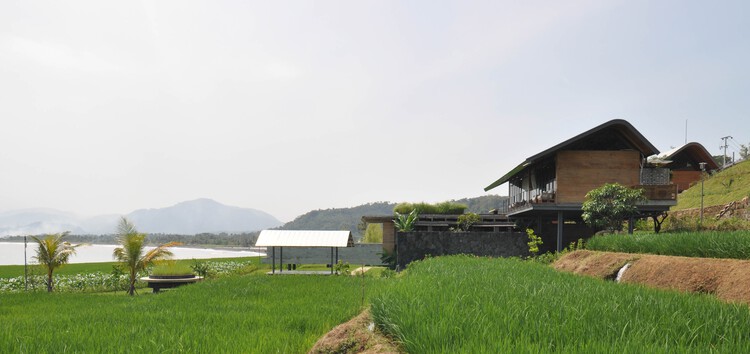
An Exceptional Site Where the Sea Meets Fields and Hills
The villa’s location is remarkably unique; it sits directly on Lodji Beach, where green rice fields stretch directly behind the white sands. The beauty of the site doesn’t stop at this charming contrast but extends with the naturally sloping terrain: from the main road, the land descends towards hills covered in dense tropical forests, painting a natural canvas combining three main vistas: the sandy sea, fertile rice fields, and dense forests. This natural diversity inspired the design to be a faithful reflection of the spirit of the place.
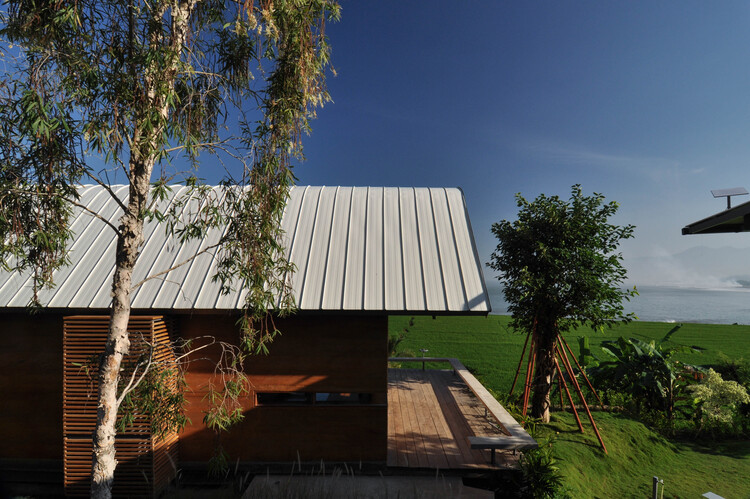
Reinventing Local Architecture: Modernity that Speaks the Local Dialect
The design concept started from a profound idea: reinterpreting traditional Indonesian village houses, but in a contemporary language. The result is a building that combines clear simplicity of form with intelligent performance. The architectural mass is organized around two central courtyards:
- The First Courtyard: Dedicated to car parking, but it doesn’t lack a smart element; its transparent roof is specifically designed to capture solar energy and convert it into clean power.
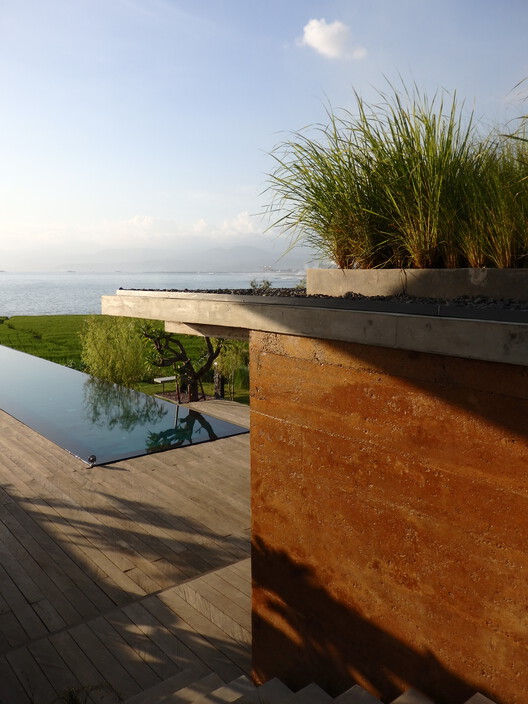
- The Second Courtyard: The beating heart of the home, situated at a lower level and embracing a swimming pool that acts as a natural extension of the internal terrace. This pool is not just for leisure; it is the geometric reference point (Datum) from which the symmetry and composition of the entire building emanates.
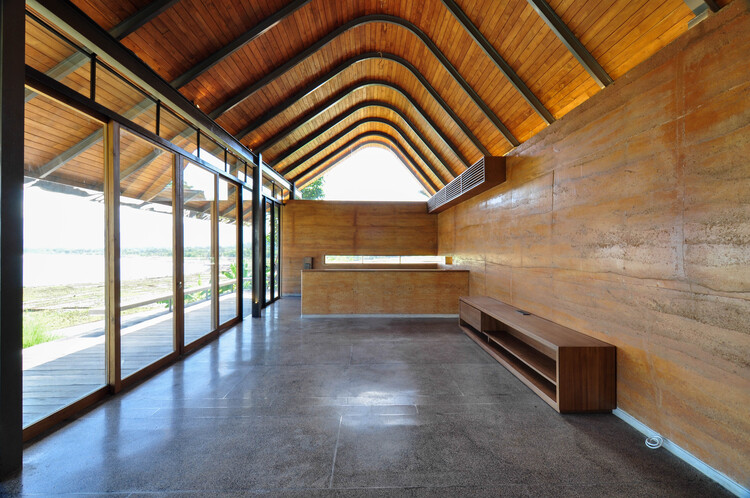
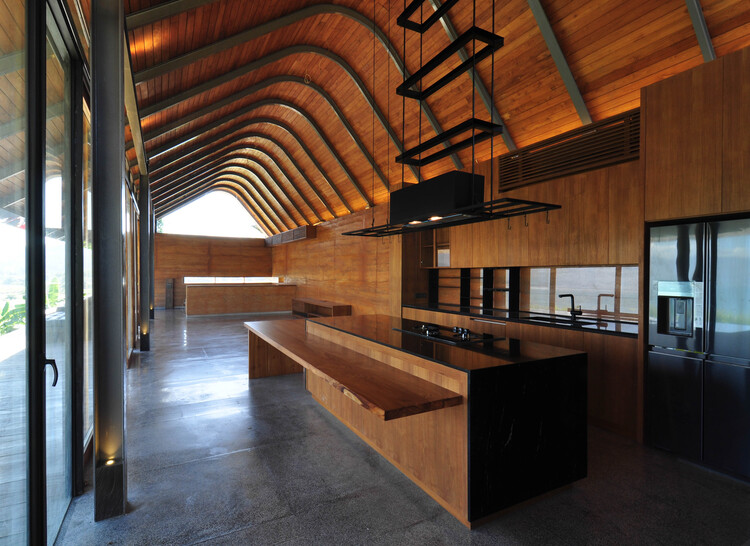
An Arched Roof: Where Tradition Meets Modernity
The villa’s exterior appears as a simple cubic mass topped with a traditional gable roof, but the surprise lies in the arching of this roof using a sturdy and innovative iron frame. This design flair not only breaks the monotony of the traditional form but also creates a more spacious and spirited interior. The iron roof structure, instead of traditional wood, allows the roof to “breathe” and be more resistant to the harsh coastal elements.
Walls of Earth: Sustainability with Deep Roots
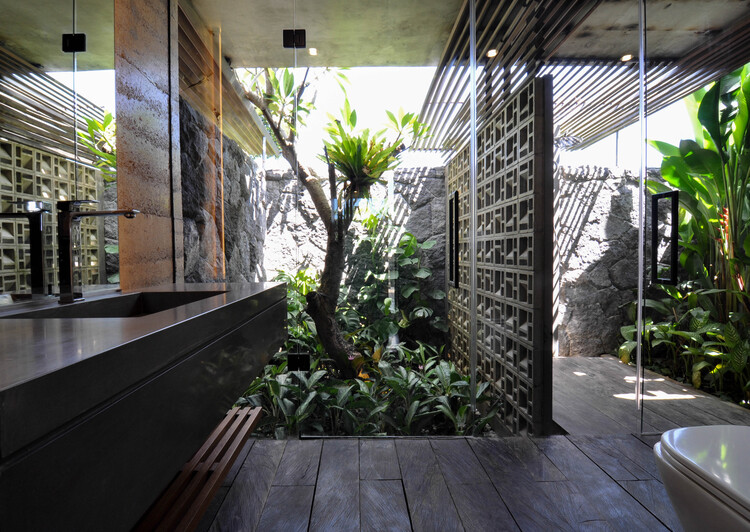
Here lies the essence and soul of the project: walls of Rammed Earth. This choice was not merely aesthetic or traditional; it was a deep environmental and ethical decision. In Indonesia, particularly in Java and Bali, traditional brickmaking relies on burning vast amounts of wood, contributing to deforestation.
By using the local soil itself (after treatment) as the main building material, “Omah Tanah” offers a revolutionary solution. The team spent over 18 attempts in the laboratory analyzing soil samples from different depths, facing the challenge of the sandy nature of the soil near the beach. Finally, suitable clay soil was found less than 1 km away. After filtering and treatment with a special hardening agent (free of cement), the soil was compacted into formwork in layers (80-100 cm) using an iron frame and Tego film, to mature and dry in just 1-2 months thanks to the sea air.
Resource Management: Autonomy in Water and Energy
To complete the sustainability cycle, the villa relies on:
- Water: The system depends on rainwater harvesting, storage, and filtration for daily use, reducing reliance on external sources.
- Energy: Solar panels installed on the service room and garage roofs provide a clean, renewable energy source, making the project nearly self-sufficient.

A Light Footprint: Development that Does Not Encroach on Nature or Community
Perhaps this aspect is the most humane part of the project. The total land area is 1.8 hectares, but 70% of it remains untouched and preserved as fully operational rice fields, where local farmers are allowed to continue cultivating and working them. It does not undercut the local economy but supports it. The residential area (30%) was built near the road to minimize interference with the natural landscape; even the pool was designed to be “floating” to leave a small footprint and allow life to continue beneath and around it.
✦ Archup Editorial Insight
The “Omah Tanah” project in Sukabumi delves into the essence of true sustainable architecture, which goes beyond merely installing solar panels to reconnect with the earth and intelligent local building techniques. The article excell highlights the immense research and experimental effort behind the “rammed earth” technique and the geographical challenges overcome, adding deep credibility to the project. However, the content could have been further enriched by including brief interviews with local residents or engineers to reveal the human and social challenges in accepting this technique. Nevertheless, this project remains a role model; it offers not just a luxurious villa but a powerful message about the designer
Brought to you by the ArchUp Editorial Team
Inspiration starts here. Dive deeper into Architecture, Interior Design, Research, Cities, Design, and cutting-edge Projectson ArchUp.