
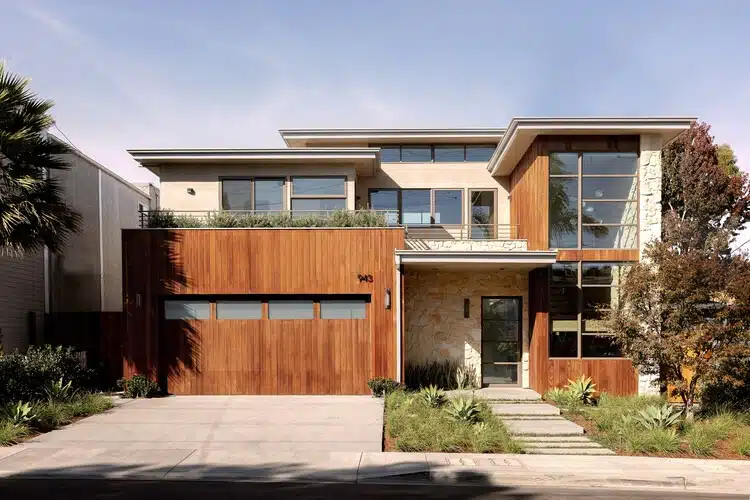
Renovating a Vintage Home to Redefine the Indoor-Outdoor Connection

Home Renovation and Lifestyle Update
John and Carmen Ramos lived in a 1950s farmhouse-style home for more than twenty years. Over time, it became essential for them to design a new space that aligns with their coastal lifestyle, blending comfort and elegance.
Interior and Exterior Design
The new home was constructed on the site of the old one, with a focus on integrating indoor and outdoor living elements. The ground floor features a master suite that offers privacy and comfort, while the second floor provides open spaces and expansive terraces, enhancing the interactive experience between interior and exterior areas.
Hosting and Family Space
The home is designed to accommodate all family members, with careful consideration of natural flow between rooms and open spaces. This approach reflects the architects’ commitment to creating a practical and comfortable environment, while preserving the family’s personal character and unique lifestyle.


The Importance of Location in Architectural Design
Location is a fundamental factor in the living experience. In this case, the site was ideal, just a few buildings away from the beach, offering natural views and enhancing the coastal lifestyle. However, the location alone was not enough to meet the family’s needs due to the limitations of the old house.
Constraints of the Old Design
The existing house was built in the 1950s and was not designed for the modern open-living style. The interior layout was rigidly divided, dark, and cramped, making movement between rooms complicated. For example, the kitchen was behind a separate door, the bedrooms were lined along a dark corridor, and access to the backyard was only possible through a narrow service door on the side of the house.
Impact of Layout on Family Life
The limitations of the old house’s design not only affected movement within the home but also made hosting regular family gatherings difficult. Narrow spaces and complex corridors restricted interaction and the shared living experience, prompting the family to seek a new design that offered openness and flexibility.

Efficient Use of Small Spaces
The primary goal was to maximize every inch of the small plot to benefit the family. The focus was on providing areas for play, relaxation, and entertainment that align with a modern and comfortable lifestyle.
Vertical Expansion and Independent Units
By adding a second floor to the main house and constructing an Accessory Dwelling Unit (ADU) at the rear of the property, additional spaces were created to meet the family’s diverse needs. This expansion also provided key opportunities to bring natural light into previously dark corners of the layout, significantly enhancing the living experience.
Enhancing Functional and Lighting Experience
This approach reflects the importance of analytical thinking in architectural design, where the work goes beyond merely increasing space. It also includes improving lighting, movement flow, and spatial integration to support the family’s daily life.

Open Ground Floor Layout
The ground floor was reorganized into an open-plan layout focusing on the main living area, designed to be warm and inviting. This space features large sliding doors that open onto the new backyard and pool, enhancing the integration between indoor and outdoor living.
Master Suite Designed for Long-Term Living
The master suite was carefully positioned on the ground floor to allow the couple easy access to daily amenities and comfortable living as they age. This approach reflects the design’s emphasis on comfort and practical functionality alongside aesthetic appeal.
Maximizing Natural Light
Bringing in as much sunlight as possible was a top design priority. The master suite and main gathering spaces receive morning to midday light, while the kitchen and dining room are bathed in warm orange hues of the sunset streaming through the stair tower. This thoughtful use of light enhances the sense of warmth and spaciousness throughout the day.

Longitudinal Expansion and Family Spaces
The second floor added two new bedrooms for visiting family members, connected to a central living area, enhancing communication and comfort within the home.
Open Terraces and Light-Filled Experience
Two new terraces extend from the front yard through the living area to the rear of the property, providing expansive upper-floor spaces for relaxation and leisure in an open environment filled with natural light.
Multi-Functional Spaces
The second floor also includes a gym equipped with a private bathroom and sauna, as well as an integrated office space. This diversity of use allows the family to adapt the space to their changing needs, reflecting a flexible design approach that balances entertainment, wellness, and work.

Material Selection and Finishes
The material palette used in the home reflects the classic Southern California character, blending stucco, stone, and wood into a dynamic façade that creates an appealing visual contrast.
Indoor-Outdoor Contrast
The exterior vertical siding contrasts with the irregular forms of the stone cladding and the smooth stucco backdrop, enhancing the façade’s visual depth. Inside, exposed beams and a stone-clad fireplace provide a sense of continuity between the exterior materials and the main living space.
Interior and Artistic Details
A stone waterfall countertop drapes over the kitchen island, complemented by custom walnut cabinetry, while natural stone tiles cover all bathrooms, providing a durable foundation for private spaces. Carefully considered stone finishing details add refined touches that reflect quality and attention to interior design.

✦ ArchUp Editorial Insight
Although the project offers an opportunity to explore the integration of indoor and outdoor spaces and improve natural light flow, some design decisions raise questions when viewed from a broader architectural perspective. For instance, vertical expansion and the addition of an Accessory Dwelling Unit (ADU) enhance land utilization, but they may place pressure on the balance between privacy and spatial cohesion, especially if the family’s needs change over time. Similarly, the emphasis on natural sunlight and open spaces contributes to an improved living experience, yet it may require careful management of heat and privacy during hot days or when the yard is used for multiple purposes.
The project can serve as a valuable reference for architects and designers studying how to repurpose existing sites while considering prior structural and planning constraints. At the same time, it illustrates the challenges that may arise when attempting to achieve a comprehensive balance between functionality, aesthetics, and flexibility in family spaces. In other words, useful insights can be drawn from strategies involving expansion and natural light, while recognizing that some solutions may require fine-tuning to suit different conditions or diverse lifestyles.
Prepared by the ArchUp Editorial Team
Don’t miss the chance to explore more from Architecture in fields like Design and Projects on the ArchUp website.


