
Designing the SeoulOne District: Integrated Living in the 10-Minute City

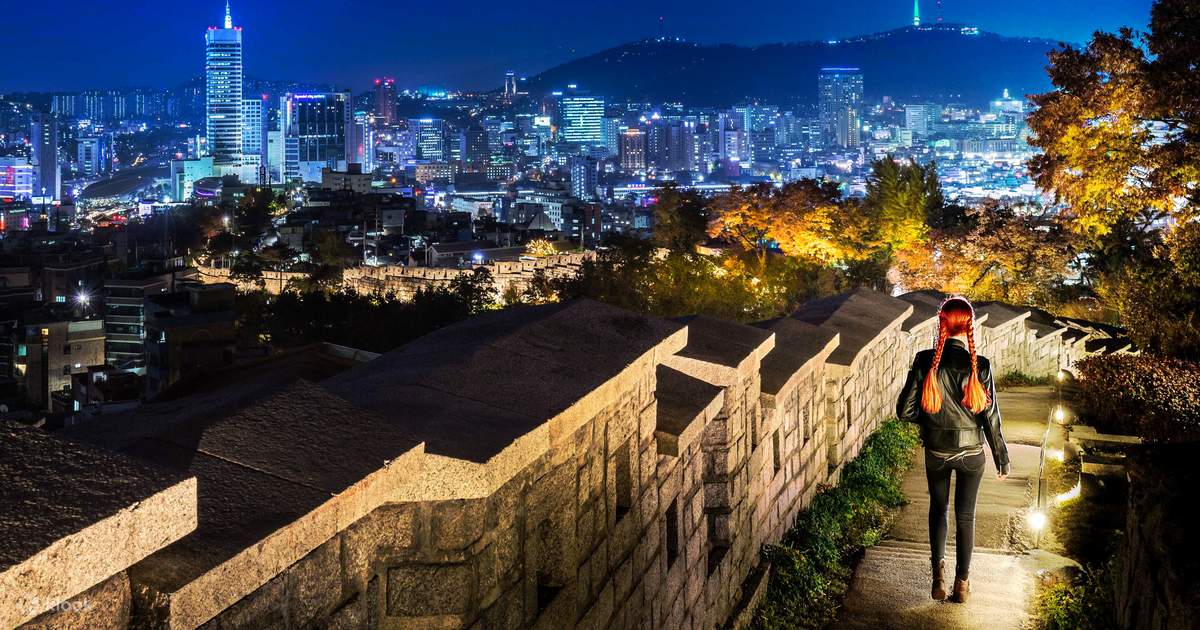
We stand at the threshold of a new era in urban planning in Seoul. The SeoulOne project
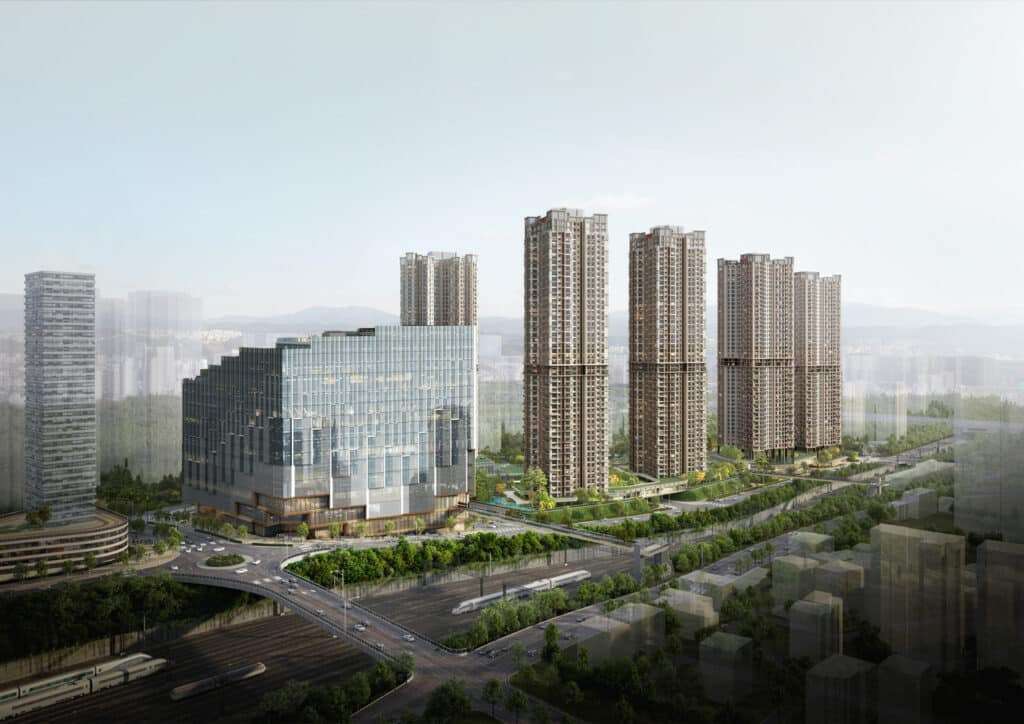
embodies the transformation of a former industrial and railway site. This site becomes an advanced model for multi-generational living. This plan represents a vision for a green, miniature city that never sleeps. It introduces the concept of the 10 minute city, where all essential needs for residents are met within a distance of no more than ten minutes on foot.
Footsteps Replace Wheels: The New Urban Promise 🚶♀️
Imagine starting your day in SeoulOne. Here, the sounds of car engines are absent. Pedestrians dominate all movement. This is a pioneering design decision. It solidifies the 10 minute city as a tangible reality. The entire district rises on an elevated platform dedicated to walkers. This platform completely separates them from surrounding roads and traffic. Traffic is limited to an outer ring road. This road provides direct access to underground parking. This commitment to a car-free environment ensures movement safety and efficiency. It also fosters a strong sense of community belonging within the 10 minute city.
As you wander through this district, which spans 405,000 square meters, you’ll find everything is within reach. It offers residences operating around the clock, offices, hotels, and essential facilities. The 10 minute city concept is evident in this measured density of mixed-uses. It ensures that daycares, senior centers, a hospital, and a learning center are nearby. Retail shops are also just a short walk away.
Harmonizing with Topography: Nature as a Design Guide 🌳
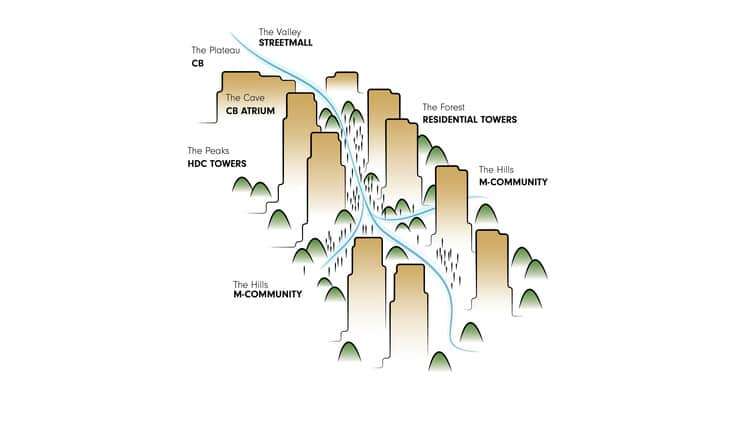
The architecture goes beyond mere functionality. It embraces the surrounding environment. The district’s proximity to the mountainous region in northeast Seoul inspired the designers. They applied traditional Korean planning principles.
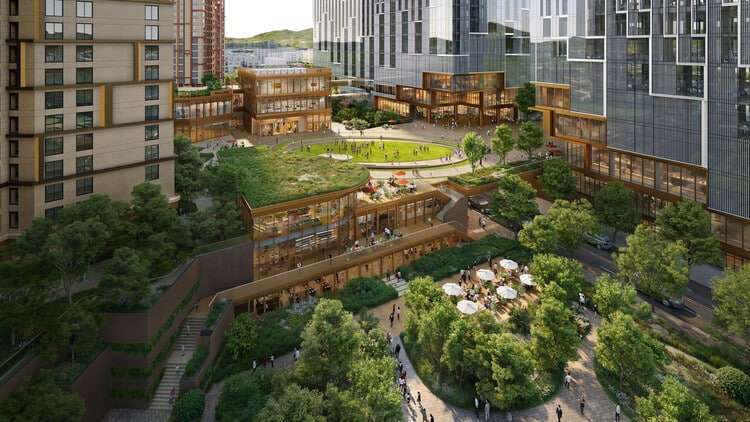
You’ll notice that the forms of the buildings harmonize with the nearby mountain topography. This creates open visual corridors toward the natural landscape. This visual integration is reinforced by dedicating more than 30% of the site to green spaces. This transforms the district into a perpetual green village.
- The SeoulOne Green Network:
- Pocket Parks: To provide small, easily accessible natural breaks.
- Green Roofs: To increase thermal insulation and reduce surface water runoff.
- Water Gardens: To aid in water management and create aesthetic focal points.
- Forest Walk: To offer an immersive natural experience within the urban fabric.
The Circle of Life and Community Connection 🤝
The core concept of the project, named The Grand Circle of Life, is evident. It features a tiered arrangement of facilities serving all age groups. While the elevated platform provides a dynamic space for walking, a series of pedestrian bridges connects this district to adjacent areas.
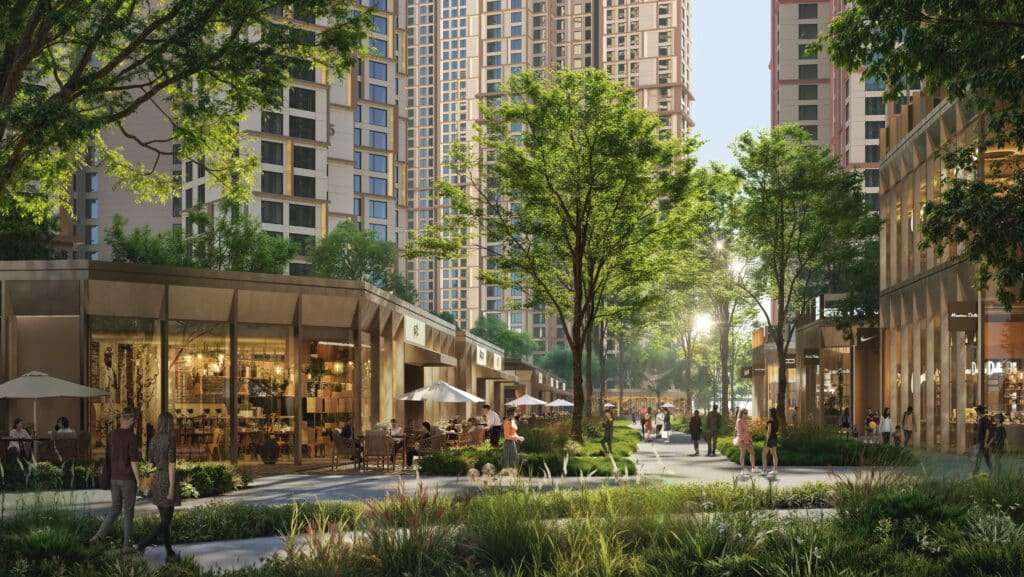
Within this arrangement, you’ll observe carefully designed meeting points. For example, every two residential towers are connected by a shared podium. These bases are known as M community levels. They are dedicated spaces for residents to meet. This encourages interaction and reduces isolation. These architectural details ensure that the 10 minute city remains socially vibrant and interconnected.
Construction Technologies and Sustainability 🛠️
The construction relied on a range of technologies and materials to ensure its sustainability:
- Integrated Networks: Full integration of green and blue networks for resource management.
- Clean Energy: Utilization of energy systems to reduce environmental impact.
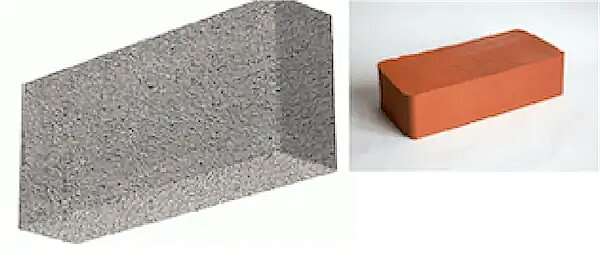
- Local Materials: Use of materials inspired by traditional Korean ceramics. This contributes to lowering the project’s carbon footprint.
- Smart Technology: Application of smart city technologies to enhance service efficiency.
The most prominent landmark in the district is The Cube building. This structure functions as a mixed use center. It houses a retail mall, offices, and a hotel. The offices are organized around a collaborative central atrium. Natural light streams in through stepped skylights. These facilities ensure that pedestrian movement and commercial activity continue around the clock. This confirms the viability of the 10 minute city as a sustainable living model.
✦ ArchUp Editorial Insight
The SeoulOne masterplan reveals a highly functional interpretation of the 10 minute city, emerging as a self-contained urban fabric elevated above vehicular traffic. Visually, the project asserts dominance through stepped building masses that echo the surrounding mountainous topography, connected by suspended pedestrian bridges. The primary critical analysis concerns the planning approach: while the complete separation of pedestrians from cars (via an elevated platform) is appealing, it risks creating an isolated district that may lack urban permeability and natural integration with Seoul’s traditional urban grid, despite external connectivity promises. Nevertheless, the architectural value lies in presenting a dense, sustainable model for multi generational housing, advancing the global discussion on the future of human-centered development in major cities.



ArchUp: Urban and Sustainability Analysis of Seoulluon Integrated District Design
This article examines the Seoulluon district in Seoul as a case study in the “15-minute city” model. To enhance its archival value, we would like to present the following key planning and technical data:
The urban design is based on an elevated pedestrian platform 12 meters above street level, covering 100% of the district’s 405,000 m² area. The circulatory traffic system (outer loop) completely separates vehicular movement from interior spaces, providing underground parking for over 5,000 vehicles. The mixed-use density reaches 6.0, with allocation of 40% for housing, 30% for offices, and 30% for public facilities.
The environmental system features a blue-green network covering 35% of total area, including 15,000 m² of green roofs and water gardens with rainwater retention capacity of 5,000 m³ annually. The plan achieves 40% lower energy consumption than local standards through centralized renewable energy systems.
In terms of functional performance, the design ensures pedestrian access to 12 essential services (healthcare, education, retail) within an 800-meter radius (10-minute walk). The project comprises 15 residential towers ranging from 25 to 50 stories, accommodating up to 20,000 residents, with tiered community centers serving all age groups.
Related Link: Please review this article for a comparison of human-centered urban planning models:
Integrated Cities: From Theory to Application in Contemporary Urban Planning
https://archup.net/neubiberg-sustainable-urban-planning/