Bruno Munari and his relationship with art and architecture

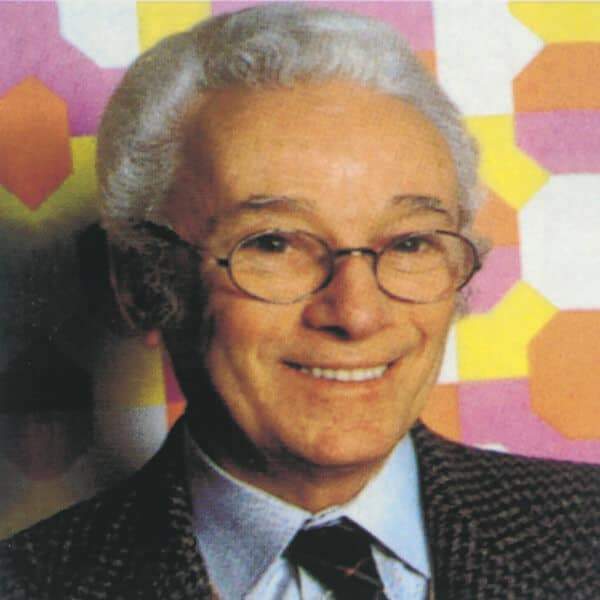
Bruno Munari and his relationship with art and architecture
Bruno Munari and his relationship with art and architecture,
By animating and disseminating into everyday life his ongoing research into the circulation and instability of forms, signs, colours, light, words and images,
He never ceased to combine imagination and method, a logical and intuitive invention,
within an approach that sought to realize the significance of things.
From the first futuristic paintings of the 1930s to unread books, from useless machines to talking forks,
from original photographs to the high-voltage structures of the 1990s,
Bruno Munari (1907-1998) played his whole life with great economy of categories and disciplines,
trying to combine them into a single radical and generous artistic practice.
Encouraging everyone to develop their curiosity and creativity in art and architecture.
Practices of Bruno Munari
Throughout the twentieth century Bruno Munari’s practice included design, drawings,
illustrations and books, as well as art, architecture, visual arts, photography and film.
His artistic research, heterogeneous and highly coherent, cannot be separated from practical thinking in pedagogy.
Weaving connections between creativity and everyday life,
he produces original works and published objects, and organizes educational seminars and workshops for children.
He passed through and participated very early in various avant-garde artistic movements of the early twentieth century, such as Futurism and Surrealism.
He experimented with geometric shapes, the triangle, the circle, and the square, seeking to eliminate the superfluous.
He was very involved in the Concrete Art and Architecture movement, founded in Milan in 1948,
which brought together artists, among others, such as Max Bell, Klee, Kandinsky,
Book, what is it?
It is a body made up of several cards connected to each other by a link.
But what’s in it?
Usually there are words that, if placed end to end, form a line miles long, and to read them you have to walk a lot.
But what do we read in these words?
We read very different stories, stories of people from today or the past, scientific experiments, myths, very complex philosophical or political ideas, poems, assessments, science fiction stories.
Works of Bruno Munari in art and architecture
His work combines architecture, industrial design and the visual arts so dear to the Bauhaus.
From the 1930s, the book became the ideal support for his artistic research, and Munari,
trained under one of the Bauhaus masters, Herbert Bayer, began a graphic activity with radical innovations.
His taste for typography led him to use lettering as a language in itself, in the manner of the Russian constructivist L. Lissitzky.
He also plays with dimensions and materials, focusing on the tangible aspect of the book’s subject,
without forgetting the fun and humorous aspect.
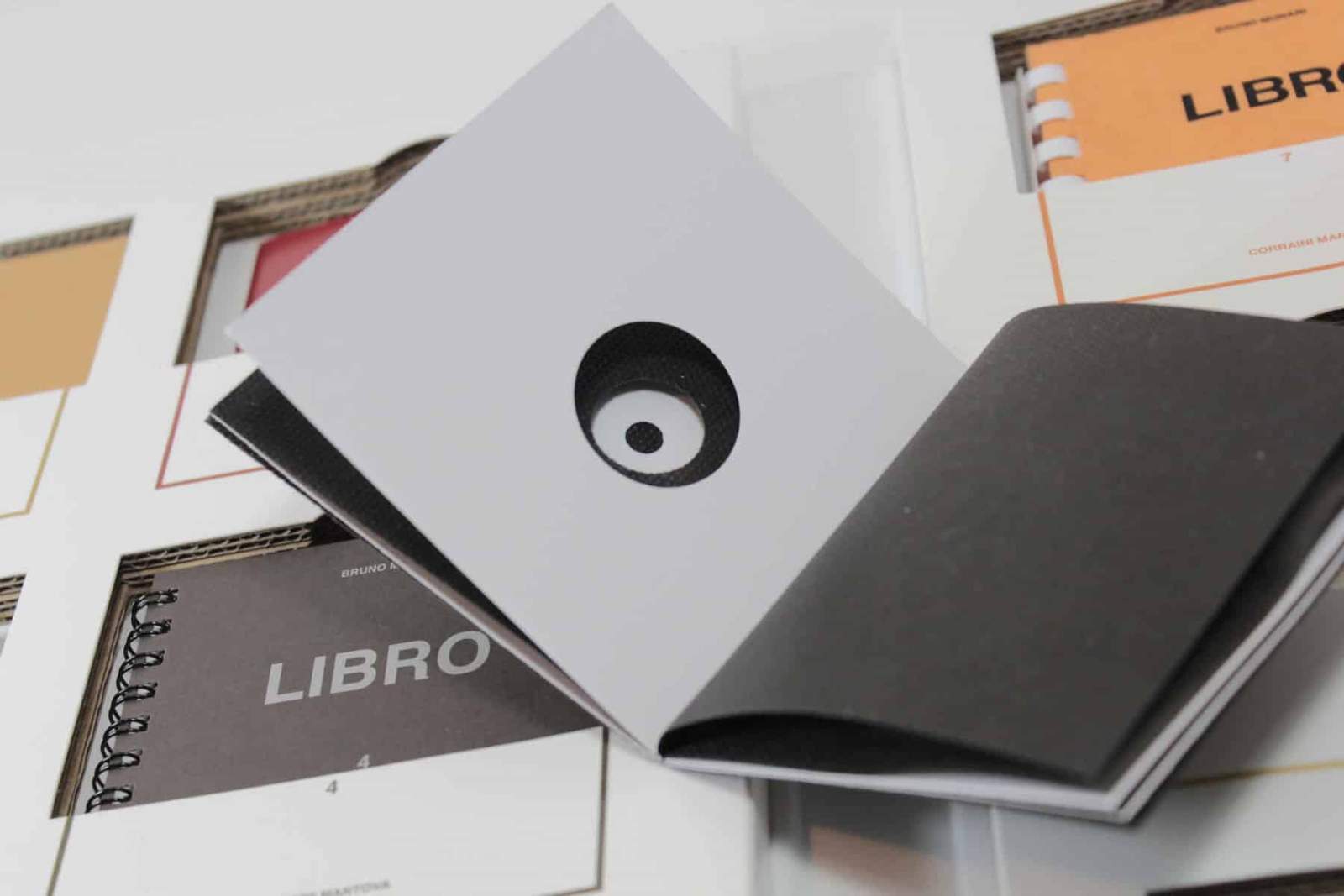
Thus, from 1949, he created the Unread Books series, a series that resulted directly from his involvement in the Concrete Art movement.
These books are square in shape and contain no words.
They are made up of pages of different colors, cut into several geometric shapes.
The book becomes a visual language, left to the free interpretation of the reader.
The prequel series of books for young children was created on the same idea, and is twelve small square books of 10cm x 10cm dimensions published by the Danes in Milan in 1980.
Bruno Munari wrote to his son
Like the Japanese Katsumi Komagata, Bruno Munari first wrote his books for his son,
he also strove to blend art and architecture with life by creating objects that harmoniously integrated with the social environment.
This interest led him to deepen the relationship with reading by inventing housing
for libraries in addition to reading books, Il Libroletto, a modular reading book, made of cloth,
Which matches Munari’s definition: “A book is a bed that each of us inhabits in his own way.”
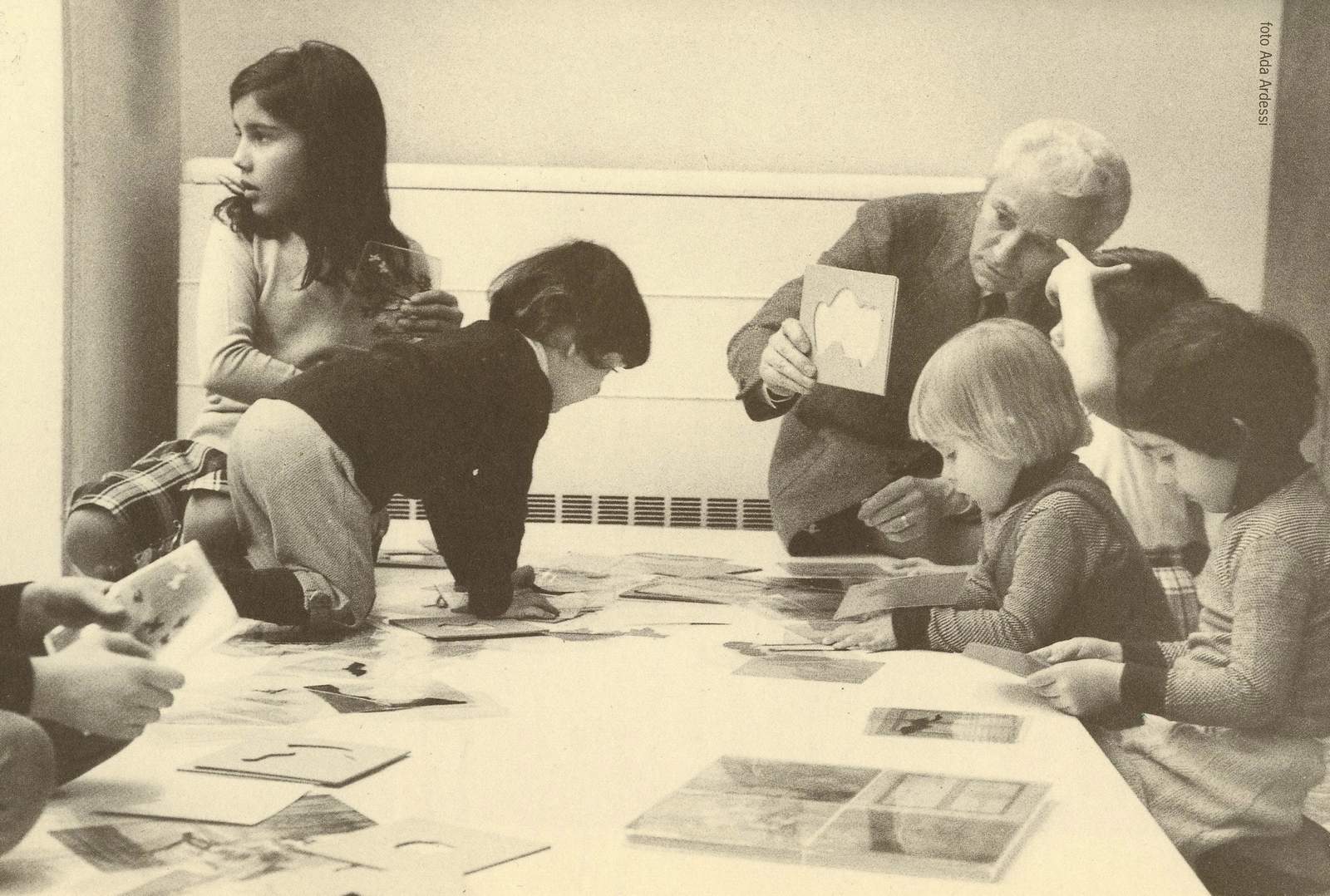
Passionate about teaching, he created exploration workshops, such as the one installed in 1977 at the School of Fine Arts in Milan.
His performances for young audiences are an activity that he will never tire of.
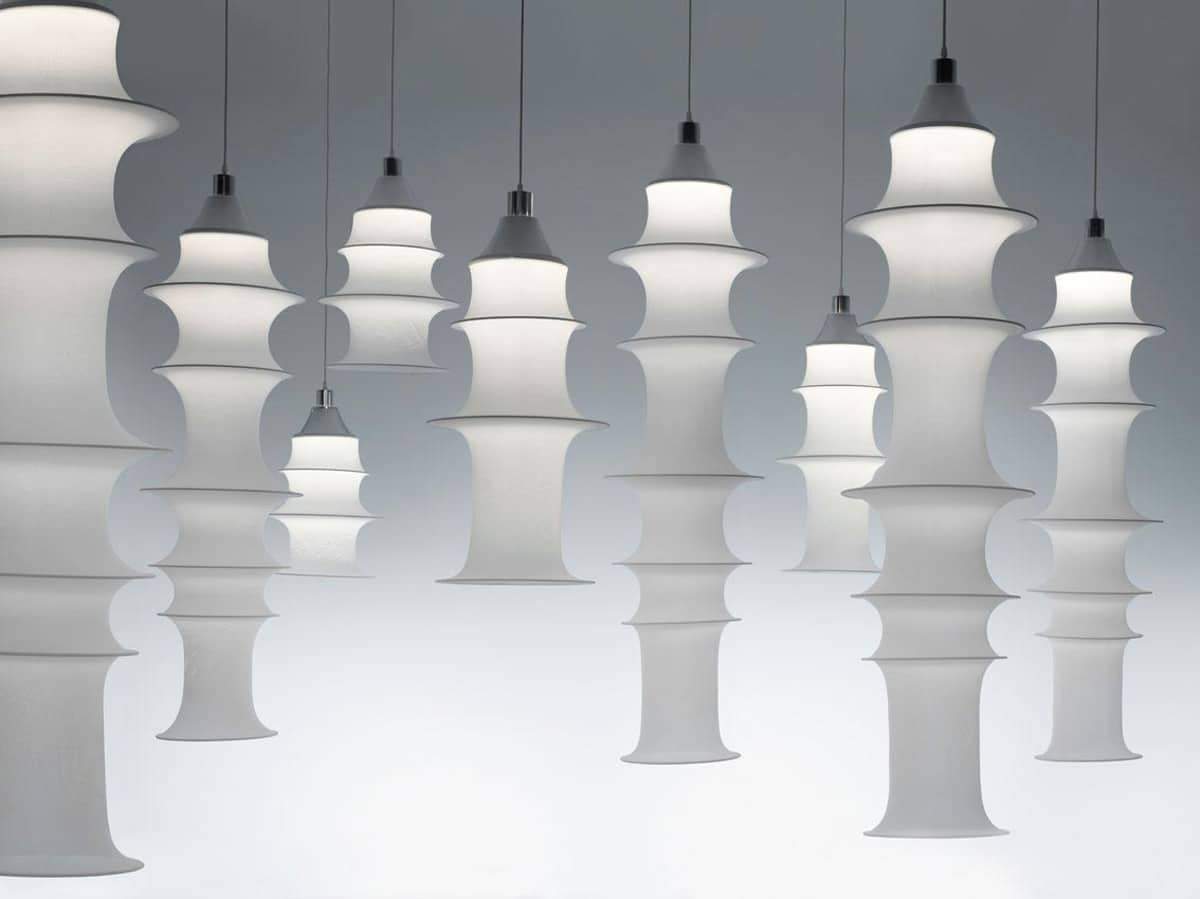
He designs useless machines that take the form of hanging mobile phones,
They are created from geometric shapes – a formal vocabulary that Bruno Munari experiments with in both 2D and 3D – that oscillate and oscillate in space.
The machine, a mythical concept of the Futurists, becomes an object deprived of function.
See More: An alternative to marble and its uses in interior design