A Closer Look at the 2025 Osaka Expo: A Vision for the Future of Exhibition Design

A Closer Look at the 2025 Osaka Expo: A Vision for the Future in Exhibition Design
As the opening date of the 2025 Osaka Expo approaches on April 13, the architectural features of the event are rapidly taking shape. Under the theme “Designing the Society of the Future for Our Lives,” the expo promises a unique blend of national pavilions, public programming, artistic interventions, and private initiatives that highlight global environmental challenges and explore sustainable solutions, balancing heritage and technological innovations.
Architecture and the Sustainable Approach
Osaka 2025 continues to present an impressive architectural vision, with architect Ana Fujimoto working on developing a massive ring structure that will be the world’s largest wooden structure upon completion. This structure will form the fabric connecting various parts of the expo, including pathways for navigation, public spaces for observation, and event areas. The expo is located across the man-made Yumeshima Island in Japan, where the pavilions are designed to spark discussions about sustainability, mobility, and cultural identity.
Diversity of Pavilions and Future Designs
Among the prominent pavilions, the Northern Pavilion stands out with its use of wood managed from forests, presenting a circular design that reflects sustainability. Meanwhile, the Saudi Arabia Pavilion blends computational design with cooling techniques, showcasing how technology can integrate with traditional methods in harsh environments.
In a similar context, the Dome Dome Theater, resembling a haystack, and Portugal’s suspended pavilion using ropes are powerful examples of how heritage and technology are embodied in future designs. These structures not only tell stories of the past but also reflect innovative visions for the future.
Engagement with Innovation and Art
The 2025 Osaka Expo is not limited to architecture; it also includes collaborative platforms for technological innovation and artistic participation. For instance, the Myaku-Myaku mascot has already gained significant popularity, while projects like the Future Society Exhibition and the Water and Light events at Art Expo continue to draw attention for addressing urgent global challenges.
What to Expect?
With the expo’s start, more details will be revealed about the national pavilions, special exhibitions, and key moments that will define Osaka 2025. It is clear that the event will be a convergence point for modern technologies and innovative architectural designs, striving for a sustainable future that tackles both environmental and social challenges.
The Wooden Structure by Sui Fujimoto as a Central Element in the Expo
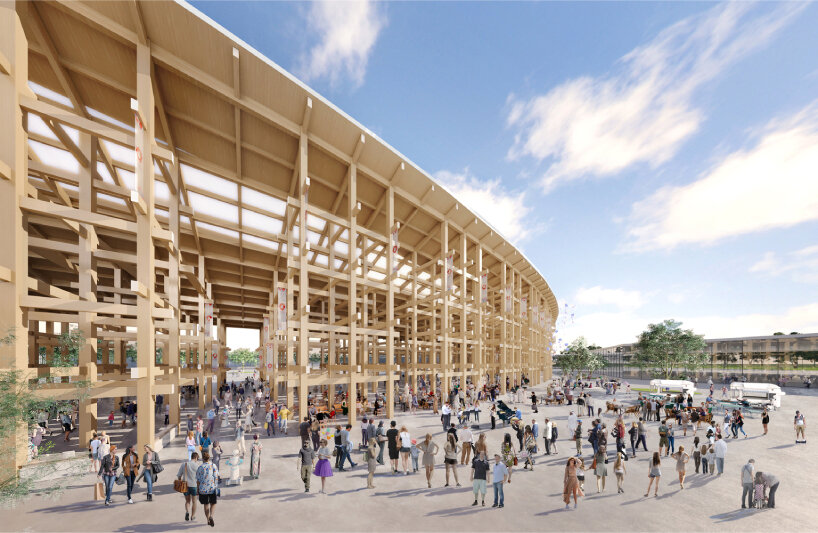
The massive wooden structure designed by architect Sui Fujimoto serves as a key centerpiece at the 2025 Osaka Expo, reflecting a deep connection to Japanese heritage and future innovation. Inspired by the architecture of ancient Japanese temples, the structure presents a complex architectural design using local Sugi cedar and Hinoki Cypress wood, with metal reinforcements to ensure earthquake resistance.
Distinctive Structural Design
The structure spans 60,000 square meters and reaches a height of 20 meters, creating a dynamic public space that enhances visitor movement. Beneath the structure, a circulation path extends, allowing visitors to wander freely. The structure also includes an elevated observation deck, offering panoramic views of the expo and its proximity to Osaka Bay. The design also features green surfaces that change with the seasons, giving the expo a lively, nature-connected character.
Multipurpose Facilities
Inside the structure, four main facilities are designated to host a variety of events, including performances, exhibitions, and cultural exchanges. The highlights of these facilities are:
- The Hospitality Pavilion, which embodies the spirit of Japanese hospitality through its corridors and garden inspired by traditional Japanese styles.
- The Exhibition Hall, designed with elements from the 1970 Sun Expo Tower, making it a vibrant cultural hub.
- The National Day Hall, which celebrates international cultural exchange through its interior and exterior spaces.
- The Expo Messe Platform, providing space for global dialogue and trade.
Technological and Architectural Challenges
As the construction progresses, Sui Fujimoto describes the project in his interview with Designboom as an architectural and conceptual challenge that merges regional architectural traditions with modern technology. The architect notes that this project is not only a stunning architectural experience but also an exciting challenge in terms of innovative construction techniques being used in this monumental endeavor.
National Pavilions: The Hungarian Pavilion
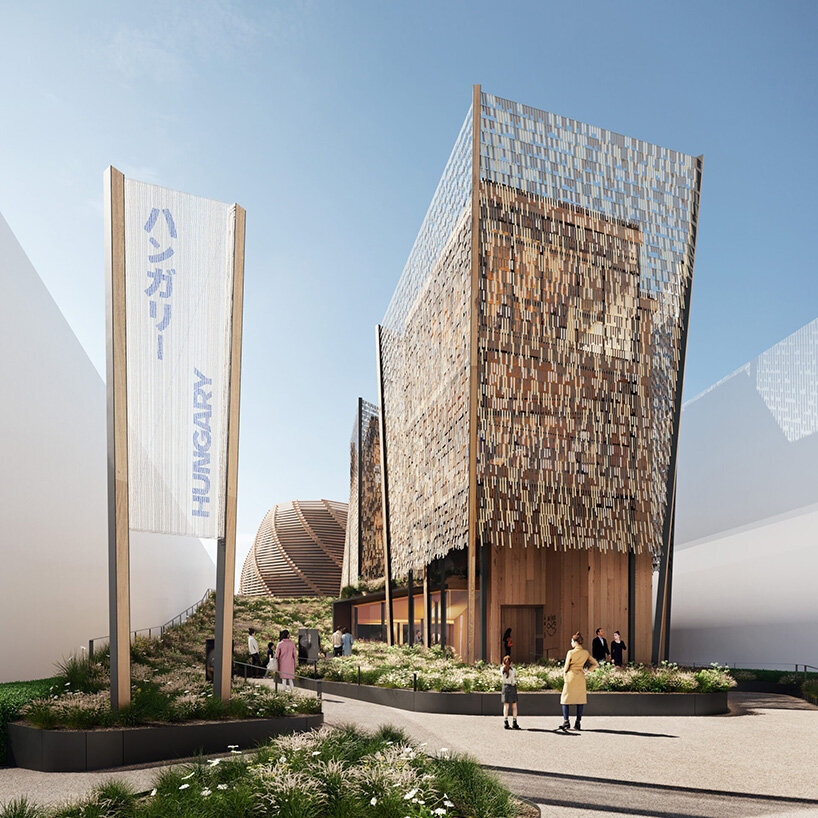
The Hungarian Pavilion at the 2025 Osaka Expo hosts a unique theater under a wooden dome resembling a haystack, reflecting a deep connection to Hungary’s rural traditions. This structure is part of the main plan by architect Sou Fujimoto, who continues to explore complex and experimental architectural spaces. The pavilion features a design inspired by forests, showcasing a circular island that bridges wooden techniques with Hungarian and Japanese folk architectural styles.
🔗 Read also:
A Multi-Sensory Journey
The pavilion reflects the profound cultural heritage of Hungary, consisting of natural materials that represent a blend of traditional architectural styles from both Japan and Hungary. The exhibition offers a multi-sensory journey, where visitors begin a green path surrounded by Hungarian folk melodies, inviting them to discover the local culture.
A Fantastical Theater Bringing Legends to Life
Under the wooden dome, an immersive performance space tells Hungarian mythical tales, seamlessly blending architectural design with cultural traditions, creating a lively artistic environment that reflects various aspects of rural life and Hungarian history.
Portugal Pavilion: “Ethereal Wave” Designed by Kengo Kuma
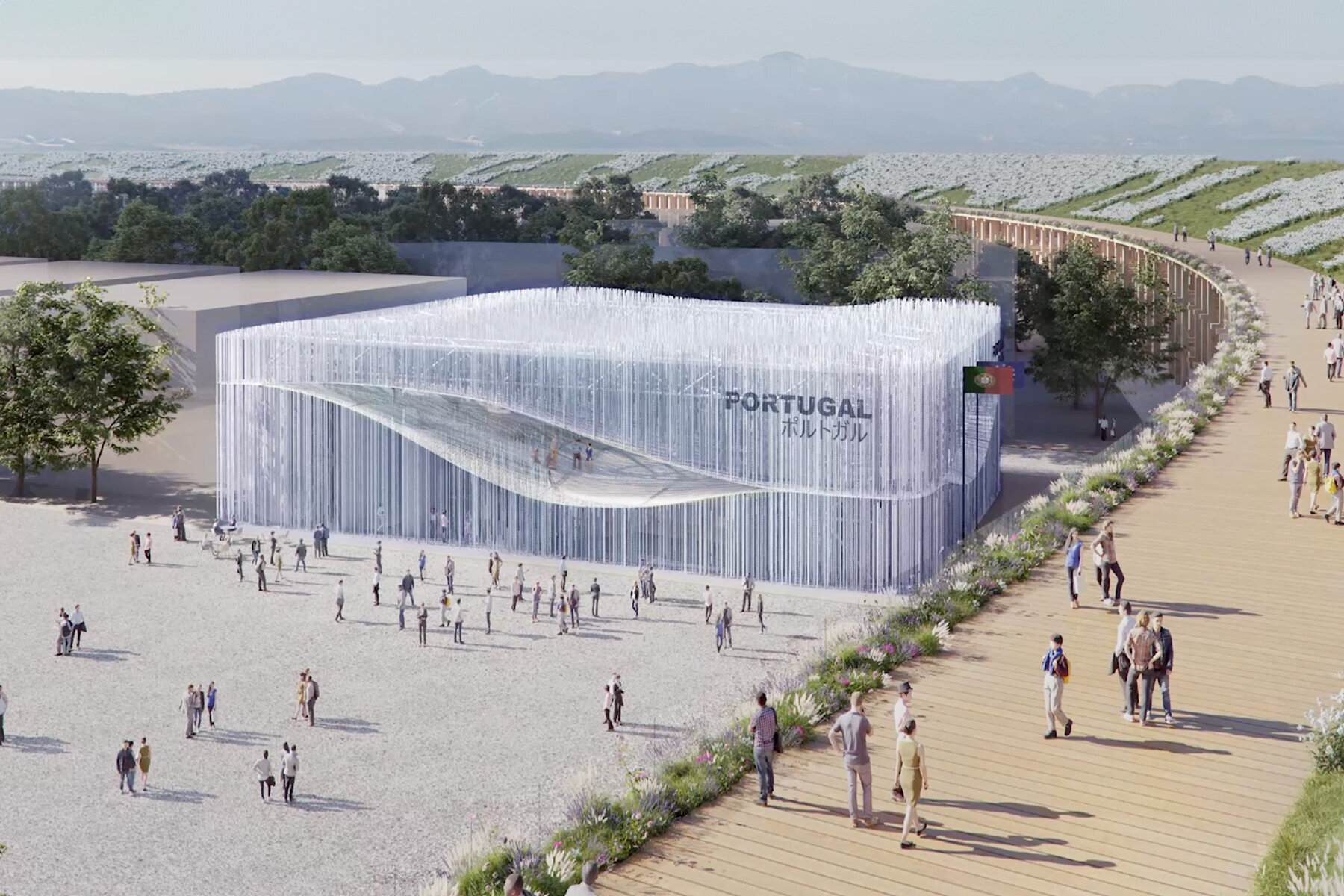
The Portugal Pavilion at the 2025 Osaka Expo embodies unique architectural creativity designed by Japanese architect Kengo Kuma. The pavilion centers around the ocean, under the theme “Blue Dialogue,” reflecting Portugal’s deep and long-standing relationship with the sea. The design mimics the waves through suspended ropes and recycled fishing nets, making the façade appear as a wave in continuous motion, symbolizing Portugal’s rich maritime heritage.
Sustainable Environmental Design
The pavilion features eco-friendly materials that support a circular economy, reinforcing Portugal’s role as a key supporter in addressing global environmental challenges such as climate change, biodiversity preservation, and sustainable development.
Exploring the Maritime Relationship Between Portugal and Japan
The architects divided the interior into two main sections:
- The first section highlights the 500-year-long maritime relationship between Portugal and Japan, through historical artifacts, artistic displays, and interactive exhibits documenting the evolution of ocean sustainability techniques.
- The second section presents a multimedia experience focused on a sustainable future, showcasing a five-minute audiovisual installation imagining the balanced relationship between humanity and the ocean.
The Triple-Action Experience for All Living Species at the France Pavilion
The France Pavilion at the 2025 Osaka Expo, titled “Natural Theater,” offers a triple-action experience that takes visitors on a unique architectural journey. The experience consists of three main stages: ascent, discovering nature, and returning to the earth.
An Architectural Path Integrating Ecological Systems
Architects Koldvi and Carlo Ratti Associati designed a circular architectural path that integrates both natural and artificial ecosystems. Visitors begin their journey up a winding staircase leading to an observation terrace. As they move, they pass through an immersive threshold that enhances the feeling of transitioning from the urban environment to nature.
The Green Terrace: A Tribute to the Environment
The green terrace, resembling a slice of nature, offers a space above the building that serves as a protective barrier. This terrace reflects a tribute to France’s rich cultural and environmental contributions in the 21st century, showcasing the country’s commitment to sustainability and environmental protection.
Sustainable Life Cycle: Reuse and Recycling
The design team at the France Pavilion envisions a long-term future for the pavilion, imagining it as a space that welcomes all living species to engage in the exhibition. Its life cycle extends beyond the event itself, contributing to a virtuous cycle of reuse and recycling, reinforcing the philosophy of sustainability and embodying the idea of integration between humans and nature.