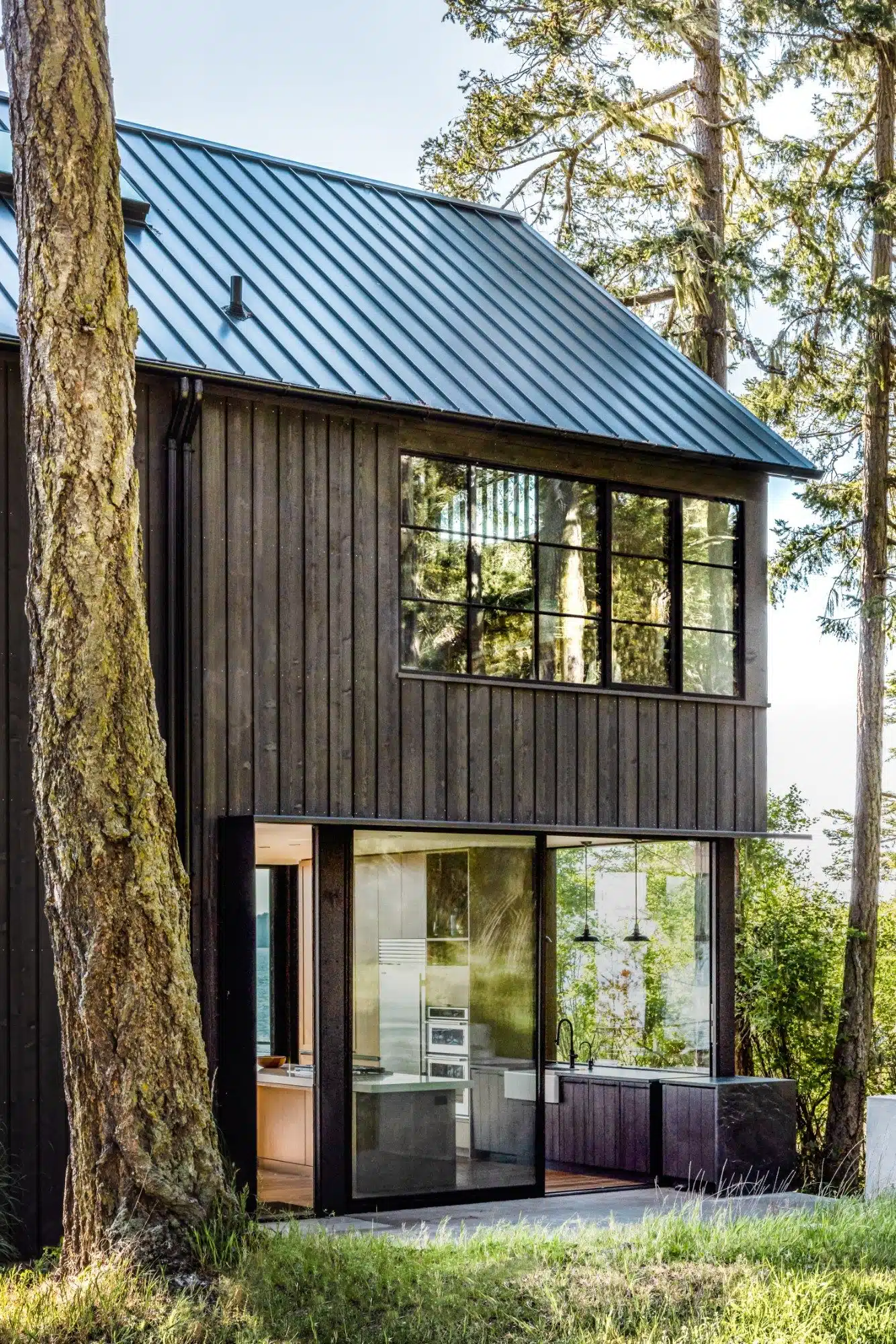
A Contemporary Cabin in Nature’s Embrace: A Comprehensive Architectural Analysis of the Black Cedar House at the Foot of Mount Rainier

Introduction: An Architecture of Whisper in a Breathtaking Natural Setting
In the picturesque area of Greenwater, just five miles from Mount Rainier in Washington, sits a single-story house with a modest design that converses with nature rather than dominating it. Designed by Robert Hutchison Architecture, this project presents an inspiring model of architecture that prioritizes integration over prominence, and whispering over shouting. This comprehensive architectural analysis offers an in-depth reading of this unique project that does not dominate its surroundings but quietly belongs to them.
Design Philosophy: Humility as a Bold Design Choice
The design philosophy here moves away from the language of spectacle and noise, instead embracing the principle of humility and integration. The designers worked with the client—who also acted as the general contractor—to develop a design strategy focused on minimizing the building’s footprint as much as possible. This approach reflects a deep understanding of the site’s uniqueness and environmental sensitivity, where the architecture decided to step aside and allow nature to be the true star of the scene.
Materials and Facade: A Dialogue Between Wood and Nature
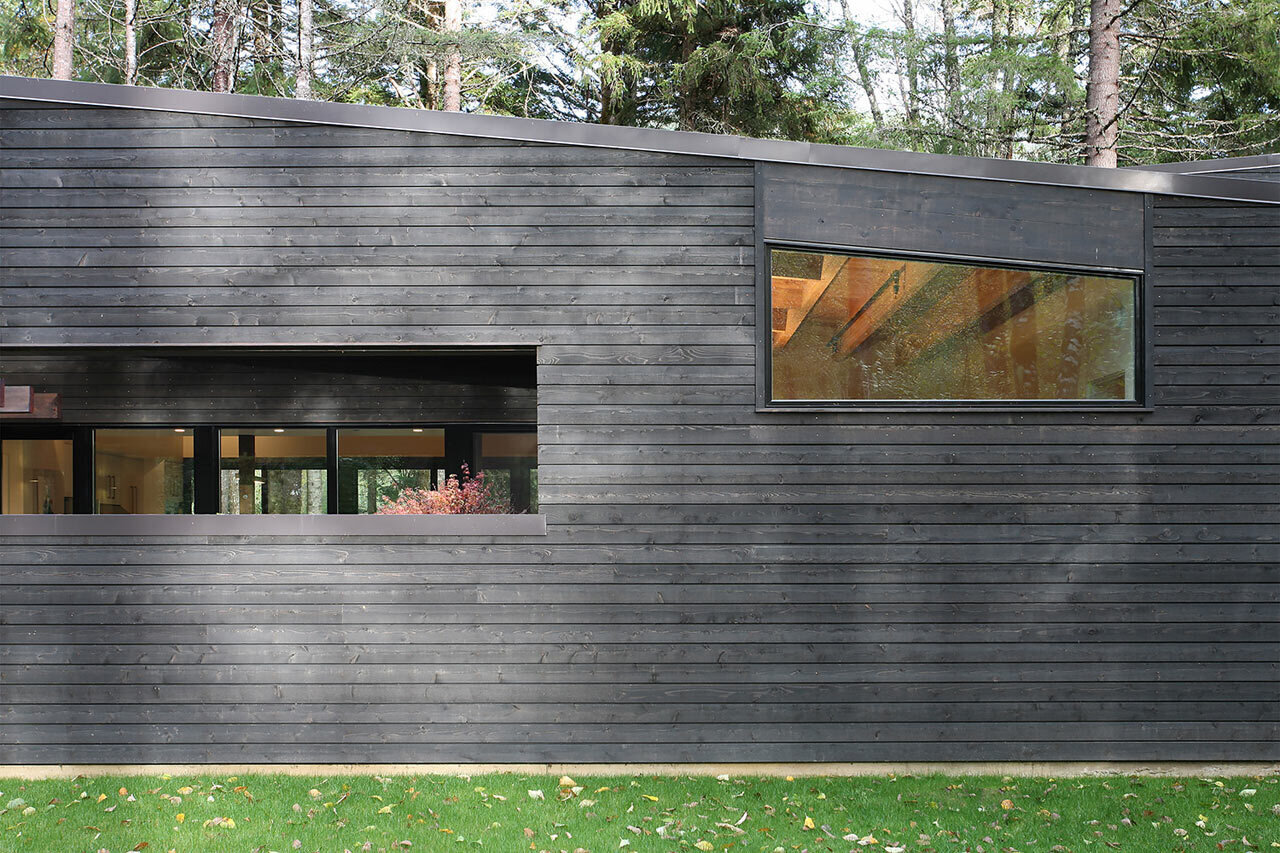
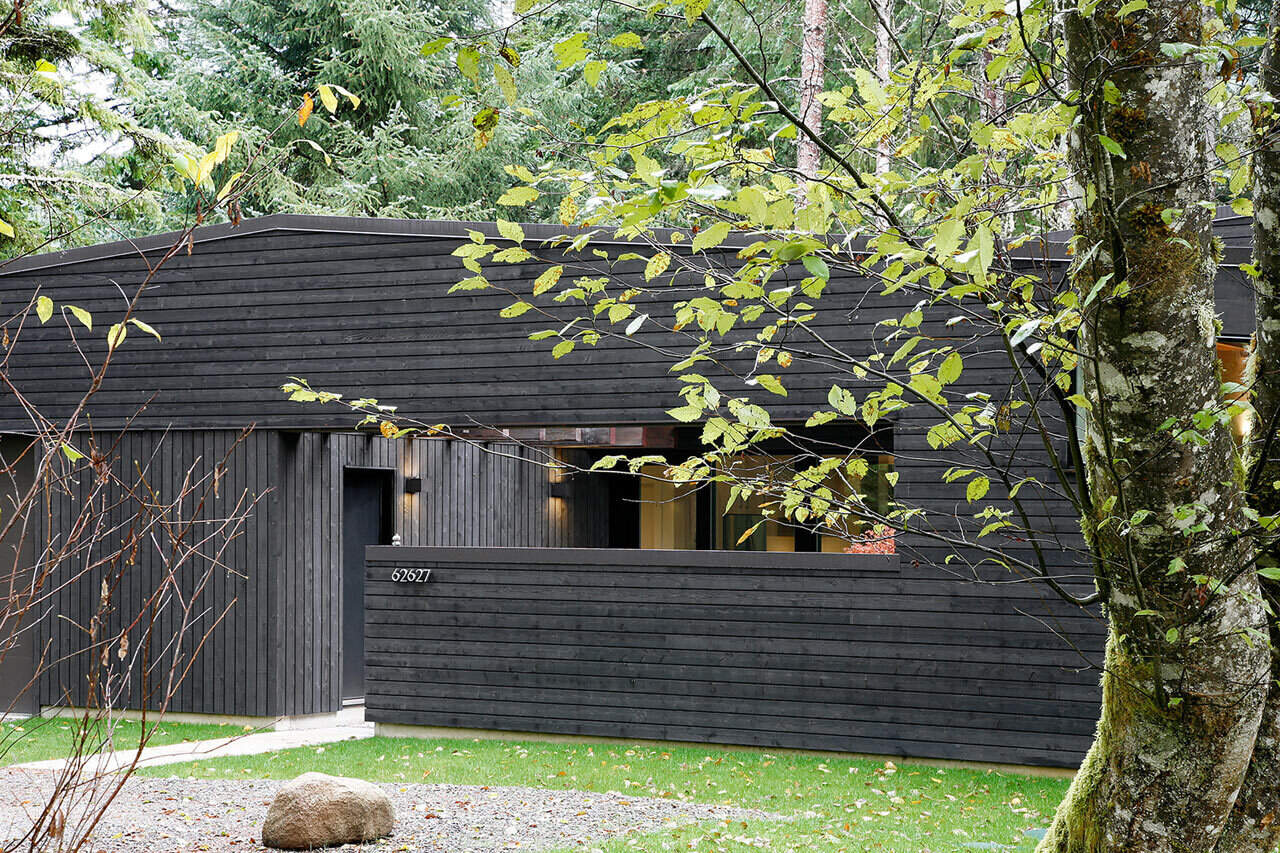
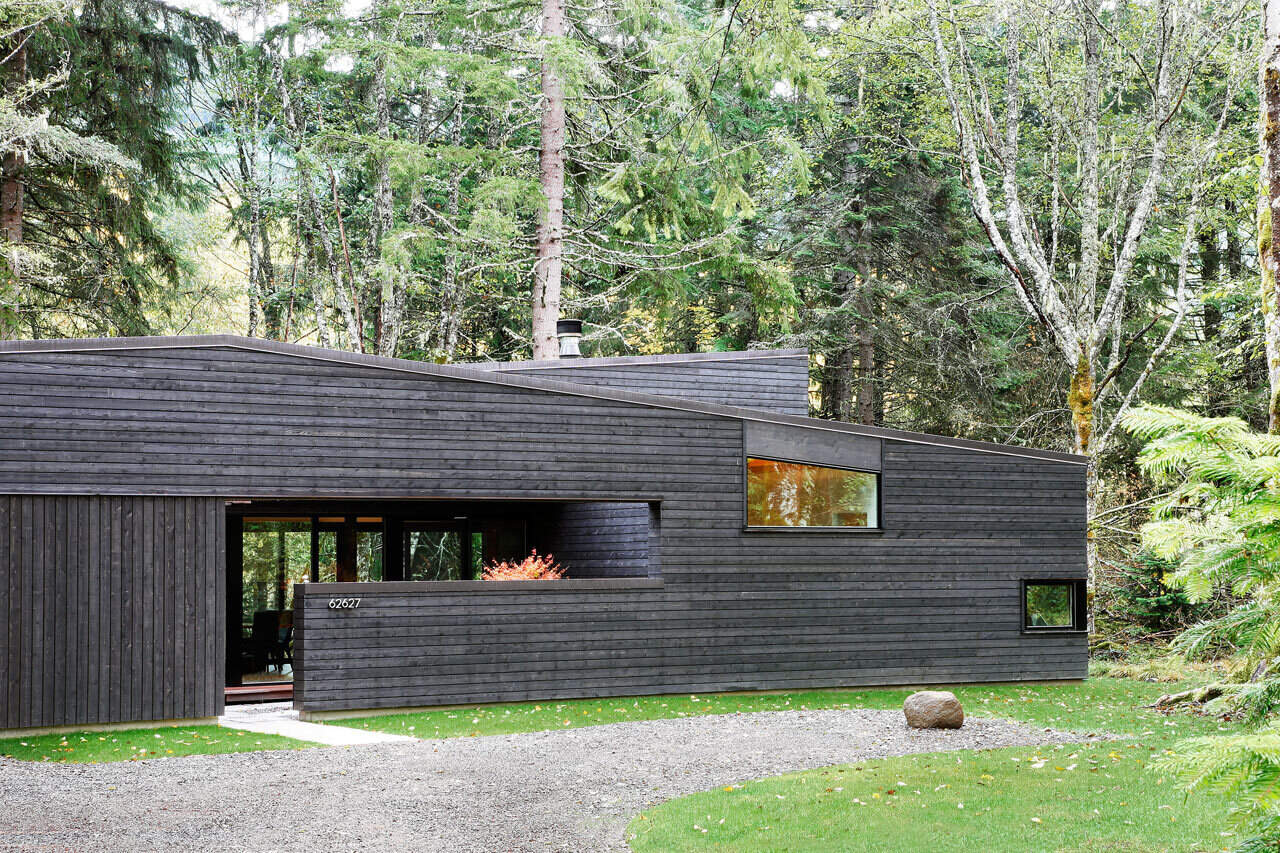
The use of western red cedar, charred to a black finish, stands out as a key design choice that reflects the project’s overall philosophy. This material not only gives the facade an aesthetic character but also functions on two essential levels: first, it allows the architectural mass to visually blend with the surrounding shadows in the forest, and second, it weathers over time under environmental factors, acquiring a natural patina that makes it an organic part of the surroundings. From the bank of the nearby White River, the structure transforms into a shadowy entity that dissolves into the natural landscape.
Architectural Planning: Transitional Thresholds and Intelligent Boundaries
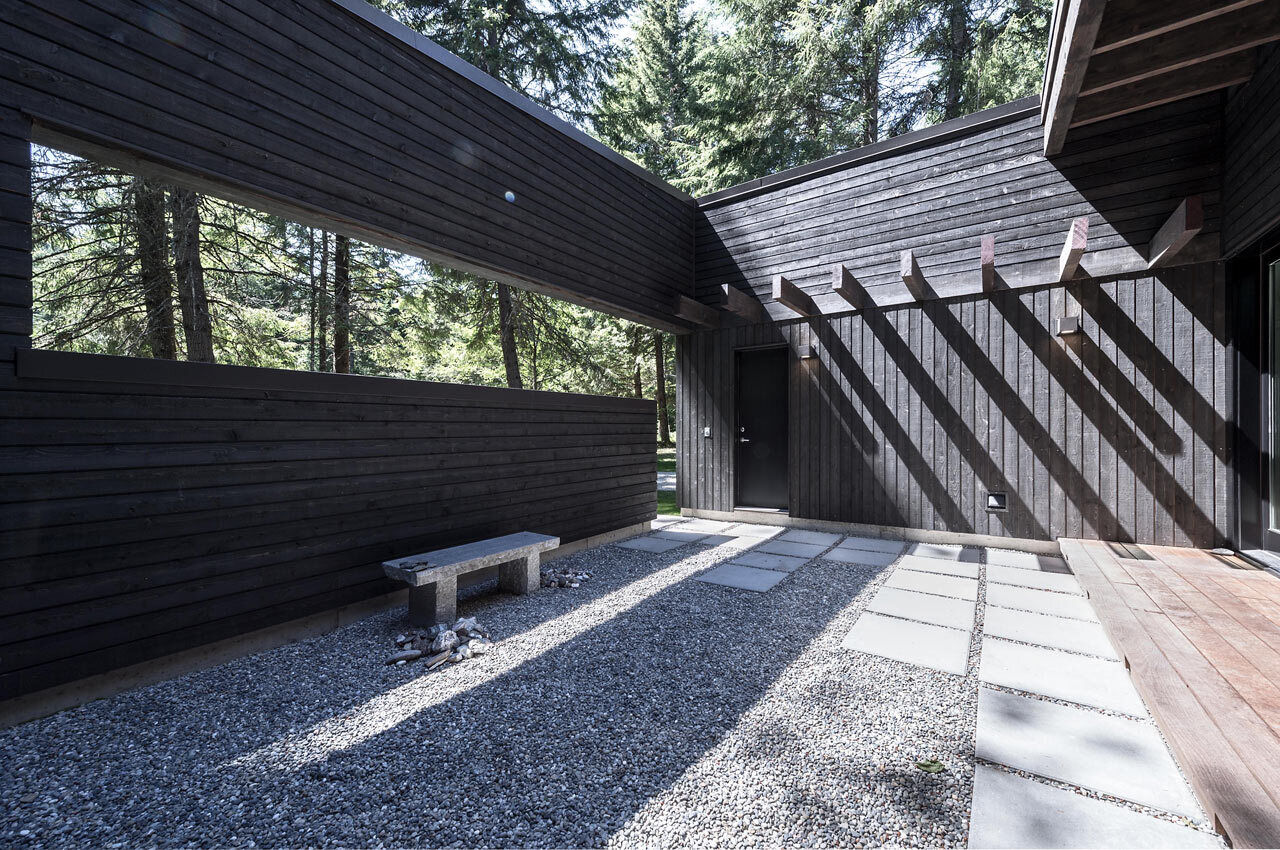
The design presents an intelligent approach to managing boundaries and transitions between spaces through a series of carefully considered thresholds. A clever cut in the front facade forms a privacy wall that conceals a quiet entry courtyard, creating a transitional space that acts as a buffer between the wilderness and the interior world. This space serves not only an aesthetic purpose but also provides a practical solution for coexisting with local wildlife, as it helps keep local elk herds at a respectful distance in an unobtrusive manner.
The Interior Experience: From Shadow to Light
The passage from the exterior door to the inside represents a journey of visual and sensory transformation. The environment shifts from the shadows of the forest to an interior space dominated by warm wood and natural light. The open plan with high ceilings and exposed wooden beams achieves a difficult equation: creating a sense of spaciousness within a compact area. The steel-clad fireplace takes center stage in the living area, not only as a source of heat but also as a visual and physical focal point that gathers users and organizes movement within the space.
Spatial Efficiency: Redefining the Concept of Luxury in Small Spaces
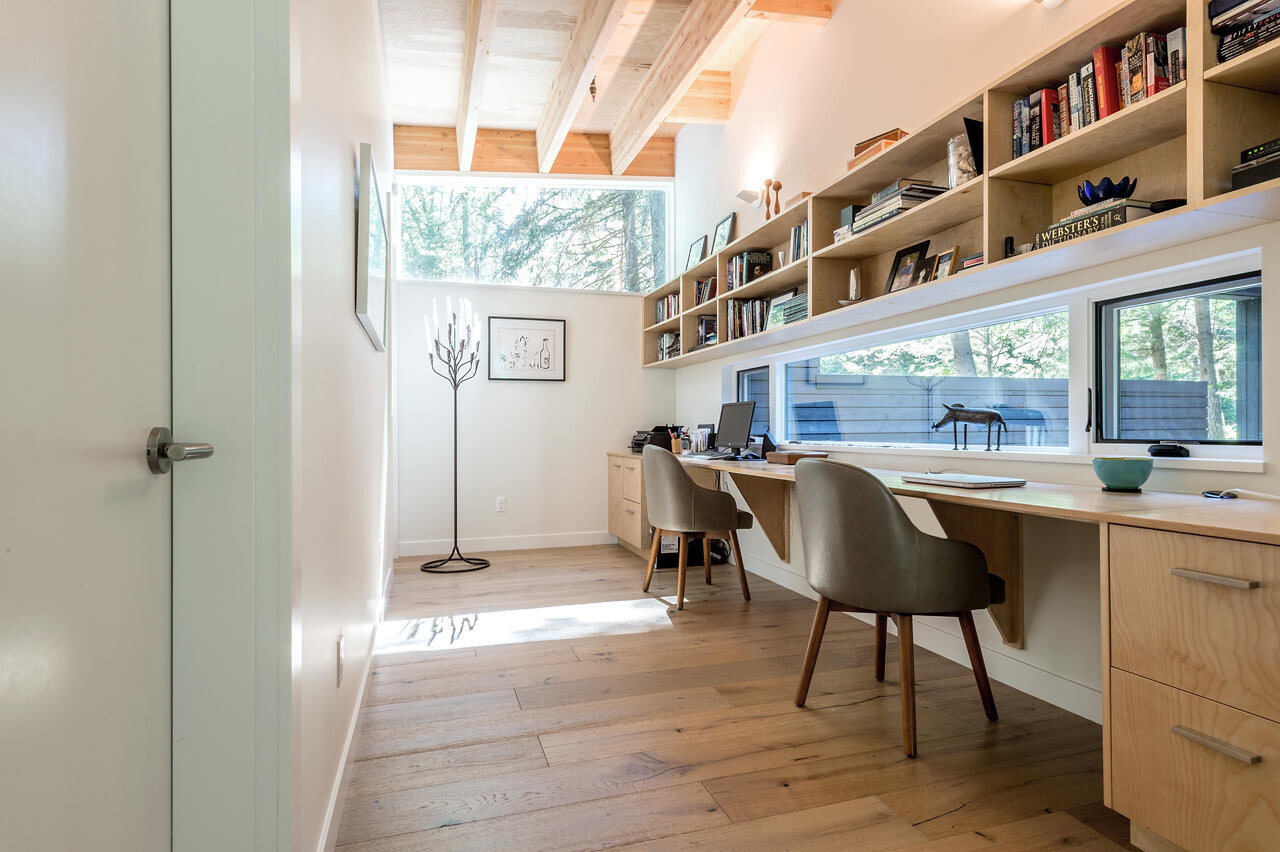
The thoughtful planning is evident in the utilization of every available centimeter, where a narrow hallway is transformed into a built-in workspace with desks and shelving, enjoying natural light from a single window overlooking the forest. This approach represents a qualitative shift in the concept of luxury, which is no longer associated with grand size and vast spaces, but with design intelligence and the ability to create rich experiences within limited areas.
Design Continuity: A Unified Language from Exterior to Interior
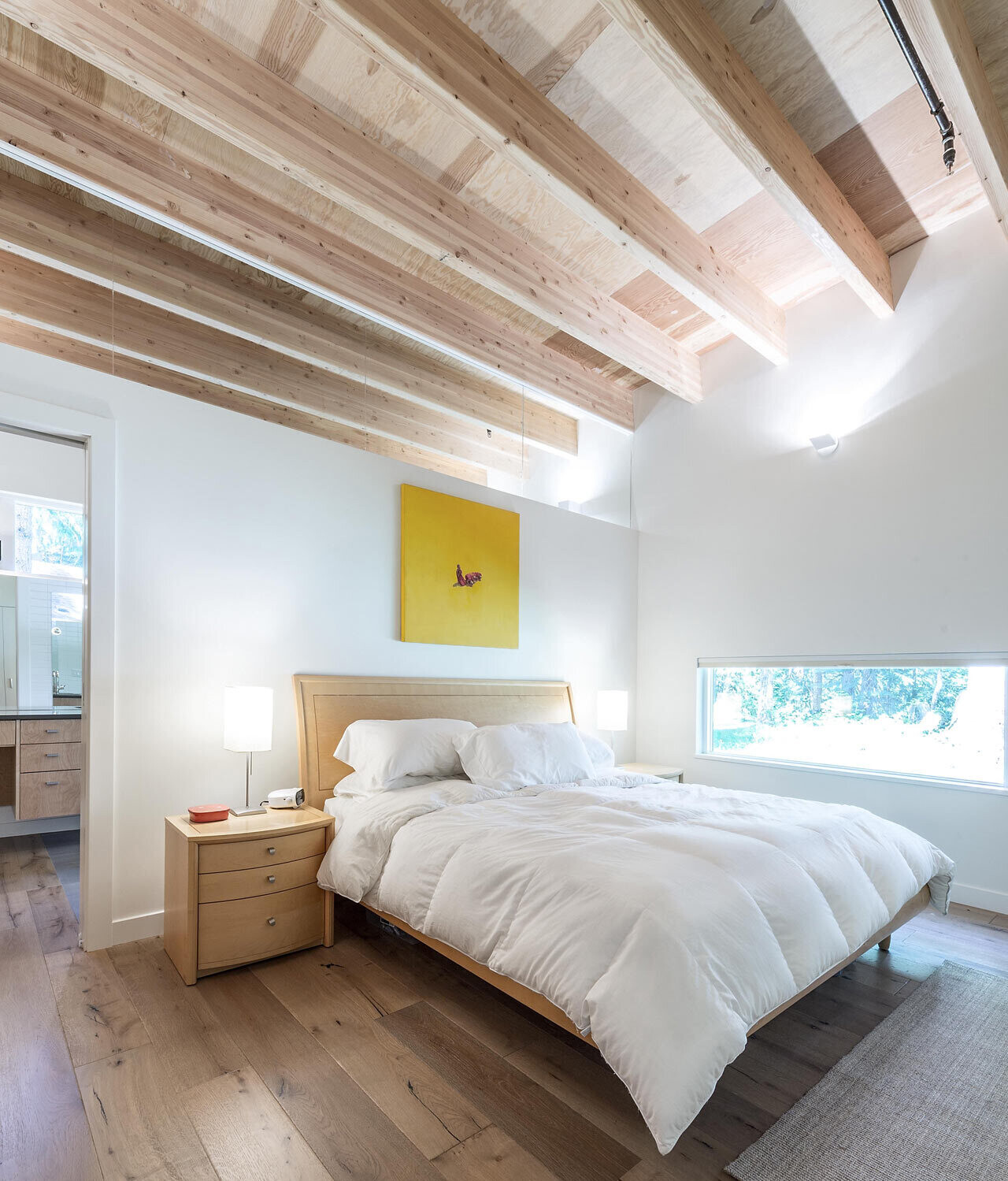
The design language extends seamlessly from public to private spaces, with the bedrooms maintaining the same architectural purity and tranquility. White walls and high ceilings dominate, with limited color accents appearing in a single artwork above the bed. In the bathrooms, frosted glass partitions divide the usage areas without disrupting the flow of space or the movement of light, achieving a delicate balance between privacy and openness.
Connection to Nature: An Ongoing Dialogue with the Surroundings
The design of this house goes beyond the traditional concept of views to offer a true immersive experience in nature. The visual and physical connection between the interior space and the covered outdoor courtyard creates a spatial continuity where the boundaries between inside and outside dissolve. This connection is not limited to the aesthetic aspect but becomes part of the daily living experience, allowing residents to enjoy the changing seasons from within their home.
Conclusion: A Design Legacy Offering Lessons in Architectural Humility
This project represents more than just a residential house; it presents an architectural statement about the possibility of achieving greatness through humility, and richness through simplicity. The project embodies a delicate balance between restraint and design richness, focusing on the clarity and tranquility resulting from well-considered design decisions. As the designers emphasize, the goal was to focus on the quality of design rather than size, producing a small space that feels expansive through light, proportion, and connection to nature. In the end, this house becomes an organic part of the surrounding ecosystem, testifying that true architecture converses with nature rather than competes with it.
✦ Archup Editorial Insight
The article analyzes a single-story house clad in black cedar, designed to blend with the forest surrounding Mount Rainier. The reliance on a uniform black color for the facade may present challenges related to heat absorption and its impact on the building’s thermal performance, particularly with the dependence on skylights for illumination. Furthermore, the open-plan interior, while creating a sense of spaciousness, raises questions about the effectiveness of acoustic insulation between different zones. The design offers an intelligent solution for dealing with the site’s topography through a central courtyard that acts as a natural barrier, maintaining privacy and regulating movement between the interior and exterior.
Brought to you by the ArchUp Editorial Team
Inspiration starts here. Dive deeper into Architecture, Interior Design, Research, Cities, Design, and cutting-edge Projectson ArchUp.