

A Contemporary Interpretation of Portuguese Hill Terraces: The Monte Dos Judeus Project in Porto

Project Location and Urban Context
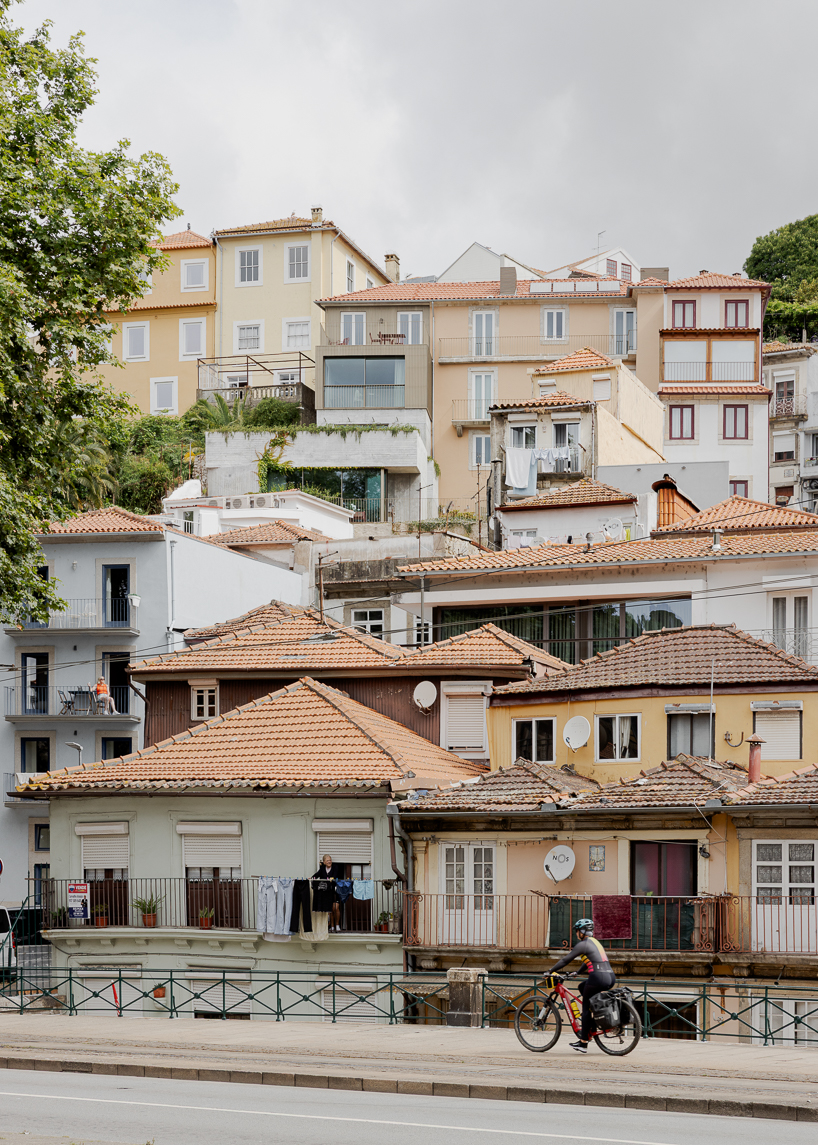
The Monte Dos Judeus residential project is located in the historic Miragaia district of Porto, Portugal, an area renowned for its steep slopes and traditional terraces that form its distinctive urban landmarks. This project represents a residential renovation that reinterprets local architectural concepts in a contemporary manner, offering a modern vision for living in one of the city’s richest historical areas. The project redefines the relationship between architecture and nature by adapting its design to the site’s challenging topography, creating a balance between contemporary requirements and the area’s rich architectural heritage.
Architectural Design and Creative Concepts
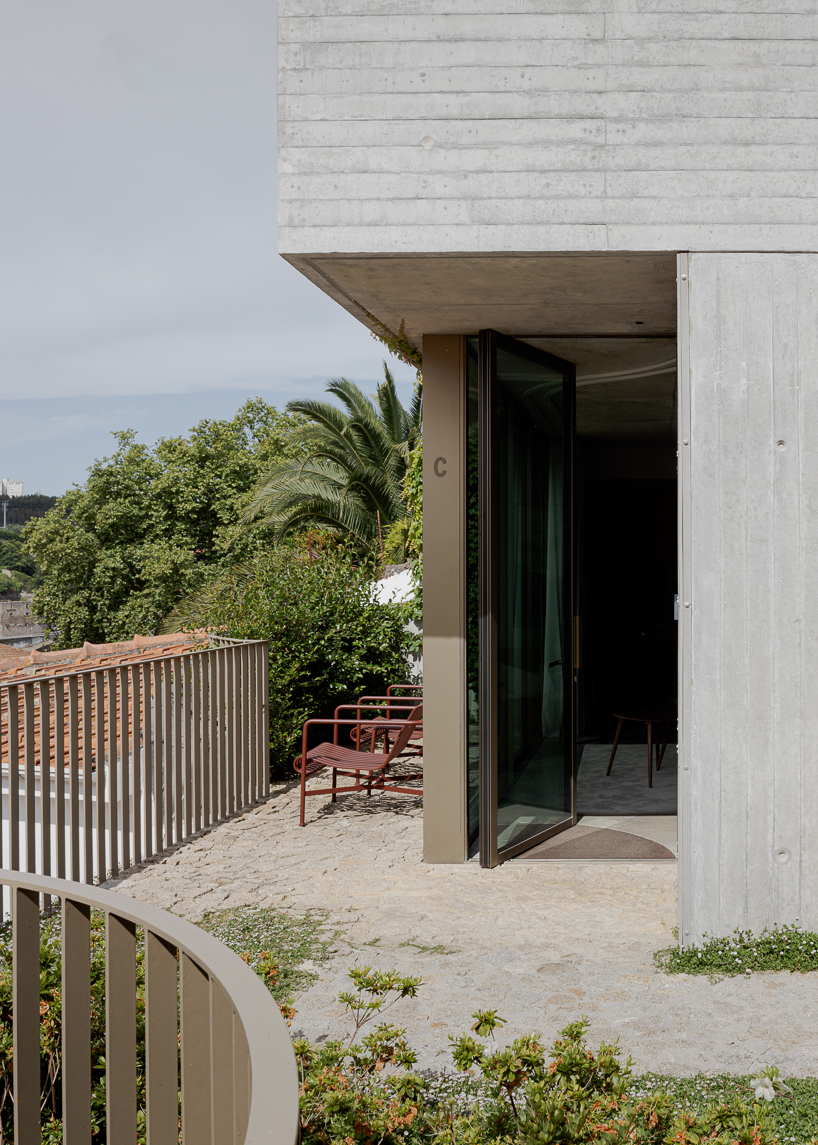
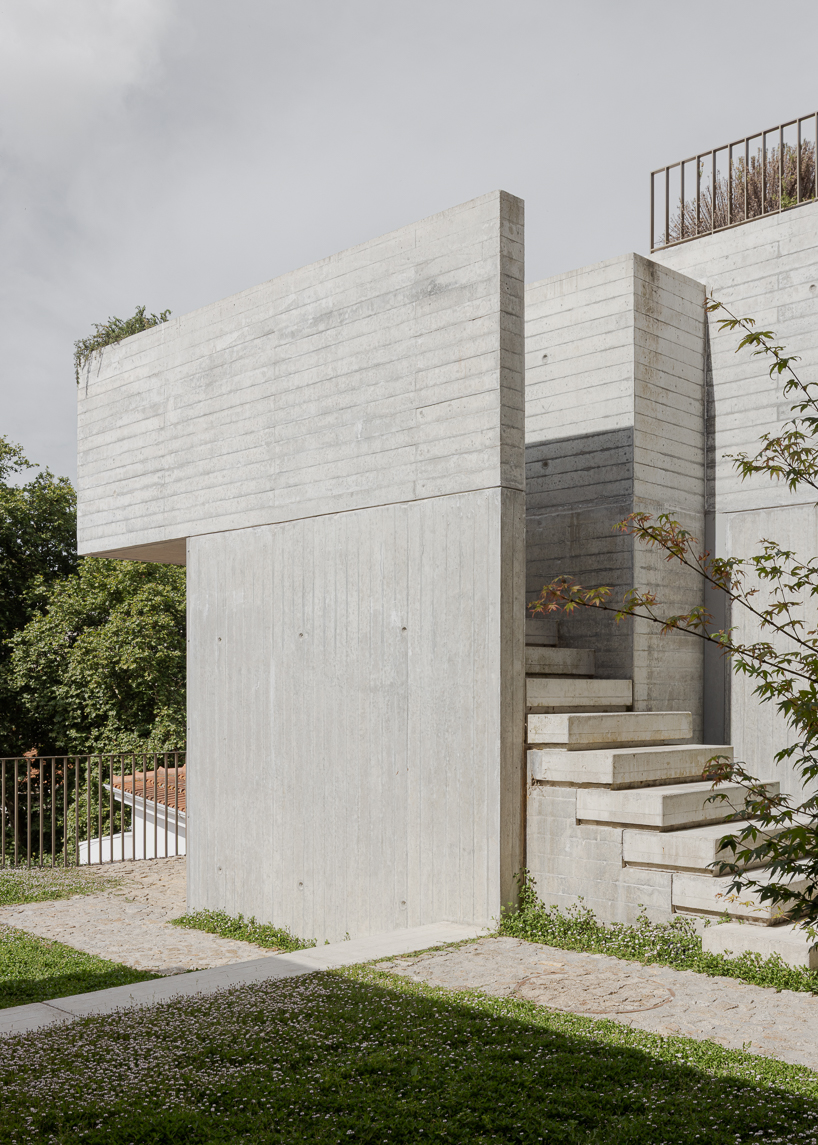
The project was designed collaboratively by António Bessa Cruz Architects and José Carlos Cruz Arquitecto, presenting a unique architectural concept inspired by the organic layers of the platforms that form Miragaia’s built environment. The design unfolds through a series of stepped concrete levels, with each platform containing an independent residential apartment. These successive levels meticulously follow the site’s natural terrain, gradually enhancing the views of the Douro River and the surrounding rooftops as the building ascends. Each apartment is designed to have private outdoor spaces and a direct connection to the landscape, inspired by the terrace gardens and backyards that once covered the hillsides.
The Dialogue Between Old and New in Construction
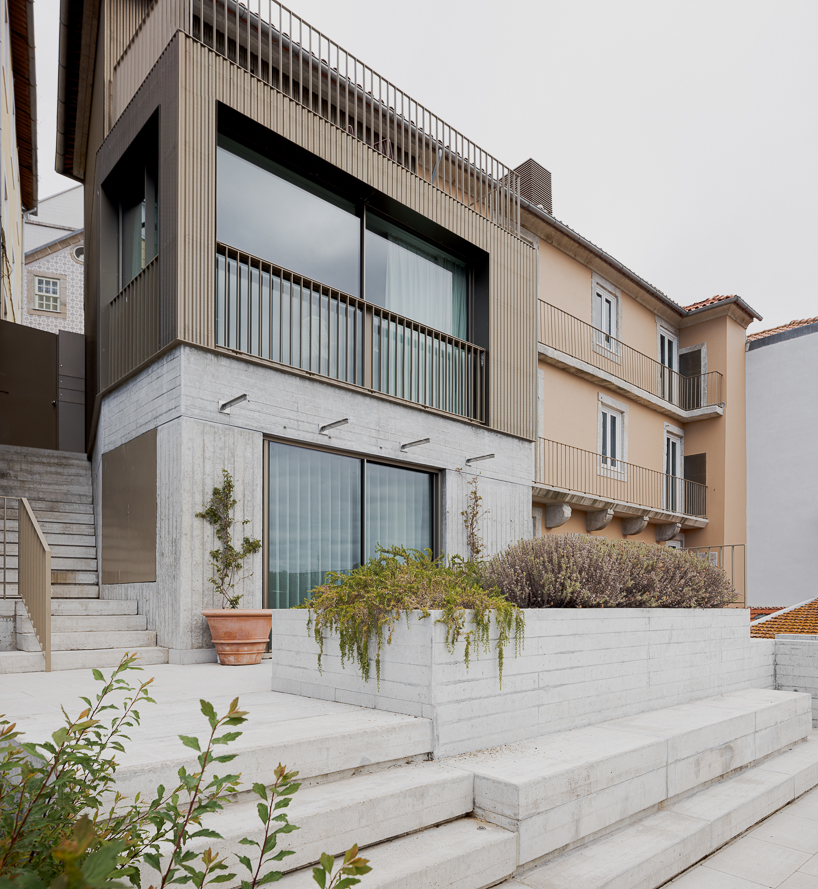
The project was built upon an existing structure that had fallen into disrepair and neglect, with the existing condition handled with great sensitivity. The original façade tiles were carefully removed for later reinstallation, preserving the historical character of the original. For the street-facing elevation, the designers adopted a dual strategy involving the reconstruction of the original façade alongside the addition of an abstract volume clad in corrugated metal sheets—a traditional building material characteristic of the Porto region. This design approach reflects a deep respect for history while embracing contemporary visions.
Materials and Architectural Details
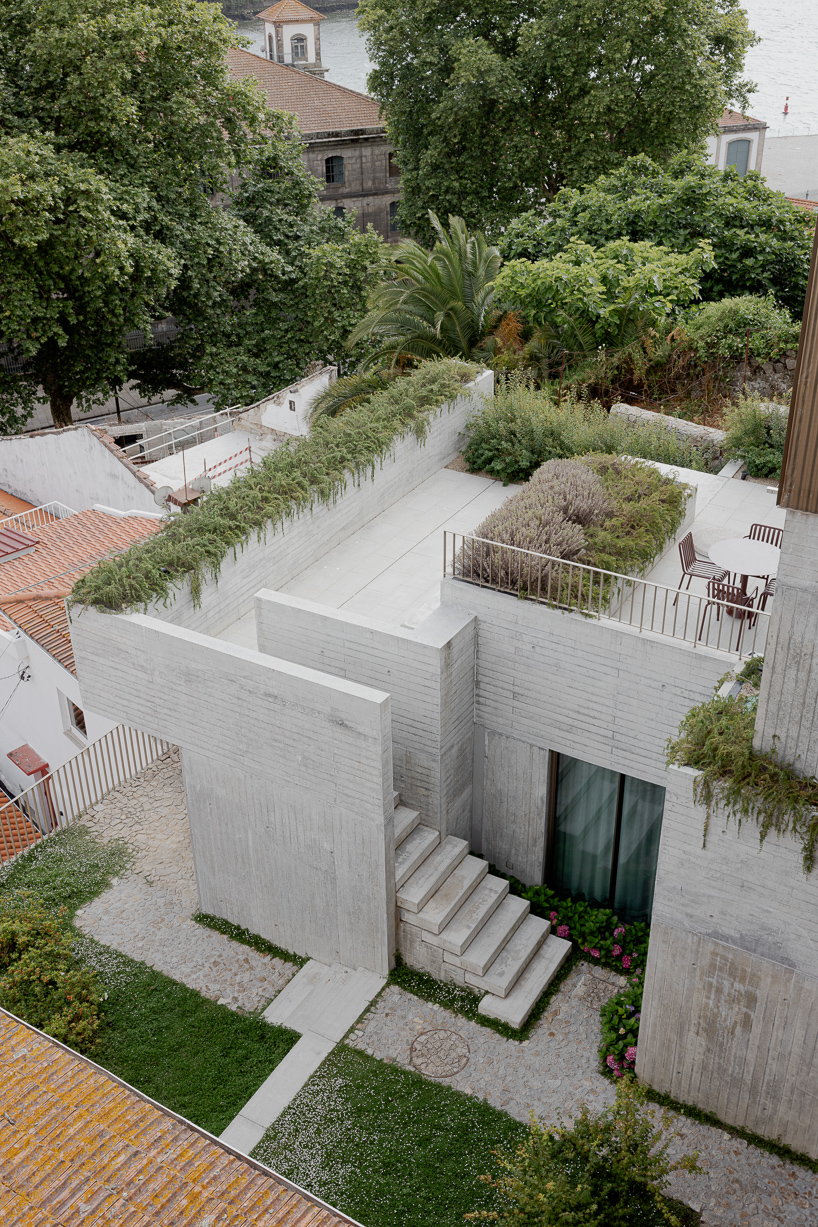
The project is distinguished by a thoughtful selection of materials that reflect the local identity while serving contemporary requirements. Exposed concrete forms the primary structure, while the corrugated metal sheets add a touch of local heritage. The design treats the rear façade with sensitivity to the surrounding context, maintaining the visual and physical relationship with the surrounding natural terraces. The project highlights a precise reading of the urban context through volumes proportionate to the site and local materials that belong to the memory of the place.
Integration with the Surrounding Environment
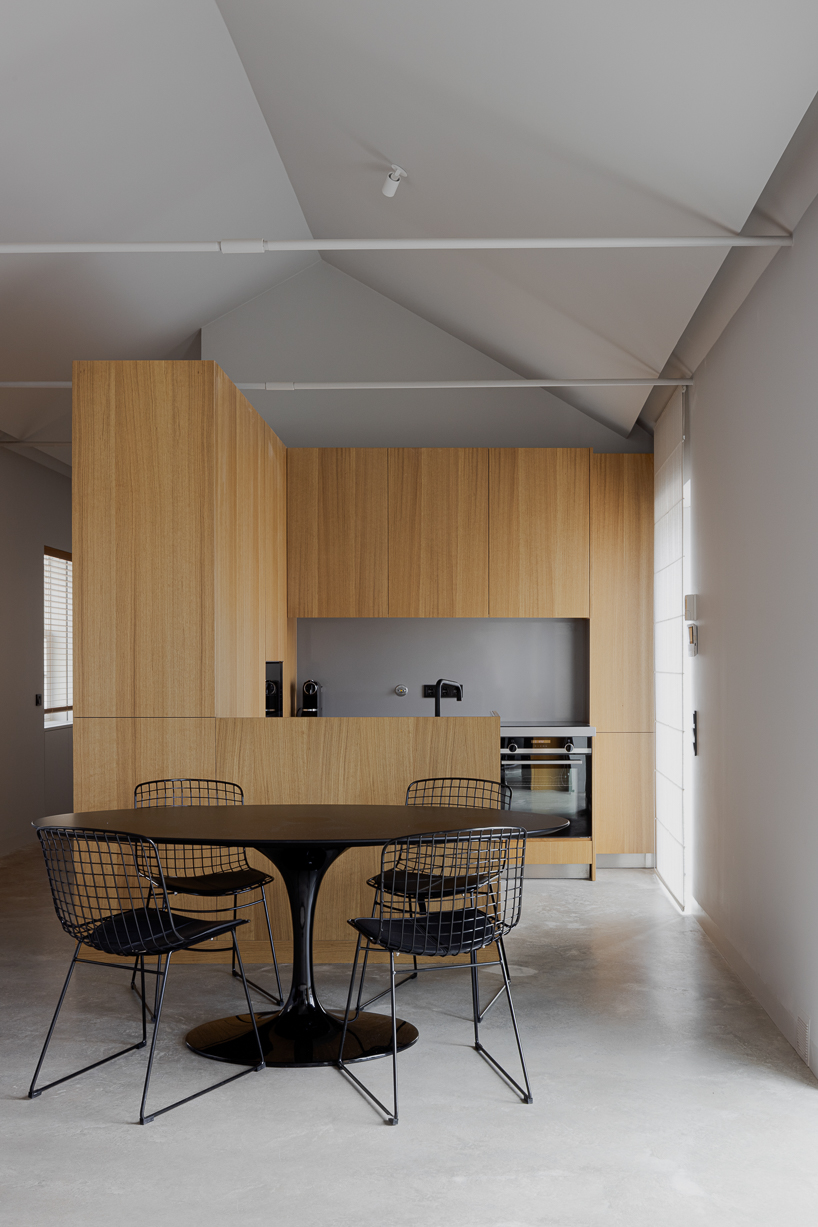
The project integrates organically with the hill’s natural slope, making the building an inseparable part of the natural landscape rather than an intrusive element. The private outdoor spaces on each level create an intimate relationship between the residents and the surrounding nature, with graduated views of the Douro River that improve upon ascent to higher levels. The design redefines the concept of living on sloping terrain by providing residential privacy while maintaining visual and physical connection with the surroundings.
Cultural and Heritage Dimensions
The project represents a successful model of architectural intervention in historic areas, balancing heritage conservation requirements with contemporary needs. The design preserves the memory of the place through the reuse of original materials and the revival of traditional architectural concepts like terraces and internal courtyards. The project reinterprets local elements, such as corrugated metal cladding, in a contemporary way, enriching the area’s urban fabric without compromising its historical integrity.
Design Vision and Execution
The collaboration between the two architecture firms is based on a realistic design language that respects the scale of the site without resorting to direct imitation. The project embodies a dialogue between historical structures and contemporary architecture, highlighting respect for the historical context while adopting modern construction techniques. The project’s precise execution reflects a deep understanding of the nature and memory of the place, making it a valuable addition to Porto’s architectural heritage.
✦ Editorial Insight from ArchUp
The Monte Dos Judeus project in Porto’s Miragaia district presents a contemporary interpretation of traditional residential terraces by integrating modern concrete with local elements like corrugated metal cladding, creating a dialogue between the historical structure and the current design. The positive critique lies in the project’s success in achieving a rare balance between modernity and respect for the site’s memory, while providing unique living spaces connected to nature. However, the article could have been enriched by a deeper discussion of the structural challenges faced in integrating the old and new structures. In conclusion, the project remains an inspiring model that shows how architecture can be a bridge between a glorious past and an innovative present, adding a new, rich layer to the area’s history without erasing its identity.
Brought to you by the ArchUp Editorial Team
Inspiration starts here. Dive deeper into Architecture, Interior Design, Research, Cities, Design, and cutting-edge Projectson ArchUp.


