Abbie Abbotsford Terrace: Mass and Rear Extension Strategy

Urban Context of Abbotsford
Abbotsford, located in inner Melbourne, is one of the areas that clearly reflects a layered historical accumulation within the urban fabric. Its streets are characterized by rows of single-fronted workers’ cottages, built in a simple Victorian style with timber cladding, dating back to the 19th century. This fabric was formed during the period of industrial settlement around areas such as Fitzroy and Collingwood.
Over time, the architectural character of the neighborhood has remained consistently preserved, making any new urban intervention directly tied to a sensitive relationship with the existing historical context, rather than being an independent architectural addition.
The Intervention of Abbie Abbotsford Terrace
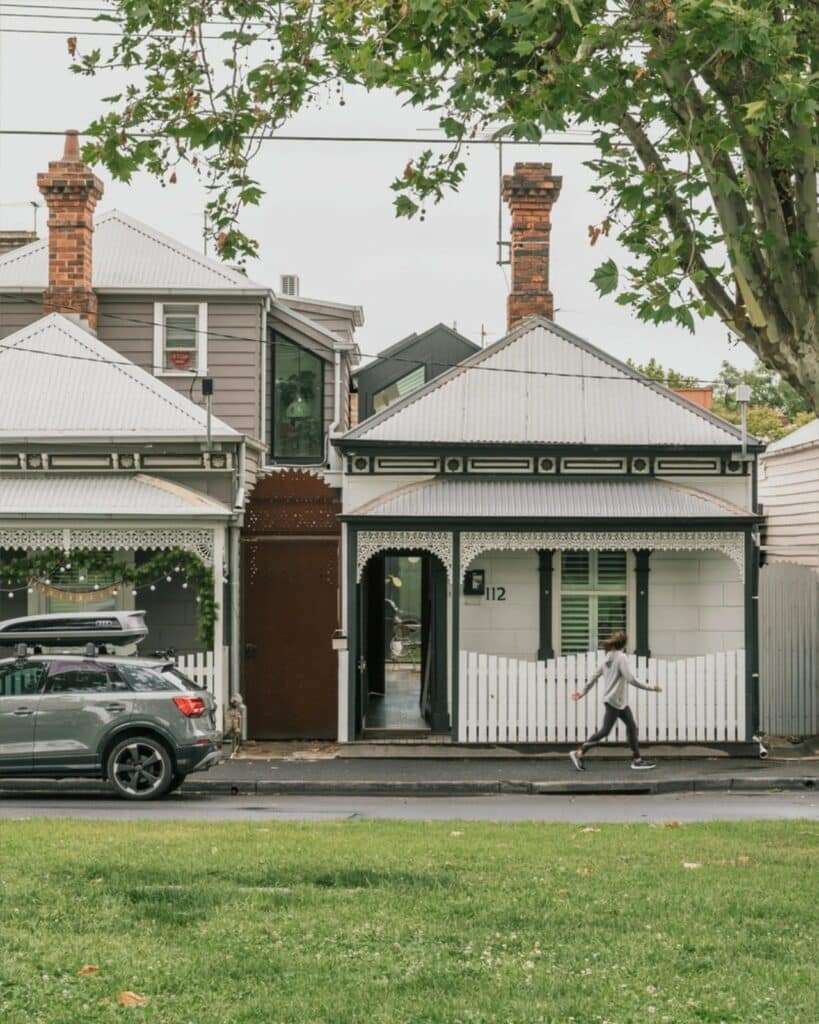
Within this framework, the “Abbie Abbotsford Terrace” project emerges as a case study of how to engage with an existing building within a stable historical context. The project began with a simple workers’ house facing a park and raised the issue of expansion without losing the original character of the building.
The architectural solution relied on calibrating new interventions to align with the surrounding context, while maintaining a balance between the existing and the added. Thus, the goal was not to redefine the building, but rather to preserve its essence within a carefully considered extension that remains harmonious with the surrounding urban environment.
Preserving the Original Mass and Adding the Rear Extension
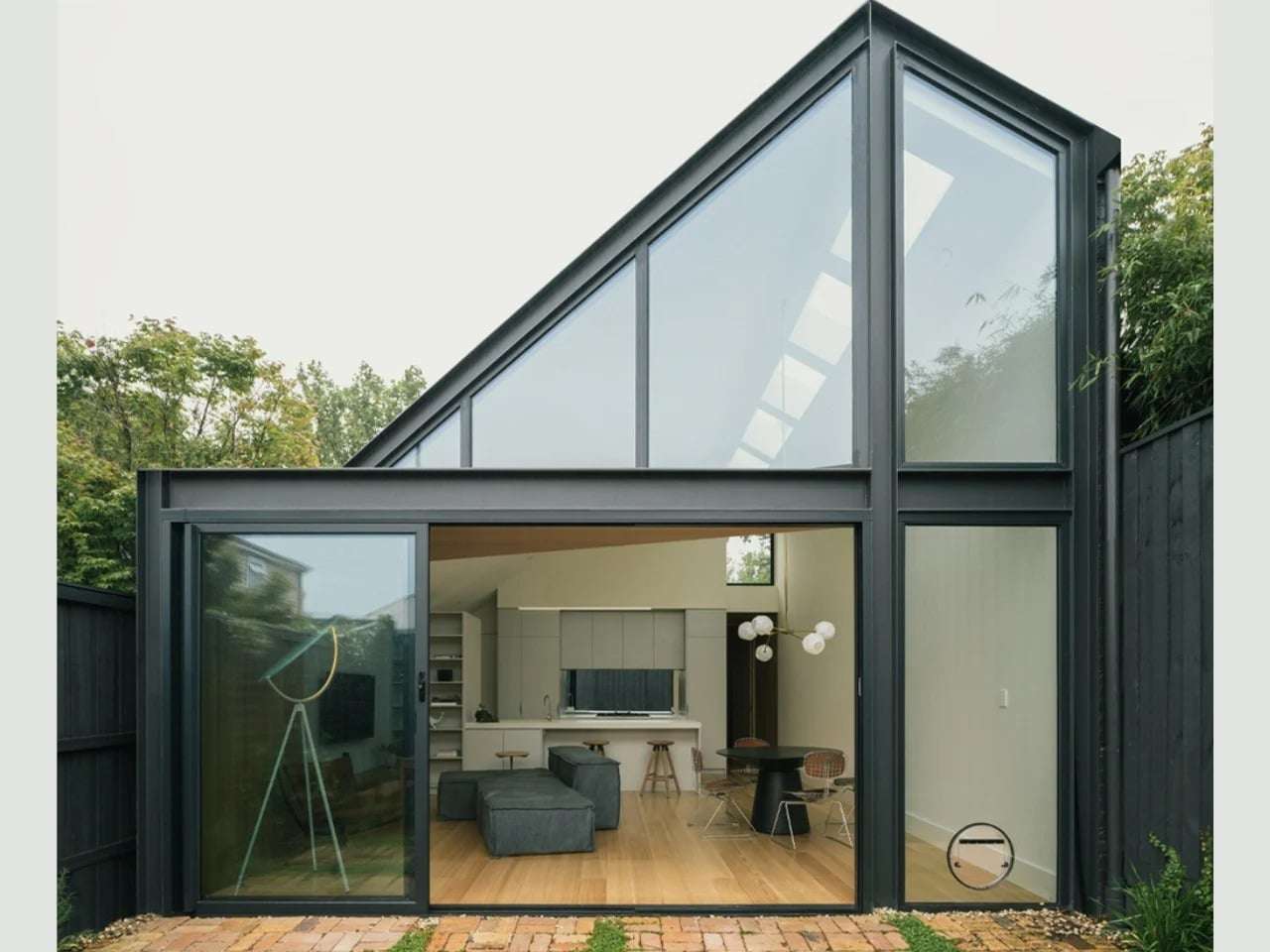
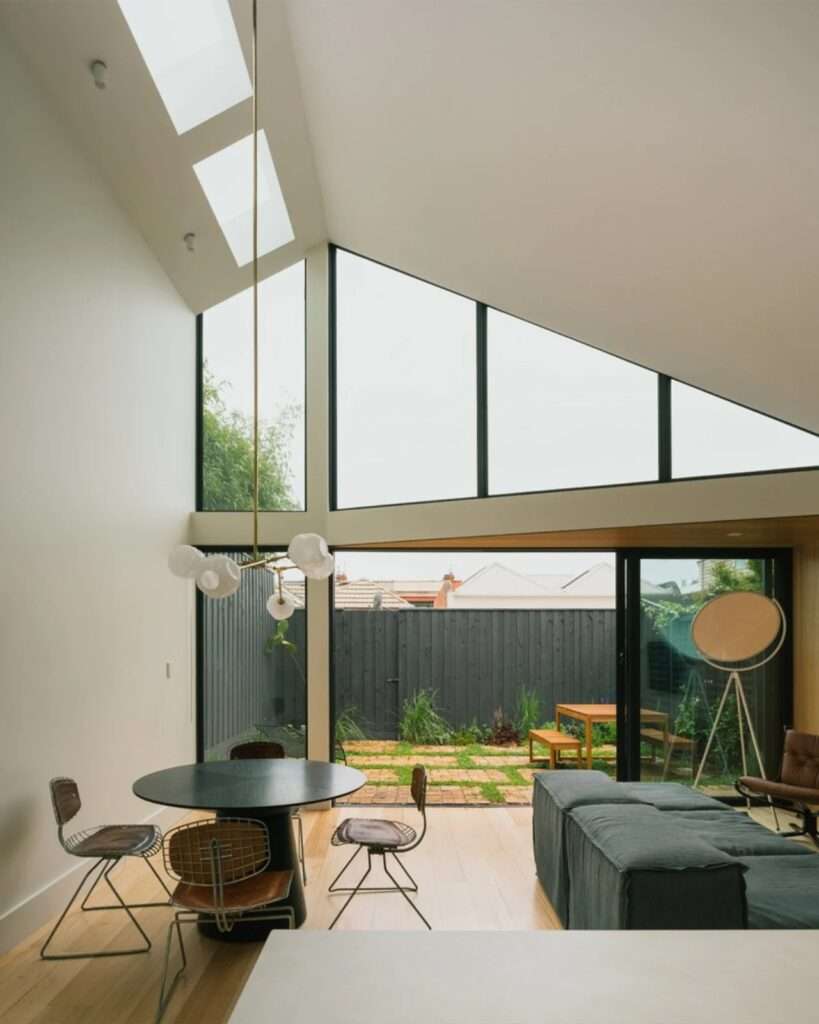
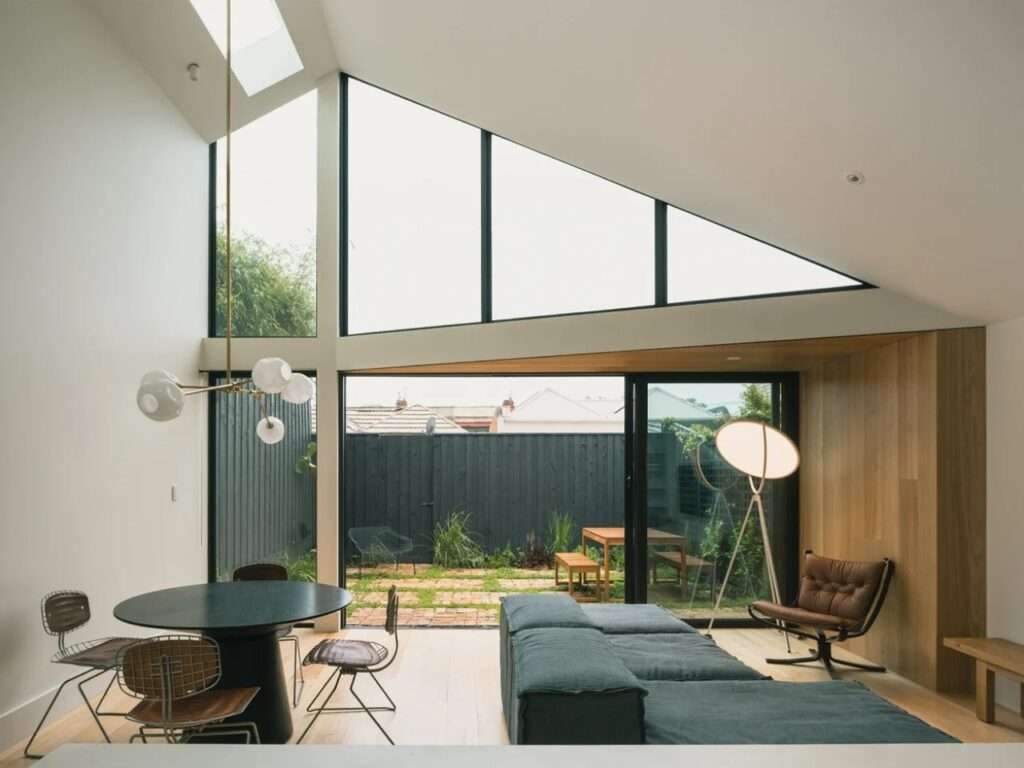
The architectural intervention was based on retaining the original cottage and fully restoring it, while preserving it as the primary street-facing façade. In contrast, the new addition was directed toward the rear of the site, where it takes the form of a contemporary single-storey extension opening onto a private enclosed courtyard.
Through this distribution, the new extension does not function as a visually dominant element, but rather as a quieter rear component that complements the existing structure without directly competing with the original mass.
The Relationship Between Old and New
This configuration produces a balanced relationship between the original building and the modern addition, where no formal rupture occurs between the two volumes. Instead, a visual and architectural dialogue is established, based on controlled contrast rather than tension.
This interaction allows for a smoother transition between design elements and enables each part to maintain its own identity within a unified whole.
Response to the Surrounding Urban Context
The building mass was also shaped in direct response to the neighboring buildings, with a two-storey house to the north and a single-storey house with limited outdoor space to the south. Accordingly, this context was adopted as a design anchor in the case study of the “Abbie Abbotsford Terrace” project, through positioning the mass along the side boundaries in a balanced manner.
Shadow impact was also carefully calculated to minimize overshadowing on the southern neighbor, reflecting an approach that prioritizes adaptation to the urban environment rather than ignoring it.
Interior Spatial Experience and Functional Extension
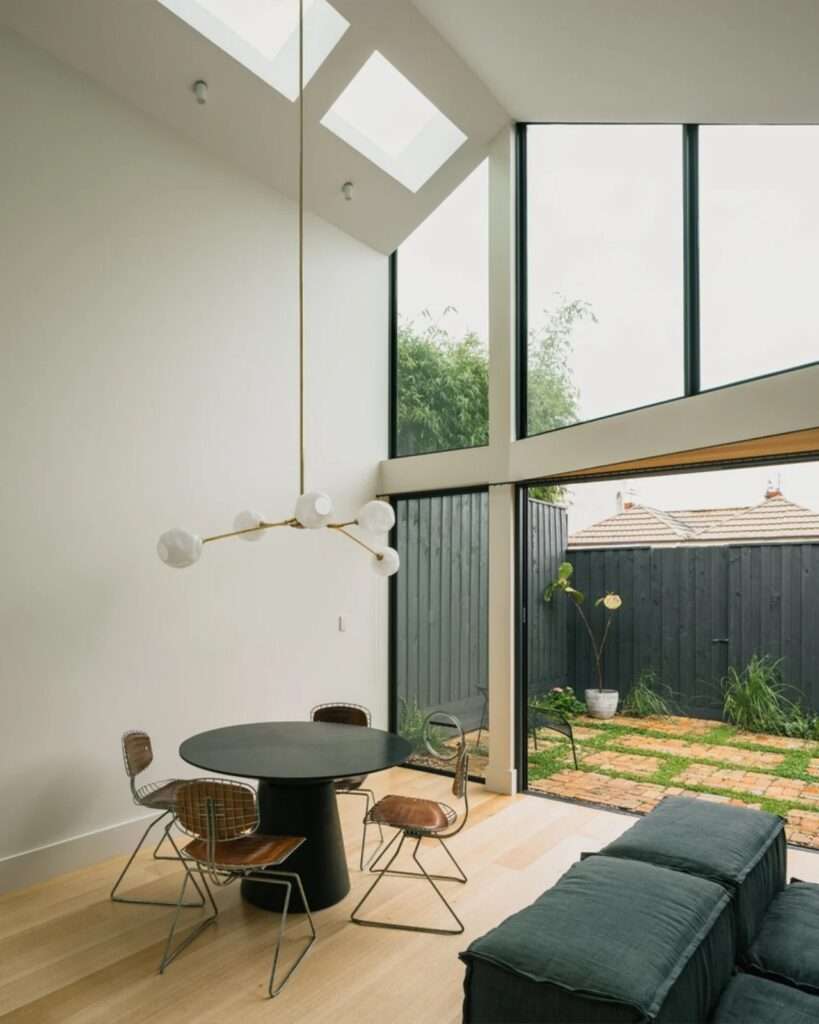
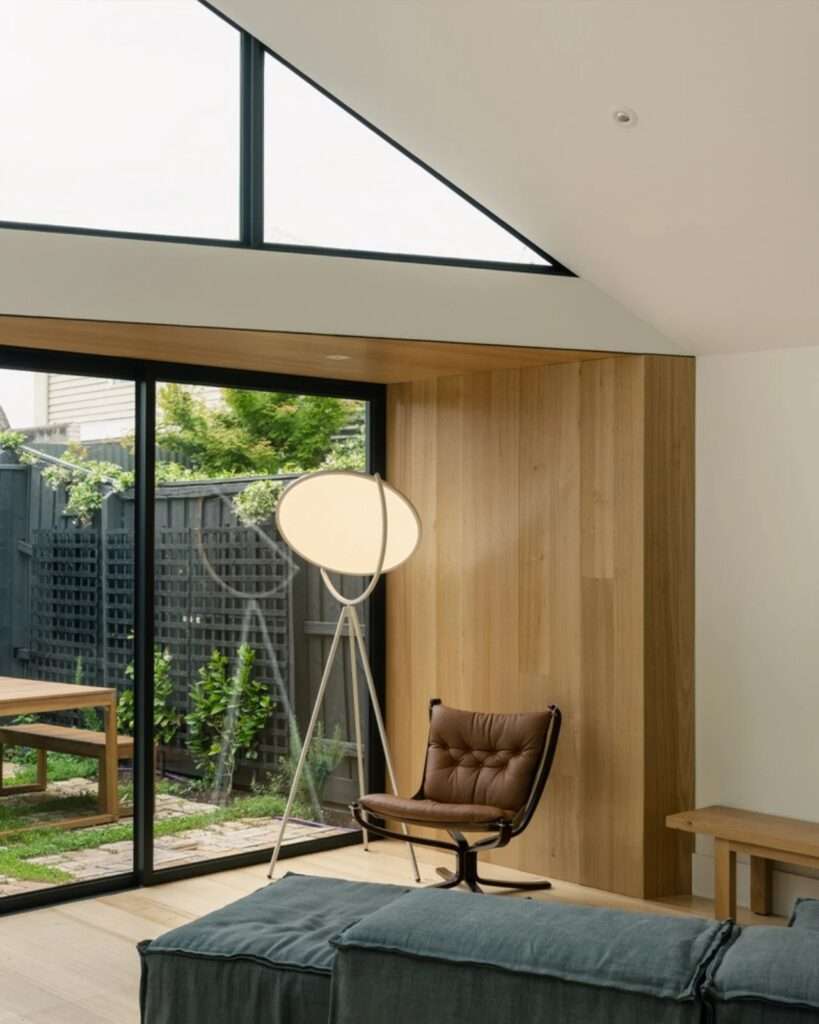
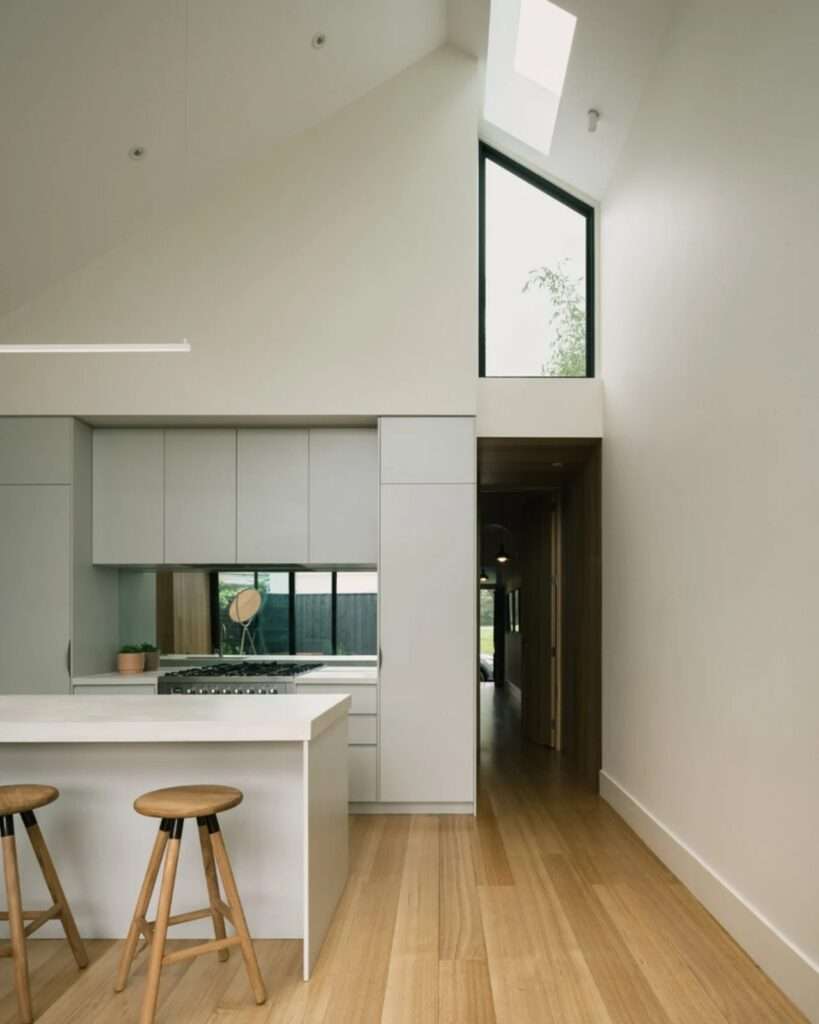
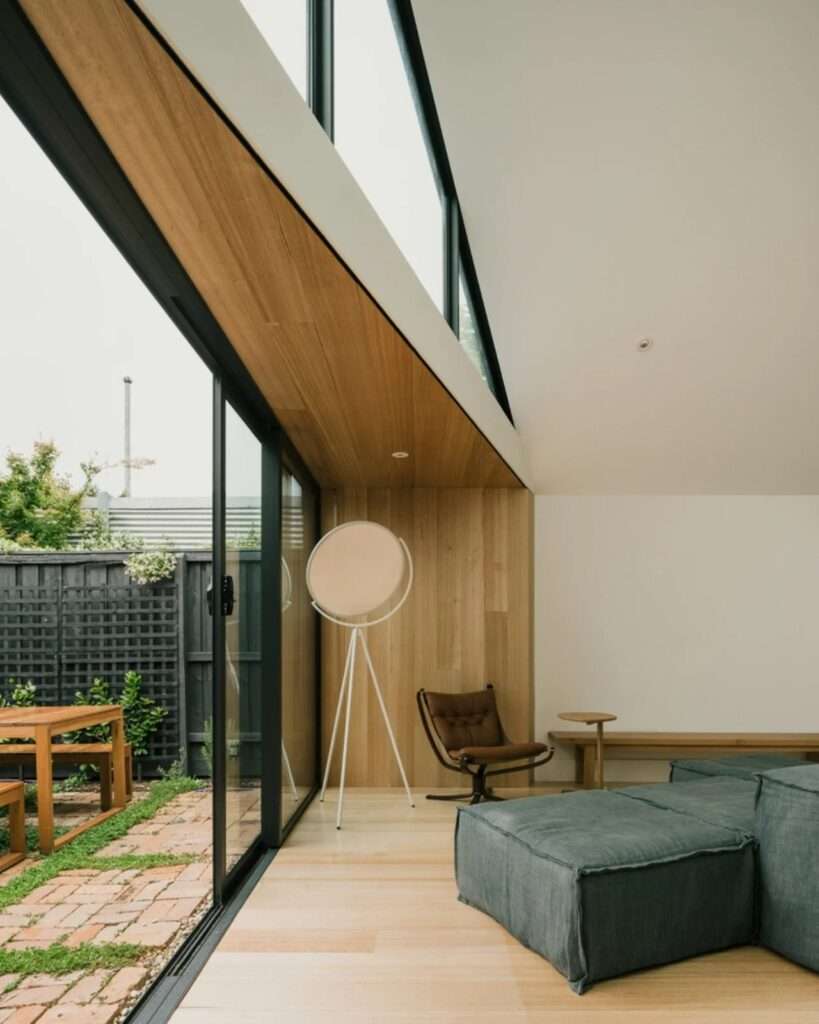
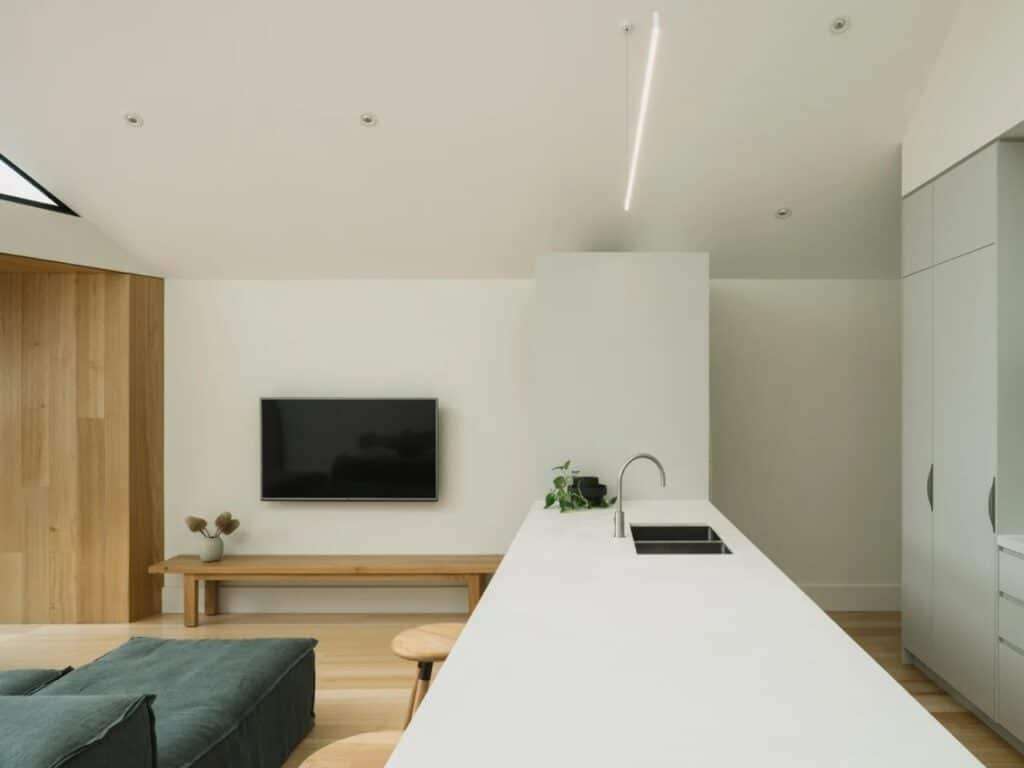
On a site of approximately 190 square meters, the project offers a spatial experience that exceeds its actual size in terms of perception and use. The rear extension is characterized by high ceilings and large windows that frame the internal courtyard, strengthening the relationship between interior and exterior spaces.
Within this configuration, the living area feels more spacious without exaggeration, while the courtyard becomes a functional extension resembling an outdoor room, expanding the scope of daily use and enhancing the sense of openness.
The Relationship Between Architecture and Everyday Context
In contrast, the project reflects a different approach to the notion of “modernity” in residential architecture. Rather than focusing on a performative or symbolic expression, the intervention engages with an existing site embedded within a stable urban fabric.
This is evident in the preservation of the continuity of the area’s urban character, where the row of Victorian cottages forms part of a collective spatial memory. From this perspective, preserving the existing fabric becomes an architectural value in itself, rather than merely a backdrop for the new building.
Integration with the Existing Urban Fabric
The project ultimately arrives at a strategy based on adaptation to context rather than surpassing it. Instead of imposing an isolated presence, the architectural update operates within the boundaries of the neighborhood and its repetitive urban rhythm.
As a result, the project derives its value from its ability to add within an existing system while maintaining the identity of the place and the continuity of its overall character.
✦ ArchUp Editorial Insight
Within the Victorian heritage fabric of Abbotsford, Abbie Abbotsford Terrace operates as a spatial modification shaped by regulatory requirements to preserve historic façades and by rising land-value pressures in inner Melbourne. The financial logic drives the fixation of the street façade as both a visual and economic asset governed by heritage protection frameworks, while allowing additional usable density to be achieved through a low-rise rear extension.
Planning constraints related to overshadowing, neighboring rights, and plot depth produce a volumetric distribution that displaces the contemporary mass toward the rear rather than allowing frontal expansion. In this configuration, the Victorian cottage is preserved as a legal and contextual condition for the continuity of the urban fabric, while modern patterns of use are redirected toward an internal courtyard.
The building emerges as a negotiated outcome between planning legislation, real-estate market pressure, and risk-minimization logic in construction, where the architect becomes secondary to the system that ultimately produces the final form.