

From $75,000 to the Price of a Smartphone: The Future of Robotic Dogs Starts Now

A Gap Between Prices and Needs
For years, robotic dogs have been confined to two extreme choices with no middle ground: either expensive industrial masterpieces worth up to $75,000—often used for military purposes thanks to their ability to perform advanced tasks like opening doors—or low-cost educational kits priced under $300, moving with limited, stiff mechanisms that resemble the slow crawl of robotic spiders.
A Limited Market with Incomplete Solutions
Between these two poles, the gap remained clear and puzzling. There was no middle solution that could fulfill the wish of a broad segment of users who have always dreamed of owning a true robotic companion. As a result, major robotics companies continued to focus either on large corporations and institutions on one end, or on simple educational kits for schools on the other—without addressing the practical needs of individuals seeking an affordable yet capable option.
Signs of Change
Over time, however, some companies began to rethink this approach. One standout example is the Sirius robot, which offers a fresh vision of how consumer robots can combine reasonable cost with advanced capabilities. Weighing only about 1 kg (2.2 lbs), Sirius is built on an open-source design with 14 degrees of freedom powered by Neurocore joints. Combined with its integration of modern AI technologies, this has made it clearly superior to older models like the Robosapien that emerged in the early 2000s.
Towards a More Inclusive Market
The Sirius experience did not stop at design alone; it also opened the door for technical communities to get involved through experimental labs with more than 3,000 participants. Additionally, this new concept won a prestigious design award (Red Dot Award: Product Design 2025), a clear signal that the market is moving towards providing more advanced robots that can genuinely be available to individuals—without requiring them to take out a loan.
Robust and Lightweight Design
To start with, the outer frame of this type of robot relies on an advanced aerospace-grade alloy, which provides an effective balance between durability and lightness. This balance gives the robot the ability to move in a realistic way and is a superior alternative to cheap plastic that cannot offer the same strength or resilience.
A Battery That Supports Daily Use
In terms of power, the robot comes equipped with a 2250 mAh battery, which is enough to keep it running for about 40 to 60 minutes of continuous movement, or around one to two hours in standby mode. This time range is considered suitable given the device’s size and intended home use.
Ready for Upgrades and Expansion
Additionally, USB-C expansion ports make the platform open to future accessories or modifications that may not have been envisioned yet. This is an important point that gives enthusiasts and developers the freedom to test creative ideas without major limitations.
Visual Capabilities and On-Device Processing
On the visual interaction level, an 8MP camera handles gesture and signal recognition, making control more fluid and closer to natural interaction with the user. The built-in processing unit supports edge computing capabilities of up to 5 trillion operations per second (TOPS), which means that voice commands and gesture motions are processed locally on the device, without constantly relying on cloud servers. This feature reduces lag and increases reliability.
A Vast Motion Library
In another context, the robot doesn’t rely on a fixed set of movements only; instead, it comes with an extensive library of over 1,000 actions that can be updated and expanded over time. This variety keeps the user experience continuously evolving instead of being limited to a few repetitive commands that quickly lose their appeal.


From Technology to Personality
The importance of this category of robots does not stop at technical specifications or motion capabilities; it extends to aspects related to personality and the flexibility to adapt to the user.
Flexible and Easy Programming
For example, visual programming interfaces based on a drag-and-drop principle allow any user, regardless of their level, to design custom movements like dances or add new “tricks.” This can be done without needing to dive into complex coding, which brings this type of technology closer to daily use for individuals.
Multiple Voices and Personalities
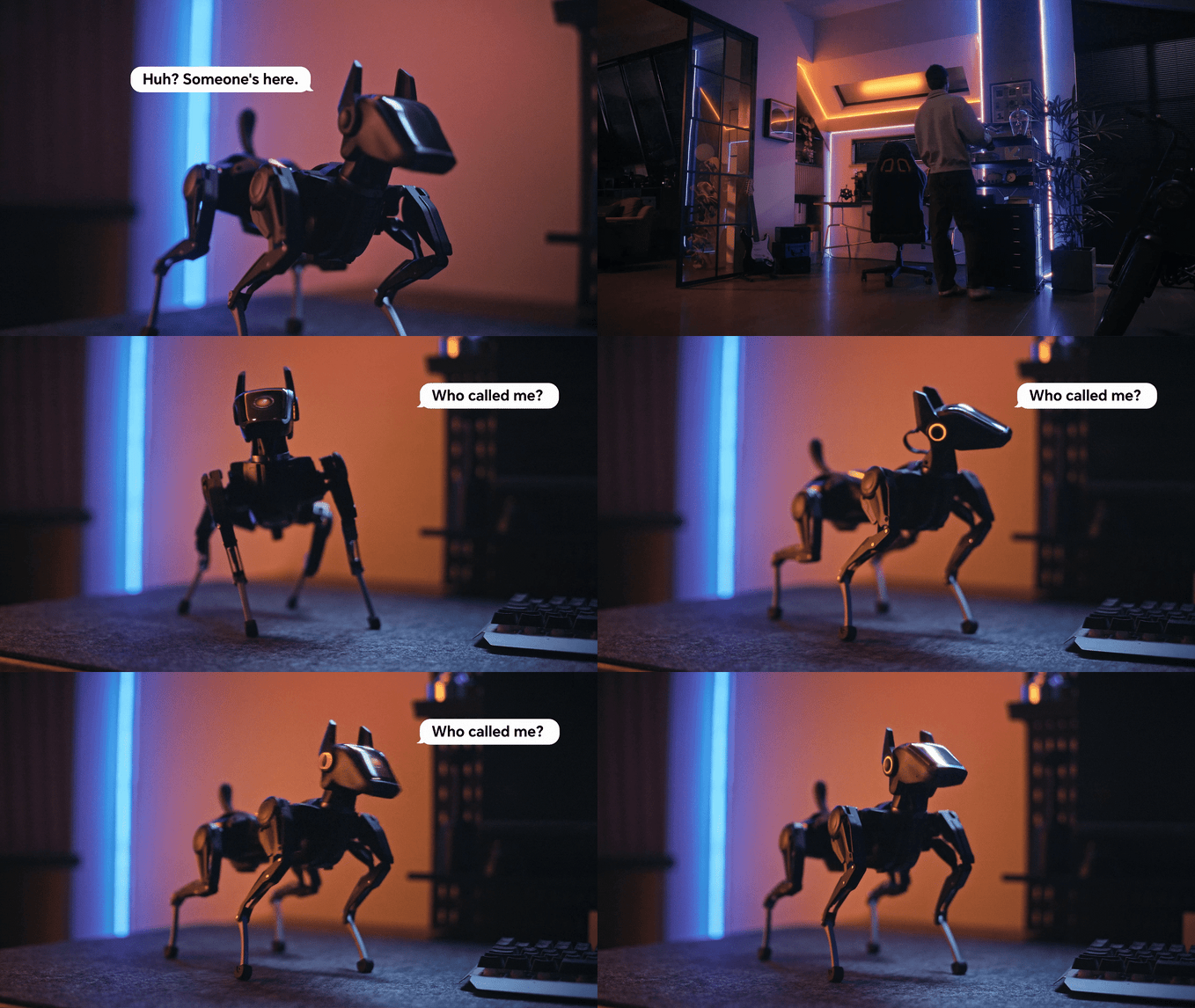
In addition, voice customization options play an important role in transforming the robot from a purely mechanical device to a companion closer to an intelligent pet. Owners can change the voice pack to match their taste, with the ability to switch between different personality modes like Husky, Corgi, or Border Collie, depending on each user’s preferences or even their mood.
A Warmer Interactive Touch
Moreover, an RGB lighting system and animated facial expressions add an emotional dimension that elevates the level of interaction. This way, communicating with the robot becomes a warmer, livelier experience that goes beyond mere functional performance to an emotional space that mimics bonds with living creatures.


An Open Creative Space for Developers
It’s remarkable that this type of robot is not limited to being a ready-to-use device only; instead, it offers developers and hobbyists the chance to dive deeper and explore new possibilities.
Support for Advanced Programming Languages
For example, supporting languages like Python, C, and C++ gives developers the freedom to build custom AI algorithms and unique motion behaviors. These capabilities allow for the creation of new experiences and the integration of additional sensors in ways that keep up with evolving needs.
Shape Customization via 3D Design
On another front, integration with design programs like Blender makes it possible to design external shells and accessories that can be 3D printed. Over time, users can easily change the robot’s appearance to match their taste or refresh its visual experience.
Manual Training and Interactive Learning
Manual training mode is also an important feature, allowing users to physically guide the robot to perform new movements. This approach provides an experience similar to training a real pet instead of relying on rigid programming alone.
An Open Community that Expands Capabilities
Since the design philosophy here is built on openness and community sharing, users can exchange code, designs, and modifications freely. This creates a vibrant environment that keeps the platform evolving and increases the chances of innovative ideas emerging.
Notes on Customization
Finally, the entire outer appearance can be customized thanks to the support for 3D-printable covers—but it’s important to avoid experiments that could make the look odd or visually unappealing, as has happened in past attempts by some companies.
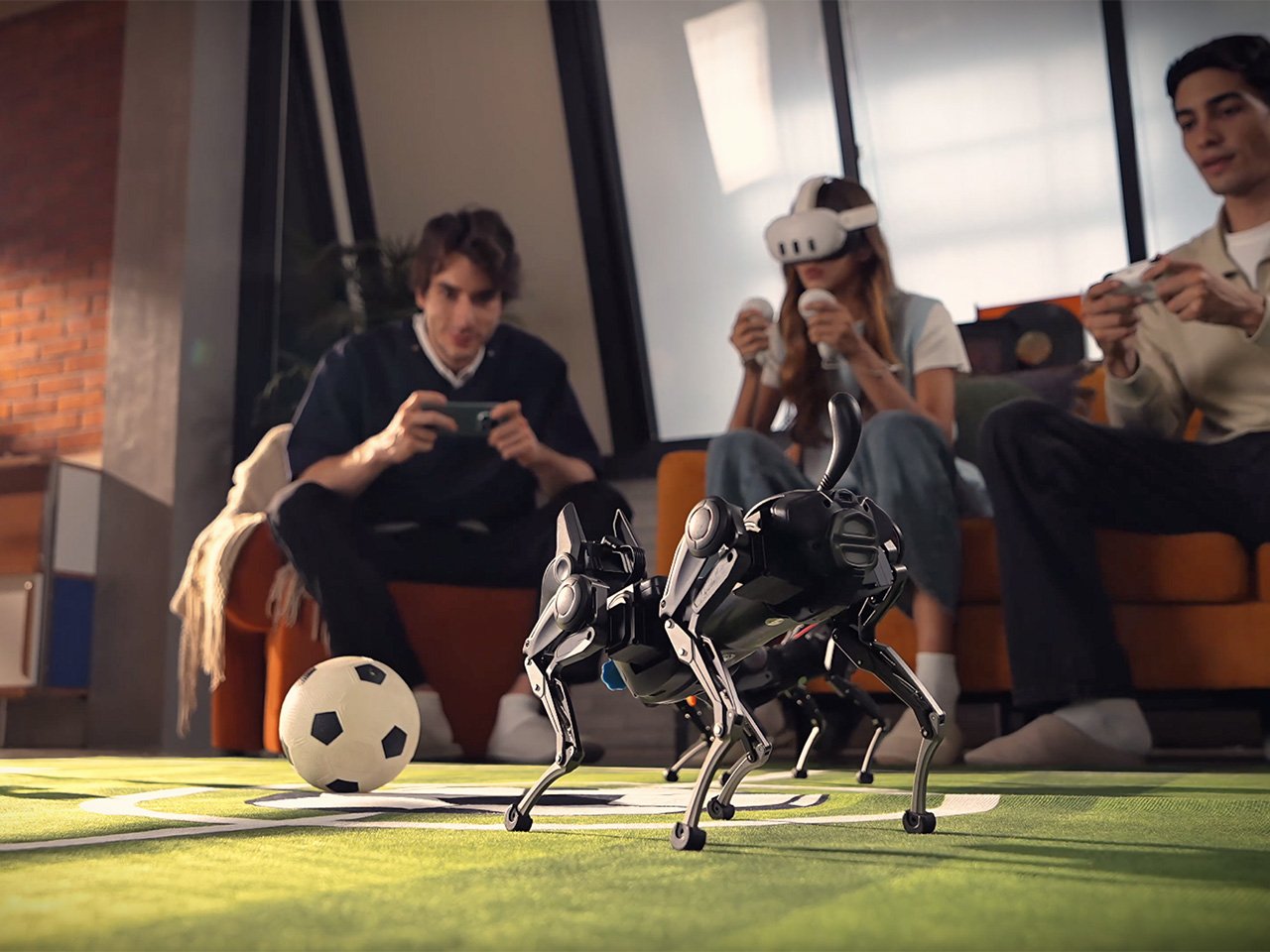
A Diversity of Control Methods
The variety of control options is one of the aspects that gives this category of robots greater flexibility to suit different usage styles—whether for casual users or professionals.
Virtual Reality: An Immersive Experience
In this context, integration with VR headsets allows the robot to be used as a virtual avatar. The user can see the world through the robot’s camera and control its movements using natural gestures, adding a level of interaction not typically available with conventional controls.
Precision Control for Gaming Enthusiasts
For gamers or those who want to perform complex maneuvers, joystick control remains an ideal option. It provides command precision and gives the user greater control in scenarios that require instant response.
Smartphone App: Easy Access
Meanwhile, controlling the robot via a smartphone app offers the simplest entry point for new users. The app combines basic commands and advanced programming tools in one familiar interface, helping to lower the barrier of complexity.
Multi-Level Responsiveness
Finally, it’s noteworthy that each control method opens up a different experience that caters to diverse user preferences. This is quite similar to how real dogs interact with humans—responding to a mix of commands, signals, and stimuli—making the bond between human and robot feel more natural.

A Pricing Strategy Unlike the Usual
Pricing in this category is no less important than the technical features themselves, as it determines how widely people can access this technology.
Comparison with Competitors
For example, a robot like Unitree’s Go1 starts at around $2,700, while Boston Dynamics’ Spot robot costs more than many cars. In light of these figures, the gap becomes clear when a robot with advanced specifications is priced far below this range.
Expanding Accessibility
This shift in pricing strategy makes owning an advanced home robot possible for hobbyists, educators, content creators, and even families who want to explore this technology from a fresh angle. Previously, such options were exclusive to research labs or large corporations only.
A Market Turning Point
With this new equation, some see this move as a potential turning point similar to what Oculus Rift did for virtual reality—making the experience accessible to the average consumer at reasonable prices and acceptable quality at the same time.

A Unique Position Among Competitors
It’s important to understand where this type of robot fits within the current market, especially with so many companies serving different needs.
A Clear Market Gap
Looking at examples like Petoi’s products, they remain clearly positioned within the category of educational toys and simple hobby kits, serving educational purposes more than providing advanced practical performance.
Purely Industrial Needs
On the other hand, larger platforms like Spot are primarily dedicated to industrial or military applications, offering complex technical solutions that don’t relate to daily use by individuals or families.
Bridging the Gap Between Both Ends
This type of robot stands out as a solution that fills the gap between these two extremes. It combines a more accessible price point with performance that approaches professional levels, along with an open-source platform philosophy that lets users modify and experiment freely.
A Human-Centered Experience
The result is a design focused on individual consumers or families, recognizing that most users want a smart device that’s expandable yet simple enough to be fun and easy to use right from the start.

Perfect Timing for an Idea to Mature
Interestingly, the timing of these models’ emergence coincides with the maturity of AI technologies and declining manufacturing costs. This alignment created a practical opportunity to transform experimental, costly concepts into products that can actually reach everyday consumers.
Motion Technologies that Mimic Nature
The company’s Neurocore joint system is a good example: it combines three degrees of freedom in a single unit to form leg structures that imitate natural movement, giving the robot a level of realism that catches the eye.
Growth of the Global Market
On another note, projections suggest that the global entertainment robot market could surpass $18 billion by 2032. This growth is driven by increasing demand for robotic companions that blend emotional interaction with programmability and customization.
The Critical Price Factor
However, achieving this growth depends on companies offering products at genuinely affordable prices. Instead of costing as much as an electric car, these robots can now be offered at a price range similar to a flagship smartphone—making this technology realistically accessible to a much wider audience.
✦ ArchUp Editorial Insight
–Combining advanced capabilities, easy customization, and bold pricing strategies, robotic dogs now appear to be entering a new era—one that could make owning them far more realistic for households than it was just a few years ago.
Explore the Latest Architecture Exhibitions & Conferences
ArchUp offers daily updates on top global exhibitions, conferences, and professional art and design forums.
Follow key competitions, check results, and stay informed through the latest news worldwide.
ArchUp is your encyclopedic hub for discovering events and design-driven opportunities across the globe.


