Ai Weiwei’s “Camouflage”: A Tense Dialogue Between Illusion and Freedom

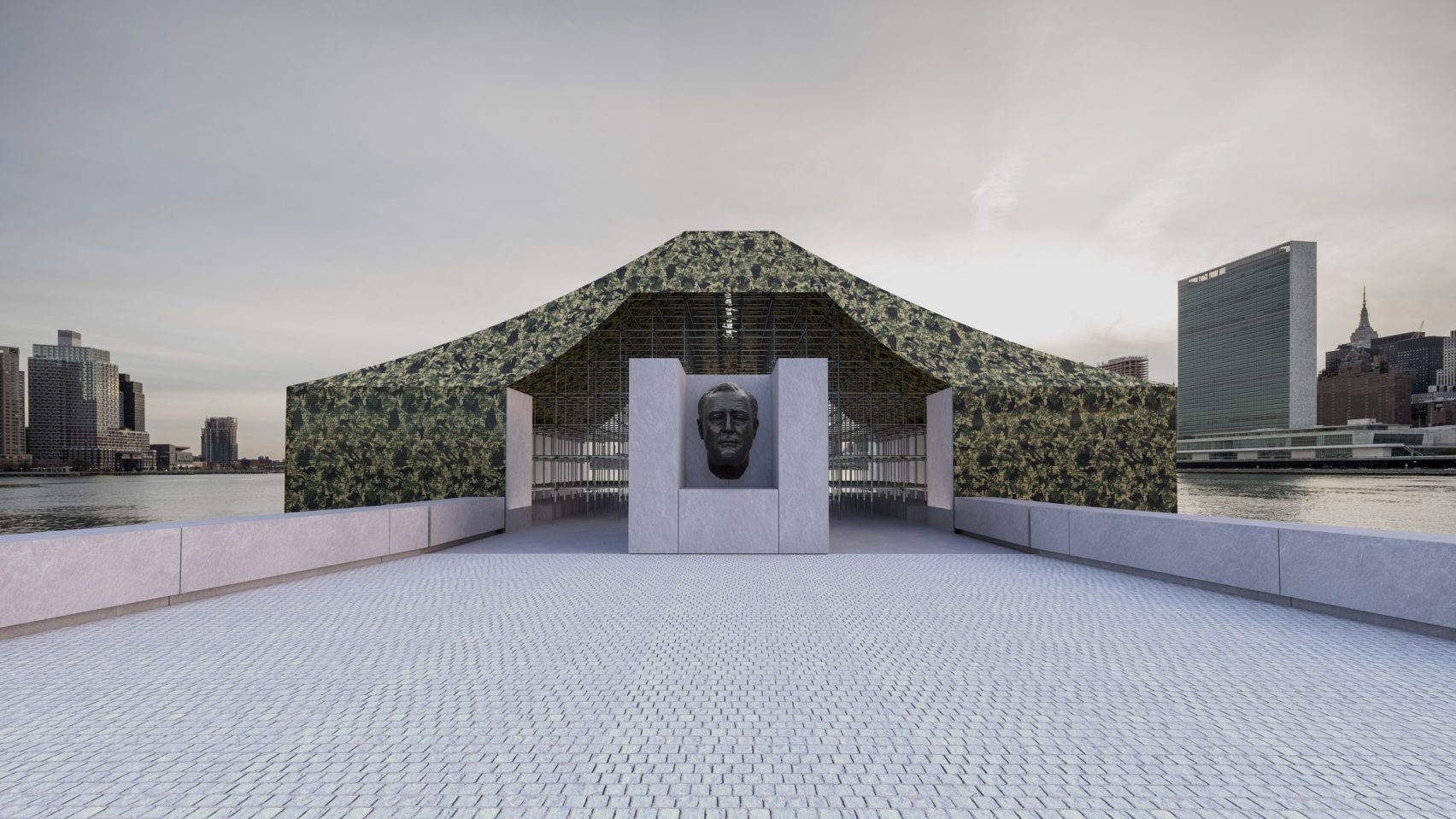
In the heart of New York City, Ai Weiwei introduces “Camouflage,” a monumental installation designed for the launch of the Art X Freedom program on Roosevelt Island. Draping a camouflage net over the bust of President Franklin D. Roosevelt, the installation boldly interrogates the intersection between concealment, war, and the fragile state of human rights today.
The Architecture of Disguise: A Framework of Illusion
The structure is not merely a shelter for a symbol of democracy; it becomes a layered commentary on the tension between what societies choose to reveal and what they deliberately mask. By utilizing a scaffold clad in camouflaged material, Ai subverts the traditional purpose of architecture—to reveal, celebrate, and shelter—turning it instead into a mechanism of deception and provocation.
Camouflage as Critique: War, Survival, and Vulnerability
Ai’s choice of camouflage, historically rooted in military conflict, serves as a direct visual provocation. It invites viewers to consider the ways in which governments and institutions obscure truths under the guise of protection. By enveloping Roosevelt’s Four Freedoms—the ideals of speech, worship, want, and fear—in a literal fabric of concealment, Ai questions whether those freedoms are being safeguarded or quietly suffocated.
Subtle Rebellion: The Power of the Cat Motif
Intriguingly, the camouflage netting is patterned with silhouettes of cats—symbols of resilience, independence, and vulnerability. Inserting the imagery of animals suffering silently alongside human crises, Ai delivers a quiet but piercing indictment of human-centered narratives, reminding us that war and disaster ripple far beyond human borders.
Interactive Layers: Reclaiming Agency Through Participation
Under the shadow of the scaffolding, visitors are invited to engage directly by attaching ribbons inscribed with personal reflections to the structure. This participatory element contrasts sharply with the overarching theme of concealment, suggesting that despite systemic forces of oppression, individual voices still possess the power to break through.
Conclusion: A Structure That Demands Unmasking
Far from offering a passive experience, Ai Weiwei’s “Camouflage” forces a confrontation with uncomfortable truths. It challenges architecture’s role in public discourse—not as a mere backdrop for political ideals but as an active agent questioning the authenticity of the freedoms it supposedly honors.
More on ArchUp: