

Almaty Museum of Arts Opens at the Foothills of the Tian Shan Mountains

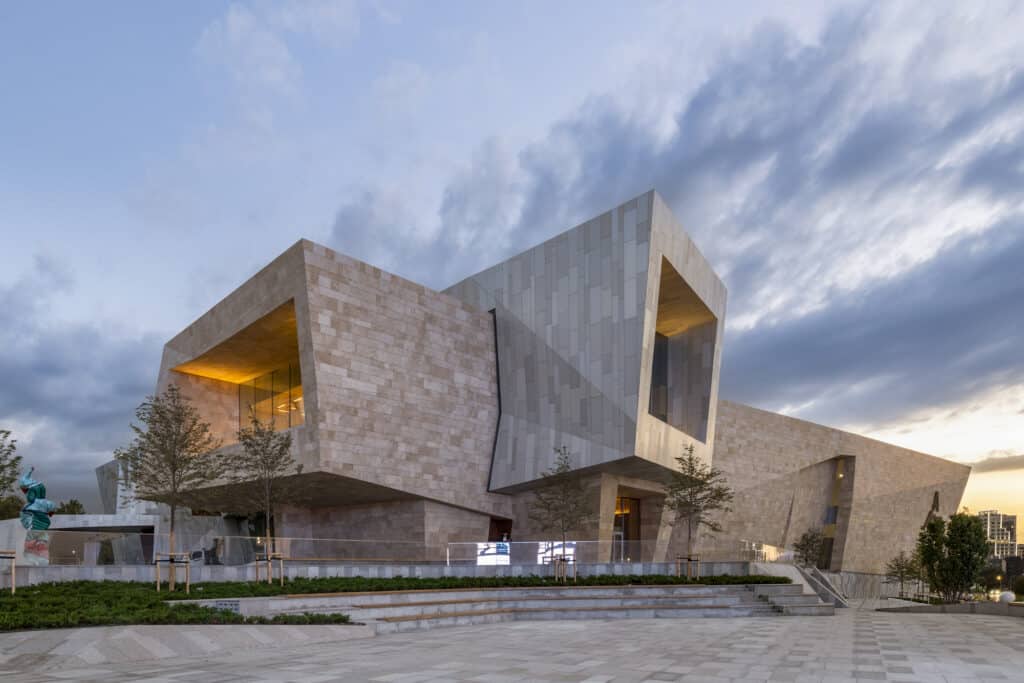
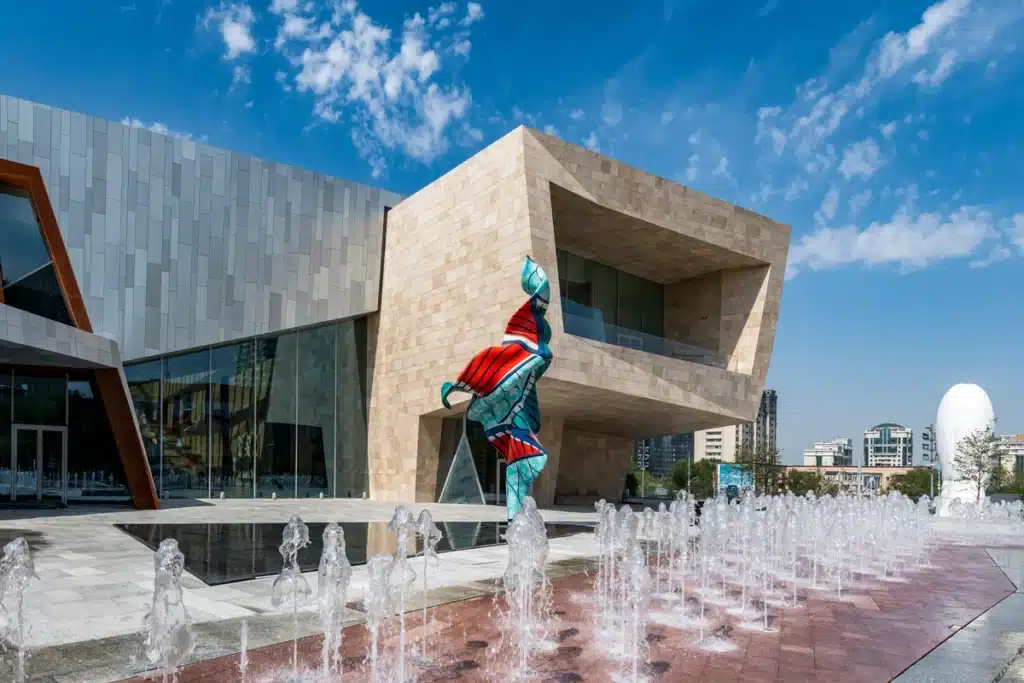
On the edge of Almaty, where the city stretches toward the foothills of the Tian Shan mountains, a new art museum has emerged with an architectural design inspired by the contrast between nature and the urban fabric. The building is composed of two interlocking volumes: one clad in stone, evoking solidity and permanence. The other is wrapped in metal, reflecting light and conveying a sense of movement and modernity.
A Central Space Filled with Natural Light
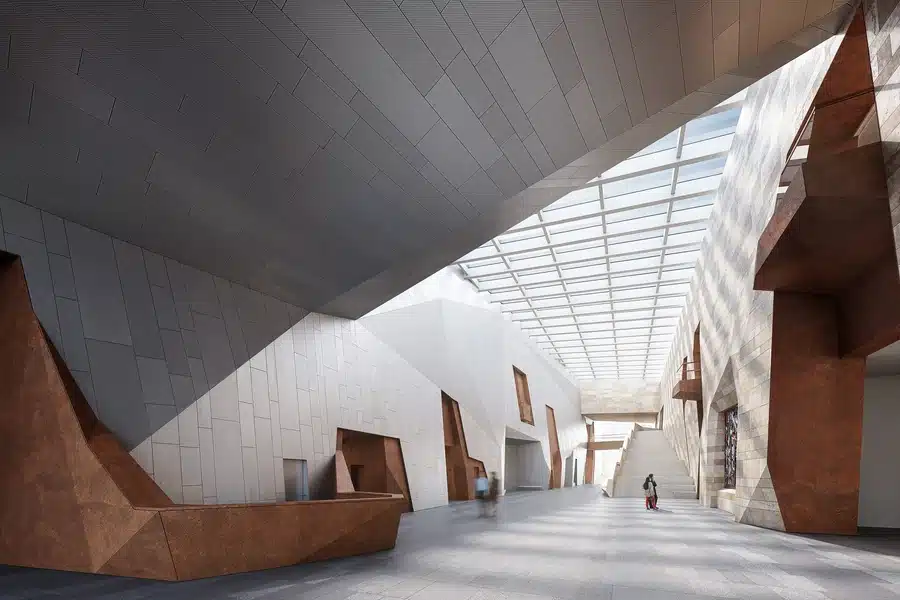
At the heart of the museum lies a spacious atrium, referred to as the “Art Street.” It organizes circulation and brings visitors together in an open architectural experience across multiple levels. This central void is illuminated by natural light, creating shifting atmospheres throughout the day. Additionally, it enhances the presence of artworks within the interior.

Blurring Boundaries Between Inside and Outside
The museum extends beyond its enclosed walls through terraces, plazas, and landscaped gardens. These outdoor areas are designed to host sculptures, installations, and performances. They turn the building into a cultural gathering place that connects architecture, art, and daily life in the city.
Spaces for Multiple Functions
The program includes galleries for both permanent and temporary exhibitions, artist-focused rooms, educational workshops, and a flexible theater space. It is adaptable for various performances and events. This multiplicity of functions transforms the museum into more than a venue for displaying art. It positions it as a dynamic platform for interaction and learning.
A New Cultural Landmark for the City
With its balanced composition of mass and void, and its dialogue between light and shadow, the museum stands as a new cultural landmark for Almaty. It reflects the city’s identity and surrounding landscape. Moreover, it redefines the relationship between architecture and art as an integral part of the urban scene.
✦ ArchUp Editorial Insight
The new museum in Almaty is defined by two interlocking volumes: one clad in stone, suggesting permanence, and the other in metal, capturing light and urban dynamism. At its core lies a naturally lit atrium. It visually extends into terraces and plazas, creating fluid movement between inside and outside. Yet, while the material contrast is evident, the design invites questions about its deeper connection to the city’s cultural identity. Nevertheless, the museum establishes itself as a flexible cultural platform. It combines exhibition spaces with public activities, ensuring a lasting role within Almaty’s architectural landscape.
Explore the Latest Architecture Exhibitions & Conferences
ArchUp offers daily updates on top global architectural exhibitions, design conferences, and professional art and design forums.
Follow key architecture competitions, check official results, and stay informed through the latest architectural news worldwide.
ArchUp is your encyclopedic hub for discovering events and design-driven opportunities across the globe.


