and Da Vinci’s Proportions.. A Sculpture Challenging Peace and War in “Pavilion 13”

Introduction: Art in the Heart of Conflict
In a bold artistic move, global artist Ai Weiwei has launched his new installation, “Spherical Installation,” as part of the events at Pavilion 13 in the Ukrainian capital, Kyiv. Commissioned by Ribbon International, this work is not merely a sculptural piece but a dense visual statement pulsating with the pain of the Ukrainian reality. The major artwork, large in scale and rich in meaning, will be on display until November 30, 2025, defying security conditions and logistical challenges to present the voice of art amid the roar of war.
Anatomy of the Artwork.. Between Geometry and Camouflage
1.1. Form and Content: Three Spheres Confronting the World
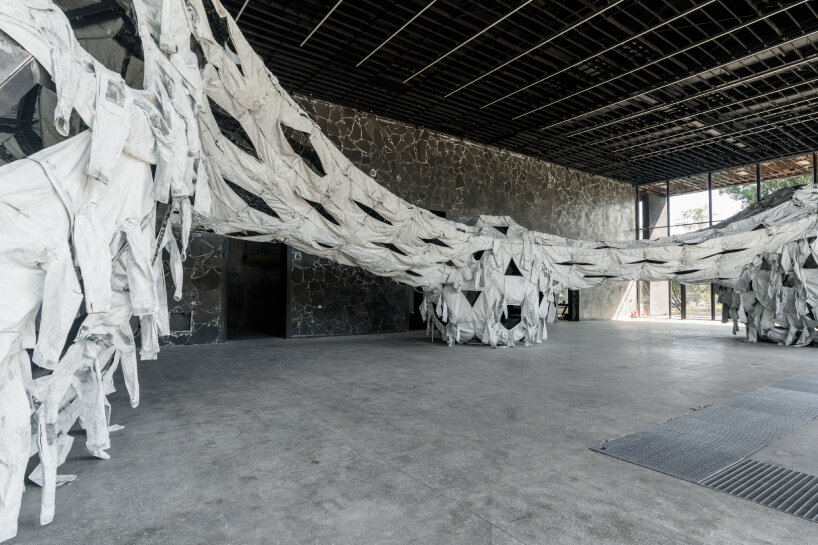
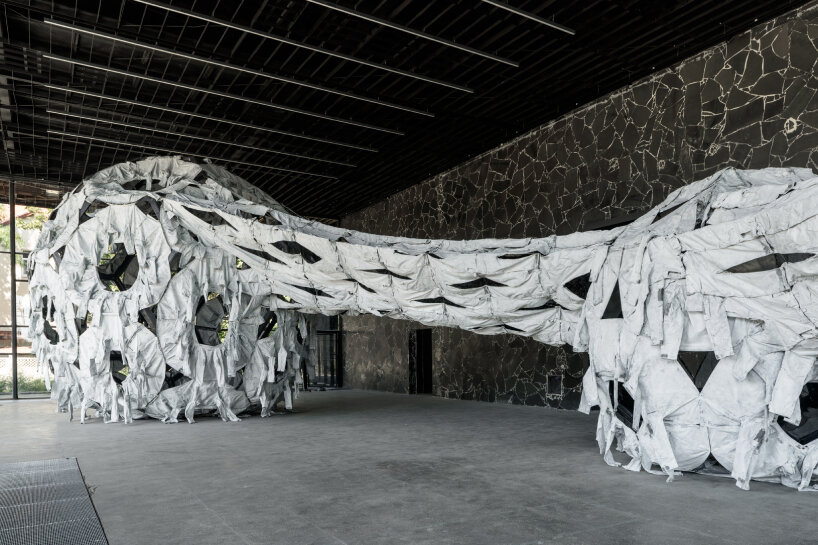
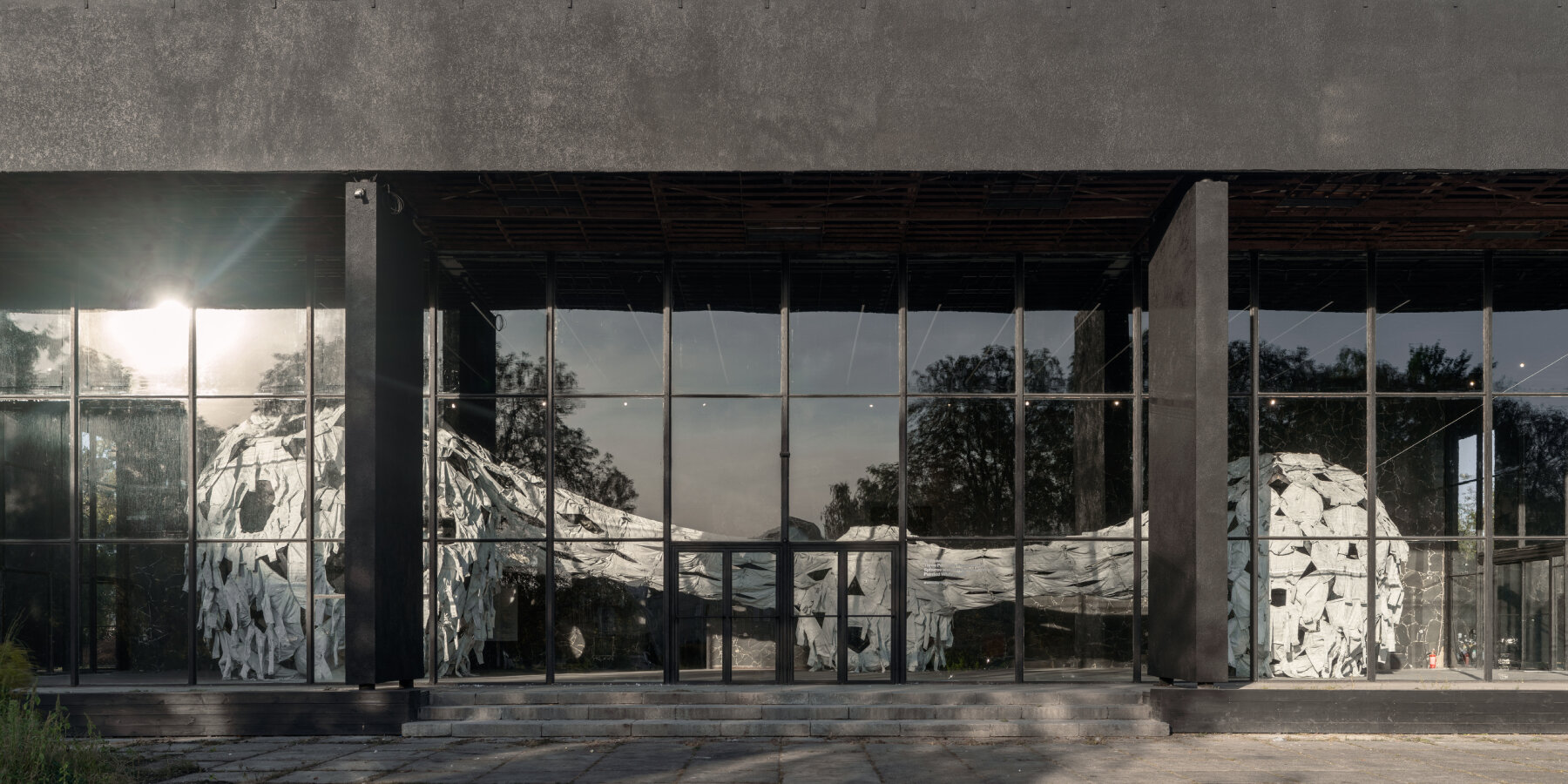
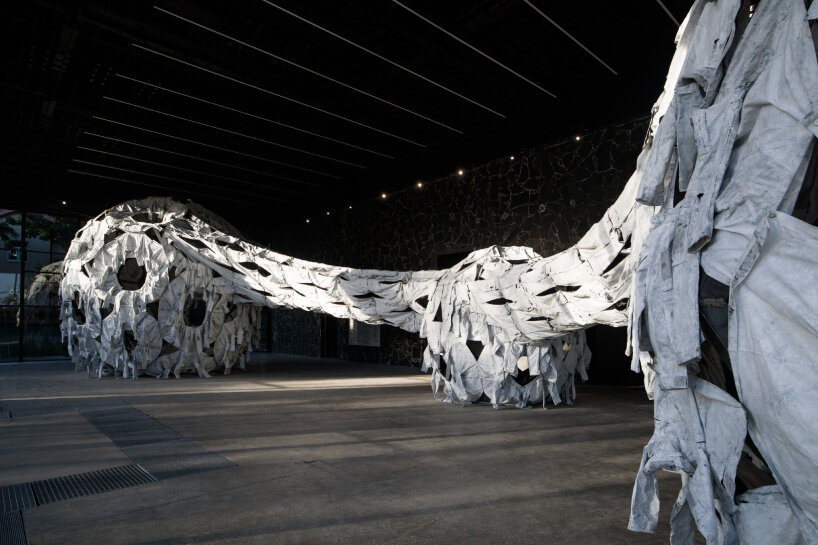
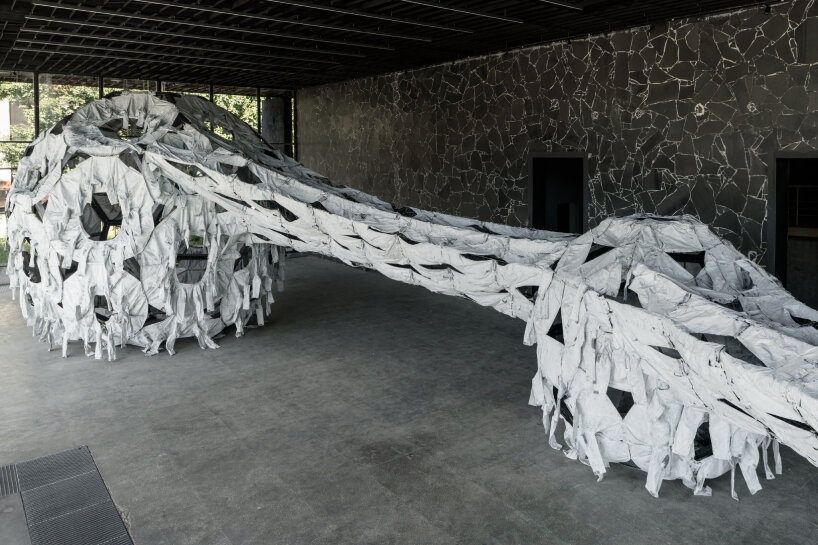
The installation consists of three spheres with perfect geometric proportions, produced with a high mathematical precision reminiscent of Renaissance works. These spheres, with their absolute smoothness and geometric perfection, are covered in white paint that meticulously replicates the pattern of military camouflage uniforms. This fusion of mathematical perfection and warlike covering is the core of Ai Weiwei’s message, with the work being executed manually by the artist and his team, emphasizing direct craftsmanship in expressing an urgent humanitarian cause.
1.2. Historical Reference: The Link to Da Vinci
The profound artistic reference to Leonardo da Vinci’s Divine Proportion is unmistakable to the observer. It represents the pinnacle of rational and humanistic thought during the Renaissance. The mathematical precision of the spheres symbolizes the order, beauty, and logical thinking that humanity has long pursued. Here, Ai Weiwei uses this historical symbol not to showcase achievement, but to confront it with the stark contradiction of the present reality.
Context and Location.. A Dialogue Between Past and Present
2.1. Pavilion 13: An Architectural Frame Laden with History
The impact of the artwork cannot be separated from the site that hosts it. Pavilion 13 in Kyiv is itself an architectural piece carrying a heavy history. The building, constructed in a modernist style in 1967, was designed to display the industrial achievements of the then-Ukrainian Soviet Socialist Republic, its transparent glass walls symbolizing transparency and progress. Today, following its renovation in 2025, this glass frame becomes a witness to a radical transformation; it no longer displays industrial achievements but highlights a sculpture mourning the destruction caused by conflict. The transparency that once symbolized openness has now become a means to display the wound of war to the entire world.
2.2. Evolution in the Artist’s Career: From Raincoats to Camouflage
This work represents a natural evolution in Ai Weiwei’s artistic career. If his previous piece, “Five Raincoats Bearing a Star,” dealt with the idea of protection from the natural elements, the “Spherical Installation” deals with a more complex form of protection: safety from human violence against fellow humans. The symbol shifts from passive protection against rain to a direct confrontation with the machinery of war, showing a development in the artist’s discourse towards oppression and global violence.
Critical and Symbolic Reading.. Beyond the Surface
3.1. Evoking Cognitive Dissonance
The work’s primary strategy is to create what is known as “cognitive dissonance” in the viewer. The audience experiences a shock upon seeing the aesthetic and mathematical perfection of the spheres coated with a symbol of destruction and combat (camouflage). This contradiction pushes the viewer to question how such human beauty and creativity can exist in a world full of conflicts. Can rationality and beauty survive in the midst of war? This is the question the work poses without answering.
3.2. Political Discourse: Art as an Act of Resistance
By deciding to display the work in Kyiv during active conflict, Ai Weiwei transforms from an artist producing works about a conflict from a safe distance to an artist participating in the geographical and psychological space of the conflict. This decision is in itself a political statement. It affirms the role of art as a witness and a means of peaceful resistance. The physical presence in the crisis zone lends credibility and power to the artistic discourse, defying immense security and logistical challenges.
Conclusion: When Form Speaks of Content
Ai Weiwei’s “Spherical Installation” is not just a masterpiece displayed in a gallery; it is a new chapter in the record of art engaged in humanitarian issues. By combining the purest forms of human geometry with the harshest symbols of destruction, the artist creates a work that remains long in the viewer’s memory. It is a reminder of our dual human potentials: the ability to create absolute beauty and the ability to destroy it. The work remains on display until November 30, 2025, inviting the world to contemplate this eternal contradiction.
✦ ArchUp Editorial Vision
The article analyzes Ai Weiwei’s “Spherical Installation,” which employs the contradiction between the geometric idealism of the spheres, inspired by Da Vinci’s proportions, and the reality of war represented by military camouflage. From a design perspective, the work raises a question about its effectiveness in dialoguing with the architectural space of Pavilion 13; the pavilion’s glass walls, despite their historical symbolism, may dilute the sharpness of the installation’s political statement by transforming it into merely an external visual element, potentially weakening the immersive experience and neutralizing the intended message’s severity within its tragic context. However, the relationship between the massive scale of the spheres and the pavilion’s interior space successfully creates a moment of startling visual clarity for passersby outside, instantly linking the idea of the building’s historical architectural achievement with the current destruction.
Brought to you by the ArchUp Editorial Team
Inspiration starts here. Dive deeper into Architecture, Interior Design, Research, Cities, Design, and cutting-edge Projectson ArchUp.