Architectural Innovation in the Modern Era: Where Function Meets Aesthetics

The Evolution of Form and Function in Architecture
Contemporary architecture has undergone a radical shift from the traditional concept that separates form and function. Buildings are no longer just structures designed to meet practical needs—they have become artistic expressions of the spirit of the age and tangible embodiments of technological progress.
This article explores the most prominent trends in modern architecture that skillfully integrate:
- Functional user requirements
- Advanced technological solutions
- Innovative aesthetic expression
- Principles of environmental sustainability
- Modern techniques as design elements
1. The Revolution in Building Materials
New materials have revolutionized architectural design:
- Self-healing concrete: Contains limestone-producing bacteria that automatically seal cracks
- Smart glass: Changes tint based on light intensity to conserve energy
- Transparent solar panels: Turn windows into energy sources without obstructing views
- Cross-laminated timber (CLT): An eco-friendly alternative to steel and concrete
2. Smart Building Systems
Technology has become an inseparable part of architectural structures:
- Interactive facades: Respond to weather conditions to optimize energy efficiency
- Smart ventilation systems: Analyze air quality and adjust airflow automatically
- Integrated energy management: Connects solar panels, batteries, and appliances
3. Passive Design as Architectural Art
Passive design strategies have evolved into aesthetic elements:
- Air domes: Distribute light and ventilation artistically
- Earthen walls: Provide thermal insulation with an organic appearance
- Rooftop and vertical gardens: Create harmony between urban spaces and nature
Case Studies of Pioneering Projects
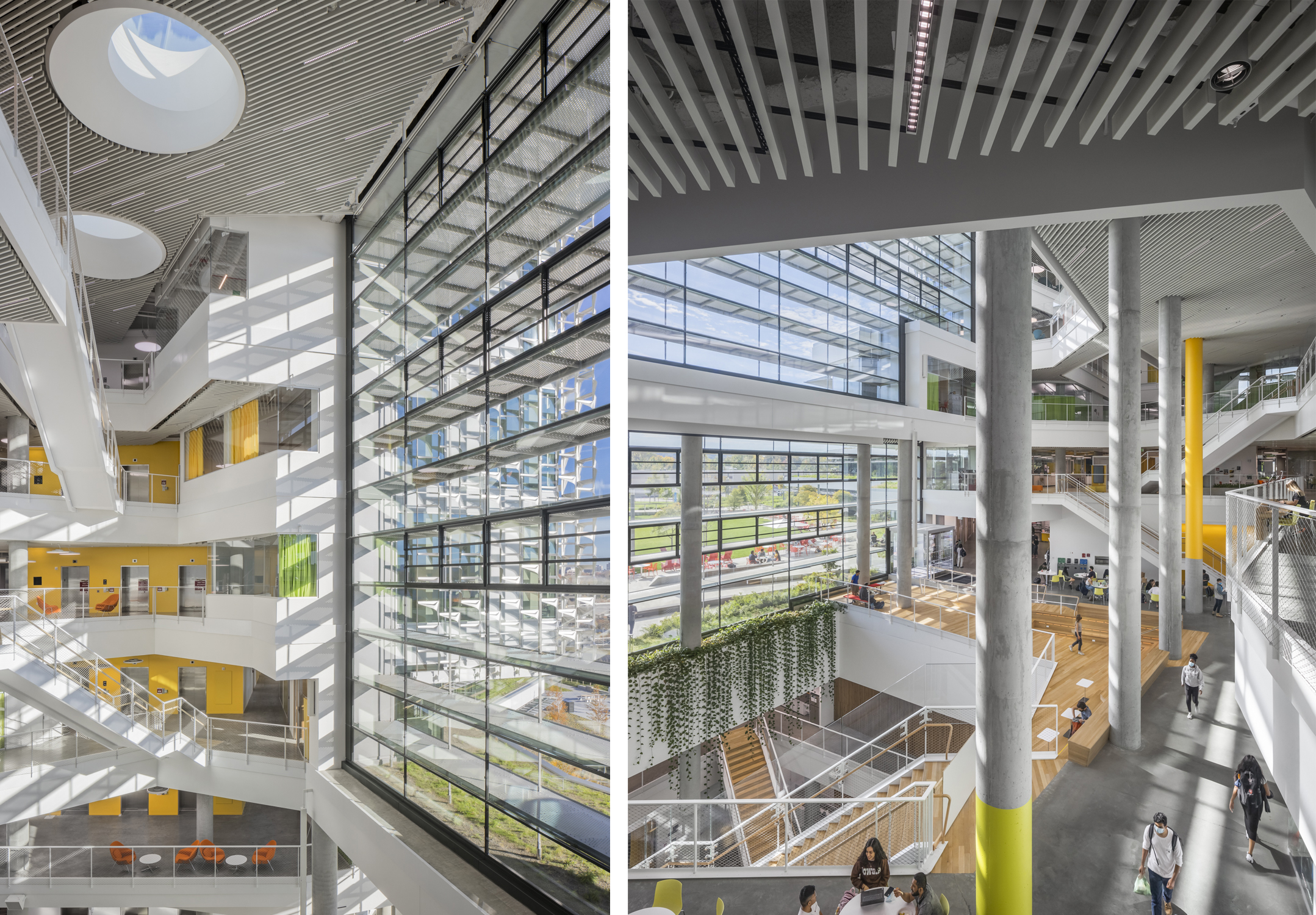
1. Harvard University Science & Engineering Complex
Behnisch Architects | Boston, USA
Key Innovations:
- Multi-layered facade system controlling light and ventilation
- Modular spaces reconfigurable for research needs
- Overhead bridges encouraging interdisciplinary interaction
Aesthetic Aspects:
- Flowing lines reflecting the dynamism of scientific research
- Play of light and shadow through metal screens
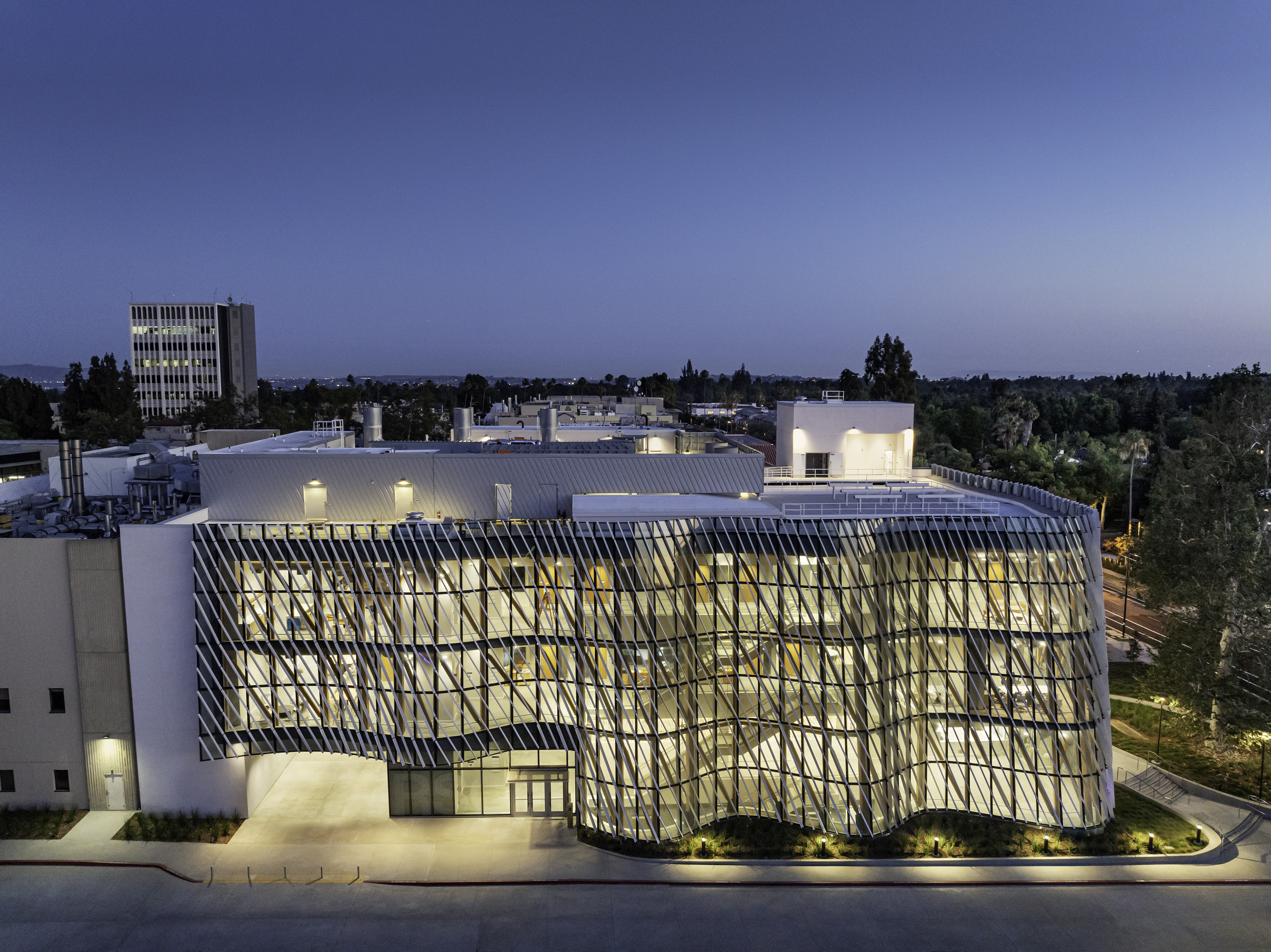
2. Caltech Sustainability Center
Cannondesign | Pasadena, USA
Innovative Sustainable Solutions:
- Wavy facade designed as a mathematical curve tracking the sun’s path
- Integrated rainwater harvesting system
- 60% of structure made from recycled materials
Added Aesthetic Value:
- Organic fluidity mimicking natural forms
- Harmony between geometric lines and green spaces
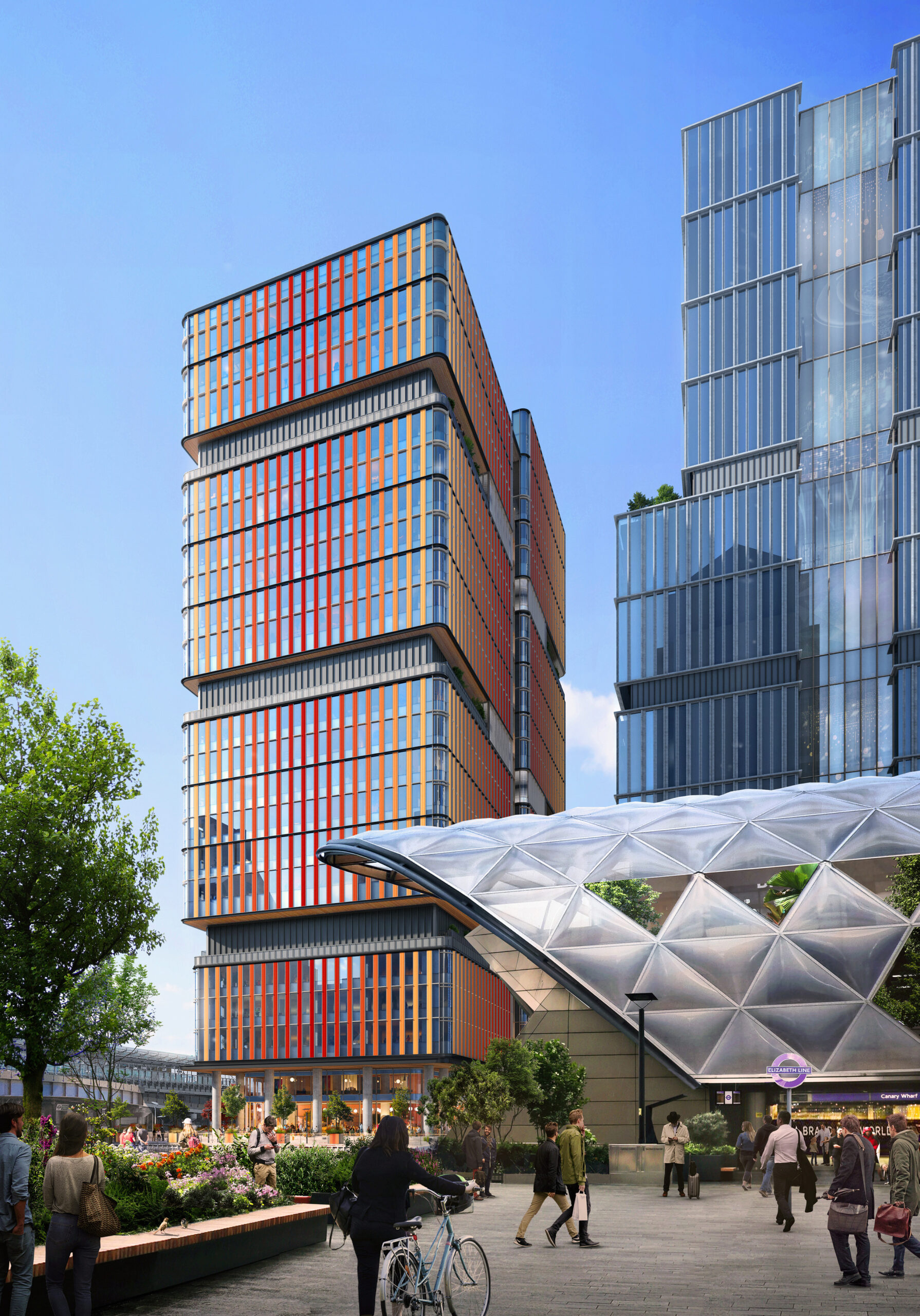
3. London’s North Quay
Kohn Pedersen Fox Associates | London, UK
Technological Innovations:
- Dual-layer facade for climate control
- AI-powered energy management
- Reprogrammable lab spaces
Aesthetic Vision:
- Terracotta color gradient reflecting the site’s industrial history
- Architectural masses harmonizing with London’s modern skyline
The Future of Architecture and Technology
1. Emerging Trends
- Living buildings: Structures that adapt to environmental changes
- 3D printing: Enables unprecedented complex forms
- Productive facades: Generate energy, purify air, and produce food
2. Challenges and Expectations
- Balancing high-tech solutions with affordability
- Preserving human identity in smart spaces
- Developing new standards for architectural quality assessment
Redefining Architecture in the Digital Age
Today, architects can no longer separate functional and aesthetic aspects in their designs. Technology itself has become a design language, enabling unprecedented creative possibilities while achieving unmatched levels of efficiency and sustainability.
The projects we’ve examined prove that the future will see even greater convergence between:
- Science and art
- Technology and nature
- Efficiency and aesthetic expression
This transformation is not merely a technical evolution—it’s a paradigm shift in how we think about the relationship between humans and the spaces they inhabit.
Stay updated on the latest in architectural content—bold projects, trends, and ideas—via the ArchUp platform.