

Architectural Security at $9: NYC Congestion Pricing Policy

Architectural Security begins with access control.
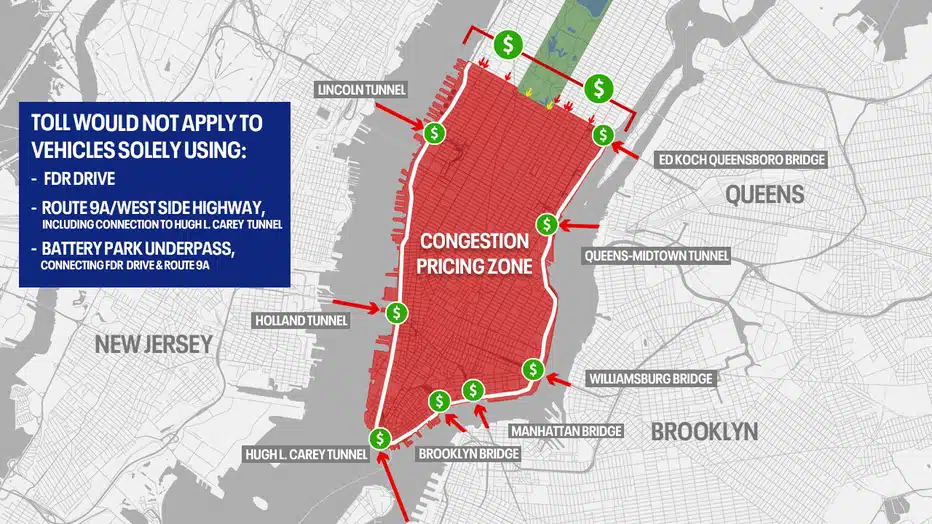
New York City now charges drivers $9 to enter Manhattan’s central business district during peak hours.
This congestion pricing policy reduces traffic and reorganizes urban space.
It treats vehicle flow as a design variable not just a transport issue.

What Is the $9 Fee?
The city imposes the fee to cut car volume.
It does not build more roads.
Instead, it shifts priority to people.
This approach aligns with principles of architectural design that prioritize human movement over mechanical throughput.
It encourages walking, cycling, and public transit.

From Traffic to Urbanism
Cars have dominated street design for over a century.
Removing them downtown unlocks new spatial possibilities:
- Curb space becomes seating or green zones
- Building facades engage pedestrians directly
- Sidewalks grow quieter, cleaner, and healthier
These changes reflect evolving priorities in cities.
They also reinforce Architectural Security by creating observable, legible, and active public realms.
The Street as Civic Infrastructure
Fewer vehicles turn streets into social assets.
New York can now widen sidewalks and add trees.
Pop-up markets, public art, and flexible programming become viable.
This shift echoes findings in current research on adaptive urban form.
Streets are no longer just for movement they are for life.
Transit as the Urban Backbone
The policy only works if transit improves.
Subway stations must be safe, functional, and inviting.
Architects should integrate them visually and programmatically into neighborhoods.
Good transit design supports urban sustainability and strengthens Architectural Security through consistent public presence.
Broader Implications
New York shows that pricing access can reshape space without new construction.
Similar models appear in global precedents found in the archive.
Upcoming events will explore street reallocation as urban strategy.
The approach also informs interior design by blurring indoor outdoor boundaries.
It affects how downtown buildings adapt to pedestrian first contexts.
Ultimately, Architectural Security grows not from walls but from clarity, activity, and human scale.
Architectural Snapshot: New York’s $9 congestion fee transforms streets from traffic corridors into secure, livable spaces proving that Architectural Security thrives when cities prioritize people over vehicles.
✦ ArchUp Editorial Insight
The article frames New York’s $9 congestion fee as an act of Architectural Security a bold but slightly strained linkage. It documents spatial shifts accurately and avoids promotional language, yet leans on familiar urbanist tropes without interrogating equity or enforcement. The internal links feel organic, and the snapshot is sharp. Still, calling pricing policy Architectural Security risks diluting the term into metaphor. That said, it correctly identifies streets as contested space. In ten years, this piece may read less as critique and more as a period document of car-reduction optimism.





✅ Official ArchUp Technical Review completed for this article.