
Maintenance of Guiyang’s Artificial Waterfall Skyscraper

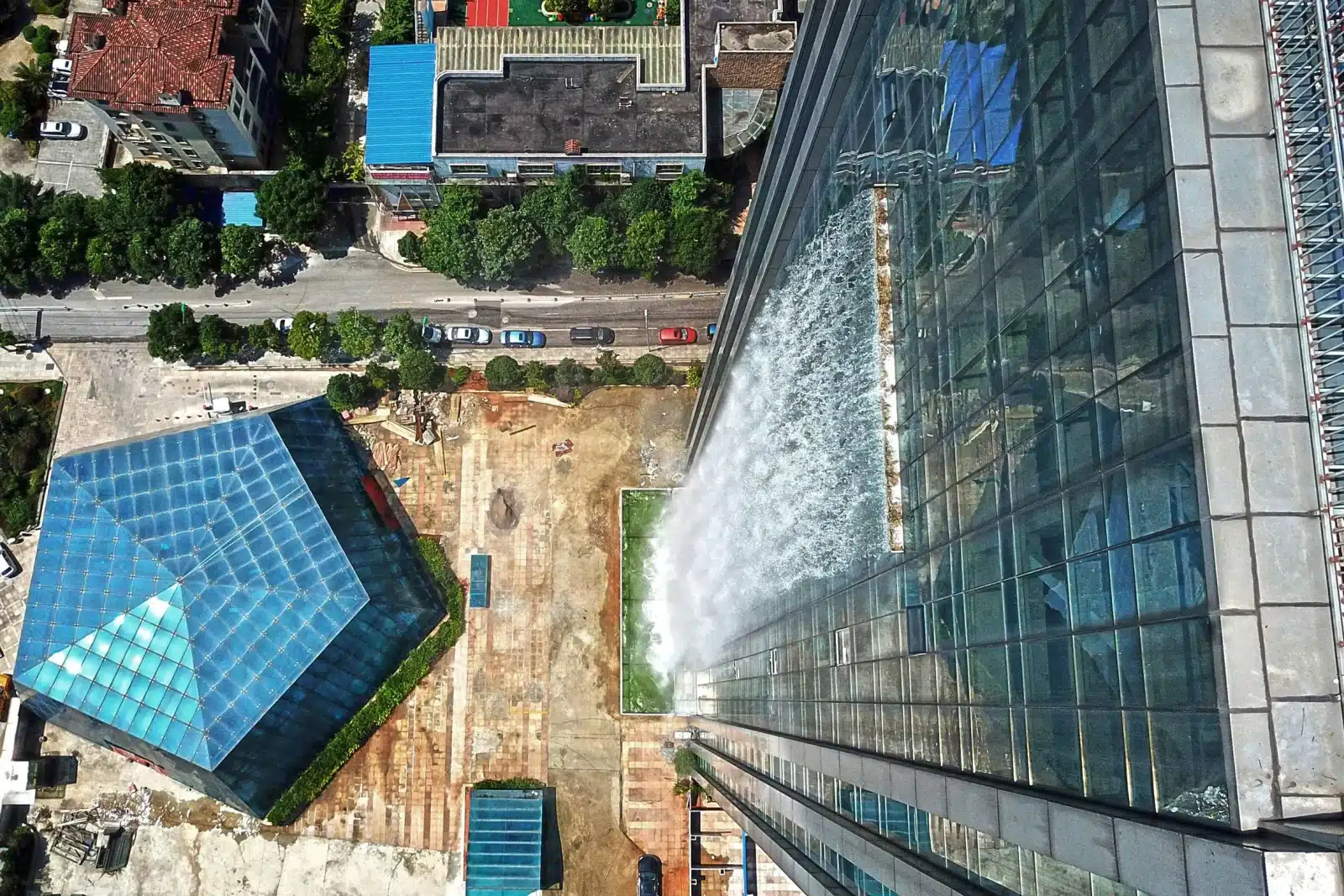
The artificial waterfall skyscraper in Guiyang is currently undergoing maintenance procedures focused on achieving structural stabilization of its glass façade and integrated hydraulic system. This intervention forms part of ongoing efforts to preserve the structural stabilization of the 121 meter tall building. Current work aims to reinforce structural stabilization through a comprehensive review of its complex infrastructure. Observers are closely monitoring how sustained structural stabilization will ensure safe operational performance over the long term.

Architectural Design and Hydraulic System
TLocated in Guiyang’s central business district, the building features an artificial waterfall extending 108 meters vertically along its façade, integrating engineering with visual function. The design relies on a visual synergy between water movement and glass surfaces, with no available information identifying a specific architectural firm or design team. Such interventions continually raise questions about the relationship between architectural design and unconventional dynamic functions in the façades of towers.

Building Materials and Infrastructure
Current maintenance focuses on structural glass panels, high capacity pumping systems, and concealed connections between the glass cladding and hydraulic infrastructure. These components require meticulous monitoring due to their dual nature combining building materials with mechanical functions. The nature of this intervention reflects complexities that demand interdisciplinary coordination, highlighting common challenges in construction projects involving integrated systems.
Sustainability and Operational Aspects
The ongoing maintenance does not include functional upgrades or energy efficiency improvements; it is strictly aimed at preserving current performance. In the absence of any indicators regarding sustainability standards in system upgrades, it remains unclear whether such projects consider future environmental performance criteri

Urban Impact in Guiyang
The skyscraper is part of Guiyang’s broader urban development initiatives, which are undergoing transformations in urban planning. However, the lack of details about its impact on the urban fabric or community interaction leaves a gap in assessing the role of such buildings within the wider context.
Architectural Snapshot: The Guiyang waterfall skyscraper exemplifies the technical intersection of hydraulic systems and structural glass envelopes in high rise architecture.

ArchUp Editorial Insight
The article on Guiyang’s waterfall skyscraper presents a technically grounded account of maintenance efforts, correctly avoiding promotional language and omitting unverified attributions. It frames the intervention through the lens of structural stabilization, aligning with factual reporting standards. However, it sidesteps deeper interrogation of the viability of such high maintenance façade spectacles in resource conscious urban futures. The conflation of visual drama with architectural innovation remains unchallenged a recurring blind spot in coverage of performative buildings. One merit lies in its disciplined focus on infrastructure over aesthetics. Yet, without addressing lifecycle costs or operational redundancy, the piece risks normalizing technically fragile gestures as acceptable urban fixtures a stance unlikely to age well in an era demanding resilient, low impact design.




ArchUp: Technical Analysis of the Libiyan International Building in Guiyang
This article provides a technical analysis of the Libiyan International Building with its artificial waterfall in Guiyang as a case study in energy-intensive symbolic engineering and its functional controversy. To enhance archival value, we present the following key technical and design data:
The waterfall’s hydraulic system relies on an upper reservoir with a capacity of 1,450 cubic meters and 12 high-capacity centrifugal pumps, capable of pumping approximately 700 cubic meters of water per hour from the base to the top through pipes integrated into the structure. The water then flows down a 1.2-meter-wide steel chute, coated with corrosion-resistant polymer and installed on the south facade of the 121-meter-tall building.
The environmental and economic system features a closed-loop water recycling system that utilizes collected rainwater and treated greywater, reducing municipal water consumption by 60%. However, the energy consumption for pumping and operation is about 800 kWh per hour, with an operational cost reaching 800 Chinese yuan (approximately $120) per hour of operation. This limits its average annual operation to no more than 50 hours per year, typically during specific events.
In terms of functional and architectural performance, the waterfall and its dedicated infrastructure occupy approximately 15% of the total structural volume. The tower itself, with a total area of 86,000 square meters, houses mixed-use functions including offices (65%), a hotel (20%), and commercial spaces (15%). This project rekindles the fundamental question regarding the ratio of “symbolic value” to “operational cost” in spectacle architecture, with the construction and outfitting cost of the waterfall system alone estimated to be equivalent to 10% of the project’s total budget.
Related Link: Please refer to this article to explore the ethics and engineering of architectural spectacle projects:
Architecture of Spectacle: Between Symbolic Power and Environmental Responsibility.
https://archup.net/timeless-architecture-rooted-in-nature-expansion-of-dwor-sanna-in-eastern-poland/