Asia Design Prize 2027

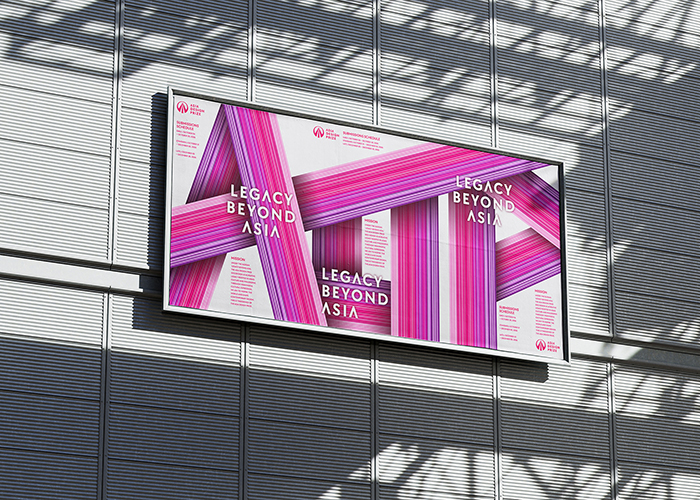
Asia Design Prize 2027 includes spatial and architectural work within a wider international design award. For architects, the decision to enter should begin with the total financial commitment and the ability to explain spatial quality within a compact visual format. The award offers recognition; the reviewed announcement does not promise construction or a cash prize.
Entry essentials
| Organizer | DESIGNSORI |
| Deadline | 30 December 2026, 15:00 UTC |
| Standard entry through 2 December | Company USD 280; professional USD 240; student USD 60 |
| Late entry | Company USD 320; professional USD 290; student USD 75 |
| Additional finalist fee | Company USD 690; professional USD 640; student USD 185 |
| Eligibility | Worldwide; up to five team members; student status extends one year after graduation |
Budget beyond the entry price
Standard entry plus finalist judging totals USD 970 for a company, USD 880 for a professional and USD 245 for a student. Late-entry totals are USD 1,010, USD 930 and USD 260 respectively. Shipping and ceremony participation are additional. These are conditional participation costs, not prizes or an estimate of the chance of winning.
Submission and jury
The spatial category requires 2–3 image-only JPG panels; up to three supplementary panels may carry text and lines. Follow the official size and file limits. The announced jury chair is Tetsuya Matsumoto, with aesthetics, uniqueness and practicality as the evaluation criteria. The organizer’s press release describes an international jury including Hyunsun Kim and Miki Orihara.
Audit findings
The rules list an opening date of 31 October, while the organizer’s launch article says 6 October. This historical discrepancy does not alter the consistent 30 December deadline. The published 24:00 KST cutoff means the end of 30 December in Korea, equivalent to 15:00 UTC that day; it must not be interpreted as the start of that Korean calendar date.
Terms and limits of review
The public refund policy generally excludes refunds after completed registration, with exceptions for payment errors or duplicate payment. The general website terms say user-post copyright remains with the user. Applicants should still read the specific publication consents presented during submission. This review covers the current rules, official launch announcement, jury page and public account terms; it does not claim to have inspected an entrant’s private dashboard.
ArchUp assessment
The image-led format makes selection unusually important. Two pictures that repeat the same attractive interior tell the jury less than a carefully chosen pair showing spatial organisation and everyday occupation. An architectural entry should make its scale, thresholds and context understandable before relying on mood.
The supplementary material is where the architect can explain what photographs alone conceal. A section can establish the relationship between daylight, structure and circulation. A simple sequence can show how a public space changes between quiet and crowded periods. These are editorial suggestions, not additional submission obligations.
Practicality is a useful criterion only when supported by evidence appropriate to the project. For a built interior, that may include accessibility and maintenance decisions. For a concept, it may mean an honest account of assumptions and unresolved technical questions. A realistic rendering should not be allowed to blur the distinction between these two levels of evidence.
The financial model deserves attention before a studio commits. Reaching the next round creates a further cost, so the initial fee is not a complete participation budget. A small practice should decide in advance what professional audience it hopes to reach and how much it is prepared to spend on that objective.
Our assessment is selective rather than universal: this can suit designers seeking visibility across architecture, interiors and other design disciplines, provided their work communicates well within the format and they accept the full fee structure. It is less compelling for someone seeking funded research, construction opportunities or a monetary award.
Transparency about additional fees is more useful than a general promotional promise of exposure. We would judge the opportunity against a practice’s existing portfolio, target market and documentation readiness, rather than treating an award logo as a substitute for demonstrable architectural performance.
Reviewed 24 November 2026. Sources: Rules and fees · Official launch and jury · Account terms and refund policy
Official 2027 promotional poster: Asia Design Prize / DESIGNSORI. Visual direction credited by the organizer to Yena Choi / BFORBRAND.
Submission deadline
Deadline: 30 December 2026 at 15:00 UTC, equivalent to the end of 30 December in Korea.