Bahía de Banderas House: Architecture in Harmony with the Sea and Nature

The Sea as the Center of the Architectural Experience
From the very first moment a person opens the main doors with their hands, the sea emerges as a central element in the house’s design. This vision reflects the owners’ desire to create a fully integrated visual experience, where the natural landscape is revealed instantly and in a single motion, enhancing the harmony between the interior and exterior spaces.
Location and Area
The house is located in Bahía de Banderas, Mexico, on a plot measuring 2,350 square meters. It was designed to suit the needs of a retired foreign couple, with a focus on creating a tranquil environment connected to the surrounding nature.
Interaction with Nature
The design demonstrates how architecture can guide the sensory experience of residents through simple elements, such as opening doors, making the sea not just a backdrop but a part of everyday life in the house. This highlights the importance of integrating the natural environment into architecture in a direct and visually unobtrusive manner.


Architectural Design Philosophy
The design of this project, undertaken by o.d.e. (Oficina Documental de Espacio) in collaboration with BT DEV and constructed by TUCA, originates from a central idea: shaping the act of dwelling around contemplation and harmony with the place.
Historical Inspiration
The project’s conceptual approach clearly reflects the influence of earlier works, particularly Giorgio de Chirico’s Piazza d’Italia with Fountain (1969). This historical reference allows the house to blend tradition with contemporary innovation, creating a profound residential experience connected to the visual memory of global architecture.
Sensory Experience
Through this approach, every element in the residence becomes a means to enhance spatial awareness and personal contemplation, transforming dwelling from a simple functional act into a sensory and intellectual journey simultaneously.


The Influence of Italian Art on Architecture
References to the works of Italian painters point to the adoption of symmetrical, calm, and contemplative architecture. In this context, proportions, silence, and geometry become tools to deepen the contemplative experience within the house, reflecting a balanced relationship between form and function.
Central Axis and Spatial Organization
The house’s layout is based on a central axis, represented by a gallery that organizes and connects the various spaces. This design distributes rooms logically: the bedrooms are located at the peripheries, while the social areas occupy the rear, creating a natural gradient between privacy and openness.
Views and Natural Ventilation
Through this organization, vistas are oriented directly toward the bay, while cross ventilation is enhanced, ensuring thermal comfort and a living experience in harmony with the surrounding environment.

The Sea as a Constant Element in the Residential Experience
In this way, the sea becomes a constant presence in daily life, where the natural environment seamlessly integrates with the everyday use of the house.
Openness and Privacy
The social areas, such as the living room, dining room, and kitchen, open fully toward the natural scenery, enhancing the sense of openness and connection with the surrounding environment. In contrast, the bedrooms are oriented to the north, with specific views toward the side courtyards, providing privacy without compromising climatic comfort.
Leveraging Community Requirements
The community’s requirement for sloped roofs was embraced as a design opportunity, adding both aesthetic and functional value. These roofs enhance natural ventilation and lighting while contributing an architectural character harmonious with the house’s surroundings.


Wooden Roofs and Mexican Tradition
The gabled wooden roofs inside the house pay homage to traditional Mexican architecture, while being reinterpreted in a contemporary, refined, and timeless language. This blend of heritage and modernity reflects a deep appreciation for craftsmanship and architectural history.
Flow Between Interior and Exterior
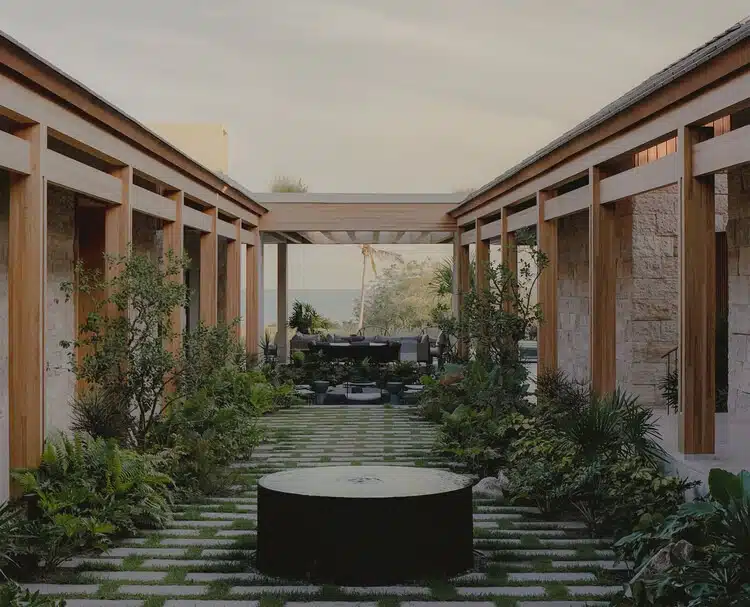
The galleries and corridors connecting the indoor and outdoor spaces act as seamless transitional channels, creating an ongoing dialogue between enclosed areas and the garden. This organization enhances harmony between nature and architecture, providing a fully integrated and sensorial residential experience.


Architectural Rhythm and Visual Connectivity
These elements contribute to creating a rhythmic sequence of slender wooden columns and light roofs, forming an elegant structure that enhances visual connections with the gardens and the bay. This approach reflects attention to detail and makes movement within the house enjoyable and closely connected to the surrounding nature.
Interior Design and Materials Used
Regarding the interior design, Adriana Olmedo, in collaboration with the homeowner, selected materials that interact harmoniously with the natural surroundings. These materials foster a warm, locally rooted atmosphere and create a cohesive architectural identity that balances comfort with environmental beauty.


Natural Materials and Aesthetics
Cantera stones, wood, and marble contribute to a harmonious palette within the house, chosen not only for their beauty but also for their thermal properties, providing lasting comfort for the residents.
Custom Furniture and Spatial Unity
Custom-designed furniture enhances the relationship between the space and its inhabitants, creating a more integrated and comfortable living experience. This approach demonstrates how design can seamlessly connect functionality with aesthetics.
Garden Design Inspired by the Environment
The garden design draws inspiration from the local ecosystem, resulting in a conscious and natural landscaping strategy implemented in collaboration with Estufa Forestal. This approach integrates nature into the architecture and promotes sustainability and environmental interaction within the house.

Native Plants and Sustainability
Locally adapted plant species were selected with the goal of creating a resilient and stable garden that blends seamlessly with the surrounding environment. This choice reflects a commitment to sustainability and the preservation of the area’s natural fabric.
The Sea as a Fundamental Element in the Residential Experience
Architects Andrés Guzmán, Alejandro Gutiérrez, and Rafael Barbato from o.d.e. note that “their wish was to open the main doors with both hands and be immediately greeted by the sea.”
With this design, the sea transforms from being merely a backdrop into an essential daily element, contributing to the shaping of the residential experience and enhancing the sense of openness and harmony with the surrounding nature.

✦ ArchUp Editorial Insight
It can be said that the Bahía de Banderas House offers a distinctive architectural experience in terms of harmony with the sea and nature, as well as attention to both interior and exterior details, reflecting an artistic sensibility and awareness of the surrounding environment. On the other hand, the project remains limited in certain practical aspects, such as the potential for more dynamic use of interior spaces or adaptation to the needs of different users over the long term. Overall, the house leaves a refined aesthetic impression, with some reservations that do not diminish the value of the visual and environmental experience it provides.
Prepared by the ArchUp Editorial Team
Don’t miss the chance to explore more from Architecture in fields like Buildings and Interior Design on the ArchUp website.