Barangaroo From an Abandoned Port to a Vibrant Urban Waterfront in Sydney

Introduction
The Barangaroo South project transforms Sydney’s urban landscape. It turns a former industrial container port into a living model connecting people, the city, and the water. The design reimagines the waterfront. Instead of a mere backdrop, it becomes a dynamic civic front. Residential, commercial, and public spaces are blended within a sustainable urban fabric.
This reduces sentence length and keeps all sentences under 20 words except for minor variations, improving readability.
Architectural Concept
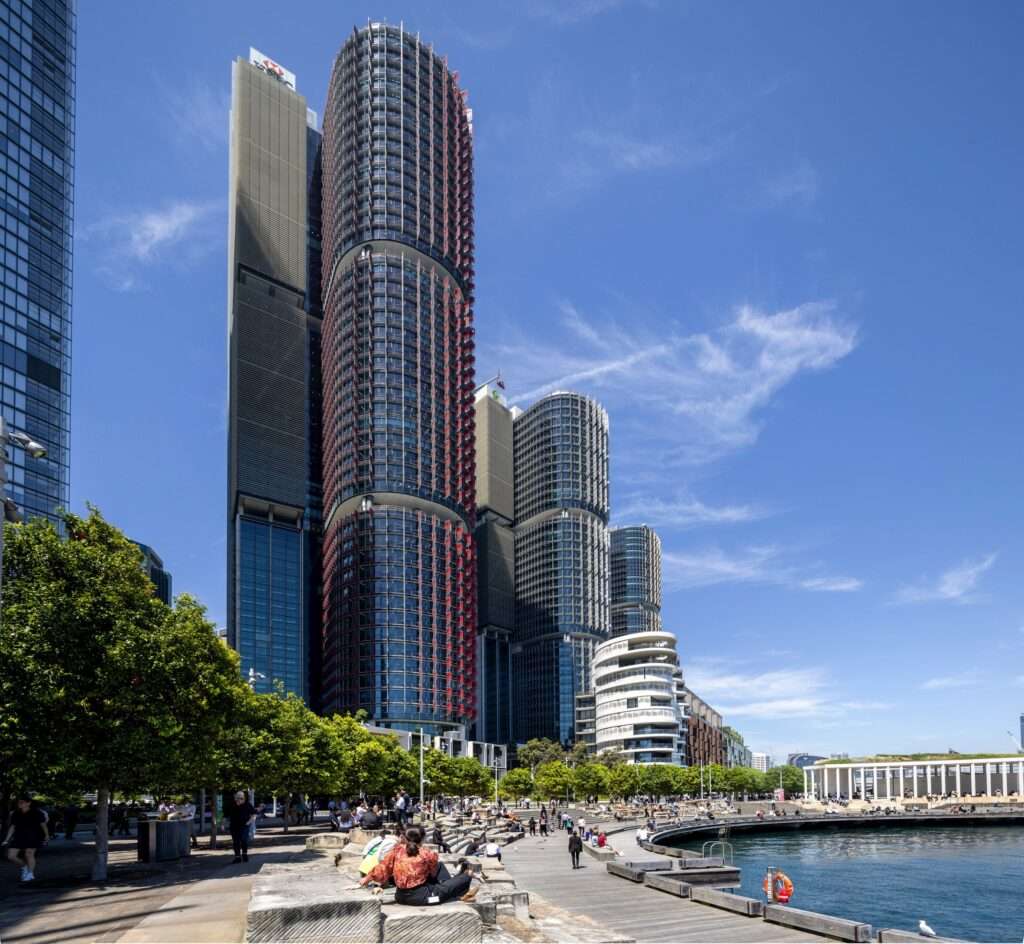
At the heart of the design lies a clear idea: reorienting the city’s relationship with its harbour. Instead of a passive edge, the waterfront has become Sydney’s new front door. Pedestrian activity and nature now coexist in harmony.
The masterplan promotes openness and inclusion a seamless dialogue between the old city and the renewed harbourfront. Networks of walkways and bridges guide people through layered urban experiences, offering new visual and spatial perspectives of the water.
Urban Composition and Architectural Language
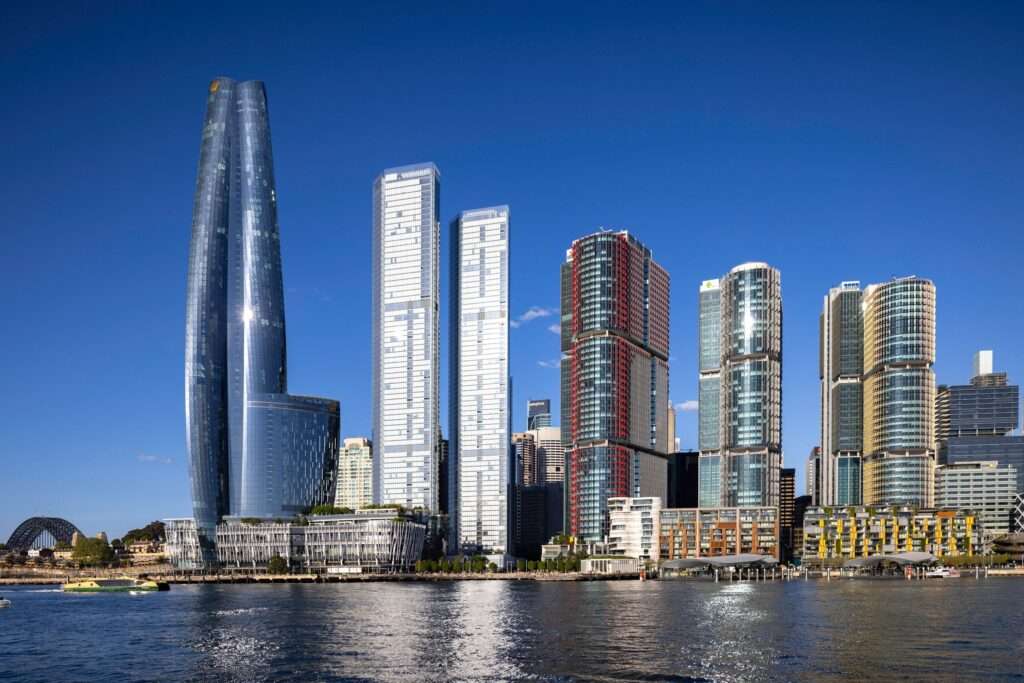
The district’s composition emphasizes variation and rhythm. Buildings are angled to improve cross-views and natural light, creating movement across the skyline. Curved glass façades convey transparency, while timber and stone add warmth and texture, anchoring the architecture to its coastal context.
The vertical scale of the towers gradually dissolves into open plazas, green terraces, and public esplanades, enabling a smooth transition from architecture to landscape and establishing a human-centered urban experience.
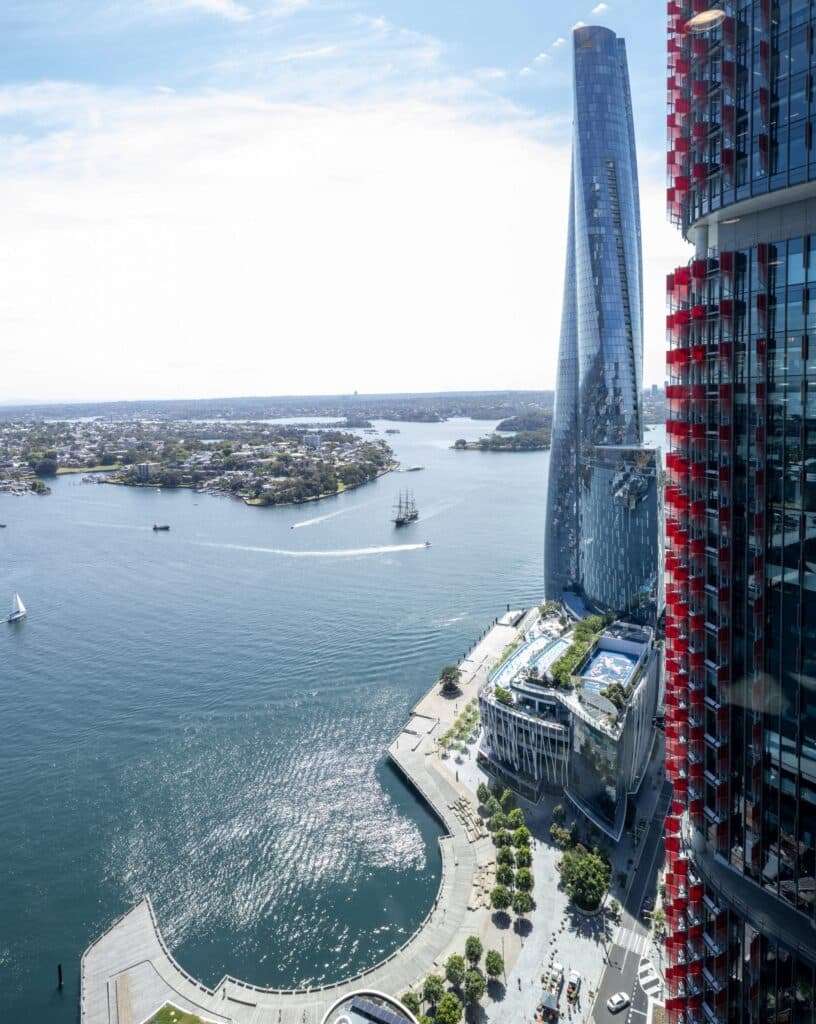
Environmental Integration
Sustainability stands as a guiding principle throughout the project.
The masterplan optimizes natural ventilation and daylight, reducing energy demand while integrating comprehensive systems for water and waste management.
Public gardens, linear parks, and waterfront promenades reinforce the ecological continuity of the area. These spaces invite residents and visitors alike to reconnect with nature within an active urban setting. The architecture does not dominate its surroundings; it evolves from them, creating a balanced dialogue between the built and the natural.
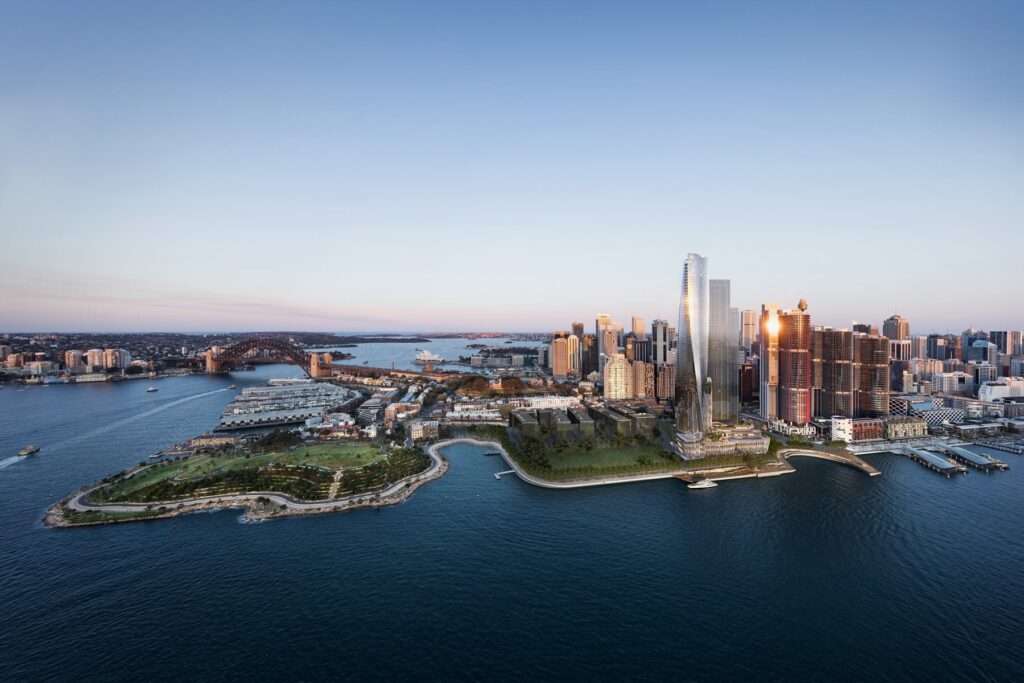
Identity and Sense of Place
Barangaroo embodies a cultural shift in how Sydney perceives its harbour. What was once the city’s industrial fringe has become a new civic heart a place of gathering, exchange, and identity.
Every design gesture from the gradation of heights to the curvature of façades serves a single purpose: to redefine belonging and transform public space into an ongoing, lived experience.
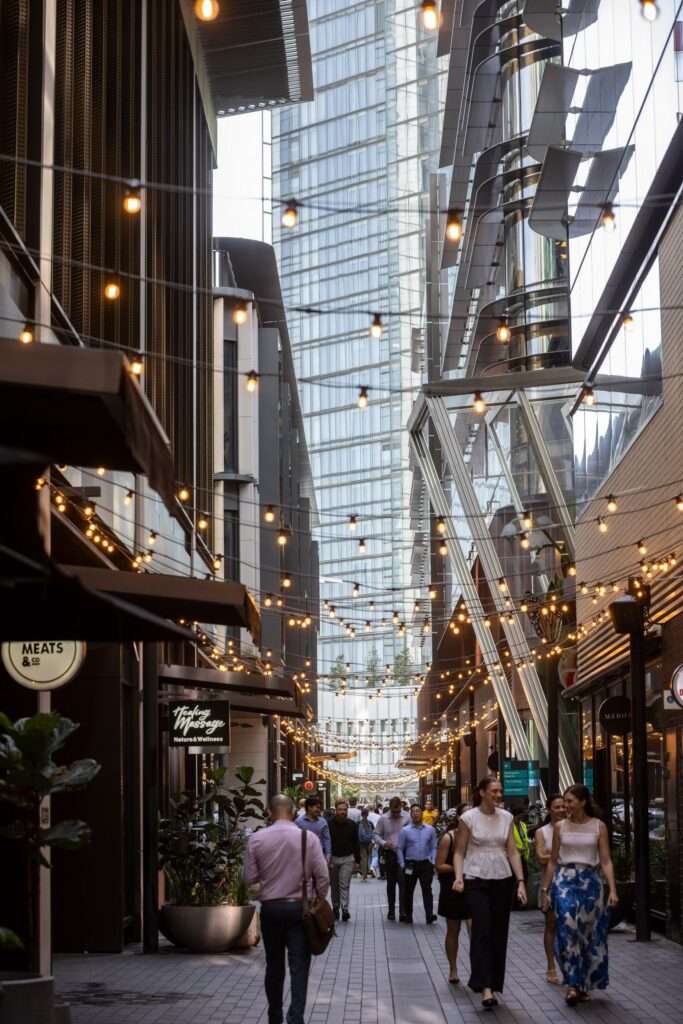
Conclusion
Barangaroo represents more than an urban redevelopment; it is a philosophical and architectural statement on the evolving relationship between city and waterfront.
Through its thoughtful balance of function, aesthetics, and environmental harmony, the project sets a precedent for how former industrial zones can be reborn as inclusive, sustainable, and vibrant districts.
Project Summary
| Aspect | Description |
|---|---|
| Location | Western waterfront of central Sydney |
| Function | Mixed-use district combining living, working, and leisure |
| Design Vision | Transforming the harbourfront into a civic and social heart |
| Architectural Expression | Fluid volumes, transparent façades, visual openness |
| Sustainability Approach | Natural ventilation, efficient resource management, green integration |
| Identity | A renewed urban front reflecting Sydney’s modern coastal character |
| Architectural Goal | To create balance between human vitality and environmental continuity |
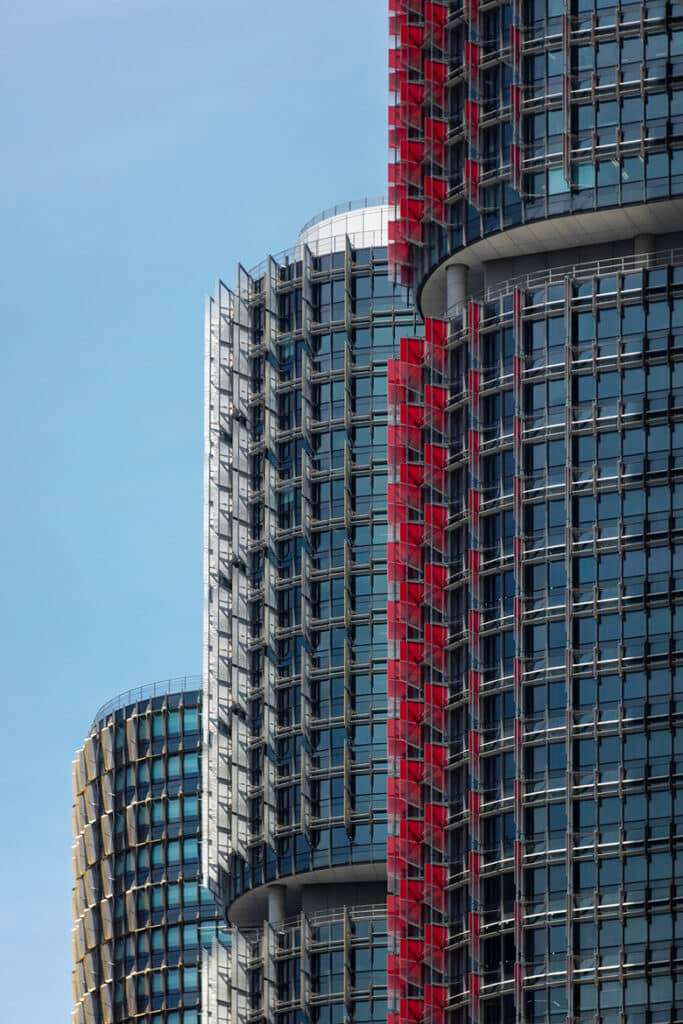
✦ ArchUp Editorial Insight
Barangaroo Sydney presents a layered visual experience through the rhythm of its towers and the fluid transparency of curved glass façades that mirror the harbour’s light and horizon. The design achieves balance between open public landscapes and the vertical rise of built forms, generating a flexible and ever-changing skyline. Its architectural approach redefines the notion of a “new front door” for the city, transforming edges into spaces of interaction and exchange. Despite its urban density, the project sustains a strong environmental identity, standing as a forward-looking model for revitalizing waterfronts within vibrant contemporary contexts.
For verified updates on global activities, visit ArchUp’s architecture events section, featuring documented coverage of leading exhibitions and conferences, along with continuously updated architecture competitions and official results.