Basketball court design by recycling shoes

Basketball court design by recycling shoes,
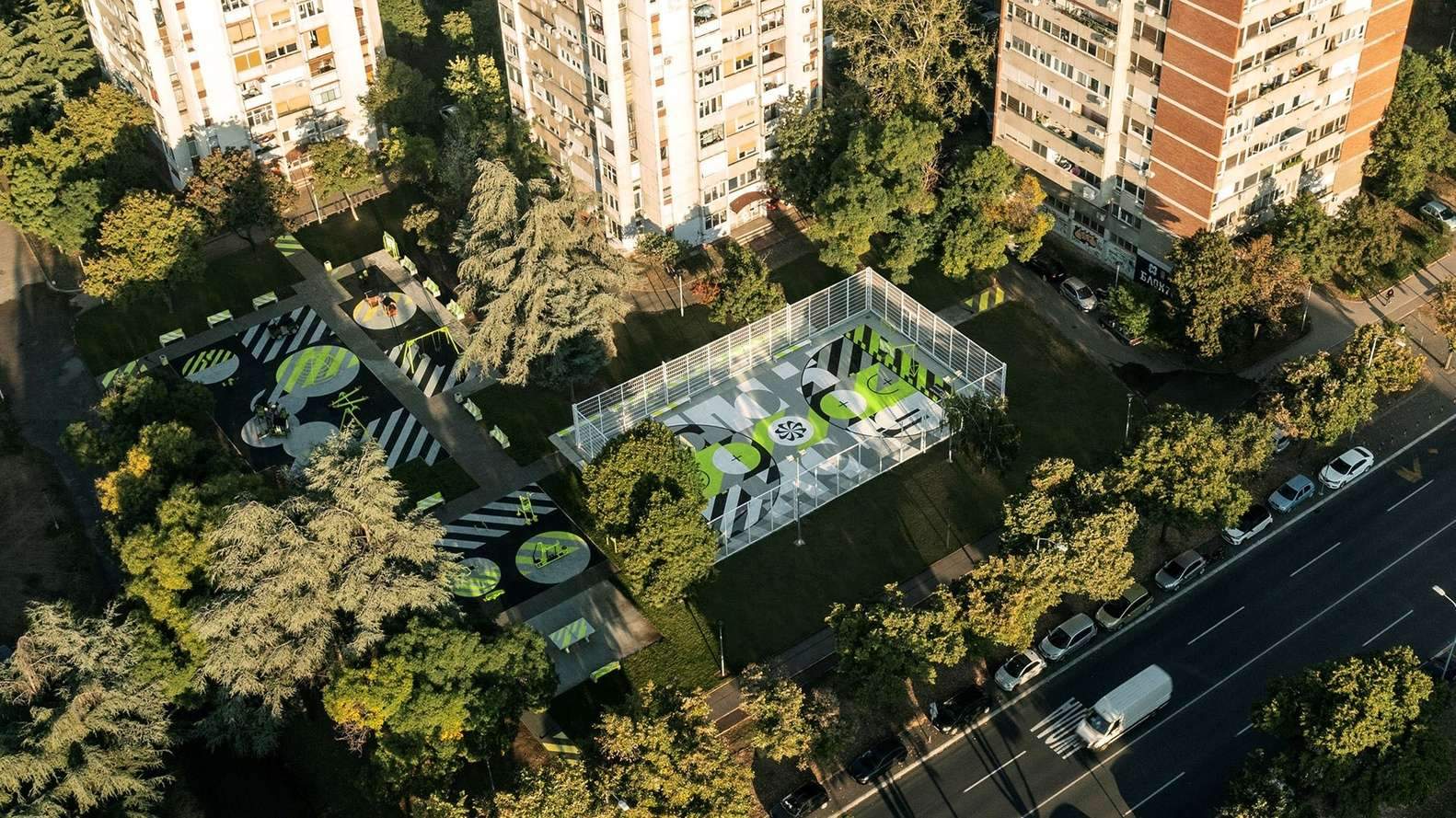
Creative agency Accept & Proceed has designed a new basketball court by recycling 20,000 sneakers in New Belgrade, Serbia.
The stadium is Nike’s, and is designed in the spirit of Go to Zero,
and includes the base court, children’s playground, grandstand seating, chain link fence, outdoor gym,
collection boxes, in-store campaign attendance, and reclaim items.
The renovation aims to revitalize the local neighborhood while providing a space for play and sports among children and adults alike.

Design Features
The team of architects made renovations inside the stadium area, where the existing fitness equipment
and garden furniture provided by the municipality were completely renovated
and given the same color palette as the stadium.
Graphic elements on the ground are also marked with bright danger lines to identify different play and gym activities.
At the same time, a network of common areas was formed for children and adults of all ages to participate in sports and each other.
Nike ran their own sustainability initiative, which had the team of designers design their own go-to-zero brand in the design of the stadium in New Belgrade.

It also gave them incredible inspiration to know that determination, community and responsibility for the planet were all key components of this project.
The lead designer of the project noted that Block 70 was chosen for its deep history with basketball,
in order to continue the outstanding project.
The visual language was developed to give it Nike’s Move to Zero identity by incorporating detailed Serbian letters into signs to celebrate the new Belgrade and the local community.
The team of architects had an interesting exercise that challenged their thinking in sports spaces to answer the following question:
What if the basic components of a basketball court were broken and a traditional stadium design re-imagined?
How can you create a space that is fun and unexpected, while still retaining clarity and playability?

It was cool to come up with the different elements of the letters that could serve another function,
like a free throw or a half field line.
The design will influence the spirit and energy of the community in Block 70,
as well as inform the players’ movements.
Block 70 was created in part from as many as 20,000 old sneakers donated by the local community,
and by reusing the shoes destined for landfills, was the goal of Nike’s sustainability initiative.
Since the primary goal of the initiative was to turn manufacturing scrap and end-of-life footwear into recycled materials,
A&P developed graphic elements and messages for the six-month campaign.