
Beijing Library Honored at AIA Hong Kong Awards 2025

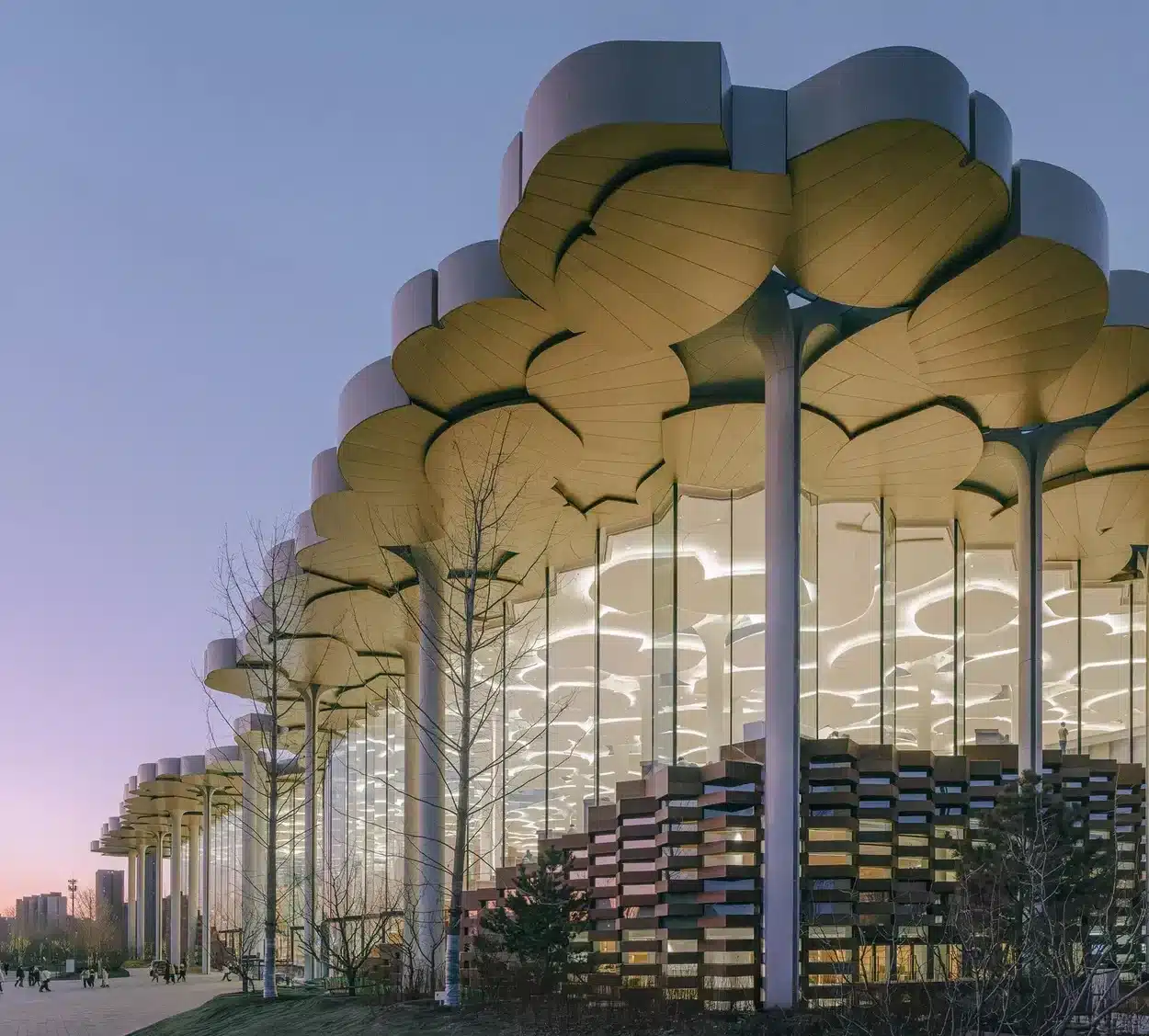
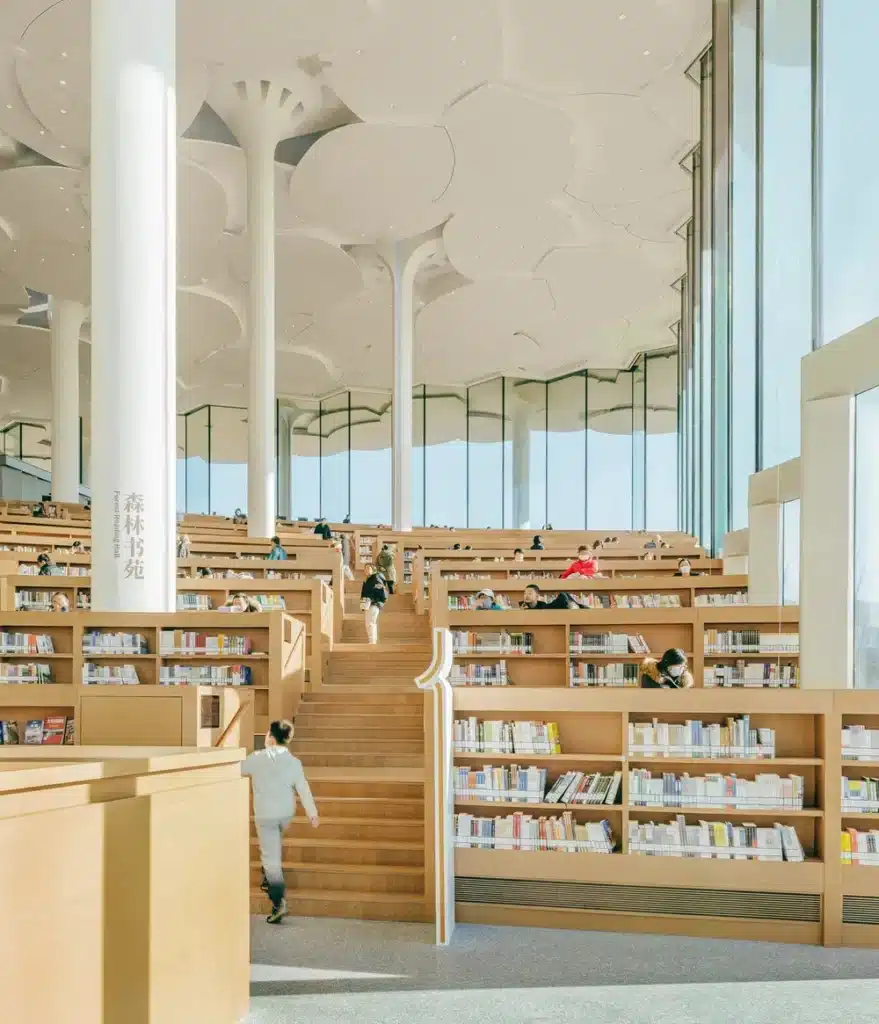
Beijing Library has received two distinctions at the AIA Hong Kong Honors & Awards 2025. Opened in December 2023, it ranks among the world’s largest public reading spaces. The project tests how libraries can serve as social infrastructure. Its design combines spatial flexibility, environmental responsiveness, and accessibility within Beijing’s new sub-center.
Design Concept
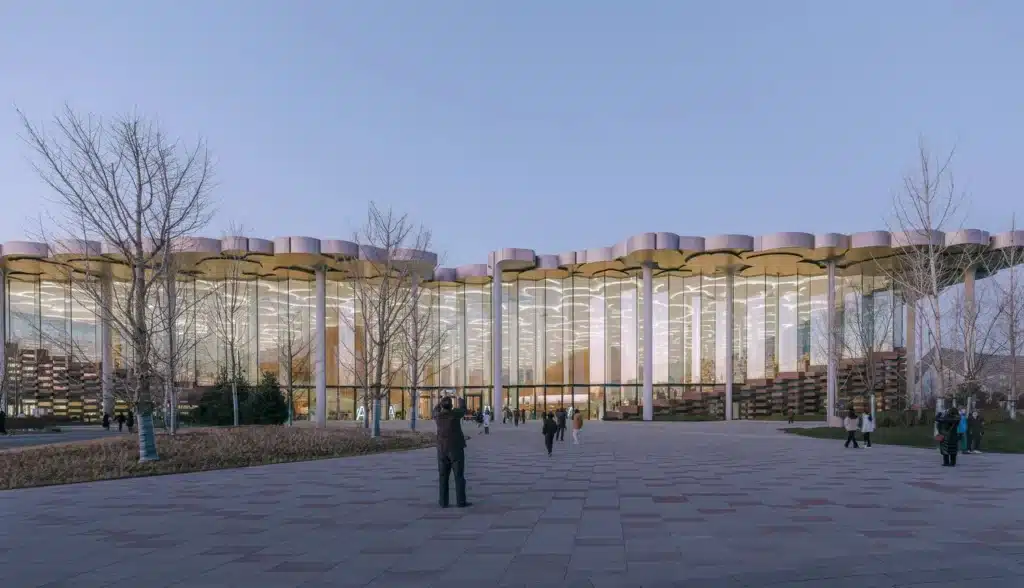
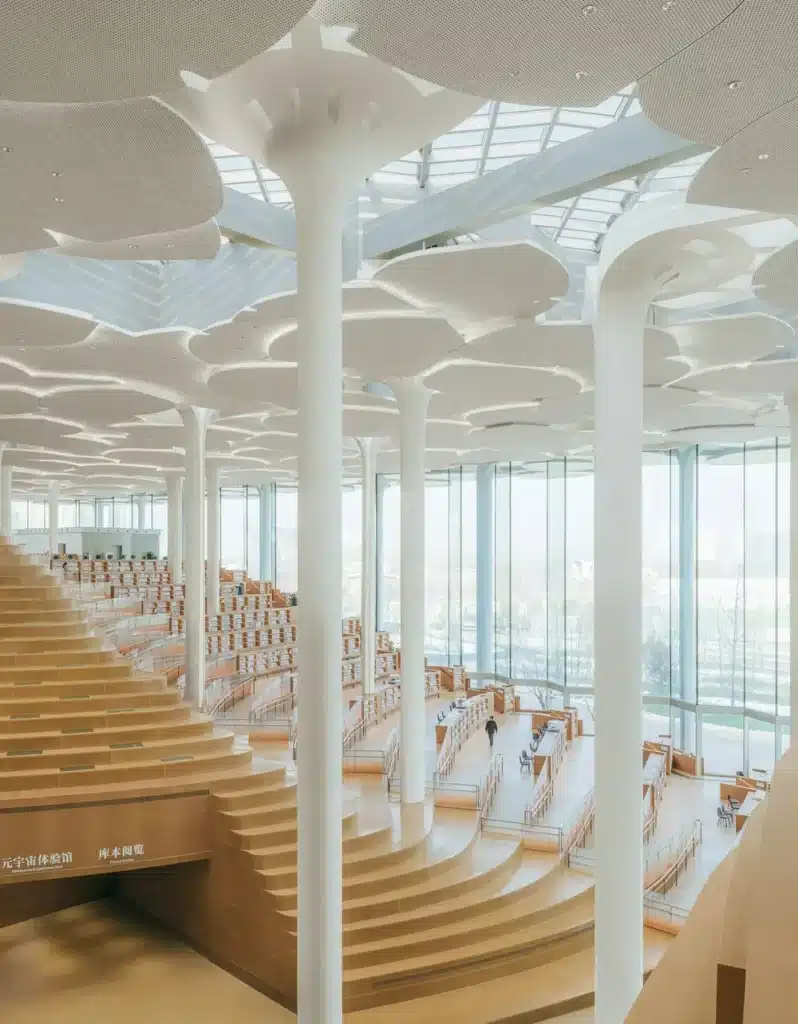
The structure rejects monumentality. Instead, it uses layered reading zones and interconnected atriums. These encourage movement and informal gathering. This reflects a global shift in architectural design. The Beijing Library enables visual continuity between interior spaces and surrounding public areas.
Materials & Construction
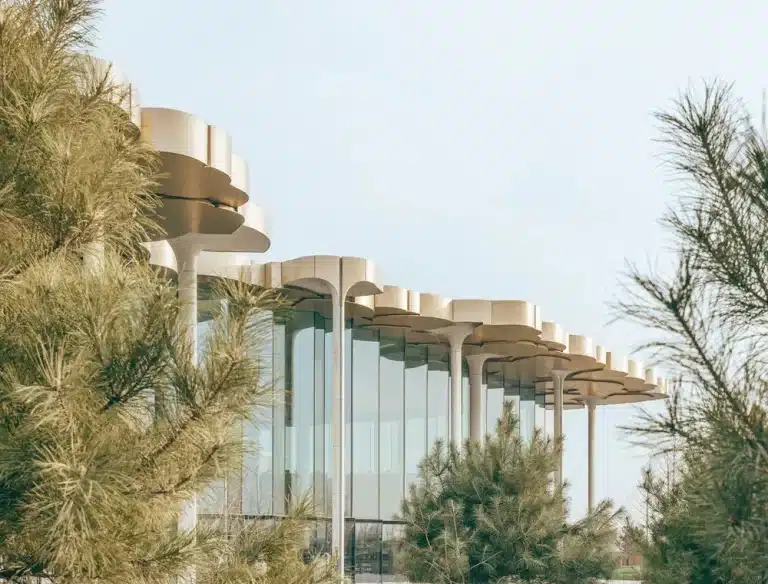
Steel and glass form the façade. Both materials were sourced locally to support contextual dialogue. Prefabricated components reduced on site waste and sped up assembly. This approach aligns with low impact standards for building materials. It also supports efficiency in large civic buildings.
Sustainability
The project won the Sustainable Design Award. It uses passive cooling, daylight harvesting, and efficient mechanical systems. These meet regional benchmarks for low-carbon public architecture. More on such strategies appears in ArchUp’s sustainability coverage.
Urban Impact
The Beijing Library sits in a fast developing district. It influences pedestrian flow and nearby construction. Beyond storing books, it functions as a daily public room. ArchUp’s cities section often explores how such spaces shape urban dynamics.
Architectural Snapshot: As digital reading grows, can physical spaces like the Beijing Library still sustain meaningful human presence?
A multi-level civic library in Beijing merges passive environmental systems with daylight rich interiors to redefine shared learning in the digital age.
ArchUp Editorial Insight
The article presents Beijing Library as a civic experiment in post-digital public space, framed through award recognition rather than independent critique. It relies on institutional validation AIA Hong Kong as its primary legitimacy, echoing a broader trend where architectural journalism substitutes honors for analysis. While the text accurately notes spatial strategies and material choices, it avoids questioning the library’s actual public accessibility, operational model, or socio political context within China’s urban governance. Still, its concise focus on passive environmental systems offers a rare technical anchor amid celebratory noise. Yet without addressing who truly uses such grand civic gestures and who doesn’t the narrative risks becoming archival decor rather than architectural documentation.





ArchUp: Technical Analysis of Beijing Library
This article provides a technical analysis of the Beijing Library, winner of the 2025 AIA Hong Kong Awards, as a case study in contemporary civic library design and environmental integration. To enhance archival value, we present the following key technical and design data:
The structural system is based on a primary steel framework with 186 slender white sculptural columns, supporting an expansive steel and glass roof with a total area of 30,000 square meters. The building dimensions are 170 meters long, 70 meters wide, with a total height reaching 47.5 meters. The use of 85% prefabricated structural components reduced construction time by approximately 25% compared to conventional methods.
The environmental and lighting system features a roof design with calculated dynamic openings that allow 95% of the main reading areas to receive direct natural light while controlling direct sunlight to minimize glare. The cooling system employs a hybrid passive-active approach including chilled beams and variable air volume (VAV) air conditioning, which contributed to reducing the building’s overall energy consumption by 40% compared to local building standards.
In terms of functional and urban performance, the design enhances urban integration by allocating 35% of the site area to public plazas and pedestrian pathways. The library has a maximum capacity of 12,000 visitors per day and offers storage space for up to 6 million books, distributed across 7 staggered floors that create a continuous circulation path. The design achieves an 82% efficiency in the allocation of interior space for public and cultural purposes.
Related Link: Please refer to this article to explore the evolution of library design as social spaces:
The Library of the Future: From Static Archive to Dynamic Community Hub.
https://archup.net/george-street-plaza-community-building-cultural-heritage/
🚨 Final Editorial Warning:
The ✦ symbol is a core and non-negotiable part of the ArchUp Editorial Insight. Any analytical section published without the ✦ icon will not be accepted under any circumstances. This is a fundamental element of ArchUp’s editorial identity.