A new residential project under construction in Mexico based on the principles of biophilic architecture.

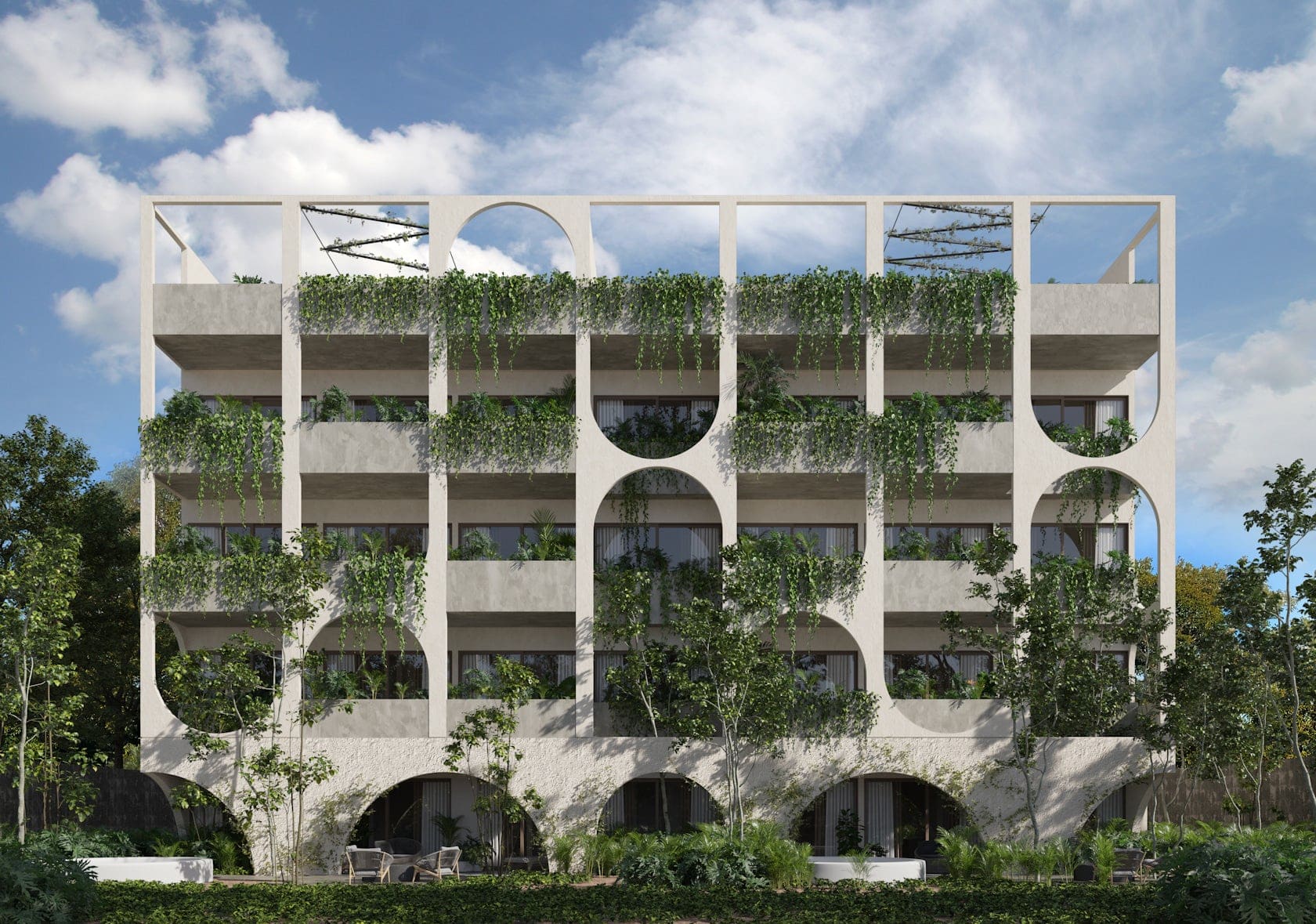
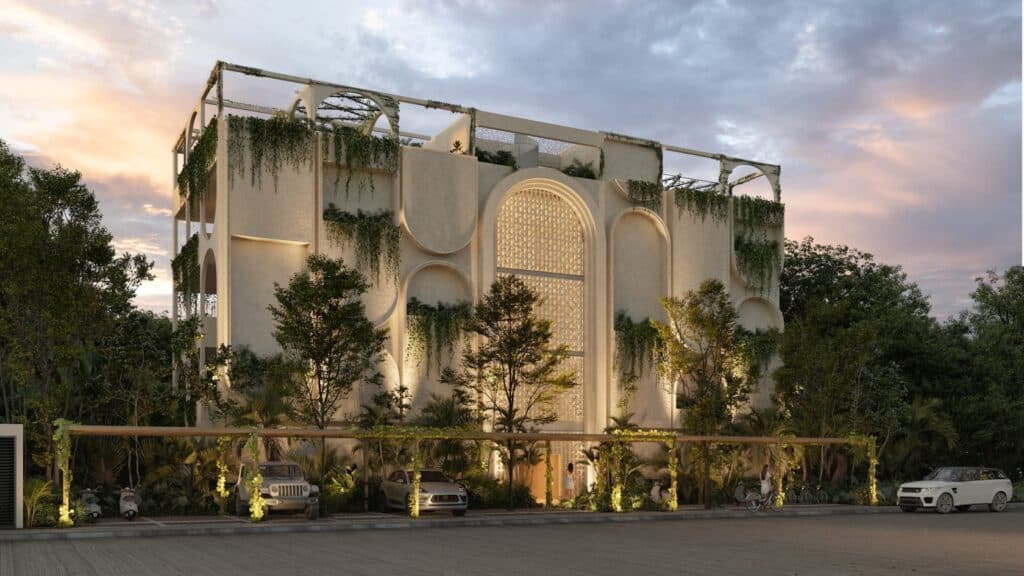
Biophilic architecture defines Vernal Tulum, an under construction development in Tulum, Mexico. Designed by aaestudio, it comprises two four story towers housing 37 apartments total. The project integrates tropical vegetation directly into its façade through open apertures and cascading greenery. This approach responds to Tulum’s ecological fragility, seeking equilibrium between human occupation and environmental preservation. It also aligns with a broader global shift toward coastal luxury developments that prioritize harmony with nature.
Design Concept and Spatial Organization
The layout prioritizes connectivity with the surrounding jungle and coastline. Units are oriented to capture cross ventilation and daylight, while recessed balconies and arches invite flora to climb the structure. This strategy reflects core tenets of architectural design that favor visual permeability and spatial fluidity qualities increasingly demanded in rapidly evolving cities like Tulum.
Materials and Construction Approach
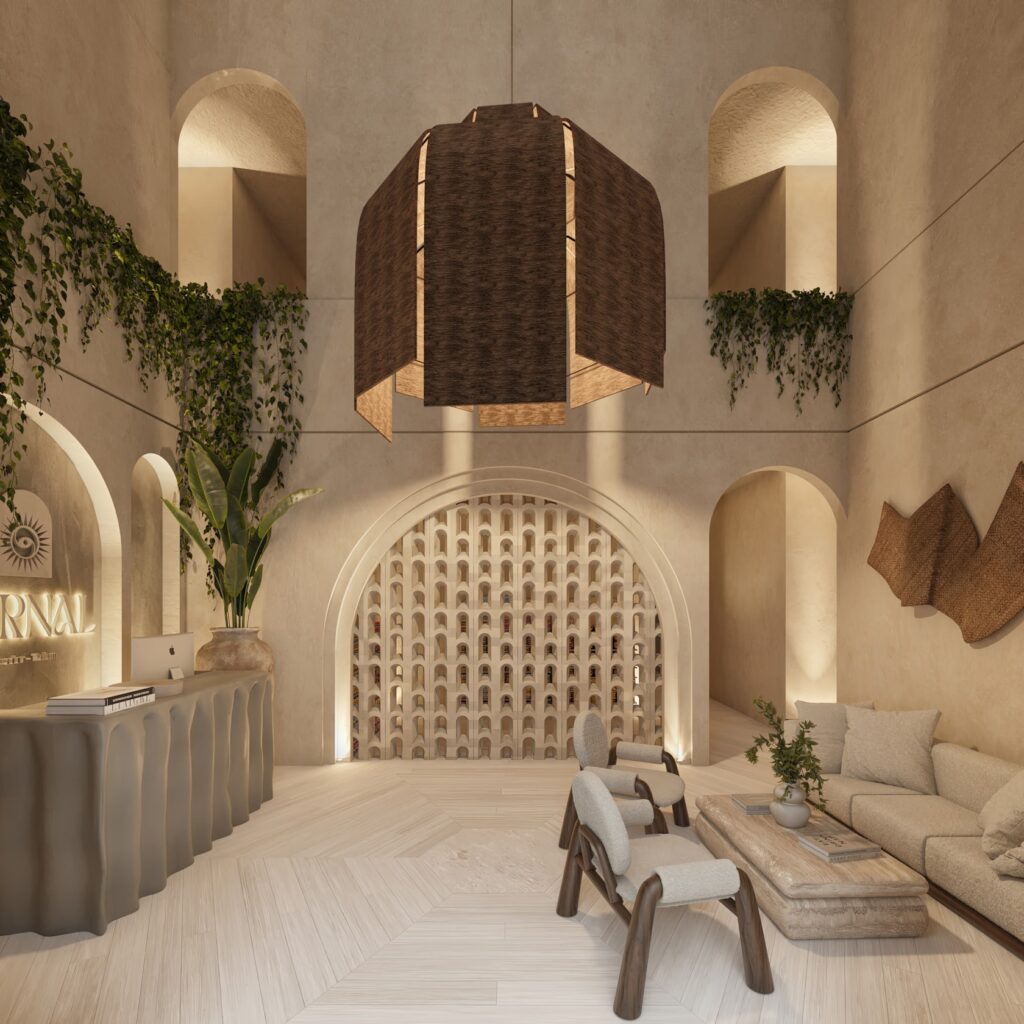
Although the project team has not disclosed exact material specifications, the renderings suggest light toned cast concrete, local stone, and sustainably sourced tropical timber. These selections suit humid, saline climates and reflect regional best practices in building materials. To protect the fragile ecosystem, the construction team will implement ethical construction protocols designed to minimize site disruption standard practice in ecologically sensitive zones like Tulum.
Sustainability and Environmental Integration
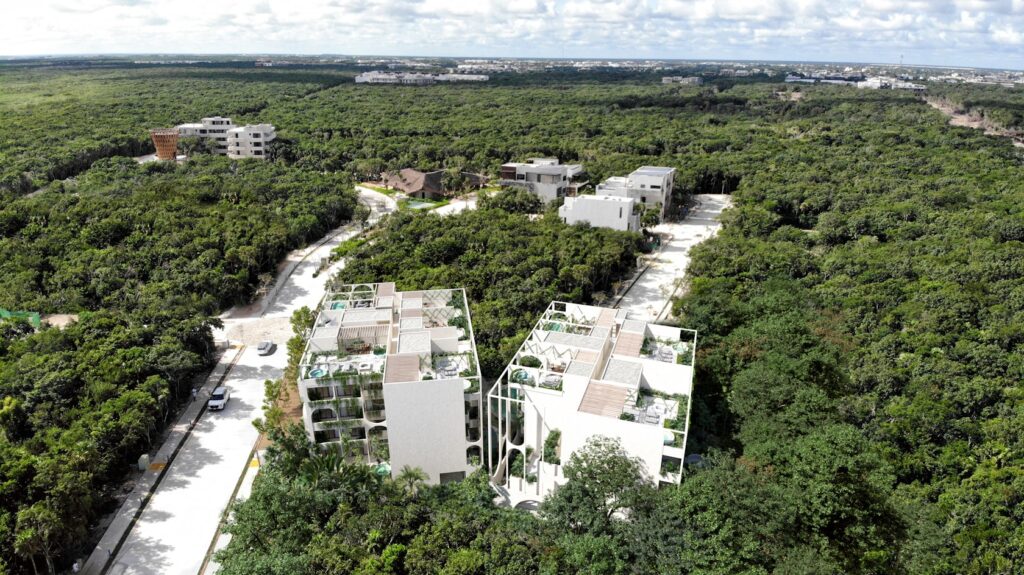
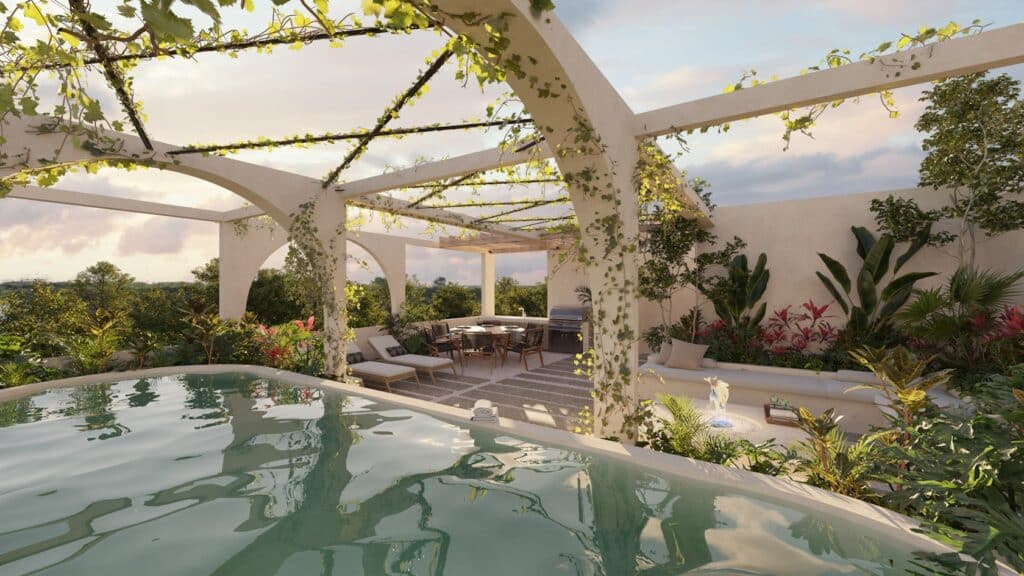
Vernal Tulum avoids high rise massing, opting instead for a low profile footprint that preserves tree cover and airflow corridors. While it carries no formal sustainability certification yet, its form and layout demonstrate implicit ecological awareness. Such strategies are frequently analyzed on the global architecture platform, which tracks how design mediates between development and conservation.
Urban Impact and Regional Context
The project contributes to Tulum’s transformation from a quiet coastal town into a luxury destination blending residence and hospitality. Yet this model intensifies pressure on water, waste, and road infrastructure. Is biophilic architecture a genuine ecological strategy or a marketing aesthetic wrapped in greenery? This tension fuels ongoing debates featured in events and critical editorial content.
Will Vernal Tulum be remembered in a decade as a thoughtful exercise in biophilic architecture or as another greenwashed real estate venture?
Architectural Snapshot: Vernal Tulum in Mexico features two four story residential towers with 37 units across a footprint ranging from 25,000 to 100,000 sqft.
✦ ArchUp Editorial Insight
The piece on Vernal Tulum presents a polished narrative of biophilic luxury in Mexico’s eco sensitive coast. It frames aaestudio’s dual tower scheme as harmonious with nature, using familiar tropes of seamless integration and passive design. Yet it sidesteps deeper questions: Who accesses this harmony? At what ecological cost? The language leans promotional, masking speculative development as ecological stewardship. Still, it correctly identifies Tulum’s typological shift toward hybrid residential hospitality models. It remains uncertain whether history will remember this project as thoughtful architecture or merely as another aestheticized real estate gesture especially in a region already straining under greenwashed density.